
Java Language Basics - PDF, Notes, Programs, Syntax, for Beginners
Java Language Basics consists of Java programming history, types, arrays, Object Oriented Programming, Arrays, Functions, comments, structures and other basic features of Java programming language in detail along with examples.
 Varun Saharawat30 Oct, 2025
Are you aware of the Java language basics or not? Java is a popular high-level object-oriented, platform independent programming language developed by Sun Microsystems in 1991. In 1995, the Sun Microsystem changed the name of Sun to Java. In 2009, further, the Oracle Corporation took over the Sun Microsystem.
Java developers are always in demand as a programming language as it enables programmers to write code that can run on multiple devices having Java Virtual Machine (JVM). There are many features of Java programming language such as strong typing, automatic garbage collection, standard libraries, and other features of Java that make it my favorite.
What is Java Programming Language?
Java is an object-oriented programming language designed to help developers design and implement smart application programs that can run on any device. Java is widely used for developing mobile, web and desktop applications.Key Facts of Java Language Basics
- Java was developed by James Gosling, Sun Microsystem in 1995
- It is known for its simplicity, security, and robustness features.
- Java is a popular enterprise level application and compiled language.
- Java syntax is similar to C/C++ in various aspects and hence it is easy to learn for people who only know C/C++ programming
Java Language Basics: Different Editions
There are multiple editions of Java language which offering different features to the programmers.- Java Standard Edition (JSE): This edition of Java is used to write programs for a desktop computer. It contains standard functionalities such as file I/O, Networking, and multithreading.
- Java Enterprise Edition (JEE): This edition of Java is used to create large programs that can run on a server and manage heavy traffic at once. It is also used to provide APIs for building scalable and secure applications, middleware, enterprise services, etc.
- Java Micro Edition (JME): This version of java is used to develop applications for small devices, applications, phones, embedded systems, IoT devices, set-up boxes, etc.
- Java Card: It is similar to smart cards and other small memory devices like Credit Cards and SIM Cards and other embedded security devices.
- JavaFX: It is a platform for creating rich applications over the internet such as animations, 2d/3d graphics, UI Components, etc.
Types of Java Platform
In this Java language basic tutorial let us check the collection of programs used to develop and run a program written in Java programming language.1. Java Virtual Machine (JVM)
Java Virtual Machine (JVM) allows compiled code to run on any platform without any changes. It is used to achieve “write once, run anywhere”. It translates bytecode into machine code relative to the host system. It includes built-in garbage collection and reduces memory leaks.2. Java Development Kit (JDK)
The Java Development Kit includes all essential tools like Java compiler, debugger, and other libraries to help execute Java applications. Developers use this JDK to develop and test applications. It also consists of extensive documentation for the Java standard libraries which help developers to understand pre-defined classes and methods.3. Java Standard Libraries
These libraries include Java language basics, data structure, I/O operations, and other programming tasks. It offers advanced packages for networking, database, and empowering developers to create scalable and highly efficient applications.Java Language Basics: OOPs
The Object Oriented Programming Language is a feature of Java language that solves complex problems by breaking complex problems into simple sub-problem. In OOPs we use classes and objects to create programs that can be reused and are flexible.- Classes: A Class is a blueprint or prototype of data and methods of an object. It is represented by using the class keyword in Java.
- Objects: An object is an instance of the class which represents a real world entity. It consists of a unique behavior, identity, and state.
- Abstraction: An abstraction is a process by which we hide irrelevant information from the user and display only the necessary information. For example, A driver knows how to drive a car but he might not know the complete mechanism of driving a car running.
- Encapsulation: It is the process of binding data and methods into a single unit. It restricts direct access to any of the object’s components ensuring complete control over data integrity and security.
- Inheritance: Inheritance allows any new class to reuse the properties and methods of an existing class. This reduces the redundancy and improves the maintainability. For example, A Car class can inherit from a Vehicle class to reuse properties like Speed or methods like Start().
- Polymorphism: It allows multiple methods in a class with the same name but different parameters to execute at the same time. The decision is made keeping in mind at the compile time. There are two major types of polymorphism i,e. Method overloading and method overriding.
Java Language Basic Structure of a Java Program
Every Java program is enclosed within the main statement given below. Check the table.| public class ClassName { public static void main(String[] args) { // Code to be executed System.out.println("Hello, World!"); // Print statement } } |
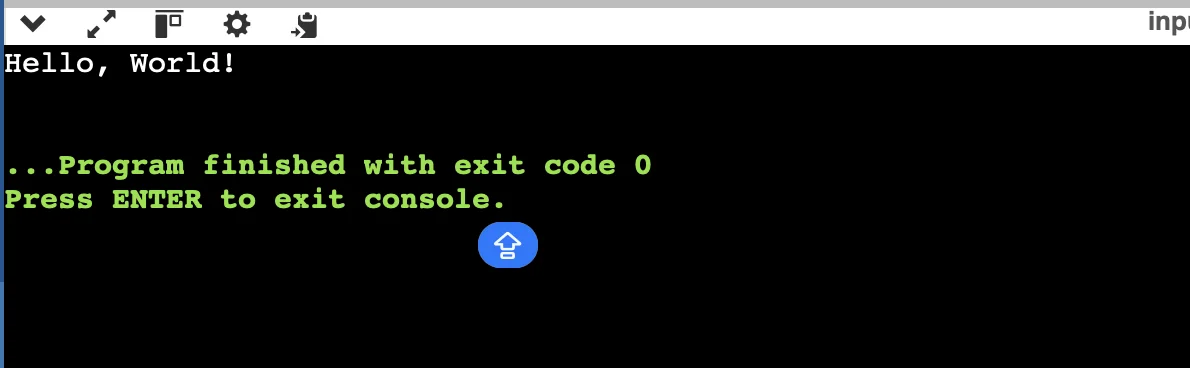 There is always a class and main method with two parameters in the java language's basic structure. To print or display a message on the screen we use system.out.println().
Java Language Basic: Comments in Java
There are two types of comments in the Java language.- Single Line Comment
- Multi-Line Comment
Single Line Comment
| // This is a single-line comment |
Multi-Line Comment
| /* This is a multi-line comment. You can write multiple lines. */ |
| int number = 10; // Integer type double price = 19.99; // Floating-point type char letter = 'A'; // Character type boolean isJavaFun = true; // Boolean type String text = "Hello"; // String type |
Java Language Basics: Conditional Statements
Let us check some of the best conditional statements used in the Java programming language.1. If-else Statement
| if (condition) { // Code if the condition is true } else if (anotherCondition) { // Code if another condition is true } else { // Code if all conditions are false } |
2. Switch Statement
| switch (expression) { case value1: // Code for case 1 break; case value2: // Code for case 2 break; default: // Default code } |
Java Language Basics: Loops
Loops in Java allow a set of instructions to repeatedly happen based on certain conditions. There are three major types of loops in Java- While Loop
- For Loop
- Do-while loop
For Loop in Java
| for (int i = 0; i < 10; i++) { System.out.println(i); } |
While Loop in Java
| int i = 0; while (i < 10) { System.out.println(i); i++; } |
do-while Loop in Java
| int i = 0; do { System.out.println(i); i++; } while (i < 10); |
Java Language Basic: Arrays in Java
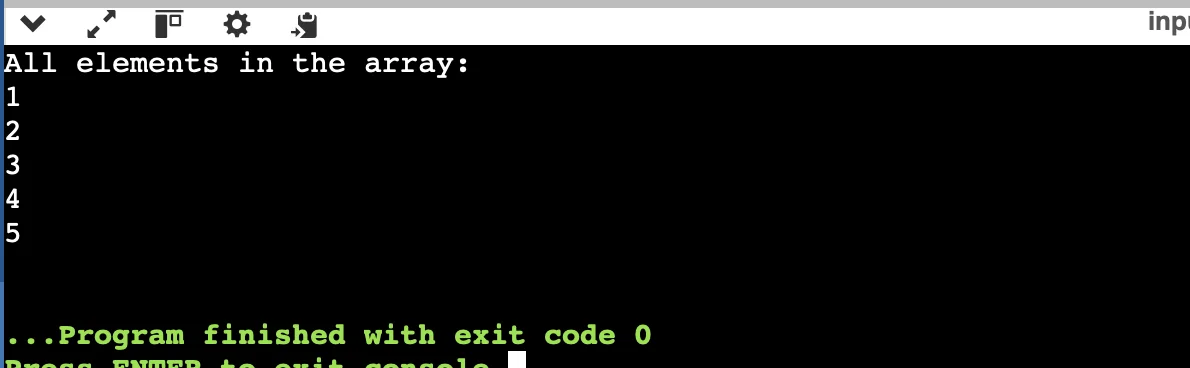
The arrays in Java are used to store multiple values in a single variable instead of declaring separate variables for each value. It contains elements of similar data types storing data at contiguous memory locations.| public class ArrayExample { public static void main(String[] args) { int[] numbers = {1, 2, 3, 4, 5}; // Declare and initialize an array System.out.println("First element: " + numbers[0]); // Access array element // Loop through the array System.out.println("All elements in the array:");for (int num : numbers) { System.out.println(num); } |
Java Language Basics: Functions
The Java Functions Consist of is used to define a block of code which is used only when called by other methods.| // Define a method public static int addNumbers(int a, int b) { return a + b; } // Call a method int result = addNumbers(5, 3); System.out.println(result); // Outputs 8 |
Java Language Basic Code Examples
Check some of the best simple Java language basic code examples below.Q1. Write a Java Hello World! Program to print a simple message on the screen.
| public class HelloWorld { public static void main(String[] args) { System.out.println("Hello, World!"); } } |
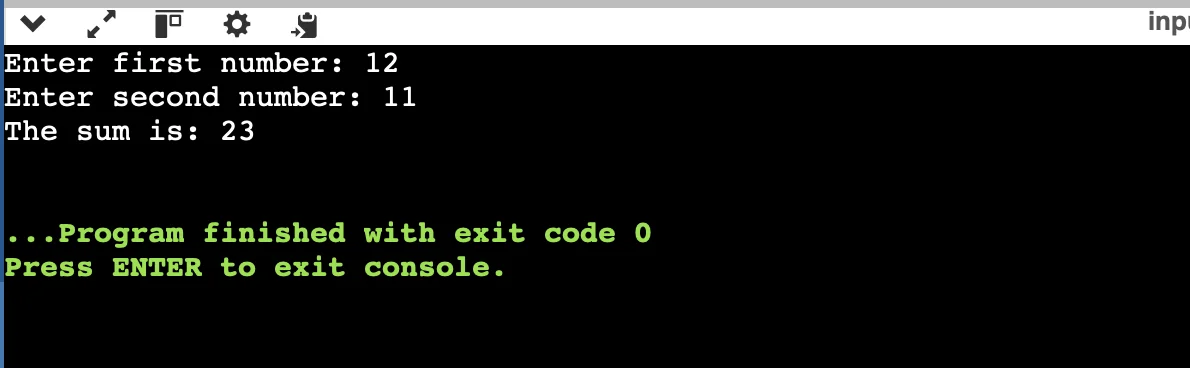
Q2. Write a simple Java language basic program to add two numbers with two variables.
| import java.util.Scanner; public class Addition { public static void main(String[] args) { Scanner scanner = new Scanner(System.in); System.out.print("Enter first number: "); int num1 = scanner.nextInt(); System.out.print("Enter second number: "); int num2 = scanner.nextInt(); int sum = num1 + num2; System.out.println("The sum is: " + sum); scanner.close(); } |
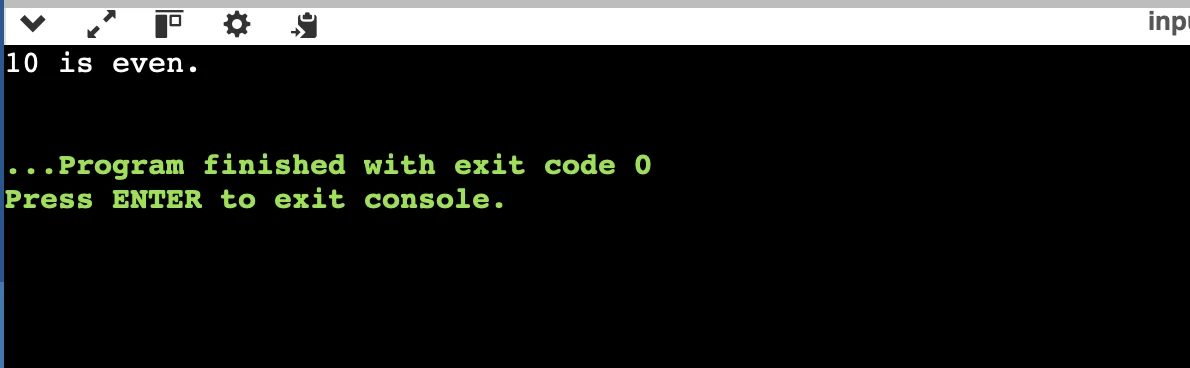
Q3. Write a Java language basic program to check if a number is even or odd.
| public class EvenOdd { public static void main(String[] args) { int number = 10; if (number % 2 == 0) { System.out.println(number + " is even."); } else { System.out.println(number + " is odd."); } } } |
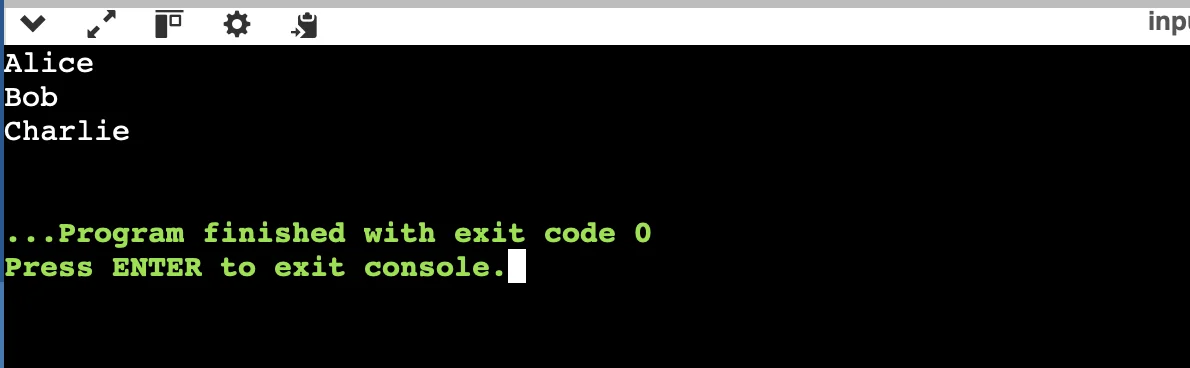
Q4. Write a simple Java language basic program to show how to use arrays in Java.
| public class ArrayExample { public static void main(String[] args) { String[] names = {"Alice", "Bob", "Charlie"}; for (String name : names) { System.out.println(name); } } } |
Learn Decode Java with DSA
Become a Java programmer with PW Skills Decode DSA with Java Course. This is a self paced course completely packed with everything you need to master programming along with Data Structures and Algorithms. Build a strong career foundation and job ready portfolio. Get in-depth learning, practice exercises, module assignments, and real-world projects with pwskills.com



Java Language Basics FAQs
Q1. What are the basics of Java Programming language?
Ans: The Java language basics consist of arrays, object oriented programming, functions, syntax, loops, and much more required to start programming in Java language.
Q2. Is Java a Platform Independent Language?
Ans: Java is a platform-independent language which means you only write once and execute as many times as you like without any modification in the code. However, Java requires JVM to execute or convert bytecode into machine language.
Q3. How many types of loops are there in Java?
Ans: There are three types of Loops in Java given below.
While loop
For Loop
Do-while loop
Q4. Is Java good for young graduates?
Ans: Java is one of the most widely used programming languages in the field of software development. If you will gain experience and strong knowledge of Java language then you can get a wide range of opportunities in multiple top IT companies.


Talk to a counsellorHave doubts? Our support team will be happy to assist you!



Get Free Counselling Today
and Clear up all your Doubts
Talk to Our Counsellor just by filling out the form.
Join 15 Million students on the app today!
 Live & recorded classes available at easeDashboard for progress trackingLakhs of practice questions

