
What Is the Classification of ChatGPT Within Generative AI Models in 2026?
 Hardik Gupta25 Sept, 2026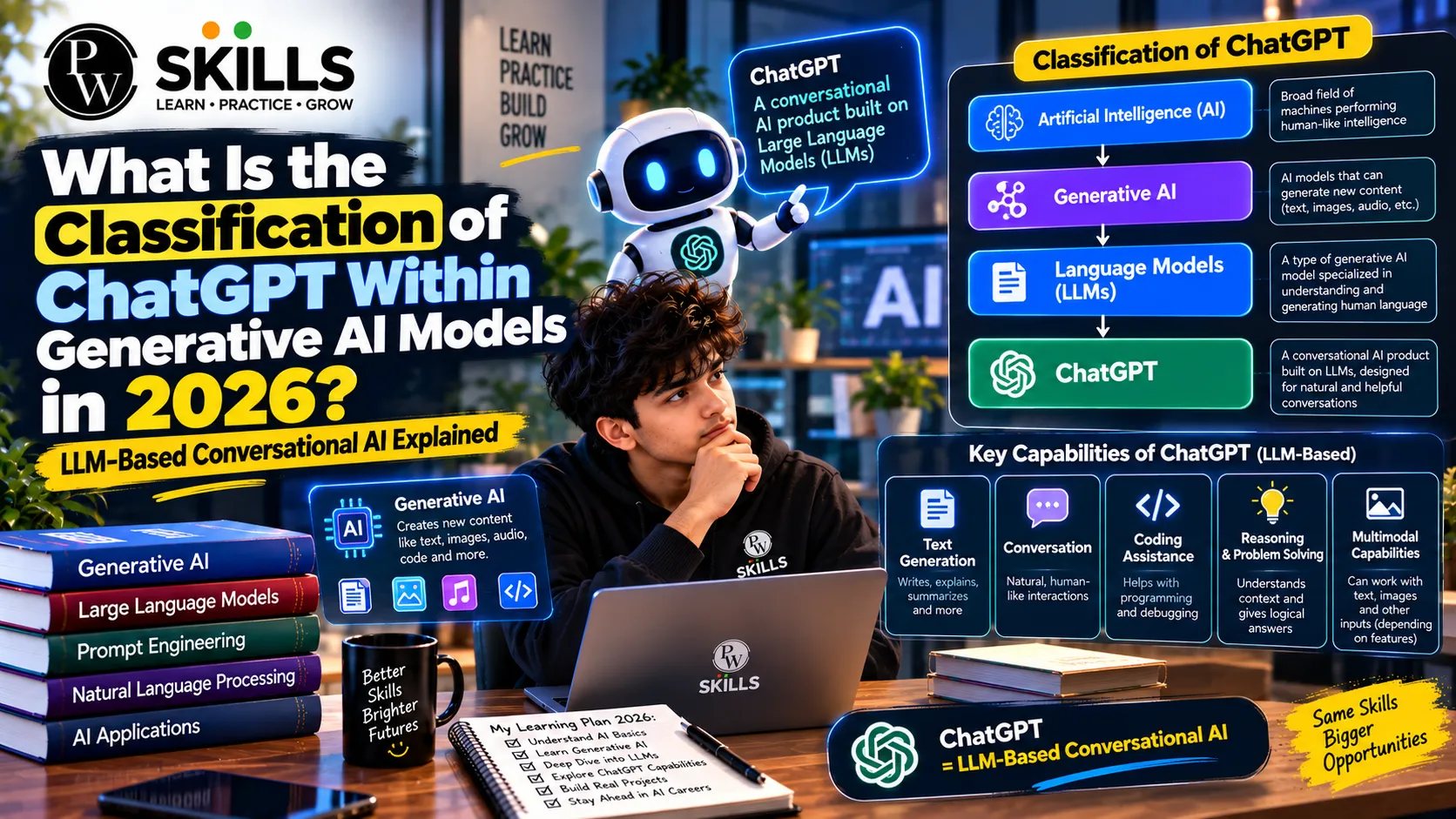
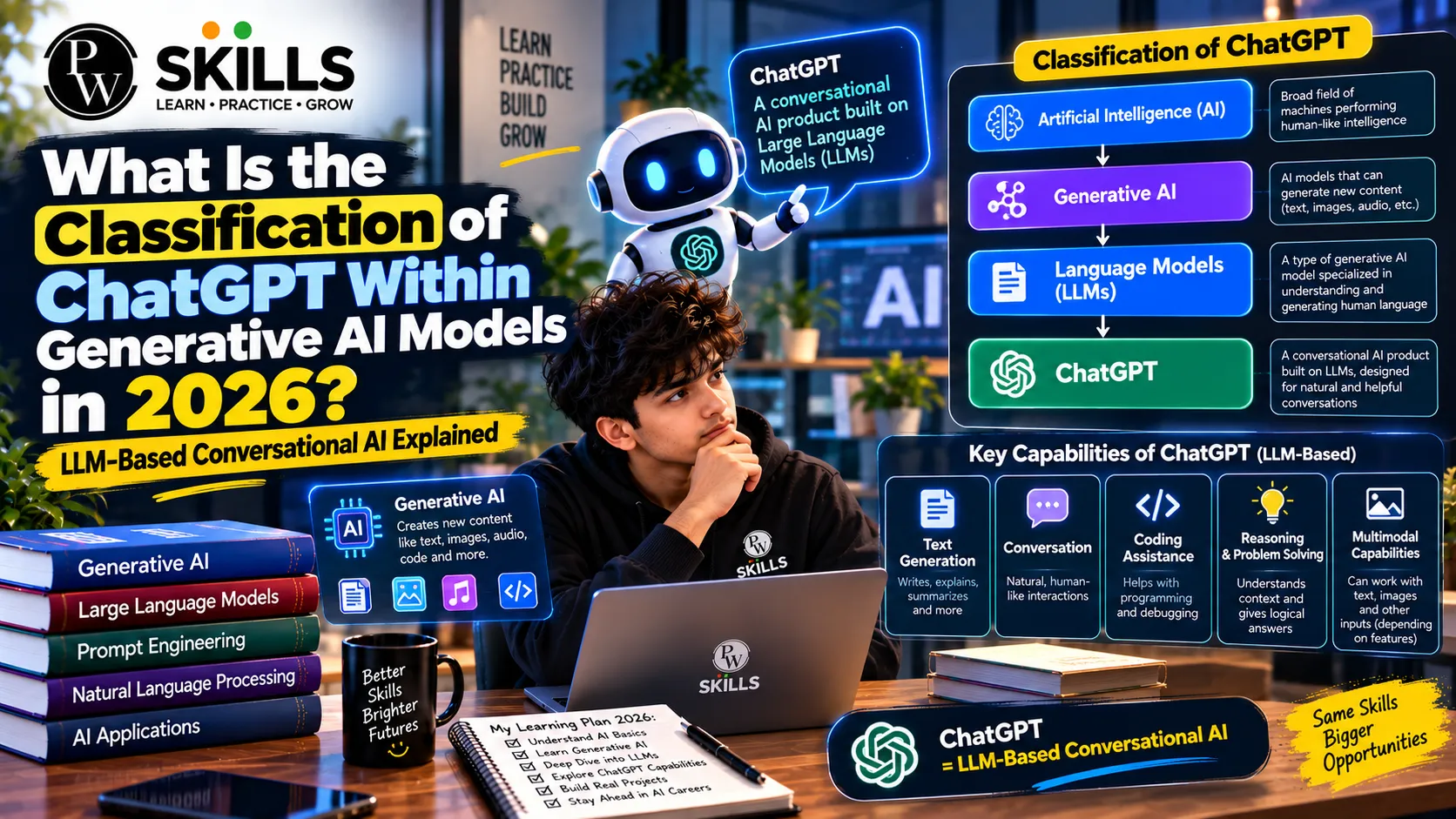
Understanding what is the classification of chatgpt within generative ai models helps students and developers grasp modern artificial intelligence systems. Many learners struggle to map out how conversational tools fit within broader machine learning frameworks. Recognizing these structural layers is essential for anyone building applications through a structured Gen AI Engineering Course.
What Is the Classification of ChatGPT Within Generative AI Models?
The foundational structure of modern systems relies on deep learning and transformer-based machine learning frameworks. A ChatGPT Generative AI model functions as a language generation system that processes user prompts and predicts suitable tokens to create a response.
Understanding what the classification of ChatGPT is within generative AI models requires looking at its underlying neural network architecture. The model learns patterns from large-scale training data and uses these patterns to understand context and generate new text rather than simply retrieving fixed responses.
Key architectural components include:
-
Tokenisation: User inputs are broken into smaller units called tokens that the model can process.
-
Neural Network Layers: Multiple layers process the input and identify relationships between different tokens.
-
Context Processing: The architecture evaluates surrounding words and previous conversation context to generate relevant responses.
-
Token Prediction: The model calculates likely next tokens and generates the response step by step.
-
Inference: During a conversation, the trained model applies its learned parameters to new prompts and produces an output.
These components work together to make ChatGPT a generative system rather than a traditional rule-based chatbot. Its classification is therefore connected to both its generative AI function and its underlying language-model architecture.
Also Check : Gen AI Engineering Course
How Do Large Language Models Fit Into ChatGPT's Classification?
Text-based generative systems sit inside a broader technological taxonomy. Large language model is a specialized type of machine learning model designed to understand patterns in human language and generate text based on the given context.
A large language model processes textual inputs by converting them into tokens and numerical representations. These representations allow the model to identify relationships between words and concepts. During generation, the model uses the available context to predict suitable next tokens and form a complete response.
When understanding what the classification of ChatGPT is within generative AI models, LLMs provide an important layer between the broader generative AI category and the user-facing conversational application.
-
Language Representation: Text is converted into numerical representations that help the model process semantic relationships.
-
Model Training: Large language model learn language patterns from large-scale datasets during training.
-
Context Windows: The model can process a defined amount of input and conversation context when generating a response.
-
Text Generation: The model predicts subsequent tokens to produce coherent and context-relevant outputs.
|
Category Feature |
Description |
Technical Focus |
|
Model Type |
Deep Neural Network |
Sequence Prediction |
|
Primary Input |
Text Prompts |
Vector Embeddings |
|
Primary Output |
Generated Text |
Probabilistic Tokens |
How Do Transformer Models Impact ChatGPT's Generative AI Architecture?
The technological breakthrough behind modern language systems comes from this type of models, which introduced a more efficient way to process relationships between words and tokens. Unlike older recurrent architectures that process sequences step by step, transformers can process many tokens in parallel during training.
For understanding what is the classification of ChatGPT within generative AI models, the transformer architecture is important because it forms the technical foundation of modern large language model. Its self-attention mechanism helps the model identify which parts of an input are more relevant when interpreting context.
Key components include:
-
Self-Attention: Helps the model evaluate relationships between different tokens in the input.
-
Parallel Processing: Allows multiple tokens to be processed efficiently during training.
-
Positional Information: Helps the model understand the order and position of tokens in a sequence.
-
Transformer Layers: Multiple layers progressively process and represent the information needed for language generation.
These capabilities allow transformer-based models to handle long and complex text more effectively, making them widely used in modern generative AI and conversational applications.
What Role Does Conversational AI Play in ChatGPT?
User-facing deployment shifts the structural classification toward interactive applications. This includes technologies designed to understand user inputs and generate responses that fit the ongoing conversation. ChatGPT uses this approach to provide interactive responses across different types of user queries.
While the underlying language model handles text processing and generation, the conversational layer helps manage the interaction between the user and the system.
-
Dialogue Management: Tracks multi-turn conversations and uses previous messages to maintain context.
-
Intent Recognition: Identifies what the user is asking and helps guide the response.
-
Context Handling: Uses relevant conversation information to make responses more connected to the current discussion.
-
Safety Guardrails: Apply rules and controls to reduce harmful, inappropriate, or unsafe outputs.
Together, these components allow generative AI models to function as interactive conversational systems rather than simple text-generation tools.
What Is the Classification of ChatGPT Within Generative AI Models in Practice?
Looking at the different architectural layers makes the classification of ChatGPT easier to understand. This can be explained by considering its underlying language model, transformer architecture, and conversational application.
ChatGPT can be understood across three connected levels:
-
Generative AI: It belongs to generative AI because it creates new text based on patterns learned during training.
-
Large Language Model: Its underlying language model is designed to process and generate human language.
-
Conversational Artificial Intelligence: ChatGPT applies this language-generation capability through an interactive interface designed for multi-turn conversations.
Therefore, ChatGPT can be viewed as a generative AI application powered by a large language model built on transformer-based architecture. This layered classification helps distinguish the underlying model from the conversational product through which users interact with it.
ChatGPT vs Large Language Model vs Generative AI
Understanding the difference between these terms makes the classification of ChatGPT within generative AI easier to follow. They describe different levels of the same technology rather than three completely separate concepts.
-
Generative AI: The broader category of AI systems that can create new content such as text, images, audio, video, or code.
-
Large Language Model: A type of AI model focused on understanding and generating human language. It provides the language-generation capabilities used by conversational applications.
-
ChatGPT: A conversational Artificial Intelligence application that uses language models to interact with users and generate responses in a dialogue format.
This distinction is useful when discussing AI technologies because a model, an application, and the broader AI category serve different roles. It also helps learners understand why ChatGPT can be described as a generative AI application powered by a large language model.



FAQs
What is the classification of ChatGPT within generative AI models?
How does a ChatGPT Generative AI model process user inputs?
Are large language models and LLMs the same thing?
Why are transformer models important for conversational Artificial Intelligence?
What makes conversational AI different from standard machine learning?





Get Free Counselling Today
and Clear up all your Doubts
 Live & recorded classes available at easeDashboard for progress trackingLakhs of practice questions

