
AND-OR Graph in Artificial Intelligence in 2026: Concepts, Examples and Applications

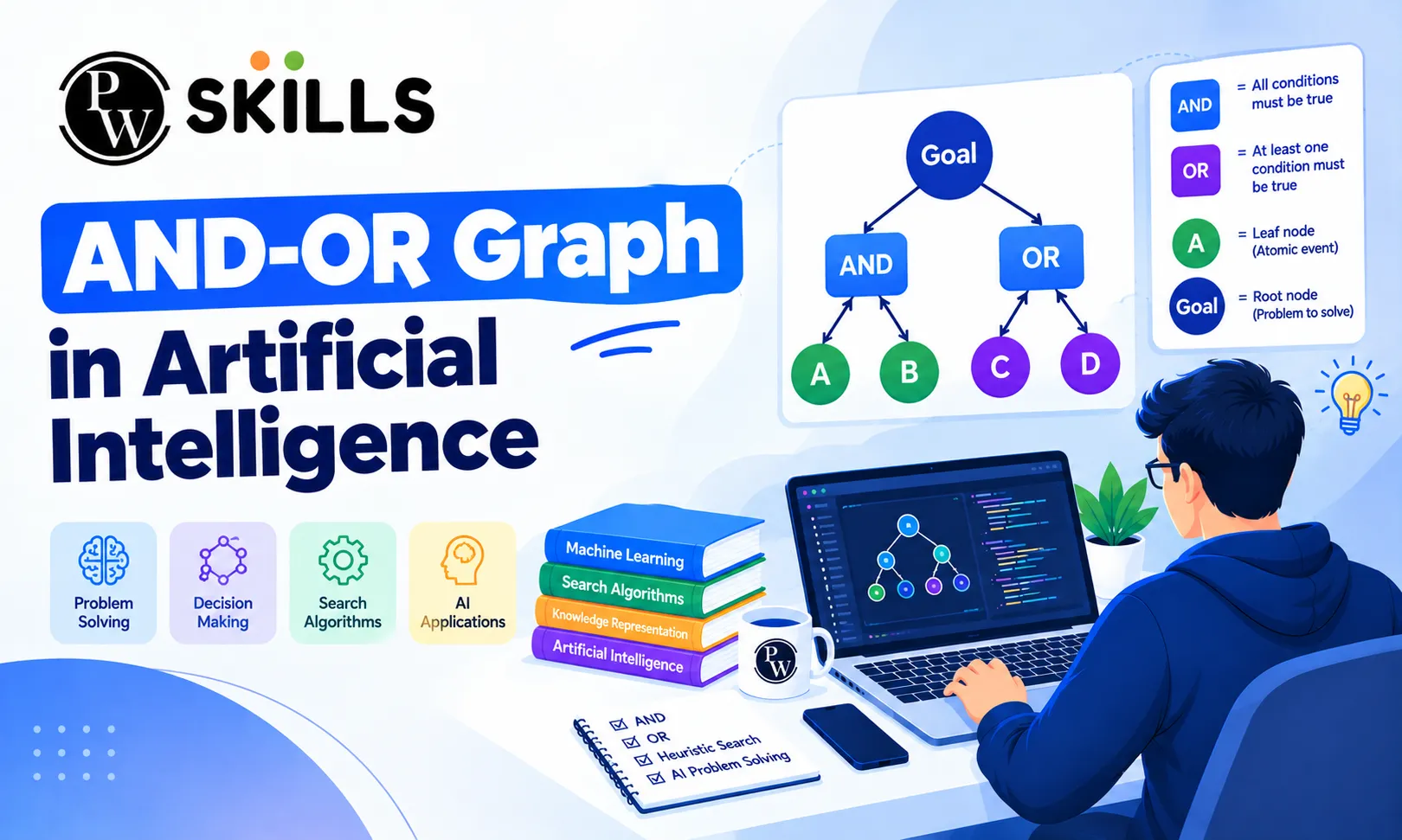
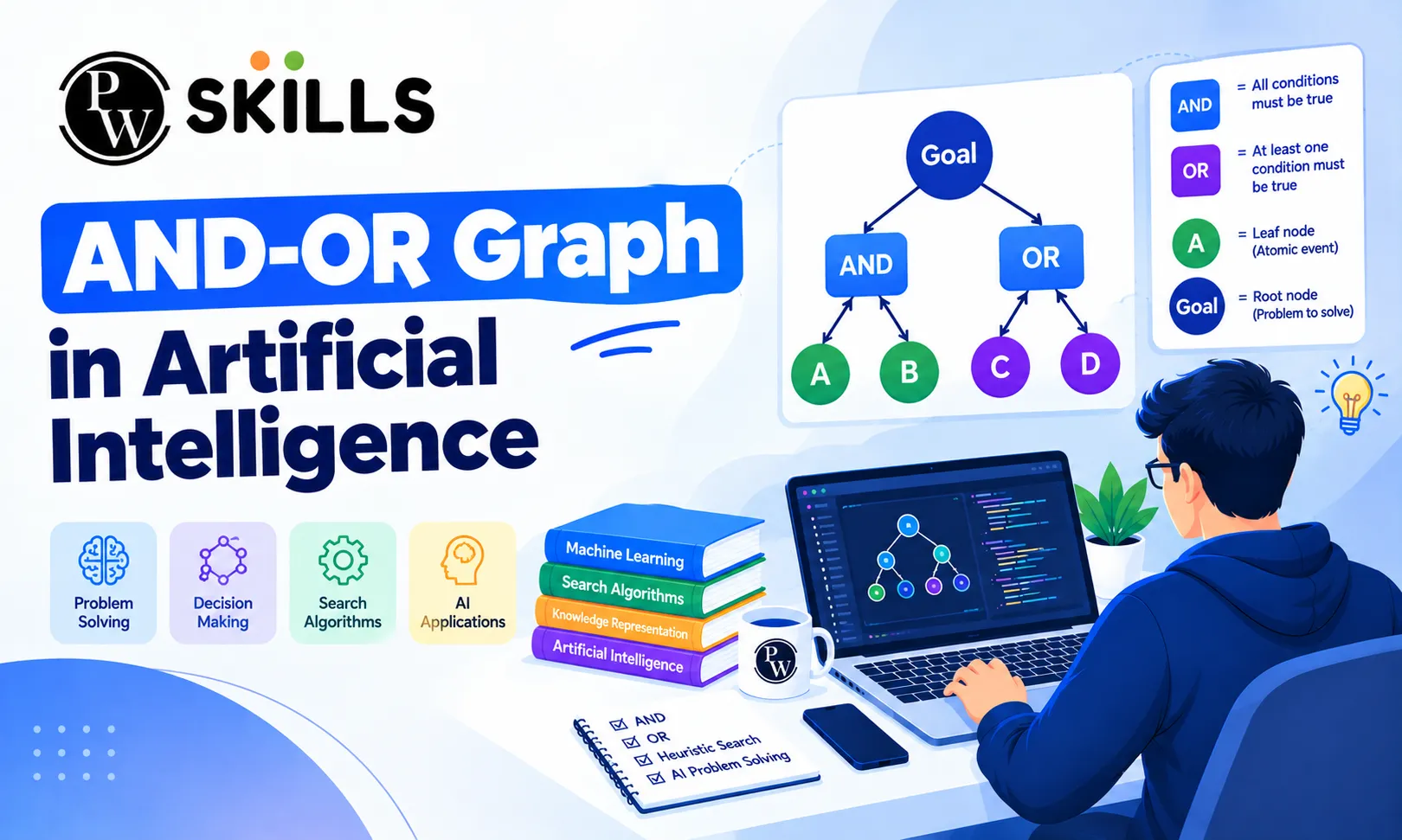
An and or graph in artificial intelligence helps an AI system break a complex problem into smaller subproblems. It uses AND nodes when multiple tasks must be completed and OR nodes when the system can choose between alternatives. Understanding this structure can help learners study problem solving in AI, AI search algorithms, and artificial intelligence graphs more clearly.
What is an And Or Graph in Artificial Intelligence?
An and/or graph in artificial intelligence is a graph used to represent a problem and its smaller subproblems. A large problem can be divided into smaller tasks, and the graph shows the relationship between them.
The two mAIn types of nodes are AND nodes and OR nodes:
- AND Nodes: An AND node means that all the connected subproblems must be solved to complete the parent problem.
- OR Nodes: An OR node means that there are different choices, and solving one suitable subproblem can be enough to solve the parent problem.
- Problem Decomposition: A complex problem is divided into smaller and easier parts until the system reaches problems that can be solved directly.
For example, an AI system may need to complete tasks A and B to achieve a larger goal. If both are required, they form an AND relationship. If the system can choose either A or B, they form an OR relationship.
How Does And Or Graph in Artificial Intelligence Help With Problem Solving?
Problem solving in AI often involves finding a way to reach a goal from an initial state. An AND-OR graph helps an AI system represent the different tasks and choices involved in reaching that goal.
When an AI system works with an and/or graph in artificial intelligence, it examines the avAIlable nodes and determines which subproblems need to be solved.
- Arc Connections: Connections between nodes show how one problem leads to another. AND connections show required subproblems, while OR connections show possible alternatives.
- Node Expansion: The search process expands a selected node to reveal its smaller problems or possible choices.
- Cost Evaluation: When costs or heuristic values are used, the system can compare different solution paths and update the estimated cost of solving a problem.
- Solution Selection: The system continues evaluating the graph until it finds a suitable set of subproblems that can solve the original goal.
This structure is useful because an AI system does not always need to follow one simple path. Some problems require several tasks at the same time, while others allow the system to choose between different options.
What Are the Uses of And Or Graph in Artificial Intelligence?
Artificial intelligence graphs can be used in different AI tasks where problems contAIn multiple steps, dependencies, or choices. An AND/OR graph in artificial intelligence is especially useful when a goal can be divided into smaller goals.
Some common applications include:
- Automated Theorem Proving: An AI system may need to prove several statements or conditions before reaching a final conclusion. AND relationships can represent the conditions that must all be satisfied.
- Hierarchical Planning: Robots and intelligent systems can divide a large task into smaller actions. For example, reaching a destination may require several smaller actions to be completed.
- Game Playing Strategies: AI systems can represent different moves and possible outcomes when analysing games. OR relationships can represent different moves, while AND relationships can represent conditions that must be considered together.
- Decision-Making: The structure can help represent situations where a system has several possible choices and some choices require multiple steps.
These applications show how problem solving in AI can use graph structures to represent complex tasks in a more organised way.
How Is And Or Graph in Artificial Intelligence Different From AI Search Algorithms?
Traditional search methods often focus on finding a path from an initial state to a goal. An AND/OR graph in artificial intelligence is different because it can represent both alternative choices and groups of tasks that must all be completed.
Some important differences include:
- Single Path vs Decomposition: A standard path search may look for one route from one state to another. AND-OR graphs can divide a problem into several required subproblems as well as alternative choices.
- Heuristic Search: Algorithms such as AO* can be used with AND-OR structures to evaluate possible solution subgraphs and guide the search toward a useful solution.
- Multiple Dependencies: AND nodes can represent tasks that depend on several subproblems being solved, which is difficult to show with a simple single-path structure.
- Alternative Solutions: OR nodes allow the system to select one option from several possible solutions.
Therefore, AI search algorithms can use different structures depending on the type of problem being solved. AND-OR graphs are useful when a problem contAIns both alternatives and mandatory subproblems.



FAQs
1. What is an and or graph in artificial intelligence?
2. How do AND nodes differ from OR nodes in an AND OR graph AI framework?
3. Why are artificial intelligence graphs important for problem solving in AI?
4. Which search algorithm is commonly used for an and or graph in artificial intelligence?
5. Where are AI search algorithms utilizing and-or structures applied?





Get Free Counselling Today
and Clear up all your Doubts
 Live & recorded classes available at easeDashboard for progress trackingLakhs of practice questions

