
AI Blogs



Get Free Counselling Today
and Clear up all your Doubts
As interest in AI continues to grow, many students and professionals are looking for practical learning resources, career direction, and tool-based understanding.
This is where generative AI blogs become useful.
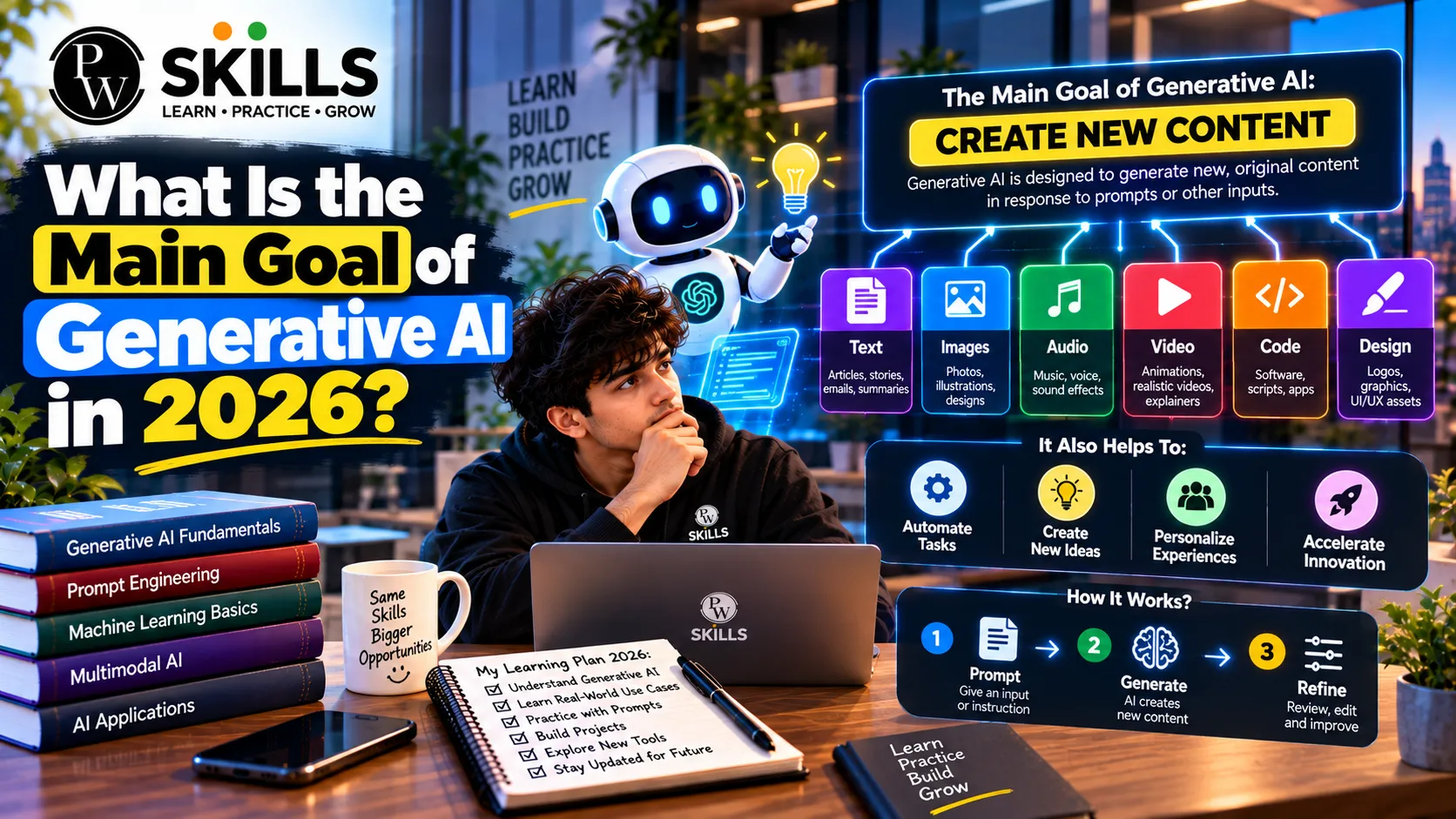
This page brings together blogs around Generative AI, prompt engineering, automation workflows, practical applications, and AI career insights for students, creators, developers, and working professionals.
What Are Generative AI Blogs?
Generative AI blogs are educational resources that explain how modern AI systems work and how people can use them for learning, productivity, business, coding, design, content creation, research, and automation.
These blogs often cover:
-
Prompt engineering techniques
-
AI workflows
-
Real-world AI applications
-
Automation use cases
-
AI productivity methods
-
AI career opportunities
-
Ethical and practical AI usage
Because AI technology changes quickly, learners often use blogs to stay updated with trends, tools, and practical implementations.
Why Students Are Reading Generative AI Blogs
Many students want to understand AI because it is influencing both learning and future careers.
Some learners want to improve productivity.
Some want to explore automation.
Some want to build AI-based projects.
Others want to prepare for emerging job opportunities.
It help students understand:
-
How AI systems are used practically
-
What prompt engineering means
-
How AI can support learning and productivity
-
What industries are adopting AI
-
Which AI-related careers are growing
For beginners, blogs also simplify complex concepts and make AI feel easier to approach.
How Generative AI Blogs are Changing Everyday Workflows?
One major reason behind the popularity of Generative AI is the rise of easy-to-use tools.
These tools help users complete tasks faster and improve productivity.
Some tools support:
-
Writing assistance
-
Content generation
-
Coding support
-
Presentation creation
-
Research summarisation
-
Data analysis
-
Design generation
-
Audio transcription
-
Image generation
-
Customer support automation
Students and professionals are increasingly using AI tools to save time and improve efficiency in daily work.
However, it works best when users understand how to give clear instructions. This is where it becomes important.
What Is Prompt Engineering in Generative AI Blogs?
It is the process of writing effective instructions for AI systems.
A prompt tells the AI what the user wants.
The quality of the output often depends on the clarity of the instruction.
For example, a vague instruction may produce a weak result, while a detailed prompt may create a much better response.
It may involve:
-
Giving clear context
-
Defining the task properly
-
Setting tone or format
-
Adding examples
-
Breaking tasks into steps
-
Refining instructions iteratively
Good techniques improves the usefulness of these tools.
Why Prompt Engineering Matters in Generative AI Blogs?
Many people assume AI tools automatically produce perfect results.
In reality, the user’s instruction quality matters a lot.
It helps users:
-
Generate better outputs
-
Reduce confusion
-
Improve accuracy
-
Save editing time
-
Create structured responses
-
Build repeatable workflows
-
Automate tasks more efficiently
Students using AI for coding, writing, research, design, or productivity often benefit from learning prompt techniques.
Even basic improvements in prompting can create noticeable differences in output quality.
Challenges Learners Face While Starting with Generative AI Blogs
Many beginners feel overwhelmed because there are too many tools, updates, and trends.
Some common beginner challenges include:
-
Confusion about where to start
-
Too many AI platforms
-
Lack of structured guidance
-
Difficulty writing prompts
-
Fear of technical complexity
-
Unrealistic expectations from tools
It can help simplify this learning process by breaking concepts into practical explanations and beginner-friendly guidance.
Why Generative AI Blogs Help Learners?
Technology changes quickly.
Blogs help learners stay connected with practical trends, tools, workflows, and career opportunities.
It can help readers:
-
Explore AI tools
-
Learn prompt engineering
-
Understand AI applications
-
Build productivity workflows
-
Stay updated with AI trends
-
Explore career opportunities
-
Learn practical AI usage
For beginners, these blogs can act as a starting point for understanding modern AI systems without making the subject feel too technical.
FAQ
What is prompt engineering?
Why are AI tools becoming popular?
Do AI careers require coding knowledge?
How can beginners start learning Generative AI?




 Live & recorded classes available at easeDashboard for progress trackingLakhs of practice questions

