
What Does the Principle of Fairness in GenAI Mean in 2026?

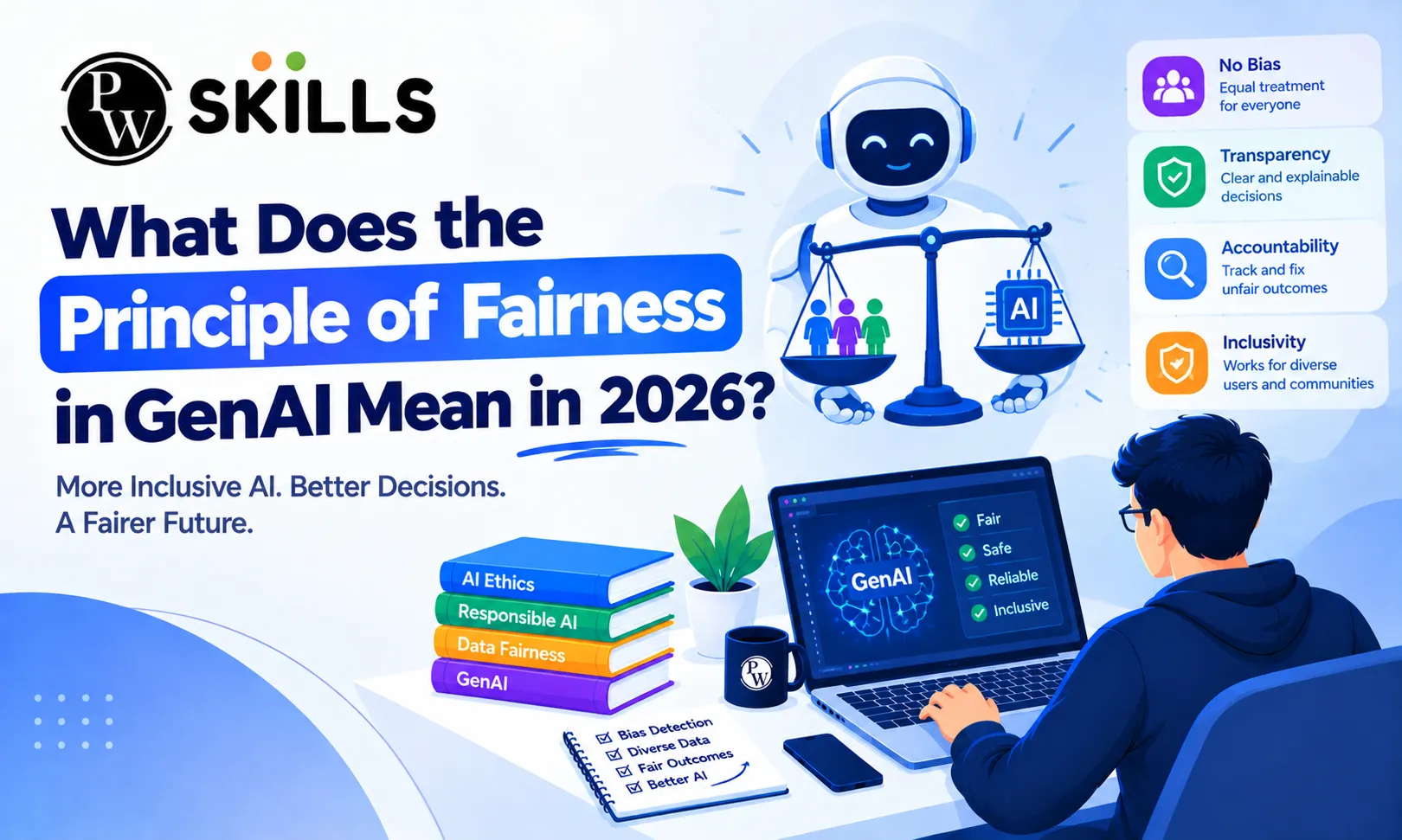
Generative AI can create text, images, code, and other content from large amounts of training data. That data can contain gaps, stereotypes, or unfair patterns from the real world. As a result, an AI model may sometimes produce different or harmful results for different groups.
Learning what does the principle of fairness in GenAI mean is therefore useful for anyone studying responsible AI. Developers need to test AI systems, understand their limits, and take steps to reduce AI bias. Fairness is not achieved by one single technique. It requires attention during data preparation, model development, testing, deployment, and ongoing monitoring.
Overview of the Principle of Fairness in GenAI
The principle of fairness in GenAI means designing and using AI systems in a way that reduces unfair treatment, discrimination, and harmful bias. Generative AI learns from large datasets that may contain gaps, stereotypes, or unequal representation, which can affect the content produced by the model. Fairness requires developers to check training data, test model outputs, evaluate different user groups, and monitor AI systems after deployment. It is an ongoing process that combines responsible data practices, regular testing, human review, and clear governance. Understanding the principle of fairness in GenAI helps developers and organisations build AI systems that are more responsible, reliable, and suitable for different users.
How Does the Principle of Fairness in GenAI Work?
Understanding what does the principle of fairness in GenAI means starts with looking at the data and systems used to build AI models. Generative AI models learn patterns from their training data. If that data contains stereotypes or does not represent some groups well, the model may reflect those problems in its outputs.
Fairness does not always mean that every user receives exactly the same output. It means that the system should be designed and tested to avoid unjustified differences or harmful bias.
- Data Representation: Training and testing data should represent relevant groups and different types of users as well as possible.
- Output Fairness: Developers should check whether generated text, images, code, or other outputs show unfair patterns toward particular groups.
- Harm Reduction: Systems should reduce harmful stereotypes, discriminatory content, and other forms of unfair treatment.
- Clear Evaluation: Teams should define what fairness means for their particular AI application and test it using suitable measures.
Fairness in AI is difficult because different applications can have different risks. A chatbot, an image generator, and an AI system used to support decisions may require different fairness tests.
How Does the Principle of Fairness in GenAI Reduce AI Bias?
Finding AI bias in a large model can be difficult because the model learns from huge and complex datasets. Developers therefore need to test the system using different examples and user scenarios.
What does the principle of fairness in GenAI look like during model testing? It can involve checking how a model responds to similar prompts that differ only in information about a person's background or identity.
- Algorithmic Auditing: Test model outputs regularly to find differences or patterns that may indicate unfair treatment.
- Red Teaming: Use challenging prompts and scenarios to find harmful stereotypes, unsafe behaviour, or other weaknesses.
- Evaluation Datasets: Build test sets that include different groups, languages, regions, and situations that are relevant to the system.
- Human Review: Ask trained reviewers to examine outputs that may be difficult to judge using automated measurements alone.
- Safety Controls: Use suitable filters or other controls to reduce harmful outputs where appropriate.
Reducing bias is an ongoing process. A model may perform well on one test and still show problems in another situation. This is why developers should combine automated testing with human review and regular system checks.
How to Apply the Principle of Fairness in GenAI
Fairness should be considered during the design of an AI system instead of being treated as a final check. Teams need processes that help them identify risks before a model reaches users.
What does the principle of fairness in GenAI require from developers? It requires them to understand the data, define possible risks, test different user scenarios, and provide ways to report problems.
- Transparent Documentation: Record information about the model, its intended use, known limitations, evaluation methods, and important risks.
- Inclusive Testing: Test systems with prompts and examples representing different users and situations.
- Clear User Feedback: Give users a way to report unfair, harmful, or incorrect outputs.
- Regular Improvement: Use feedback and evaluation results to improve the system over time.
- Defined Responsibility: Clearly assign responsibility for reviewing and addressing fairness problems.
Following responsible generative AI practices can help organisations create systems that are safer and more useful. It also helps teams understand that fairness is connected to the specific purpose and use of an AI system.
How Does the Principle of Fairness in GenAI Support Trustworthy AI?
Technical improvements alone are not enough to create trustworthy AI. Organisations also need clear rules for how AI systems are developed, tested, used, and monitored.
When considering what does the principle of fairness in GenAI mean at an organisational level, governance helps make sure fairness checks are not ignored after a system is launched.
- Regulatory Alignment: Organisations should understand and follow the laws, rules, and standards that apply to their AI system and location.
- Clear Governance: Define who is responsible for AI testing, risk review, incident handling, and system updates.
- Continuous Monitoring: Monitor real-world performance and user feedback to identify new problems after deployment.
- Independent Review: Where appropriate, use internal or external reviewers to provide another view of system risks.
- Record Keeping: Maintain records of important tests, decisions, changes, and known limitations.
A trustworthy AI system should be evaluated throughout its life cycle. New data, users, applications, or model updates can introduce new risks. Regular monitoring helps organisations find and address these issues instead of assuming that a model will remain fair forever.



FAQs
What does the principle of fairness in GenAI mean for developers?
Why is fairness in AI difficult to measure?
How does responsible generative AI reduce model bias?
What causes AI bias in large language models?
Why is trustworthy AI essential for enterprise applications?





Get Free Counselling Today
and Clear up all your Doubts
 Live & recorded classes available at easeDashboard for progress trackingLakhs of practice questions

