
AI System in 2026: Components, Types and How Artificial Intelligence Systems Work

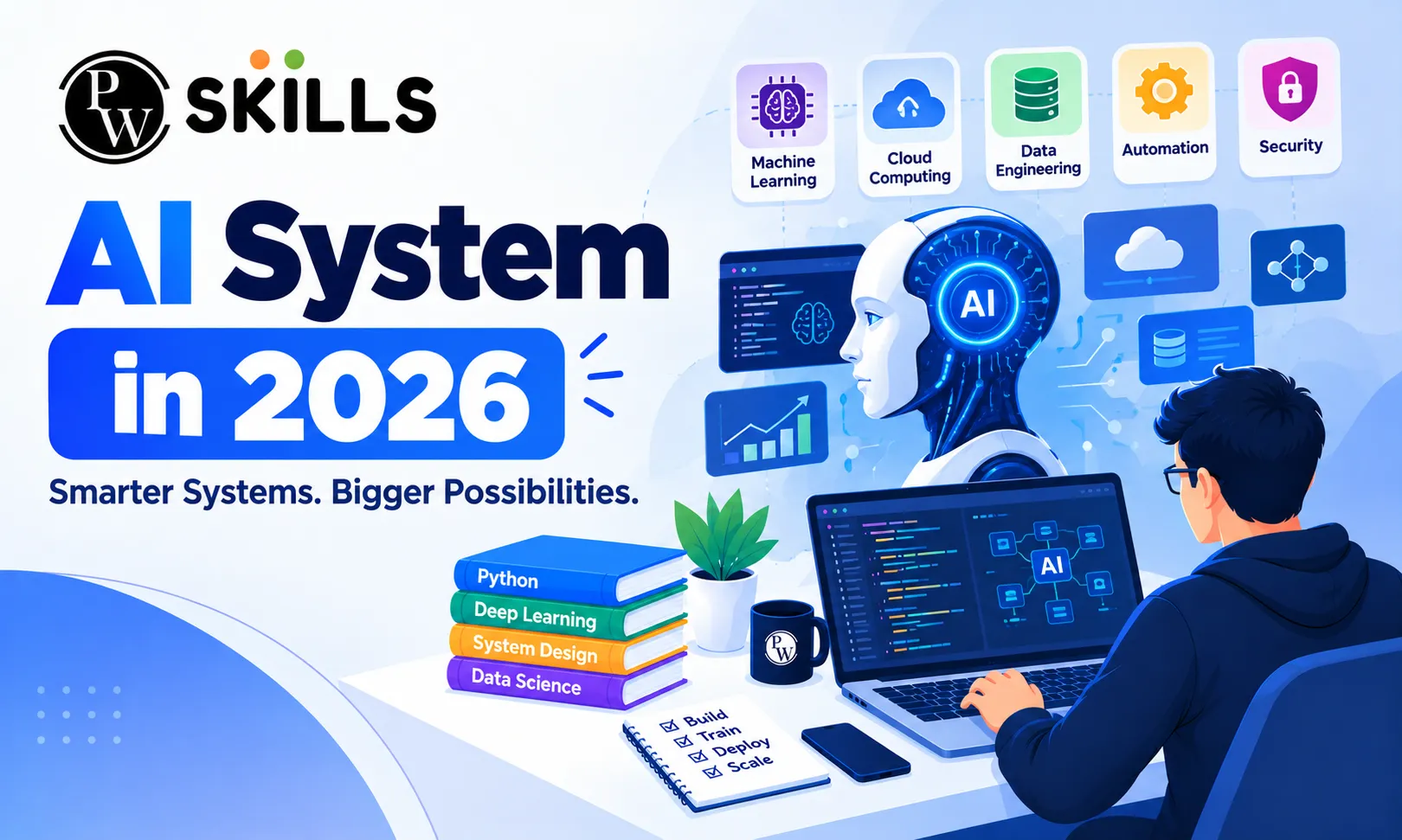
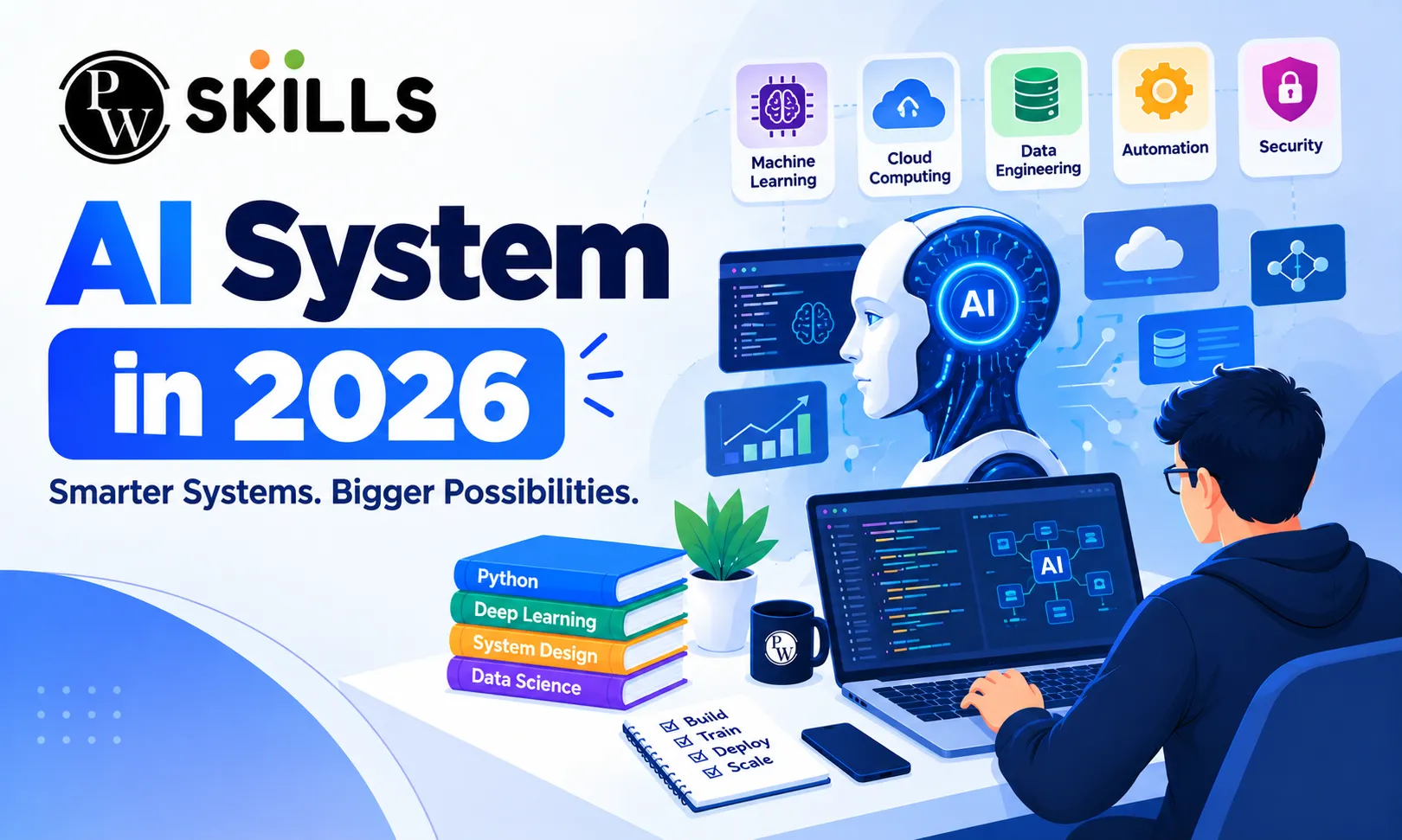
An AI system uses data, algorithms, software, and computing resources to process information and produce useful results. Modern systems can recognize patterns, make predictions, generate content, and support decisions. Understanding how an artificial intelligence system works helps learners explore its main AI components, different types, machine learning processes, and real-world applications.
What Is an AI System?
An artificial intelligence system is a computer-based system that can perform tasks using data, algorithms, and trained models. Depending on its design, it may make predictions, classify information, generate content, recommend products, or support human decision-making. Building an effective artificial intelligence system requires several important parts. These include useful data, suitable algorithms, enough computing power, and software that can process inputs and produce outputs. The exact design depends on what the system needs to do.
The main purpose of an artificial intelligence system is to process information and produce a useful result. For example, an artificial intelligence system can help detect unusual banking transactions, recommend videos, recognize speech, or identify objects in an image. These systems can process large amounts of information much faster than manual methods.
What Are the Main Components of an AI System?
Every working artificial intelligence system contains several parts that work together. These AI components help the system collect information, process it, train or run models, check results, and provide outputs to users.
- Data Ingestion Layer: Collects information from sources such as databases, sensors, websites, applications, or user inputs.
- Processing and Storage Units: Provide the computing and storage needed to handle large datasets and model calculations. GPUs and cloud computing can be used for demanding AI workloads.
- Algorithm Engine: Uses mathematical methods and logical processes to find patterns in data and produce useful results.
- Model Evaluation Framework: Tests a model using suitable measures to check how well it performs and where errors occur.
- User Interface and API: Allows users or other software systems to send inputs and receive results from the AI model.
These AI components do not work separately. Data must reach the processing layer, models must receive suitable inputs, and their results must be checked before they are used. A well-designed system also needs monitoring and updates after deployment.
How Do Machine Learning Systems Work in an AI System?
Machine learning systems are an important part of many modern AI applications. Instead of writing a separate rule for every possible situation, developers train a model using data. The model learns patterns from the training examples and uses those patterns to make predictions or decisions on new inputs.
The process usually starts with collecting and preparing data. The data is then used to train a machine learning model. After training, the model is tested on data that was not used during training. If the results are suitable, the model can be deployed as part of an application.
There are three common types of machine learning:
- Supervised Learning: The model learns from labelled examples where the expected output is already known.
- Unsupervised Learning: The model works with data without predefined labels and can find groups, patterns, or other structures.
- Reinforcement Learning: The system learns through actions and feedback, receiving rewards or penalties based on its results.
The model may be updated or retrained when new data becomes available. This helps machine learning systems remain useful when the data or real-world conditions change.
What Are the Types of AI Systems?
Artificial intelligence systems can be grouped in different ways based on their capabilities and how they use information. Understanding these types helps learners see how different AI applications are designed.
- Narrow AI: Built to perform a specific task or a limited group of tasks. Examples include image recognition, translation tools, recommendation systems, and customer support applications.
- General AI: A theoretical form of AI that would have broad human-like abilities across many different intellectual tasks. General AI has not been achieved.
- Reactive Machines: Systems that respond to current inputs without using stored past experiences to guide their actions.
- Limited Memory: Systems that can use information from previous data or recent observations when producing an output. Many modern AI applications use some form of historical data.
These categories describe different ideas about AI capability. In real projects, developers choose models and system designs based on the task, available data, computing resources, performance needs, and safety requirements.
What Are the Uses of an AI System?
The use of an artificial intelligence system continues to grow across many industries. In healthcare, AI can support medical image analysis and other data-based tasks. In finance, it can help detect unusual transactions and analyze large datasets. In retail, recommendation systems can use customer activity to suggest products or content.
AI is also used in language applications, computer vision, forecasting, robotics, cybersecurity, and business analytics. As these systems become part of more software products, developers need to consider not only model performance but also data quality, privacy, security, cost, and reliability.
Learning the design of an artificial intelligence system can help students understand careers in software development, data science, machine learning, and related technology fields. Knowledge of AI components also helps learners understand what happens behind AI-powered applications.



FAQs
What is the primary role of an AI system?
How do machine learning systems differ from standard software?
What are the most important AI components in software design?
Can beginners build a basic artificial intelligence system?
Why is data quality critical for an AI system?





Get Free Counselling Today
and Clear up all your Doubts
 Live & recorded classes available at easeDashboard for progress trackingLakhs of practice questions

