
Which Business Case Is Better Solved by Artificial Intelligence in 2026?
 Hardik Gupta25 Sept, 2026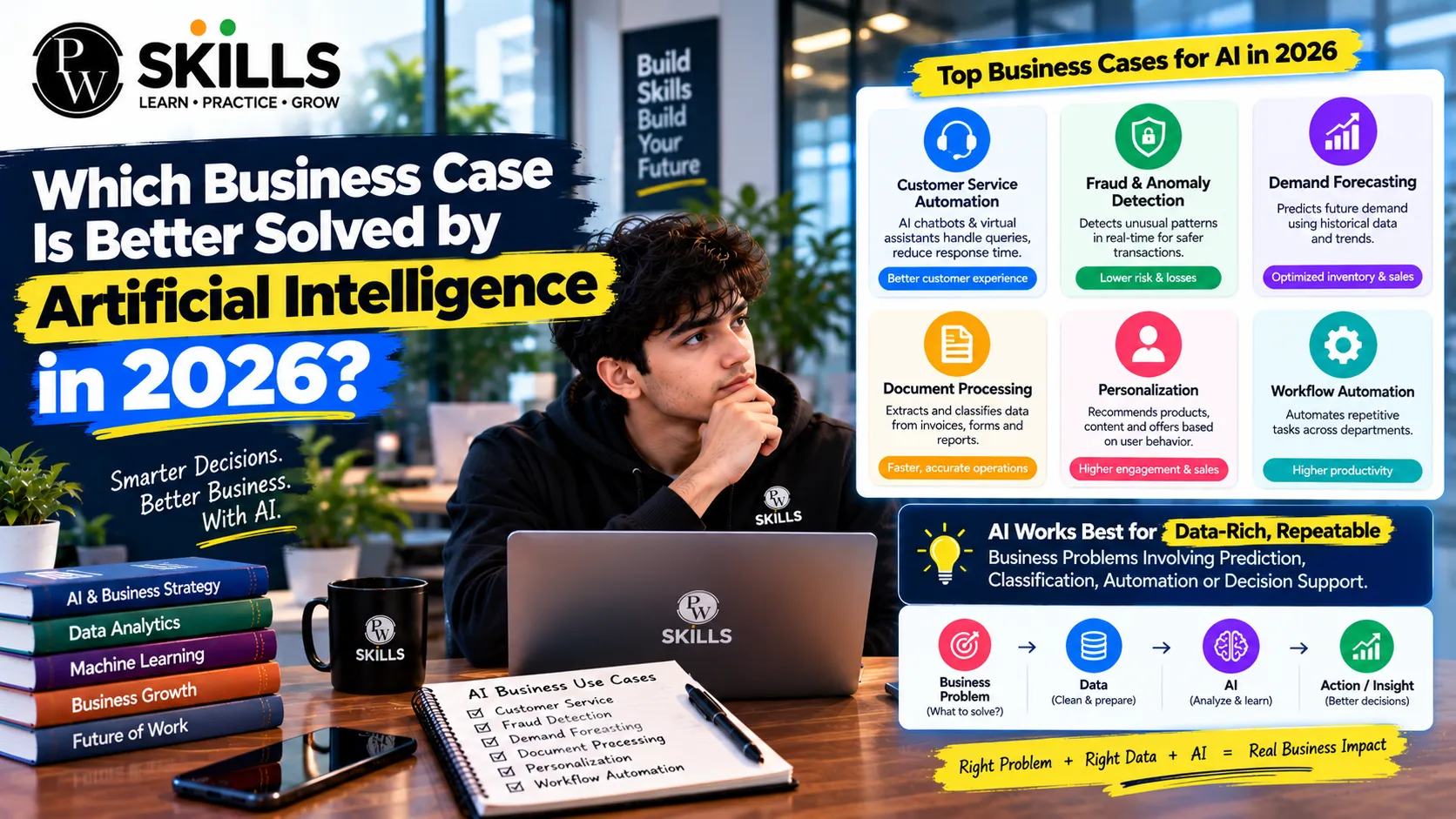
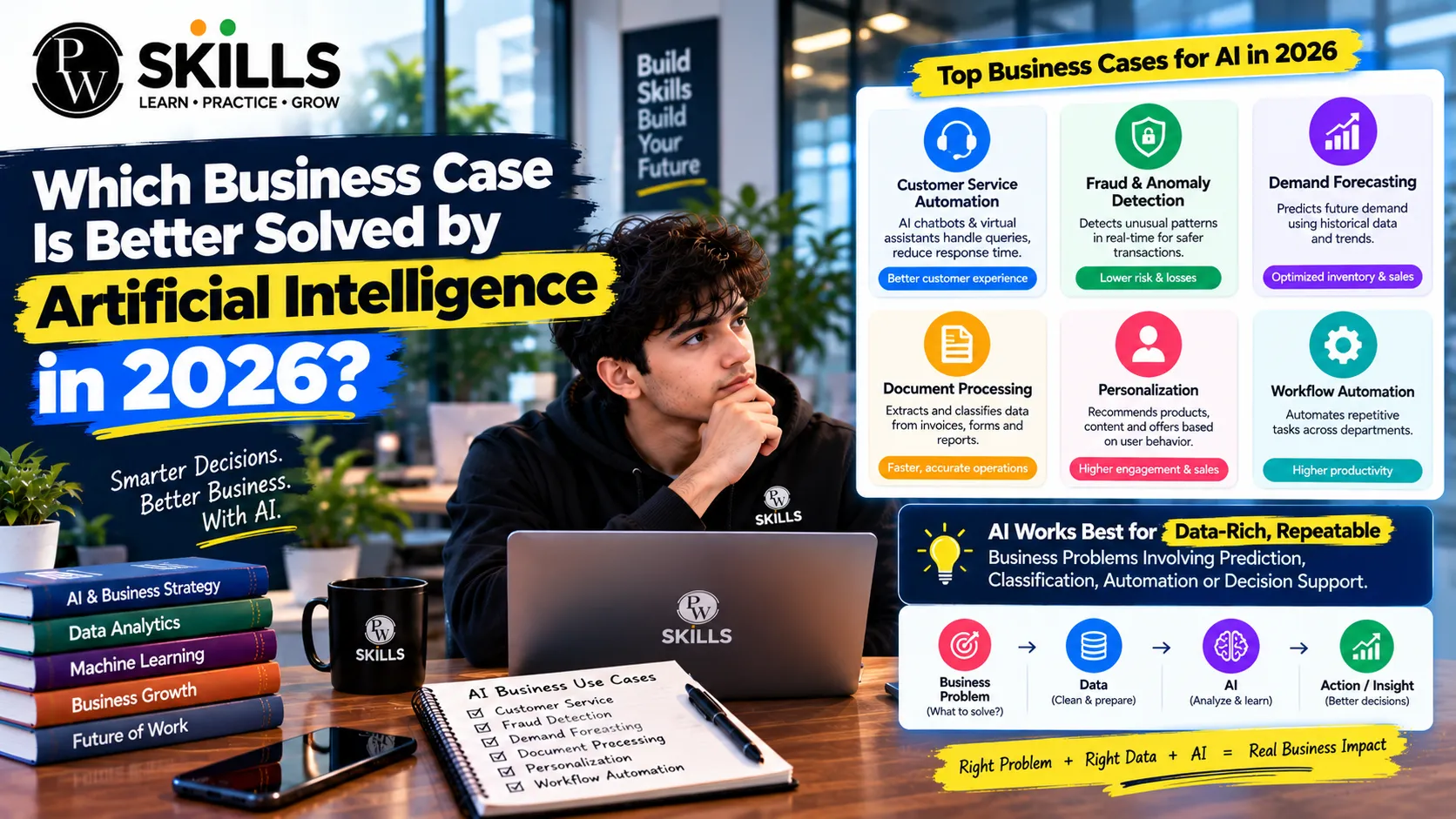
Understanding which business case is better solved by artificial intelligence helps organizations identify tasks where AI can improve speed, accuracy, and efficiency. Businesses handle large amounts of data and repetitive processes every day. Choosing the right use case allows organizations to apply AI where it can reduce manual effort, support better decisions, and improve overall business operations.
Which Business Case Is Better Solved By Artificial Intelligence For Customer Support?
Customer service represents a primary business problem where machine learning infrastructure can deliver strong operational value. Traditional customer support desks struggle with high ticket volumes, long queue times, and repetitive inquiries regarding order statuses or password resets. Among AI business use cases, automated ticket routing and natural language processing agents are particularly useful for handling these repetitive tasks. When evaluating which business case is better solved by artificial intelligence, these intelligent systems can analyse incoming customer queries, identify user intent, and provide immediate responses without human agent intervention.
The use of smart virtual assistants saves operational overhead while maintaining excellent satisfaction metrics. Unlike static rule-based chatbots from earlier decades, contemporary neural architectures may dynamically comprehend context, multi-turn discussions and extract enterprise knowledge base materials. This skill results in tier-one support tickets to resolve immediately. Then human operators will be free to think only about complex troubleshooting scenarios that require a high level of critical thinking and empathy.
|
Support Dimension |
Traditional Human Support |
AI-Powered Support Automation |
|
Response Time |
Minutes to Hours |
Instant (Sub-second) |
|
Operating Hours |
Limited by Shifts (8-12 hours) |
24/7 Continuous Availability |
|
Scalability |
Linear (Requires hiring more staff) |
Elastic (Handles traffic spikes automatically) |
|
Query Handling |
Variable based on agent training |
Consistent adherence to verified company guidelines |
How Does AI Help With Predictive Maintenance?
Industrial manufacturing and supply chain operations can face major losses when heavy machinery fails unexpectedly. Equipment breakdowns can interrupt production, increase repair costs, and delay deliveries. When evaluating which business case is better solved by artificial intelligence, predictive maintenance is a strong use case because AI can analyse equipment data continuously and identify early signs of failure.
Predictive maintenance systems use IoT sensors to collect information such as vibration, temperature, pressure, and energy consumption. Machine learning models compare this data with historical equipment patterns to detect unusual changes that may indicate component wear or mechanical problems.
Instead of relying only on fixed maintenance schedules, teams can receive alerts when equipment shows signs of potential failure. This allows technicians to inspect or repair components before a major breakdown occurs. AI can also help businesses plan spare-part requirements based on predicted maintenance needs.
By identifying problems earlier, predictive maintenance can help reduce unplanned downtime, improve equipment reliability, extend machinery life, and support better maintenance planning.
How Can AI Improve Document Processing And Enterprise Search?
Unstructured text documents create significant administrative work across legal, financial, and healthcare sectors. Processing invoices, regulatory filings, contracts, and records manually can consume considerable time. When evaluating which business case is better solved by artificial intelligence, document processing and enterprise search are useful examples because AI can quickly analyse large volumes of text and identify relevant information.
Modern natural language processing systems can extract financial figures, identify contract clauses, classify documents, and organise information automatically. Employees can search lengthy manuals, reports, and internal documents using natural language instead of reviewing each file manually.
Retrieval-augmented generation (RAG) can further connect AI systems with internal document repositories. Employees can ask questions in conversational language and receive responses based on relevant company documents. This can reduce search time, simplify information access, and help teams handle large document collections more efficiently.
How Does AI Support Supply Chain And Logistics Operations?
Global supply networks experience constant changes due to fluctuating consumer demand, fuel price shifts, weather conditions, and unexpected disruptions. Traditional forecasting methods may struggle to respond quickly to these changes. Determining which business case is better solved by artificial intelligence highlights inventory forecasting and dynamic route optimisation as useful applications.
AI systems can analyse multiple data sources, including historical sales, weather reports, local traffic conditions, and real-time point-of-sale transactions. Machine learning models use these patterns to forecast demand more accurately and help businesses maintain suitable inventory levels. This can reduce both excess stock and shortages.
AI can also support logistics teams by adjusting delivery routes based on traffic, weather, and changing delivery requirements. Automated route planning can help reduce unnecessary travel time and fuel consumption while improving delivery coordination.
By applying AI across forecasting and logistics operations, businesses can make faster data-based decisions, reduce operational waste, and respond more efficiently to changes in supply and demand.
How Is AI Used For Fraud Detection?
Fraud detection is another business case where artificial intelligence can analyse large volumes of transactions and identify unusual patterns. Banks, payment platforms, and online businesses can use machine learning models to compare current transactions with historical behaviour and flag activity that may require further review.
AI systems can process multiple factors at once, such as transaction amount, location, frequency, device information, and user behaviour. Machine learning models can learn from previous transaction patterns and identify activity that differs from normal behaviour. This helps organisations monitor transactions more efficiently without manually checking every payment.
AI can also support real-time fraud monitoring by analysing transactions as they occur and generating alerts when potentially suspicious activity is detected. Fraud teams can then review these alerts and take appropriate action. This makes AI useful for handling high transaction volumes while supporting faster and more consistent fraud detection processes.
How Does AI Improve Quality Control In Manufacturing?
Manufacturing businesses can also use artificial intelligence for automated quality inspection. Computer vision systems can analyse images of products and identify visible defects, missing components, incorrect assembly, or inconsistencies during production. AI models can be trained using examples of acceptable and defective products to recognise patterns that may be difficult to identify through manual inspection.
Unlike manual inspection, AI-powered systems can process large numbers of products continuously and apply consistent inspection criteria across production lines. When a potential defect is detected, the system can alert quality teams for further review. This helps manufacturers identify issues earlier, reduce inspection workload, minimise defective products, and maintain more consistent quality standards.



FAQs
Which business case is better solved by artificial intelligence in enterprise environments?
What are the primary artificial intelligence applications used in modern businesses?
How does AI automation differ from traditional software scripts?
Which business problems solved by AI yield the fastest financial return?
Do developers need specialized training to build business AI solutions?





Get Free Counselling Today
and Clear up all your Doubts
 Live & recorded classes available at easeDashboard for progress trackingLakhs of practice questions

