
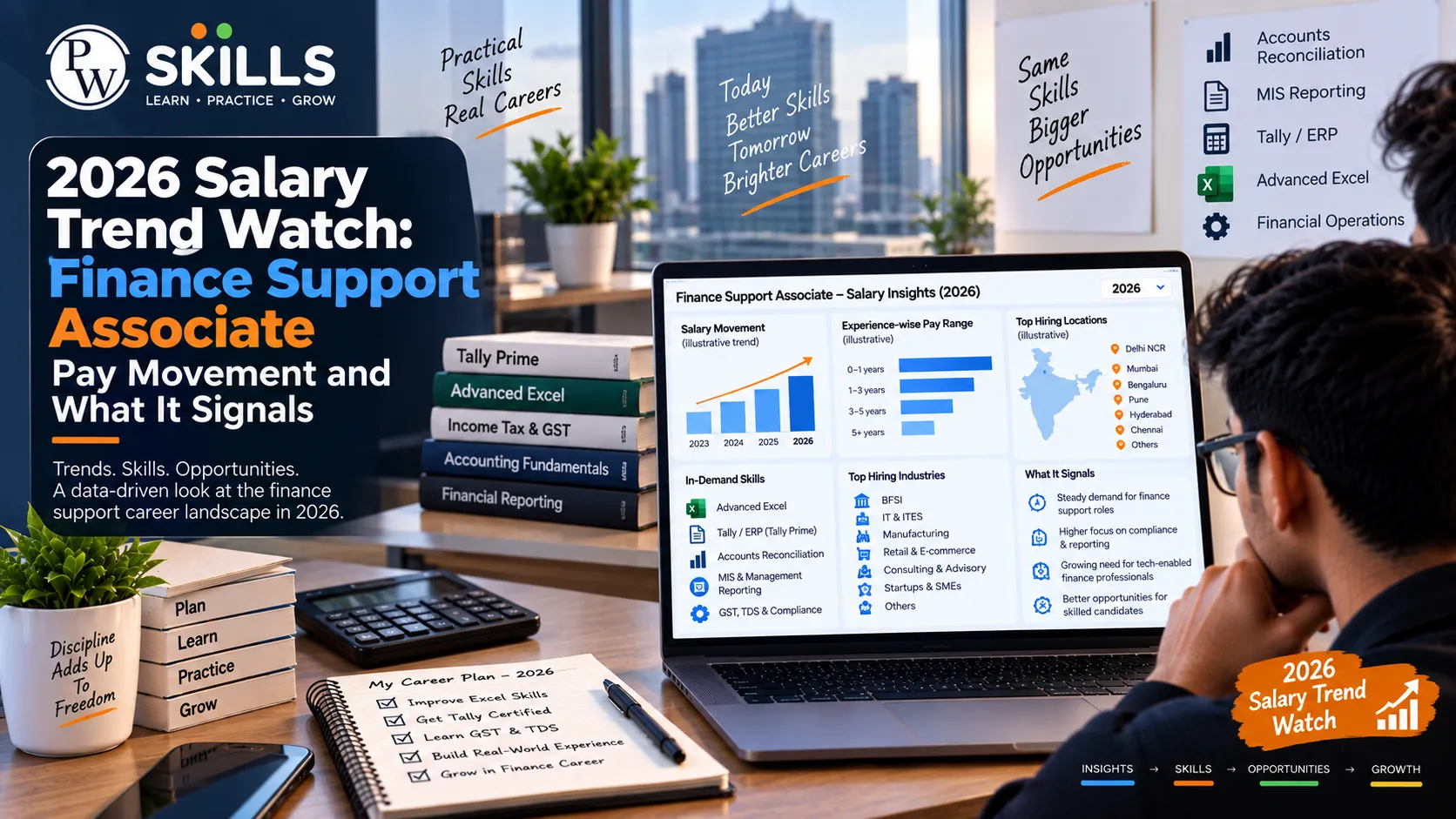
2026 Salary Trend Watch: Finance Support Associate Pay Movement and What It Signals
 Hardik Gupta21 Sept, 2026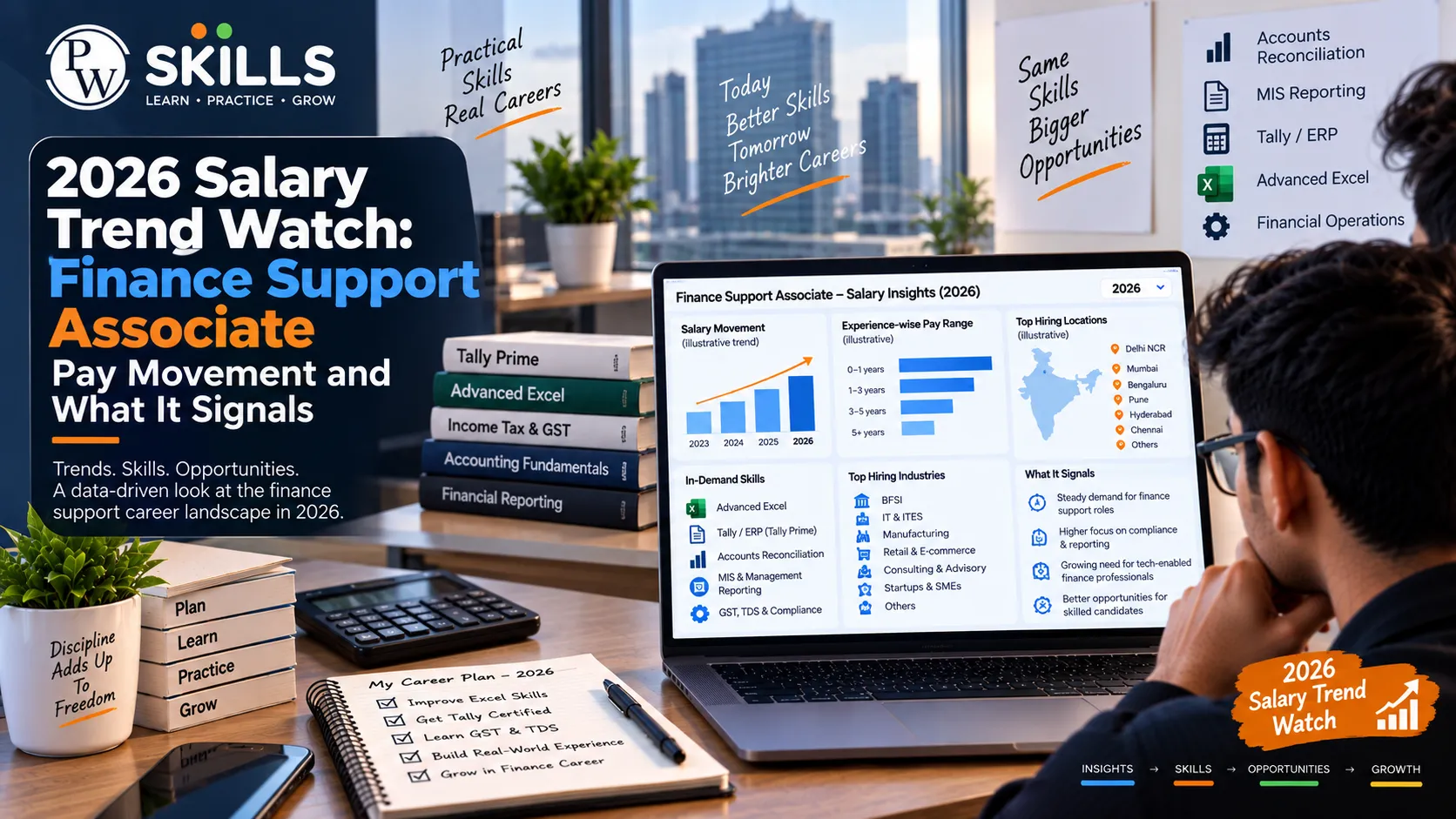
Navigating modern corporate accounting environments requires sharp precision, especially with recent regulatory pivots emerging from the GST Council Updates. Organizations are actively restructuring payroll brackets to attract candidates who display multi-faceted competencies.
Learners frequently face the hurdle of bridging technical gaps between theoretical accounting and live portal implementations. Acquiring NISM & Tally Certification Courses directly tackles this challenge by building robust practical foundations. Employers no longer settle for basic data entry operators; they demand dynamic personnel capable of handling automated ledger entries, tax filings, and market compliance seamlessly.
What are NISM & Tally Certification Courses?
NISM & Tally courses cover areas such as securities markets, investment products, and financial regulations, while Tally training helps learners manage accounting entries, invoices, ledgers, GST, and financial reports. Together, these courses can help freshers and finance professionals build job-ready skills and prepare for roles in accounting, finance, operations, and financial services.
Why NISM & Tally Certification Courses Drive Pay Growth
Financial institutions and corporate firms often value candidates who can perform their work accurately with limited basic training. Practical knowledge of accounting software and financial processes can therefore support career growth.
NISM & Tally courses can help candidates develop skills that are useful across different finance environments.
-
Enhanced Accuracy: Practical software training can help reduce errors in routine accounting and record management.
-
Regulatory Readiness: Financial market and compliance knowledge can help candidates understand important rules and processes.
-
Faster Career Mobility: A broader skill set can help professionals move from basic support work toward more specialized finance roles.
Higher pay usually comes with greater responsibility, experience, and specialized skills. Candidates should therefore treat certification as one part of a wider career development plan.
How Do NISM & Tally Certification Courses Prepare You for Securities Jobs?
Following Securities Market Professional Jobs News can help candidates understand which skills are becoming more important in financial services. Changes in regulations, digital systems, and market operations can create new responsibilities for finance support teams.
Some common areas employers may focus on include:
-
Compliance Support: Employees may assist with documentation and regulatory processes.
-
Financial Reporting: Accurate reports and records are important for internal and external requirements.
-
Digital Skills: Finance teams increasingly use software and online systems for daily work.
-
Market Knowledge: Basic understanding of financial products can be useful in firms connected to securities and investments.
Candidates who follow employment trends can use this information to decide which skills they should improve before applying for new roles.
How Do NISM & Tally Certification Courses Support Salary Growth?
Companies often use competitive salaries, bonuses, and other benefits to attract skilled employees. This can be understood through the Salary-hook approach, where compensation becomes an important factor in attracting candidates with useful and specialized skills.
For finance support professionals, compensation may vary based on experience, location, company size, job responsibilities, and technical skills.
Common factors that can affect compensation include:
-
Performance Bonuses: Some organizations provide incentives based on performance and targets.
-
Experience-Based Increments: Employees can receive higher pay as they take on more responsibilities.
-
Skill-Based Value: Knowledge of accounting software, reporting, compliance, and financial operations can improve a candidate's overall profile.
Candidates should research the role and responsibilities before discussing salary. A clear understanding of their own skills also gives them a stronger position during salary negotiations.
How Do NISM & Tally Certification Courses Prepare You for GST Updates?
Finance support teams must keep up with changes in taxation and reporting systems. GST Council Updates can affect how businesses manage invoices, tax records, returns, and related accounting processes.
For finance support professionals, some important areas include:
-
Input Tax Credit Matching: Accurate invoice records are important when checking eligible credits.
-
Portal Processes: Employees need to understand digital filing and verification procedures.
-
Tax Changes: Updates to tax rules can require businesses to review their accounting and billing processes.
Finance Support Associates do not need to become tax experts for every role. However, basic awareness of relevant tax processes can help them perform accounting tasks more accurately and communicate better with senior finance teams.
Also Explore our Course : TallyPrime Advance with GST Accounting
What Skills Do NISM & Tally Certification Courses Teach?
Salary growth is not based on certification alone. Employers may also look at how well a candidate can perform practical tasks.
Useful skills can include:
-
Tally and other accounting software
-
Financial record management
-
Invoice processing
-
Reconciliation
-
Basic taxation knowledge
-
Documentation
-
Communication skills
-
Data accuracy
Candidates who develop several connected skills can become more useful to their teams. For example, someone who can maintain records, identify errors, prepare reports, and communicate issues clearly may handle more responsibilities than someone who only performs basic data entry.
How Do NISM & Tally Certification Courses Support Career Growth?
A Finance Support Associate can start with basic accounting and administrative responsibilities and gradually move toward more specialized positions. Career growth depends on experience, performance, qualifications, and the type of organization.
Possible career directions may include:
-
Senior Finance Associate
-
Accounts Executive
-
Finance Executive
-
Accounts Payable or Receivable Specialist
-
Compliance Support Executive
-
Financial Operations Associate
NISM & Tally courses can support this journey by giving candidates a broader understanding of financial operations. NISM-related learning can add financial market knowledge, while Tally can build practical accounting software skills.
Professionals can later add Excel, Power BI, taxation, financial analysis, or other specialized skills based on their career goals.
How Can Freshers Prepare With NISM & Tally Certification Courses?
Fresh graduates often have strong academic knowledge but limited workplace experience. They can improve their profile by focusing on practical learning before applying.
A simple preparation plan can include:
-
Build strong accounting basics.
-
Learn Tally and Excel.
-
Understand common finance support tasks.
-
Learn basic compliance and taxation concepts.
-
Complete relevant certifications.
-
Practice real-world accounting examples.
-
Create a resume that clearly shows practical skills.
-
Apply for roles that match their current abilities.
Freshers should also avoid applying only because a job has a high salary. The role's responsibilities, learning opportunities, and career path are equally important for long-term growth.
How Do NISM & Tally Certification Courses Help You Understand Salary Trends?
Salary numbers can differ widely between companies and locations, so candidates should not depend on one salary figure. Instead, they can compare several job listings and look for repeated patterns.
Candidates should check:
-
Required years of experience
-
Software requirements
-
Certification requirements
-
Job responsibilities
-
Location
-
Industry
-
Seniority level
-
Additional benefits
Following Securities Market Professional Jobs News and other finance employment updates can also help candidates understand changing demand. Combining this information with personal skill development can create a more realistic salary and career plan.



FAQs
What role do NISM & Tally courses play in salary increments?
How do GST Council Updates impact daily accounting tasks?
Why is Securities Market Professional Jobs News relevant for finance associates?
What is a Salary-hook in corporate recruitment?
How can fresh graduates prepare for high-paying finance support roles?





Get Free Counselling Today
and Clear up all your Doubts
 Live & recorded classes available at easeDashboard for progress trackingLakhs of practice questions

