

A Beginner's Guide to India's Securities Market
 Praveen Singh1 Jul, 2026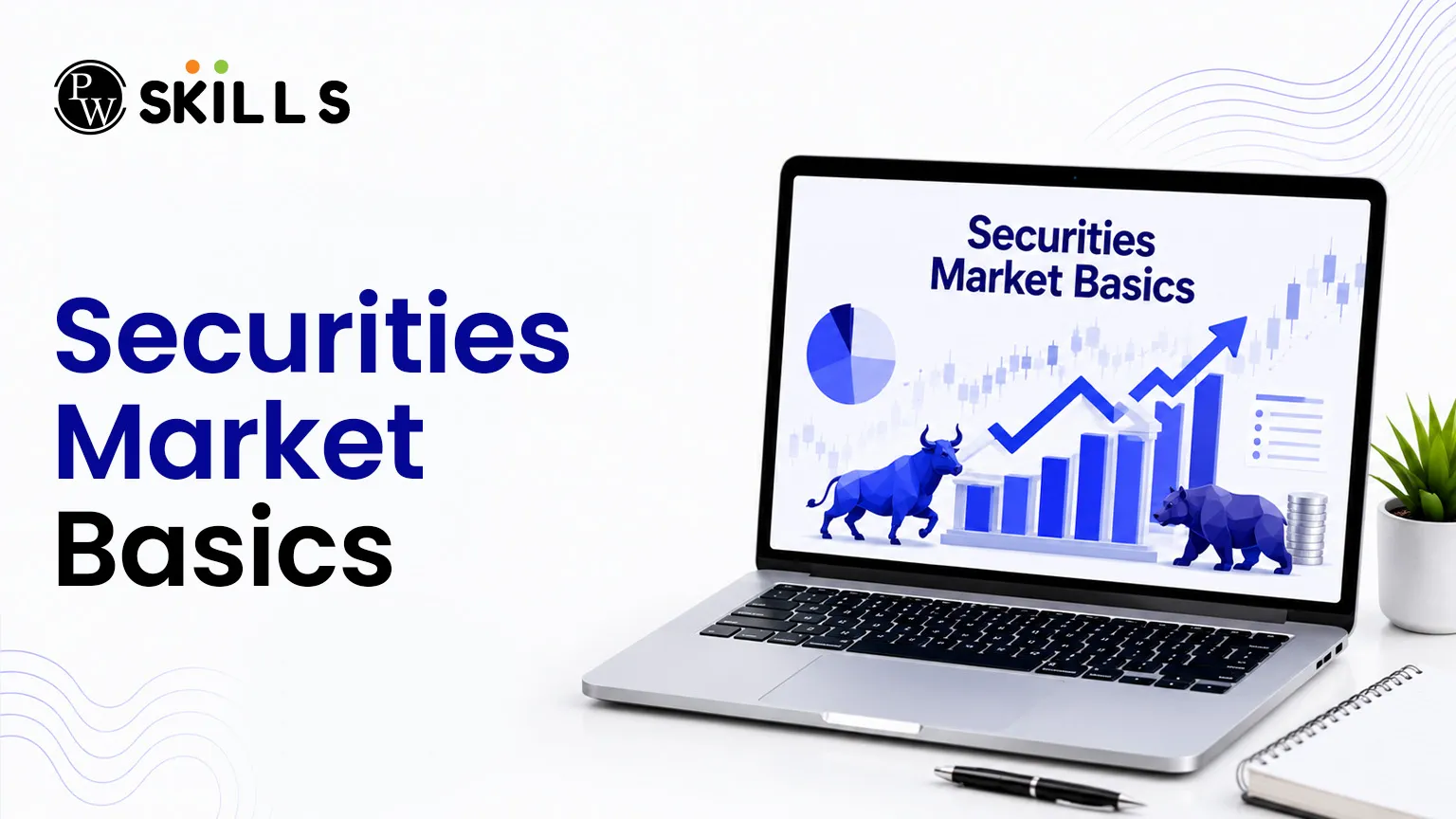
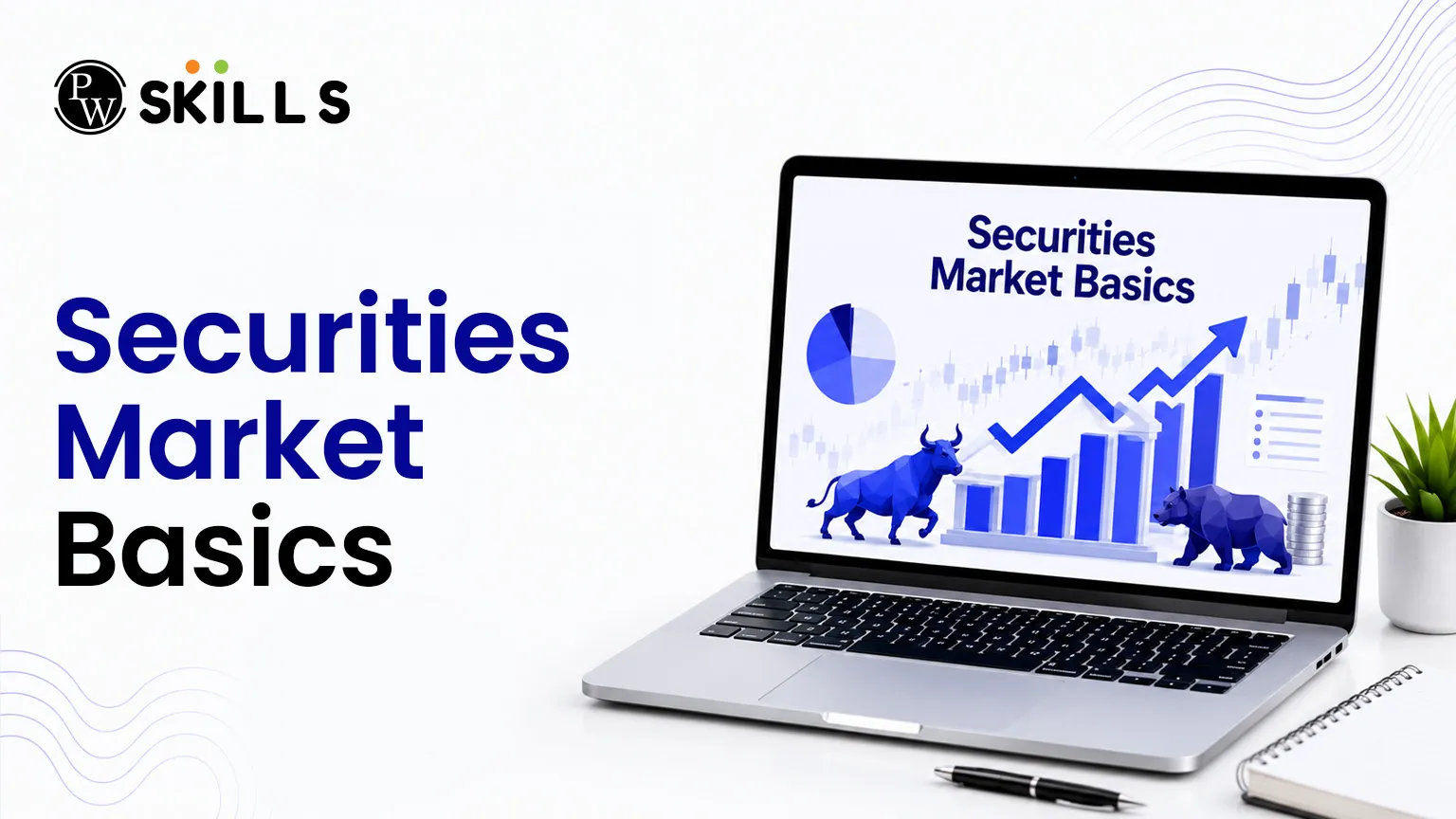
The first step in making informed investing selections is knowledge of the financial markets. Securities Market Basics covers the functioning of the securities market in India, the involvement of different market participants and the fundamentals of investing. These concepts can help you feel more confident about navigating the stock market and set the foundation for solid long-term financial progress.
What Are Securities Market Basics
A securities market is essentially a controlled arena in which the surplus money of savers are directed to those who require capital for growth. Just as a typical marketplace connects buyers and sellers of real things, this financial ecosystem promotes the interchange of financial products.
Under the Securities Contracts Regulation Act (SCRA), a security is defined as a financial instrument that is capable of being traded in the exchange and has an underlying value. These are formal contracts that define the terms of trade between the fund seeker and the investor.
Read More: Top 15 Biggest Stock Markets in The World
The Two Major Asset Classes
The market segments financial instruments into two major foundational blocks:
-
Equity Securities: These represent residual ownership in a business enterprise. When you buy equity shares, you participate in the company's risks and rewards. While equity offers the potential for long-term capital growth and dividend payouts, these returns are never guaranteed. Equity securities are perpetual in nature and do not mature.
-
Debt Securities: These act as structured loans where the investor acts as the lender and the issuer acts as the borrower. Debt instruments, such as bonds or debentures, are issued for a specific period to raise money at a reasonable cost. They give investors a prioritised claim on cash flows through periodic interest payments and principal repayment at maturity.
The Lifecycle of Trading Segments
The market functions across distinct segments that cater to the life cycle of a security:
-
Primary Market: The market where new issues of securities are sold to the public for the first time by firms or governments. This comprises initial public offerings (IPOs), rights issuance or private placement to raise fresh funds.
-
Secondary Market: After a security is issued in the main market, it is transferred to the secondary market for regular trading. This is the typical trading market in which investors purchase and sell existing shares among themselves, providing price discovery and instant liquidity without impacting the basic capital of the issuer.
-
Derivatives Market: This segment deals with specialised financial contracts such as futures and options whose pricing is derived from an underlying asset (such as an equity share or index). Derivatives are not an ownership form but are used by market participants mainly to manage risk, hedge portfolios or trade on price changes.
Key Participants in Securities Market Basics
It’s an interconnected network of participants, and that builds a transparent financial ecosystem. Each actor has a part to play in making sure that capital transfers safely from a saver’s bank account into productive company assets.
Essential Market Intermediaries
To execute a single trade in the Indian securities market, several specialized service providers operate behind the scenes:
-
Stockbrokers: Registered trading members of stock exchanges who execute buy and sell orders on behalf of retail and institutional clients. They also market IPOs and offer research advice.
-
Depository Participants (DPs): Agents acting as the vital link between retail investors and central electronic depositories (such as NSDL and CDSL). They hold physical shares securely in an electronic format within a Demat account.
-
Clearing Members: Specialized financial entities responsible for the daily clearing and settlement of trades. They ensure that the buyer receives the shares and the seller receives the money without default.
-
Registrars & Transfer Agents (RTAs): Back-end operators who maintain the definitive ownership records on behalf of corporate issuers. They manage the retail allotment of IPOs and process corporate actions like dividends.
-
Asset Management Companies (AMCs): Firms that pool capital from thousands of individual investors to manage mutual fund schemes, diversifying systemic risks across highly structured portfolios.
-
Investment Bankers: Corporate financial advisors who structure IPOs, manage corporate debt issuances, and ensure compliance before a company lists on an exchange.
-
Credit Rating Agencies: Analytical bodies that evaluate debt securities based on an issuer's financial ability to service interest and principal payments on time.
Stock Exchanges and Regulators in Securities Market Basics
Maintaining absolute market integrity requires strict structural oversight. Without a firm legal architecture, public confidence in stock market fundamentals would collapse. The system uses a multi-layered regulatory approach involving national watchdogs and frontline market infrastructure institutions.
Frontline Infrastructure Providers
Stock exchanges provide the state-of-the-art technological framework that makes instant electronic trading possible. In India, institutions like the National Stock Exchange (NSE) and the Bombay Stock Exchange (BSE) enforce the first level of market discipline.
They provide continuous automated order-matching systems, publish real-time price feeds, and mandate strict corporate governance disclosures for listed companies.
The Nodal Regulator: SEBI
The Securities and Exchange Board of India (SEBI) acts as the principal statutory watchdog governing the market. Operating under the guidelines of the SEBI Regulations, its operational mandate focuses on three core pillars:
-
Protecting the Interests of Retail Investors: Ensuring fair treatment, preventing fraudulent market manipulation, and providing robust grievance channels.
-
Facilitating Orderly Market Growth: Codifying practical regulations that govern intermediaries, introducing safer settlement cycles, and modernising digital trading platforms.
-
Maintaining Market Integrity: Enforcing strict compliance rules, monitoring insider trading activities, and auditing exchanges daily.
Investor Safety Mandate: SEBI requires a single, unified Know Your Customer (KYC) compliance standard across the financial ecosystem. Investors must update six mandatory core attributes: Name, PAN, verified Address, Mobile Number, Email ID, and Income Range. This prevents unauthorized transactions and ensures instant trade notifications.
Overlapping Regulatory Authorities
While SEBI retains core command over capital assets, other apex institutions oversee adjacent financial sectors:
-
Reserve Bank of India (RBI): Regulates the highly critical money market segment, manages government debt issuance programs, and oversees exchange-traded currency derivatives.
-
Ministry of Corporate Affairs (MCA): Administers the provisions of the Companies Act 2013, ensuring correct corporate administration, strict financial audits, and lawful corporate structure formation.
-
Ministry of Finance (MoF): Responsible for macro-economic policy formulation within the Department of Economic Affairs, national structural changes and legal enactment of acts relating to the financial markets.
Benefits of Securities Market Basics
Developing a functional understanding of Securities Market Basics offers tangible advantages for individual financial growth and national economic stability.
-
Efficient Capital Allocation: The approach ensures that household savings do not lie idle in inefficient physical assets. Rather, it methodically channels such monies into high-growth corporate sectors, financing technological advancements and national infrastructure projects.
-
Enhanced Liquidity and Price Discovery: In secondary stock markets, investors can sell their financial securities for cash nearly instantaneously. The continuous volumes of buying and selling ensure that the pricing of assets is transparent and market-driven based on real-time supply and demand.
-
Wealth Creation for Retail Savers: It gives ordinary people a tangible way to overcome inflation over lengthy periods of time. Buying shares gives ordinary people the chance to share directly in the commercial success of the best companies.
-
Robust Investor Protection and Risk Mitigation: Clearing houses guarantee no counterparty defaults in any trade settlement. Mutual funds, diversified derivatives and other vehicles also provide participants with an efficient way to hedge certain portfolio exposures.
Read In Detail: The Complete Beginner's Guide to Stock Market Investing





A Beginner's Guide to India's Securities Market FAQs
What is the primary difference between the primary and secondary markets?
Why does SEBI enforce mandatory KYC attributes for investors?
How do debt securities differ fundamentally from equity securities?
What unique function do Depository Participants perform for retail accounts?
Who regulates the money market and government debt programs in India?





Get Free Counselling Today
and Clear up all your Doubts
 Live & recorded classes available at easeDashboard for progress trackingLakhs of practice questions

