
2026 Salary Trend Watch: GST Executive Pay Movement and What It Signals
 Hardik Gupta21 Sept, 2026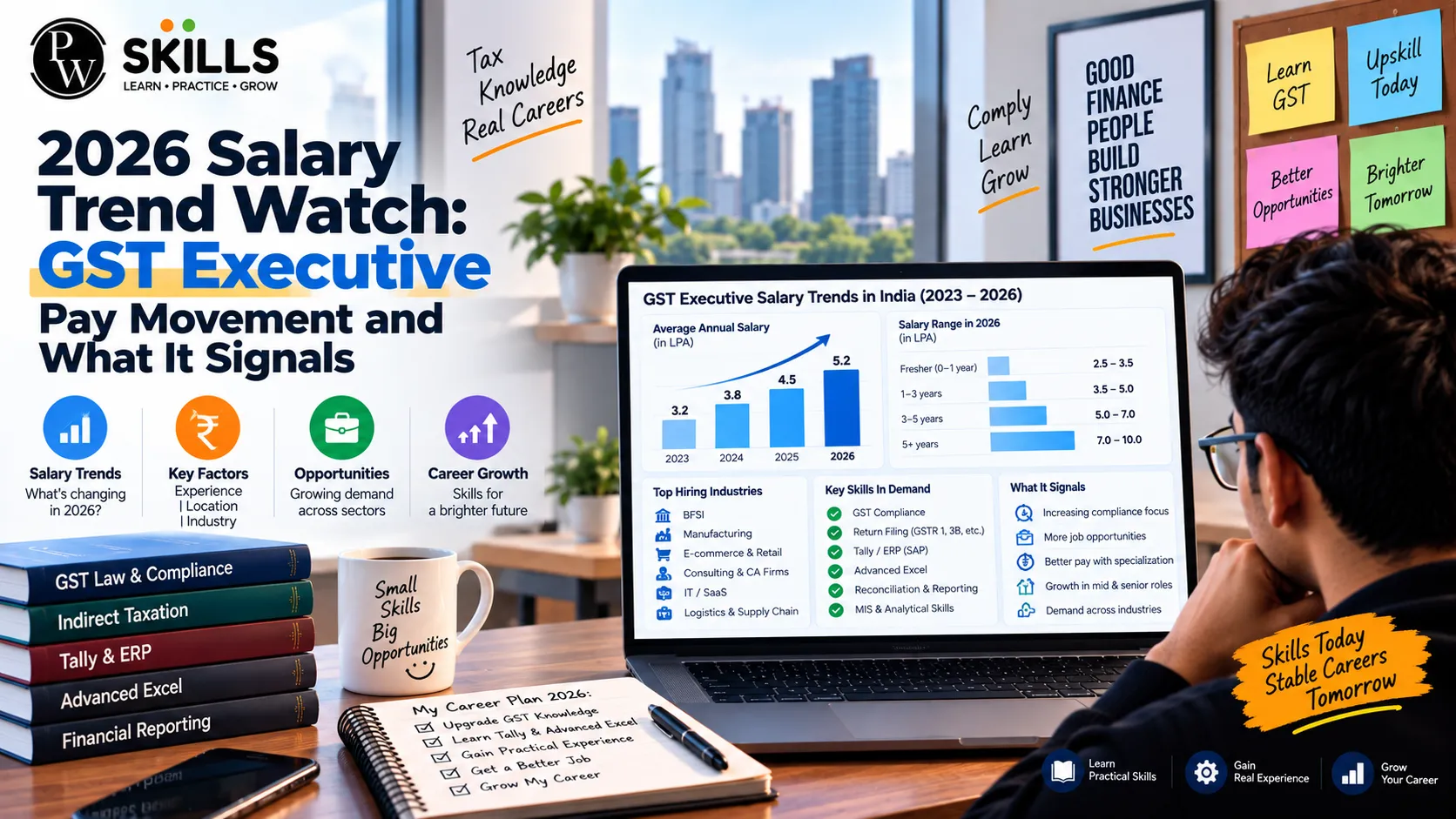
Navigating modern financial compliance requires more than basic theoretical knowledge. Organizations face tighter regulatory audits, making skilled professionals important for daily operations. Recent changes in taxation and compliance mean that companies increasingly look for trained talent.
Professionals tracking the latest Tally/Accounts Executive Jobs News understand that basic bookkeeping alone may not lead to better opportunities. NISM & Tally Certification Courses can help candidates build practical accounting, tax, and financial skills that match current industry needs.
Why Is NISM & Tally Certification Courses Important?
NISM & Tally Courses are important because they help learners build practical skills in financial markets, accounting, taxation, and financial operations. NISM learning provides knowledge of securities markets and related financial concepts, while Tally training helps learners practise accounting entries, ledgers, invoices, GST, and financial reports.
These skills can help freshers and working professionals become more job-ready and match the practical requirements of finance and accounting roles. When combined with Excel, communication skills, and practical experience, these courses can support better career growth and wider job opportunities.
How Do NISM & Tally Certification Courses Match NSDC-FICCI Skill Trends?
The NSDC-FICCI Skill Gap Report can be used as part of a wider understanding of India's workforce and skill requirements. NSDC maintains sector reports and skill studies covering workforce requirements across industries, including banking, financial services, and insurance.
For finance professionals, the larger lesson is that employers need people who can apply their knowledge in real work environments.
-
Digital Skills: Finance teams increasingly depend on software and digital systems.
-
Practical Knowledge: Employers need professionals who can perform daily tasks accurately.
-
Skill Alignment: Training becomes more useful when it matches actual job requirements.
-
Continuous Learning: Professionals need to update their skills as processes and technology change.
Candidates can use such reports to understand broad workforce trends rather than treating them as direct salary guarantees.
Also Explore : TallyPrime Advance with GST Accounting
How Do NISM & Tally Certification Courses Prepare You for Tally Accounts Jobs?
Following Tally/Accounts Executive Jobs News can help candidates understand what companies are asking for in current vacancies. Job descriptions often provide more useful information than vacancy numbers alone.
Common requirements may include:
-
Tally or other accounting software
-
GST and taxation basics
-
Bank reconciliation
-
Invoice processing
-
Ledger maintenance
-
Accounts payable and receivable
-
Documentation and audit support
Employers may also expect candidates to learn company-specific systems after joining. This makes basic software knowledge valuable, but candidates should continue building their skills beyond one tool.
How Do NISM & Tally Certification Courses Prepare You for GST Jobs?
GST work has become closely connected with digital accounting and online compliance processes. Finance teams may need to check invoices, reconcile records, review tax information, and support timely filings.
This has changed the nature of many entry-level accounting roles.
Earlier, a candidate might have focused mainly on recording transactions. Today, the same professional may also need to understand how accounting data moves between software systems and tax platforms.
Important skills include:
-
Checking invoice details
-
Supporting reconciliation
-
Identifying mismatches
-
Maintaining digital records
-
Preparing information for GST filings
-
Following internal compliance processes
This shift can increase the value of candidates who understand both accounting concepts and the software used to apply them.
How Do NISM & Tally Certification Courses Support Salary Growth?
The modern salary-hook is not limited to a high starting salary. Employers may use competitive pay, incentives, benefits, and career progression to attract candidates with useful skills.
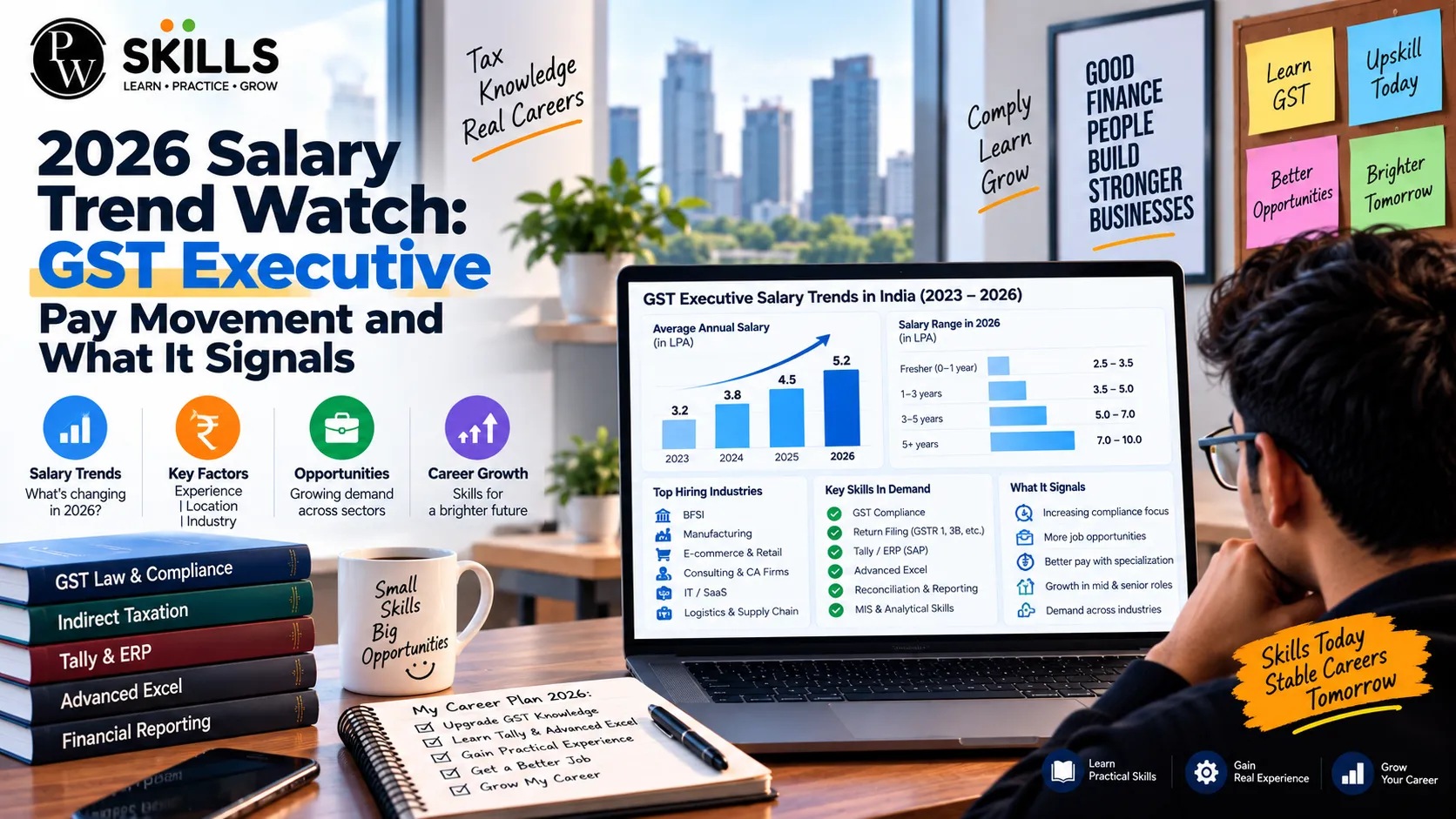
For GST and accounting professionals, salary growth can depend on several factors:
-
Experience: Professionals generally gain more responsibility as they become experienced.
-
Specialization: Skills in taxation, compliance, reporting, or financial analysis can support career progression.
-
Software Knowledge: Strong accounting and reporting software skills can improve workplace productivity.
-
Industry: Pay can vary across sectors such as manufacturing, retail, IT services, consulting, and financial services.
-
Location: Salary levels can differ between cities and regions.
Candidates should therefore compare the complete role instead of focusing only on the advertised salary.
What Skills Do NISM & Tally Certification Courses Teach?
A GST Executive can gradually move into broader accounting, taxation, or finance positions. Building additional skills can make this transition easier.
Useful areas include:
-
GST compliance
-
Direct and indirect taxation
-
Advanced Excel
-
Financial reporting
-
Reconciliation
-
Payroll basics
-
ERP systems
-
Data analysis
-
Audit support
A professional who starts with GST work can later explore positions such as Accounts Executive, Taxation Executive, Senior Accounts Executive, Finance Executive, or Compliance Executive, depending on experience and qualifications.
How Can Freshers Prepare With NISM & Tally Certification Courses?
Fresh commerce graduates often face strong competition because many applicants have similar academic qualifications. Practical training can help them show employers that they have taken additional steps toward workplace readiness.
NISM & Tally Courses can provide exposure to financial markets, accounting software, and related concepts. However, freshers should combine certification with practical projects, Excel skills, communication, and basic taxation knowledge.
A strong fresher profile can include:
-
Commerce degree
-
Relevant certifications
-
Tally skills
-
Excel knowledge
-
GST basics
-
Academic or practical projects
-
Internship experience
-
Clear understanding of finance tasks
This approach gives recruiters more information than a degree alone.
How Do NISM & Tally Certification Courses Support Career Growth?
Professionals who want better compensation should focus on increasing the value they can provide to an employer.
A simple approach is:
-
Identify skills required in current job listings.
-
Compare them with your existing skills.
-
Learn the missing tools or concepts.
-
Gain practical experience through projects or work.
-
Update your resume with measurable responsibilities.
-
Track Tally/Accounts Executive Jobs News regularly.
-
Apply for roles that match your growing skill level.
Salary growth is usually a gradual process. Continuous learning and greater responsibility can be more valuable than completing certifications without practical application.



FAQs
How do NISM & Tally Certification Courses impact 2026 salary trends?
What insights does the NSDC-FICCI Skill Gap Report provide for finance professionals?
Where can job seekers find reliable Tally/Accounts Executive Jobs News?
What makes a candidate eligible for a strong salary-hook in corporate taxation?
Are these certifications suitable for fresh commerce graduates?





Get Free Counselling Today
and Clear up all your Doubts
 Live & recorded classes available at easeDashboard for progress trackingLakhs of practice questions

