
2026 Hiring Outlook for Tally/Accounts Executives: Reading Between the Job-Portal Numbers
 Hardik Gupta21 Sept, 2026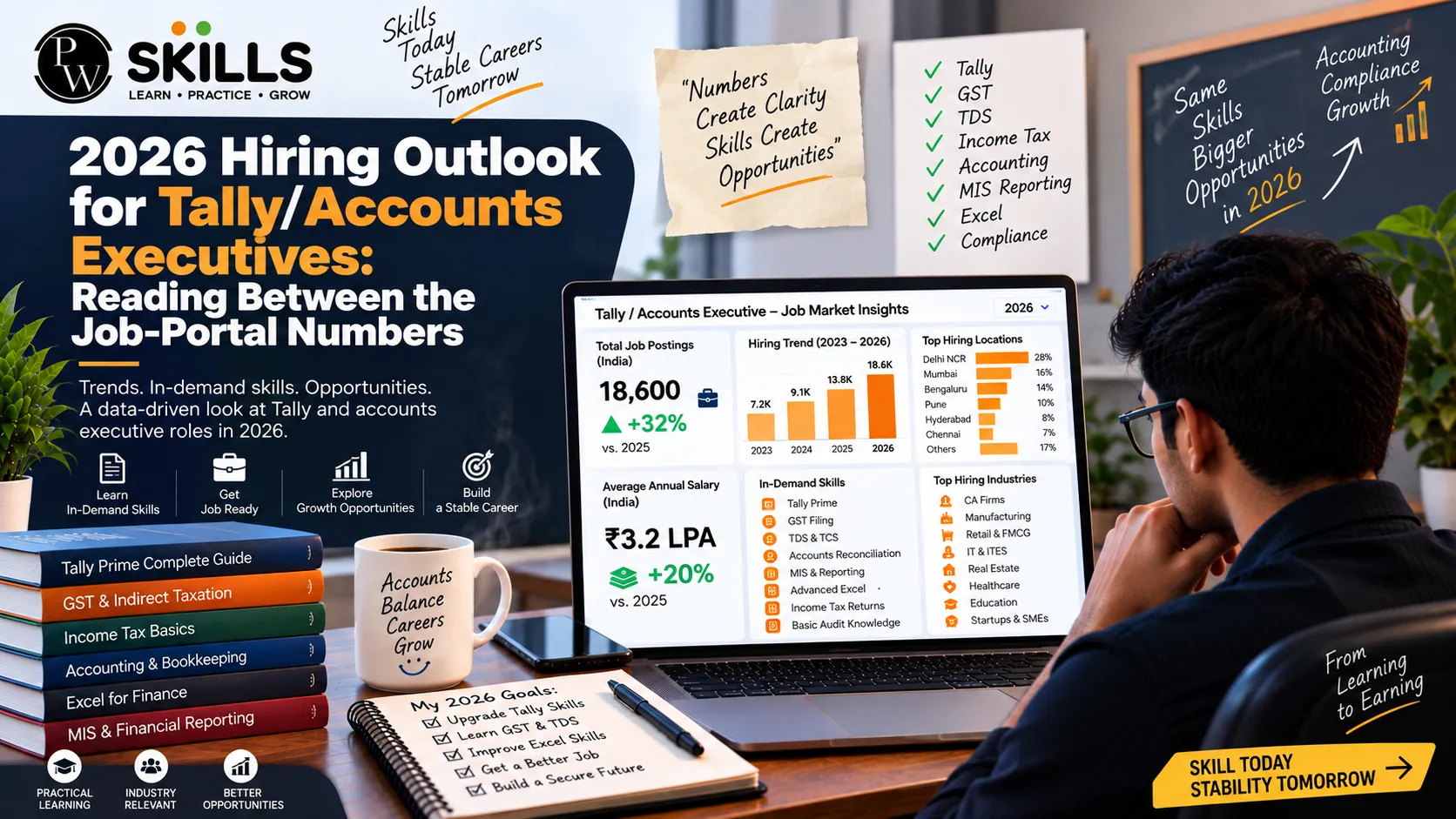
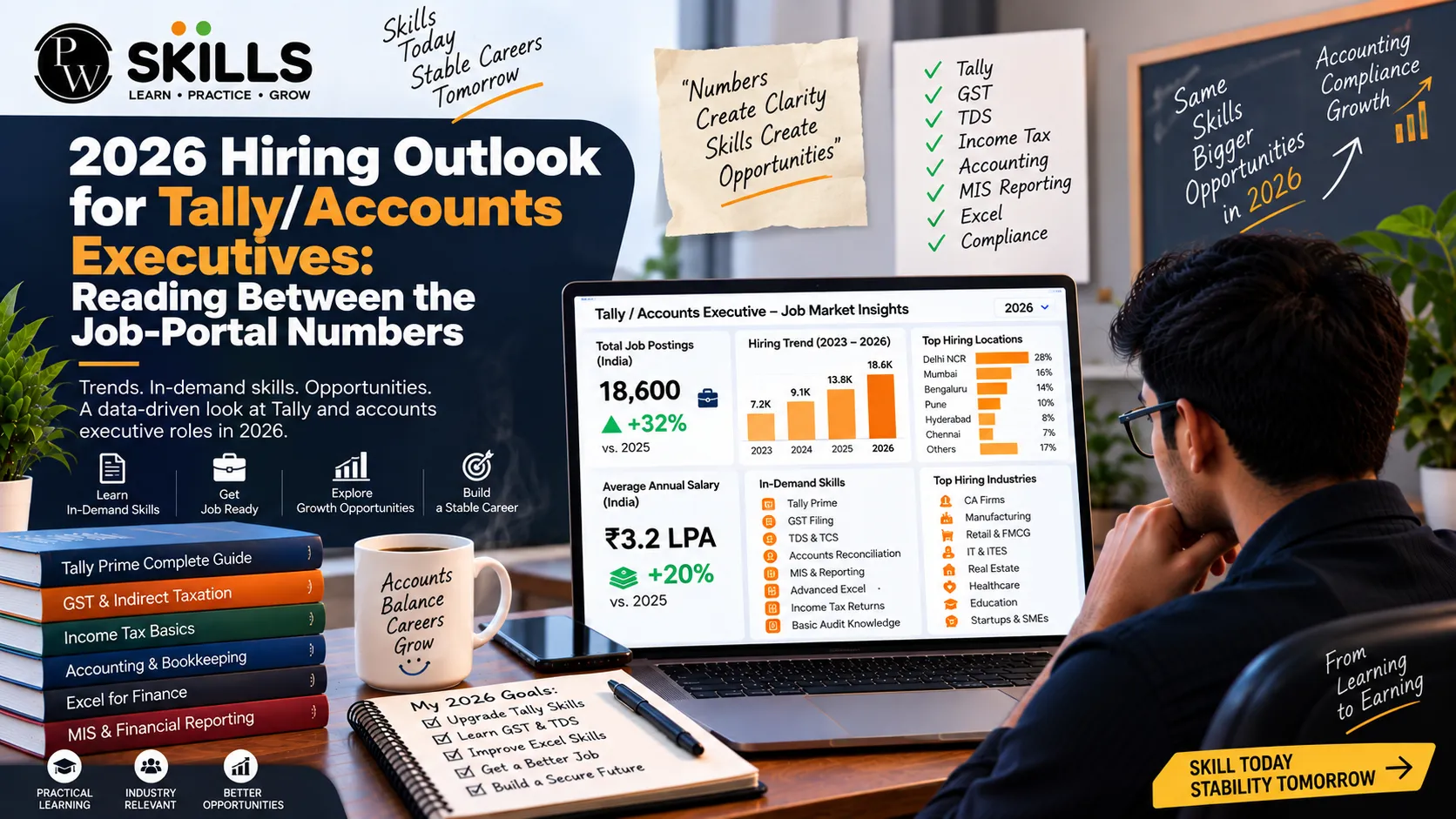
Modern accounting graduates and finance professionals often find it difficult to understand changing hiring needs and job portal trends. Traditional bookkeeping skills alone may not be enough, as employers increasingly value software knowledge, compliance skills, and relevant certifications. This article explores the 2026 hiring landscape and explains how combining accounting skills with NISM & Tally Certification Courses can help candidates better match current job requirements.
What Are NISM & Tally Certification Courses?
NISM & Tally Certification Courses help learners build skills in financial markets, accounting, taxation, and financial operations. NISM certifications provide knowledge of securities markets, investment products, and related financial concepts, while Tally training teaches practical accounting tasks such as ledger management, invoicing, GST, TDS, and financial reporting. Together, these courses can help students, freshers, and finance professionals develop job-ready skills for accounting, financial services, operations, and related roles.
How Do NISM & Tally Certification Courses Help With Job Portals?
Job portals display raw numbers that often mask what employers actually need. A posting might ask for basic ledger management, but interviewers test for advanced compliance, taxation filing accuracy, and asset management frameworks. Relying solely on basic software training leaves candidates vulnerable to automated applicant tracking systems.
-
Filtered Out by Algorithms: Automated screening tools look for specific regulatory compliance keywords alongside technical ledger software terms.
-
Shifting Employer Expectations: Firms want professionals who understand underlying asset regulations, not just data entry clerks.
-
The Compliance Gap: Basic ledger operators miss out on high-paying corporate roles because they cannot interpret statutory compliance updates.
Candidates must look past raw vacancy counts on boards and focus on skill stacking. Integrating software knowledge with regulatory credentials changes a resume from average to elite.
How Do NISM & Tally Certification Courses Help With SEBI NISM Circulars?
Regulatory bodies regularly update rules and processes, and these changes can affect the skills financial companies look for when hiring. New compliance guidelines may focus on areas such as investor protection, transparent fund management, proper documentation, and accurate reporting. Financial firms need employees who can follow these requirements carefully because compliance mistakes can create financial and legal problems.
This makes regulatory awareness an important part of finance recruitment. Candidates who understand relevant rules may require less basic training after joining an organization. NISM & Tally Certification Courses can help candidates build a mix of financial market knowledge and practical accounting skills, although the exact certification required depends on the role and applicable regulations.
-
Mandatory Compliance Knowledge: Organizations value candidates who understand relevant regulatory requirements and can follow updated processes with accuracy.
-
Reduced Training Costs: Candidates with relevant certifications and practical skills may need less basic training, helping employers save time during onboarding.
-
Cross-Functional Value: Professionals with accounting knowledge and financial market awareness can support different areas such as operations, reporting, compliance, and other finance functions.
Following official regulatory updates can also help professionals understand how finance roles are changing. Candidates who regularly improve their knowledge can update their resumes and skills before new requirements become common in job descriptions. This proactive approach can help them stay prepared for changing recruitment needs and build stronger long-term career opportunities.
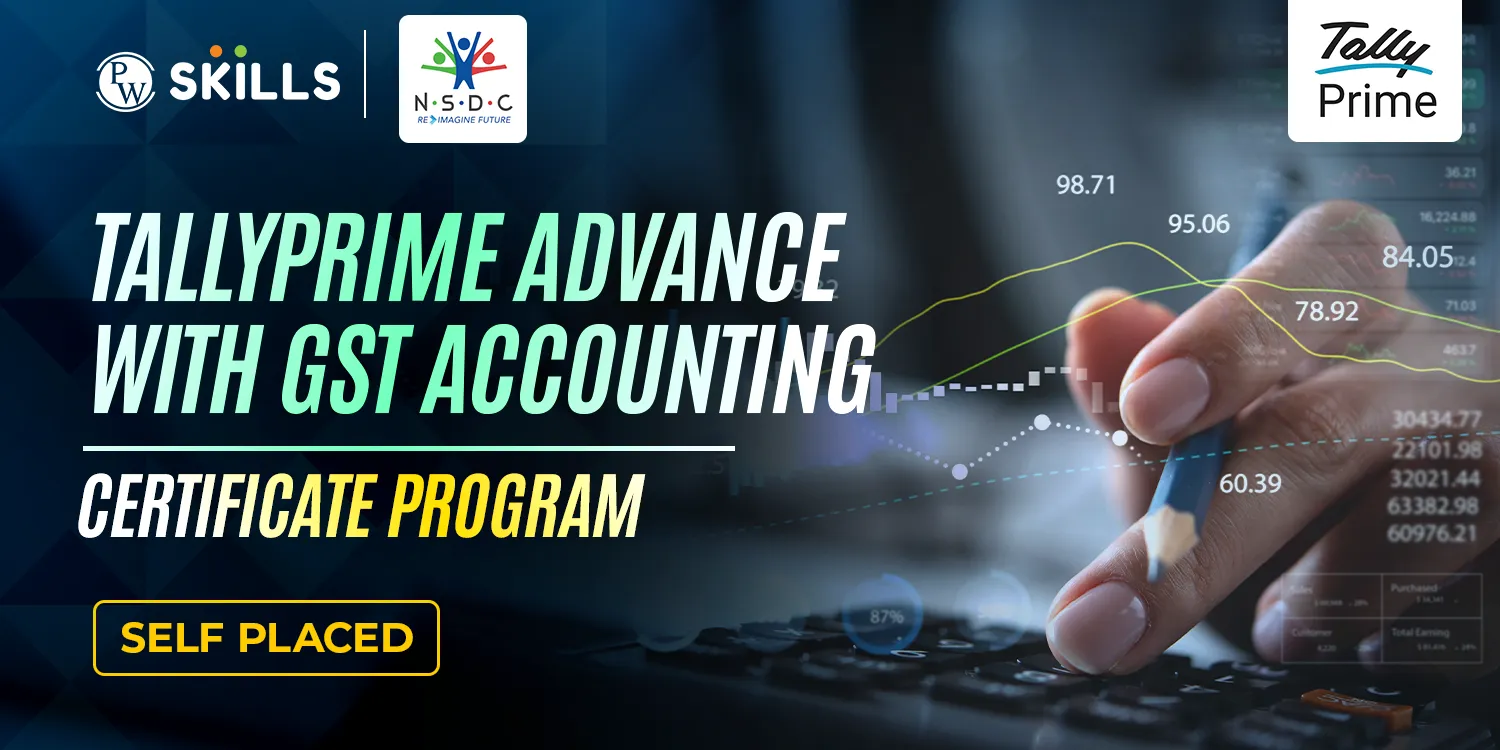
Also Explore our Course : TallyPrime Advance with GST Accounting
How Do NISM & Tally Certification Courses Prepare You for Mutual Fund Jobs?
Financial service providers, asset management firms, and corporate accounting departments frequently merge operational accounting with investment product distribution. Reviewing recent employment bulletins highlights a rising demand for multi-skilled professionals. When an enterprise expands its financial services portfolio, accounting teams often assist with product tracking, commission accounting, and investor servicing.
-
Broadened Career Horizons: Certified executives qualify for roles spanning corporate accounting, wealth management support, and portfolio operations.
-
Higher Earning Potential: Dual-skilled professionals command better remuneration packages compared to single-skill data entry operators.
-
Resilience Against Automation: Routine bookkeeping tasks face automation threats, whereas advisory and compliance-heavy roles remain secure.
Candidates tracking market sectors notice that financial institutions prioritize applicants who understand both ledger entries and capital market instruments. This combination ensures long-term career stability.
How Do NISM & Tally Certification Courses Improve Job Search Strategy?
Getting a good corporate role requires a clear plan for improving skills and building a strong profile. Candidates should first identify their skill gaps and then choose relevant training that matches current job needs. Planning certification completion around active hiring periods can also help candidates apply with better preparation.
-
Audit Current Competencies: Compare your software and finance skills with current job descriptions to find missing skills or certifications.
-
Optimize Professional Profiles: Add relevant credentials and skills clearly to your resume and online profiles so recruiters can find them easily.
-
Network with Industry Peers: Connect with finance professionals and industry experts to learn about changing job requirements and career opportunities.
Taking action early is important in a changing job market. Professionals who build relevant skills, complete recognized training, and keep their profiles updated can improve their chances of getting noticed by recruiters.



FAQs
What makes NISM & Tally Certification Courses essential for modern accounts executives?
How do SEBI NISM Circulars impact everyday corporate accounting roles?
Can candidates combine Mutual Fund Distributor Jobs News insights with accounting credentials?
Why do standard job portals fail to show the true demand for skilled accountants?
How does strategic upskilling protect accounting professionals from job automation?





Get Free Counselling Today
and Clear up all your Doubts
 Live & recorded classes available at easeDashboard for progress trackingLakhs of practice questions

