
2026 Hiring Outlook for GST Executives: Reading Between the Job-Portal Numbers
 Hardik Gupta19 Sept, 2026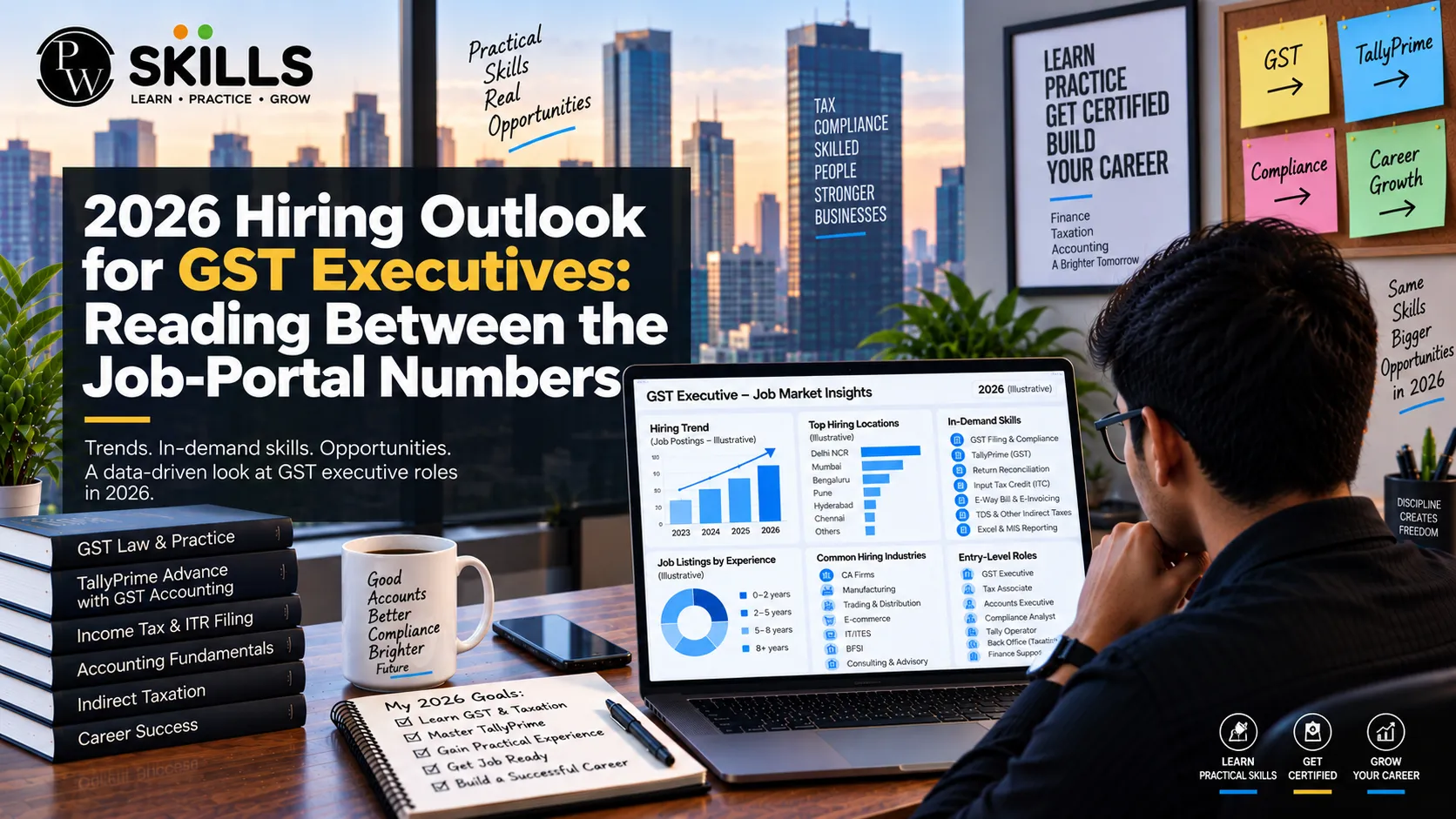
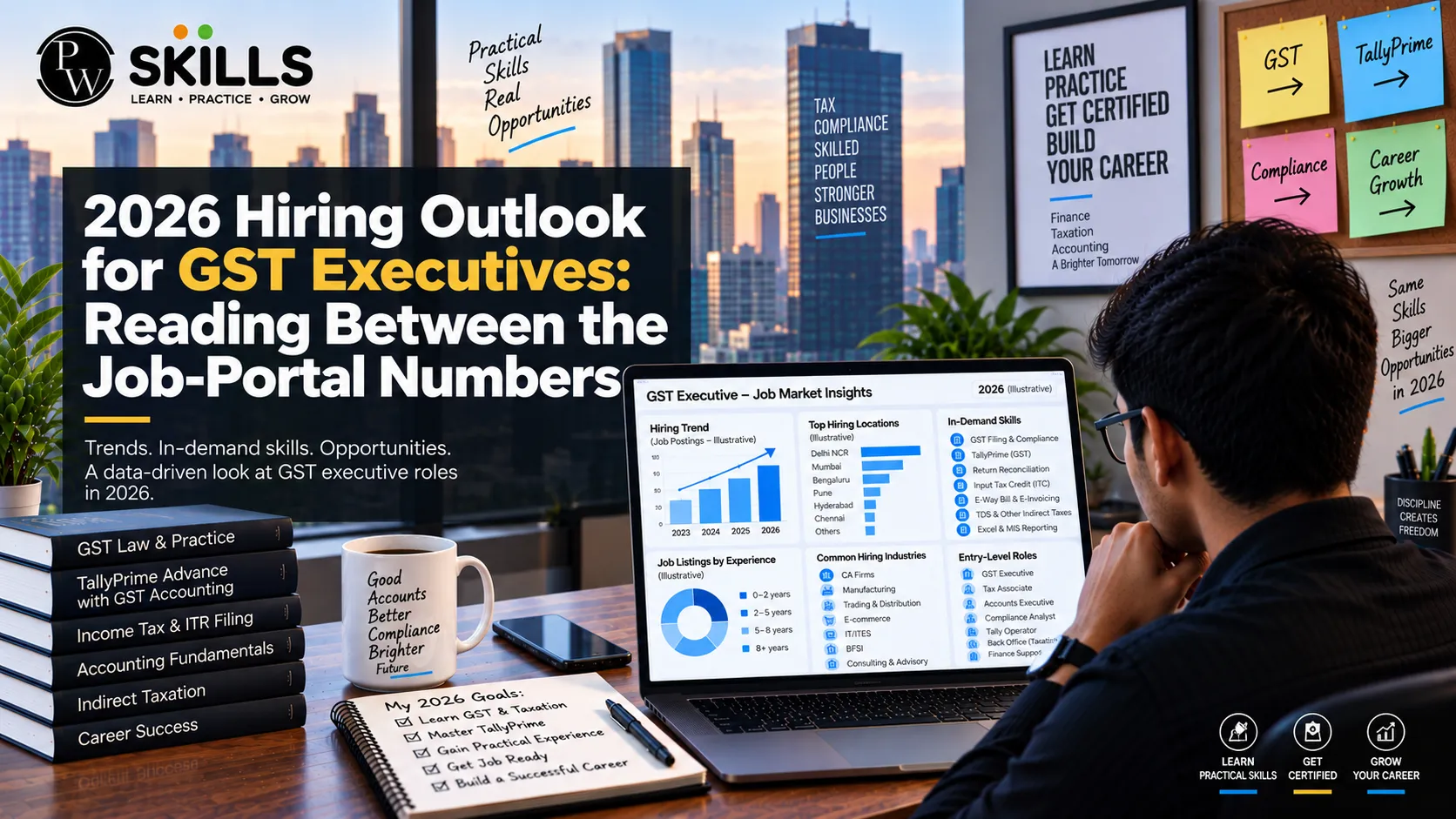
The demand for GST professionals is growing as more businesses use digital tax systems. Companies need employees who can manage invoices, check tax details, and support GST compliance.
A degree in commerce or accounting can provide a strong base, but practical software and tax knowledge can make candidates more job-ready. NISM & Tally Certification Courses can help fresh graduates build practical accounting and taxation skills for entry-level roles.
Overview of NISM & Tally Certification Courses
NISM & Tally Courses can help learners build practical skills in accounting, taxation, financial markets, and financial operations. Tally knowledge supports tasks such as accounting entries, invoicing, GST records, and financial reporting, while NISM learning provides knowledge of financial markets and related areas. These skills can help freshers and early-career professionals prepare for accounting, GST, finance, securities operations, and other entry-level roles.
How Do NISM & Tally Certification Courses Prepare You for GST Jobs?
A commerce degree can teach students important concepts such as accounting, taxation, business law, and financial statements. However, classroom learning may not always provide enough practice with the software and online systems used in real offices.
A new employee may be expected to work with accounting entries, invoices, tax records, spreadsheets, and reconciliation tasks soon after joining.
This creates a gap between knowing GST theory and performing GST work.
Candidates can reduce this gap by developing practical skills before applying for jobs. Learning accounting software, Excel, GST workflows, and basic compliance processes can make the transition from college to the workplace easier.
NISM & Tally Courses can support this type of preparation by giving learners exposure to practical accounting and finance-related skills.
Also explore our Course : TallyPrime Advance with GST Accounting
What Skills Can You Build with NISM & Tally Certification Courses?
Job descriptions can provide useful clues about what companies expect from candidates. Instead of focusing only on years of experience, applicants should look at the technical skills mentioned repeatedly across vacancies.
Common requirements include:
GST Return Knowledge
Candidates should understand the basic purpose of GST returns and how business transactions are reported. They should also know how sales, purchases, tax amounts, and input tax credit connect with GST compliance.
Reconciliation Skills
GST Executives may need to compare internal accounting records with tax-related data. Finding differences early can help businesses avoid problems later.
Accounting Software
Knowledge of Tally or other accounting systems can help candidates manage invoices, ledgers, tax records, and financial transactions.
Excel Skills
Excel remains useful for checking large amounts of financial information. Functions, filters, sorting, pivot tables, and basic data analysis can support everyday tax work.
Attention to Detail
GST work involves numbers, invoices, tax rates, dates, and transaction records. Small mistakes can create larger problems, so accuracy is an important workplace skill.
How Do NISM & Tally Certification Courses Prepare You for Tally Accounts Jobs?
The growth of digital accounting has also changed the nature of Tally-related positions. Tally/Accounts Executive Jobs News increasingly reflects demand for candidates who can do more than simple data entry.
Companies may expect an Accounts Executive to manage several connected tasks. These can include recording transactions, preparing invoices, checking ledgers, supporting GST work, and preparing basic reports.
This creates opportunities for candidates who have a wider skill set.
Instead of learning Tally only as a data-entry tool, students can learn how accounting software supports the complete business accounting process.
Skills that can improve job readiness include:
-
Ledger creation and maintenance
-
Sales and purchase entries
-
Bank reconciliation
-
GST configuration
-
Invoice management
-
Basic financial reporting
-
Tax-related record keeping
Understanding these areas can help candidates apply for a wider range of accounting and GST-related positions.
How to Stay Updated With GST Council Updates with NISM & Tally Certification Courses?
GST rules and procedures can change as the tax system develops. Professionals therefore need to keep themselves updated rather than depending only on what they learned during their degree.
For a GST Executive, this means learning should continue even after joining a company.
A good professional should develop the habit of checking reliable updates and understanding how changes may affect daily accounting work.
What Skills Can You Build With NISM & Tally Certification Courses?
Getting the first GST job is only the beginning. Professionals who want better roles should gradually add more advanced skills.
A useful skill path can include:
GST Basics → Tally → Excel → Reconciliation → E-Invoicing → Tax Compliance → GST Analysis
This can help a junior employee move toward more responsible positions.
Additional skills that can support career growth include:
-
Advanced Excel
-
Tally and ERP systems
-
GST reconciliation
-
Tax documentation
-
Financial reporting
-
Audit support
-
Basic income tax knowledge
-
Data analysis
The more confidently a professional can handle connected finance and tax activities, the more useful they can become to an organisation.
How NISM & Tally Certification Courses Can Support Career Preparation
NISM & Tally Courses can be useful for learners who want to build broader finance skills along with accounting software knowledge.
Tally training can support practical accounting work, while NISM-related learning can introduce learners to financial markets and related professional concepts.
This combination can be useful for candidates who do not want to limit themselves to one finance career path.
However, candidates should choose certifications according to their target role. Not every GST Executive position requires an NISM certification. For GST-focused careers, practical taxation, accounting, Tally, Excel, and GST knowledge should remain a major focus.
How Do NISM & Tally Certification Courses Help You Understand Job Requirements?
A large number of job listings does not automatically mean every candidate will receive multiple offers. Job seekers need to look deeper into the requirements behind those listings.
When reviewing vacancies, check:
-
Which skills appear most often?
-
Is Tally required?
-
Is GST filing experience mentioned?
-
Is Excel required?
-
Does the company ask for reconciliation skills?
-
Is prior experience mandatory?
-
What salary range is offered?
-
Which industries are hiring?
-
Are similar roles listed under different job titles?
This method gives a clearer picture of actual market demand.
The Hiring-outlook-hook should therefore focus on the skills companies repeatedly request rather than simply quoting the number of vacancies available.
How Can Freshers Prepare With NISM & Tally Certification Courses?
Freshers can follow a practical preparation plan before applying.
First, strengthen accounting basics. Understand journal entries, ledgers, trial balance, invoices, and financial statements.
Next, learn GST concepts. Understand the basic GST structure, input tax credit, invoices, returns, and reconciliation.
Then, practise Tally. Create sample company records and practise sales, purchase, payment, receipt, and GST-related entries.
Improve Excel skills. Learn to sort, filter, analyse, and present financial data.
Build practical projects. Create sample GST reconciliation sheets or accounting reports that can be discussed during interviews.
Finally, track job requirements. Review current vacancies and identify skills that appear repeatedly.
This approach can help freshers move from theoretical knowledge to practical job preparation.



FAQs
What role do NISM & Tally Certification Courses play in securing modern accounting roles?
Where can professionals track authentic updates affecting indirect taxation?
How do recent GST Council Updates impact daily accounting operations?
Why do corporate recruiters value Tally/Accounts Executive Jobs News trends?
How does the hiring-outlook-hook strategy improve job search outcomes?





Get Free Counselling Today
and Clear up all your Doubts
 Live & recorded classes available at easeDashboard for progress trackingLakhs of practice questions

