

How AI-assisted equity research From Financial Modeling with AI Course Applies on the Job
 Hardik Gupta31 Jul, 2026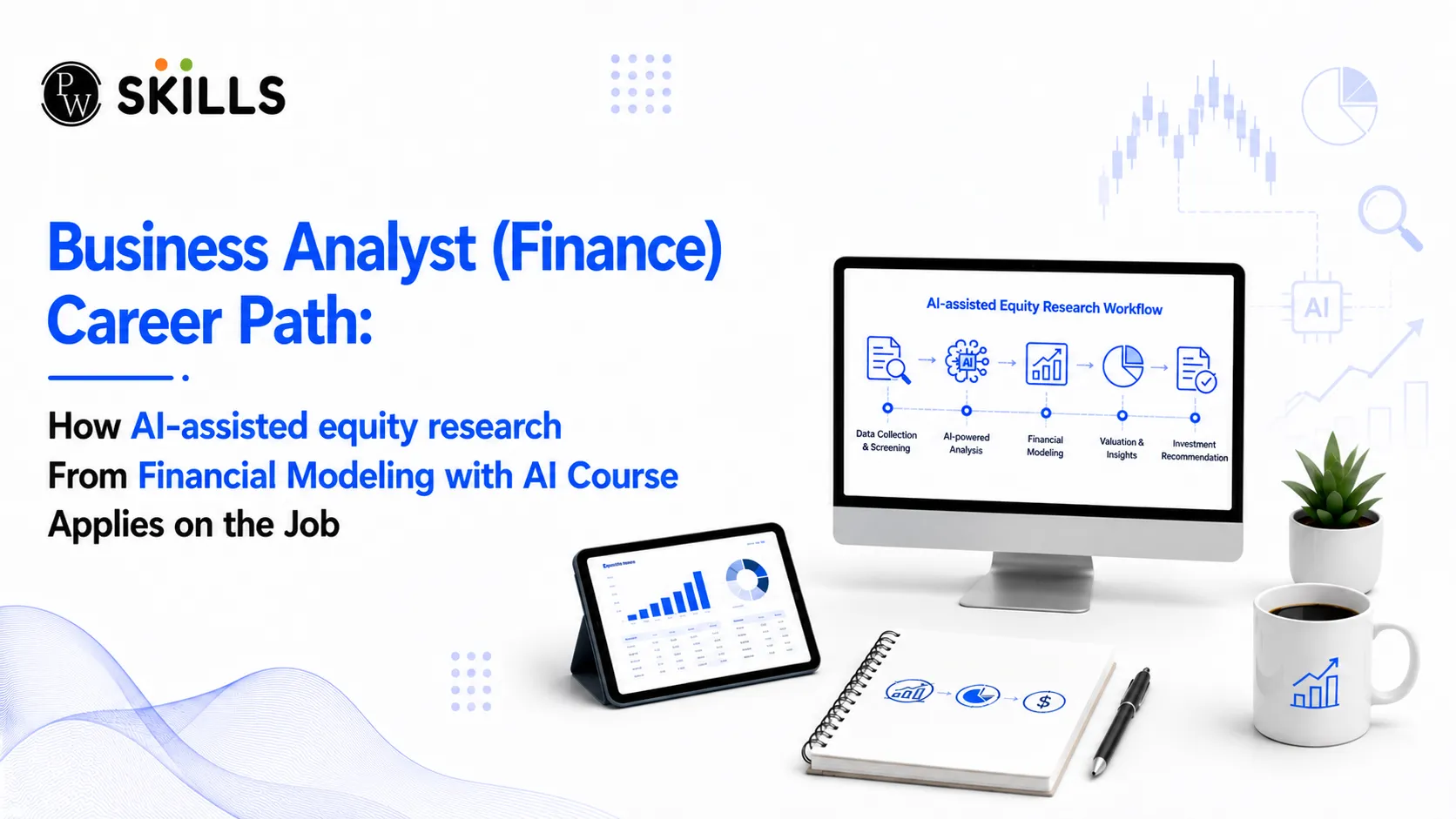
Many candidates find it difficult to apply classroom accounting rules to the fast-moving requirements of modern equity research desks. Traditional spreadsheets alone can no longer keep up with the demands of quick investment decisions.
Employers actively look for analysts who can review market trends rapidly, build dynamic forecast models, and evaluate massive datasets without wasting hours on manual data entry. Enrolling in a Financial Modeling with AI Course resolves this daily challenge by introducing automated workflows to routine valuation tasks.
By combining strong analytical principles with smart tools, candidate analysts transition smoothly into competitive corporate roles.
What Is Financial Modeling with AI Course?
A Financial Modeling with AI Course is a targeted training program designed to teach structured company valuation, statement evaluation, and revenue forecasting using smart computational tools. Instead of typing out every spreadsheet line item by hand, learners discover how machine learning algorithms and natural language processing tools assist in collecting raw figures, reading annual reports, and building scalable financial formulas.
-
Automated Data Extraction: Gathering balance sheet, income statement, and cash flow details automatically from public market filings.
-
Dynamic Forecasting: Applying predictive logic to revenue projections, operational costs, and profit margins.
-
Sensitivity Analysis: Running multi-variable scenario models across changing market conditions in moments.
-
Valuation Frameworks: Constructing Discounted Cash Flow (DCF) models alongside comparable company analysis using smart benchmark updates.
Why Is Financial Modeling with AI Course Valuable for Business Analysts?
Business analysts in the financial domain serve as the central connection between raw operational data and executive decision-making. Leadership teams rely heavily on these analysts to judge potential corporate acquisitions, review capital expenditure requests, and monitor competitor market share.
Candidates who finish a Financial Modeling with AI Course secure a distinct practical advantage over peers who stick only to older, manual techniques.
|
Operational Focus |
Traditional Financial Modeling |
AI-Assisted Financial Modeling |
|
Data Collection |
Manual typing of historical financial filings |
Automated data extraction using smart character tools |
|
Scenario Testing |
Static planning limited to basic variables |
Real-time stress testing across dozens of variables |
|
Model Setup |
Hours spent building cell layouts and formats |
Fast template generation allowing deeper analysis time |
|
Error Checking |
High risk of hidden formula calculation errors |
Automated script audits that highlight calculation anomalies |
This strategic shift changes the daily responsibilities of a business analyst from routine data entry to high-level strategic evaluation. Professionals with these practical skills gain an edge during hiring assessments for corporate strategy teams, investment funds, and management consultancies.
AI-Assisted Equity Research in Financial Modeling with AI Course
Equity research demands detailed study of company filings, broader macroeconomic indicators, and trade sector trends to figure out if a stock is overvalued or undervalued. Introducing technology directly into research workflows speeds up the discovery of key investment insights.
1. Parsing Filings and Earnings Transcripts
Reading long quarterly earnings transcripts manually can take up an entire working day. Smart natural language software allows analysts to scan hundreds of pages quickly, highlighting subtle shifts in leadership tone, sudden expense updates, or changes in revenue targets.
-
Sentiment Evaluation: Spotting shifts in executive confidence across sequential quarterly report statements.
-
Metric Extraction: Pulling division-level revenue numbers and operating profit margins instantly.
-
Risk Identification: Isolating newly listed risk statements in annual disclosures without reading through standard boilerplate content.
2. Supporting Financial Statement Modeling
A critical skill covered during study is Financial Modeling with AI Course + Financial statement modeling, which shows how smart algorithms link three-statement financial models together smoothly.
When sales projections change, intelligent scripts automatically calculate corresponding updates across working capital needs, interest costs, and cash balances, keeping the spreadsheet completely error-free.
How Financial Modeling with AI Course Improves Stock Research Skills
Stock research depends on precision, speed, and objective logic. Integrating modern technical tools refines how analysts formulate, test, and present their investment ideas.
1. Faster Data Processing
Research analysts frequently track dozens of target companies in a single industry sector. Using intelligent software lets analysts run automated quantitative filters, ranking target stocks instantly by price-to-earnings growth, enterprise value ratios, or returns on capital.
2. Advanced Risk Assessment
Instead of creating only basic base, bear, and bull cases, smart software lets analysts run detailed probability simulations. This method tests thousands of potential market conditions, offering investment committees a clear view of risk probability.
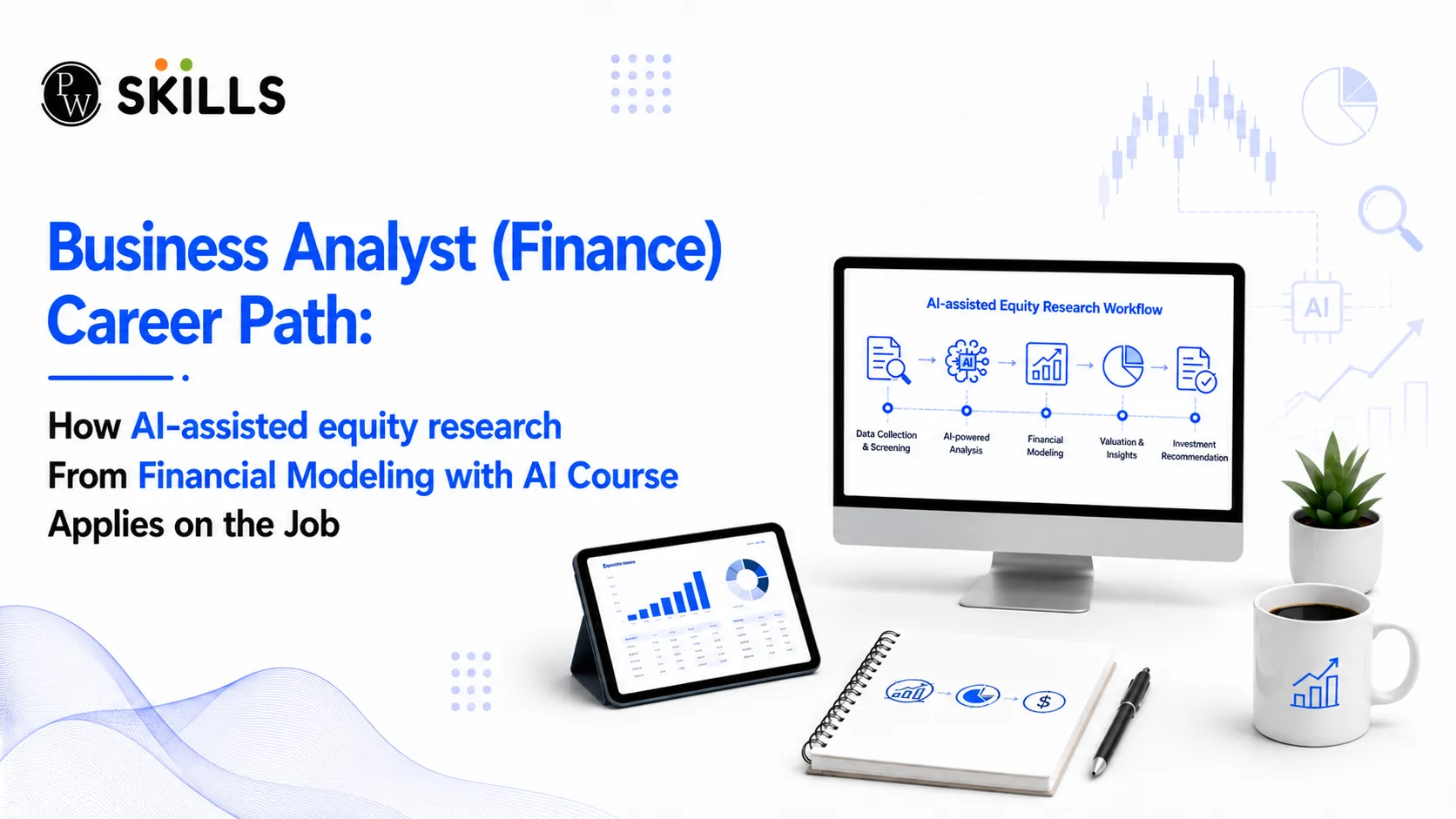
-
Sector Screening: Applying automated quantitative filters to select target companies quickly.
-
Data Extraction: Gathering quarterly numbers, filings, and transcript notes automatically.
-
Model Construction: Building dynamic integrated statement models and baseline valuation sheets.
-
Scenario Stress Testing: Running multi-variable tests to measure financial strength under market stress.
-
Thesis Drafting: Synthesizing quantitative outputs and qualitative findings into clear investment briefs.
Real-World Business Analyst Tasks with Financial Modeling with AI Course
Understanding financial theory is helpful, but corporate recruiters care most about how your practical skills apply to real daily tasks. Completing a Financial Modeling with AI Course prepares analysts to take on essential business tasks right from their first day on the job.
-
Designing Automated Valuation Tools: Setting up responsive workbooks that update stock prices, index benchmarks, and interest rates automatically.
-
Executing Competitor Benchmarking: Extracting operational metrics across rival firms to highlight shifts in market position and cost structures.
-
Writing Concise Executive Memos: Using writing tools to turn long analytical calculations into simple bullet points for management teams.
-
Targeting Specialized Career Roles: Meeting the specific skill sets required for Financial Modeling with AI Course + Valuation Analyst Jobs, where asset pricing accuracy and DCF models are daily expectations.
-
Reviewing Capital Budgets: Analyzing corporate project returns, internal rates of return, and payback periods using dynamic sensitivity sheets.
Projects to Practise in Financial Modeling with AI Course
Putting analytical concepts into practice helps lock in knowledge. Building a clean portfolio of practical projects during your studies gives concrete proof of your skills when talking with hiring managers.
Project 1: Fully Integrated 3-Statement Model
-
Goal: Build an integrated model that pulls five years of historical data from public disclosures automatically.
-
Focus: Connecting the income statement, balance sheet, and cash flow statement dynamically while setting up automated checks to ensure balance sheet equilibrium.
Project 2: Technology Sector Relative Valuation
-
Goal: Create a responsive relative valuation file covering key software companies.
-
Focus: Extracting sales multiples, operating profit figures, and expected growth rates using automated extraction tools.
Project 3: Comprehensive Equity Research Summary
-
Goal: Prepare a complete investment memo combining quantitative valuation outputs with qualitative risk assessments.
-
Focus: Using natural language tools to summarize sector trends, competitive moats, and operational risks alongside a complete discounted cash flow framework.
Career Tips After Financial Modeling with AI Course
Finishing a structured study program marks a strong step forward, but landing good positions requires a clear market strategy.
Build a Public Portfolio
-
Save sanitized sample models on cloud drives or personal portfolio pages to show clean layout structures and logical formulas.
-
Post brief analytical insights on professional social networks to demonstrate your ability to explain complex financial topics clearly.
Highlight Practical Skills on Your Resume
-
Include specific references to automated modeling tools, financial research platforms, and data scripts alongside core accounting knowledge.
-
Describe past accomplishments by showing measurable outcomes, such as cutting down model setup times or raising forecast precision.
Prepare for Technical Interview Steps
-
Practice explaining every baseline assumption in your models step by step.
-
Explain clearly how technology assisted your analysis without replacing fundamental accounting rules or human financial judgment.





FAQs
What technical knowledge is required before taking a Financial Modeling with AI Course?
How does technology assist in financial modeling tasks?
Are traditional financial modeling skills still important?







Get Free Counselling Today
and Clear up all your Doubts
 Live & recorded classes available at easeDashboard for progress trackingLakhs of practice questions

