

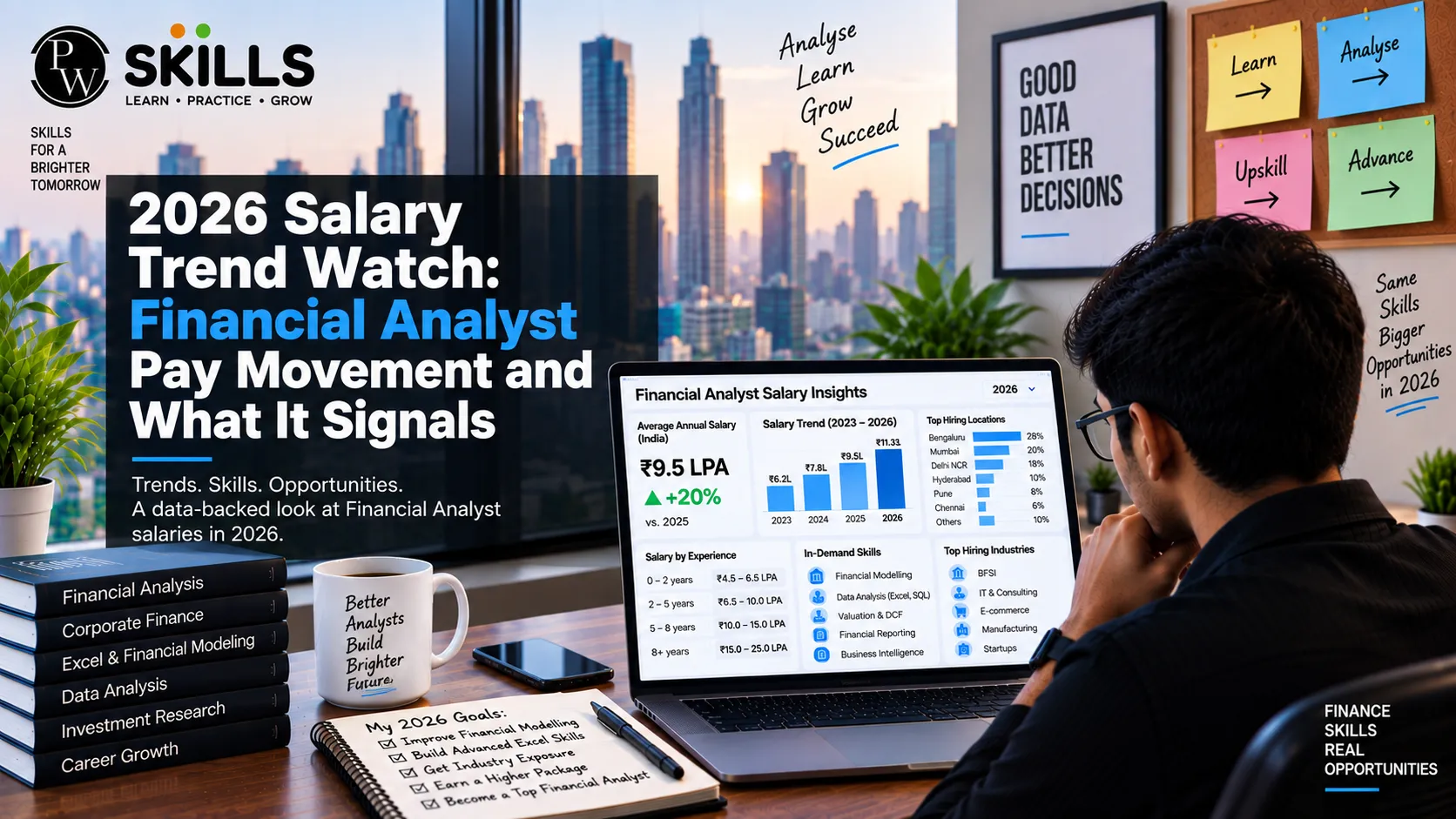
2026 Salary Trend Watch: Financial Analyst Pay Movement and What It Signals
 Hardik Gupta18 Sept, 2026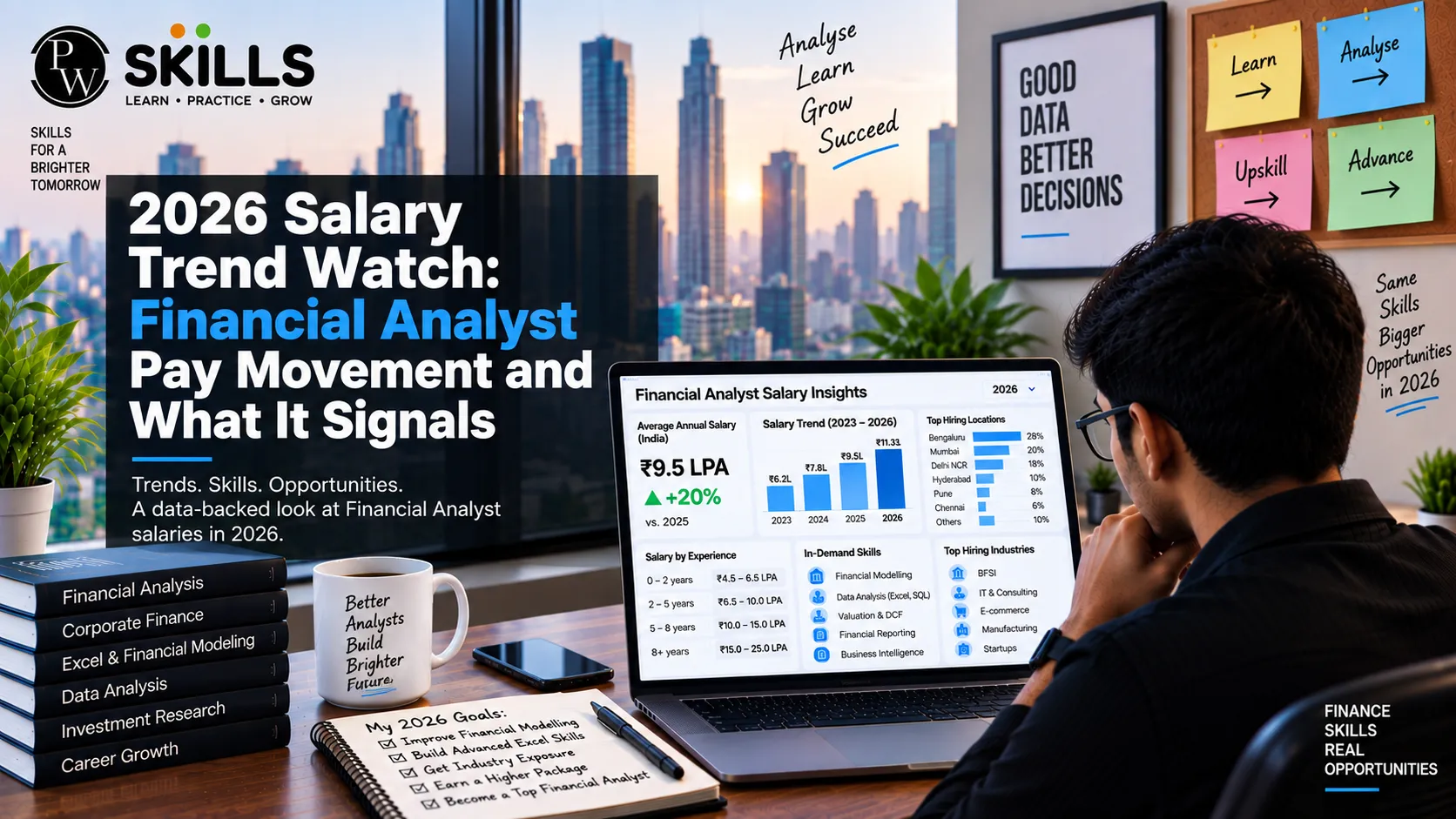
The financial sector is changing rapidly in 2026 as routine analysis and manual reporting become increasingly automated. Employers now value analysts who combine traditional valuation skills with AI, predictive modelling, and automated forecasting. This shift is widening the gap between traditional and tech-skilled professionals. A Financial Modeling with AI Course can help learners build relevant skills and improve their career prospects.
What Is Driving Financial Analyst Salary Trends in 2026 With a Financial Modeling with AI Course?
Compensation structure changes reflect a fundamental shift in how businesses evaluate corporate data. Modern financial institutions require real-time forecasts, scenario stress testing, and rapid valuation outputs. Traditional manual spreadsheet modeling is no longer fast enough to support these data-heavy environments.
|
Workflow Phase |
Traditional Workflow |
AI-Augmented Workflow |
|
Data Intake |
Data Entry Manual ledger posting, receipt transcription, and human-dependent spreadsheet entry. |
Auto Data Ingestion Automated OCR, continuous API syncs, and real-time bank/ERP data pipelines. |
|
Analysis & Processing |
Manual Formulas Static VLOOKUPs, hardcoded formulas, and manual spreadsheet calculations. |
AI Predictive Models Machine learning forecasting, anomaly detection, and automated variance analysis. |
|
Reporting Output |
Static Reports End-of-month PDF balance sheets, historical P&L statements, and rigid reports. |
Real-Time Scenarios Dynamic interactive dashboards, live stress-testing, and instant financial simulations. |
|
Execution Speed |
Slow Review Periodic human bottlenecks leading to delayed reporting and reactive decisions. |
Strategic Decisions Continuous insights allowing leadership to execute proactive, data-backed strategies. |
Key market forces driving current pay trends include:
-
Integration of Machine Learning Models: Corporate finance teams expect analysts to train predictive algorithms directly within financial models to project cash flows accurately.
-
Automated Data Processing: Companies favor candidates who can build dynamic, automated pipelines to extract raw operational data, replacing manual copy-pasting.
-
Higher Employer Expectations: Recruiters actively seek candidates who possess hands-on skills acquired through this course
How a Financial Modeling with AI Course Can Impact Financial Analyst Salary Trends
Compensation benchmarks show a clear gap between traditional financial analysts and tech-enabled finance professionals. Industry data highlights that analysts capable of automating complex DCF models, LBO schedules, and Sensitivity Analyses earn significantly higher salaries.
|
Job Level |
Standard Financial Analyst Pay Range (Annual CTC) |
AI-Skilled / Tech-Augmented Pay Range (Annual CTC) |
Key Skill Differentiators |
|
Entry-Level (0–2 Years) |
₹3.5L – ₹6.0L |
₹6.5L – ₹9.5L |
Automated Python/Excel scripts, prompt engineering for research, basic forecasting. |
|
Mid-Level (3–6 Years) |
₹7.0L – ₹12.0L |
₹12.5L – ₹18.0L |
Dynamic AI financial models, machine learning-driven valuations, automated pitchbooks. |
|
Senior Level (7+ Years) |
₹14.0L – ₹22.0L |
₹24.0L – ₹40.0L+ |
Strategic AI integration, enterprise-wide financial planning, predictive capital allocation. |
A Salary-hook study reveals that candidates who demonstrate practical experience from this course land entry and mid-tier roles at compensation levels typically reserved for senior professionals.
CFA Institute Investment Professional Outlook and AI Skills for Finance
The latest outlook underscores a clear consensus across the global finance sector: technical proficiency alone is no longer enough for rapid career advancement.
|
Core Hiring Priority |
Operational Focus & Technical Requirement |
Industry Impact & Strategic Objective |
|
1. AI-Assisted Financial Analysis & Forecasting |
Leveraging machine learning models, Python-based scripts, and generative tools to process large datasets. |
Accelerates data turnaround times and shifts analyst focus from manual compilation to strategic interpretation. |
|
2. Advanced Capital Structure & Valuation Engineering |
Deep exposure to complex private markets, alternative asset classes (private equity/debt), and sophisticated valuation architectures. |
Enables precise deal structuring and risk pricing in an increasingly democratized and diverse investment universe. |
|
3. Automated Risk & Scenario Analysis |
Implementing real-time stress-testing pipelines, automated regulatory compliance checks, and dynamic anomaly detection. |
Mitigates algorithmic "black box" risks while safeguarding institutional portfolios against rapid market volatility. |
The report points to three crucial trends shaping recruitment strategy:
-
Analytical Agility: Employers value analysts who write custom scripts to ingest alternative datasets into valuation frameworks faster than traditional methods allow.
-
Shift from Execution to Strategy: Because AI algorithms handle routine data processing, analysts are evaluated on their strategic insights, scenario interpretations, and communication.
-
Upskilling Expectations: Investment firms actively favor candidates who complement traditional certifications with practical, modern credentials like this course.
What Corporate Finance Analyst Jobs News Reveals About Demand for Financial Modeling with AI Course
A review of the Financial Modeling with AI Course + Corporate Finance Analyst Jobs News shows a notable shift in job descriptions. Global investment banks, private equity firms, and corporate treasury teams are updating their core requirements.
Key job market updates include:
-
Updated Job Requirements: Over 60% of mid-to-senior corporate finance listings list prompt engineering, automated forecasting, or machine-learning-assisted analytics as preferred qualifications.
-
Higher Compensation Budgets: Organizations are shifting hiring budgets toward hybrid roles that combine financial strategy with AI technology.
-
Shorter Time-to-Hire for Skilled Talent: Candidates with verifiable projects built during this course experience faster recruitment cycles.
Importance of Enrolling in a Financial Modeling with AI Course
Upkilling through a structured curriculum ensures you gain hands-on practice with the tools shaping today's financial markets. Self-study often lacks the practical depth required to build complex models efficiently under corporate standards.
A specialized curriculum prepares you to:
-
Build robust three-statement financial models integrated with predictive AI plug-ins.
-
Automate valuation methods, including Discounted Cash Flow (DCF), Trading Comps, and Precedent Transactions.
-
Execute complex Monte Carlo simulations and sensitivity analysis in seconds using automated workflows.
-
Construct interactive executive dashboards that extract live market data for instant corporate reporting.
Investing in this course directly positions you to capitalize on current market trends and secure higher-paying analyst roles.





FAQs
How does a Financial Modeling with AI Course impact career progression in 2026?
What is the expected salary increase after completing an AI Financial Modeling course?
Does Corporate Finance Analyst Jobs News suggest traditional modeling skills are obsolete?
How does the CFA Institute Investment Professional Outlook view AI skills?
Who should enroll in a Financial Modeling with AI Course?







Get Free Counselling Today
and Clear up all your Doubts
 Live & recorded classes available at easeDashboard for progress trackingLakhs of practice questions

