

2026 Hiring Outlook for Investment Banking Analyst (Entry-Level)s: Reading Between the Job-Portal Numbers
 Hardik Gupta18 Sept, 2026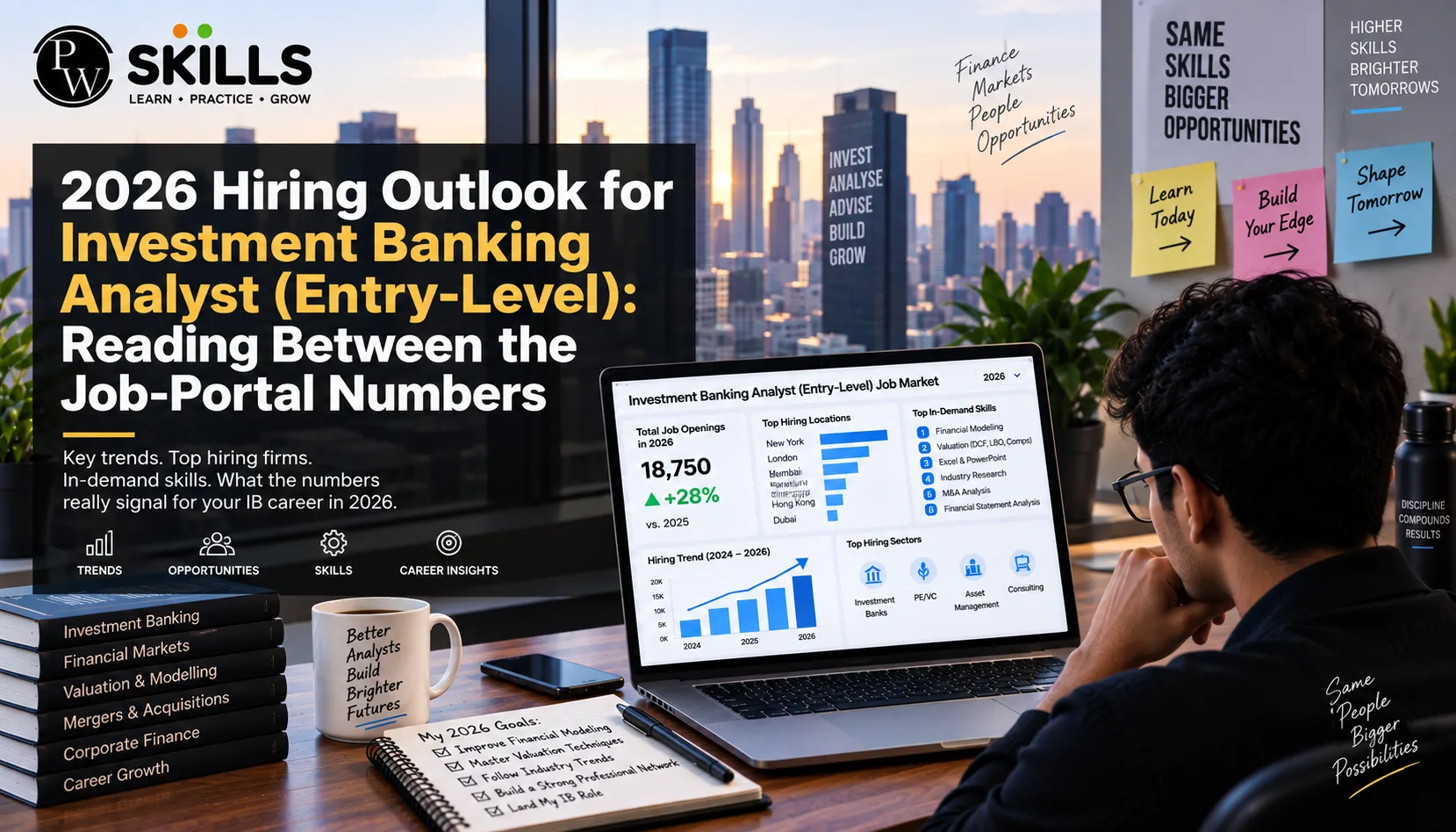
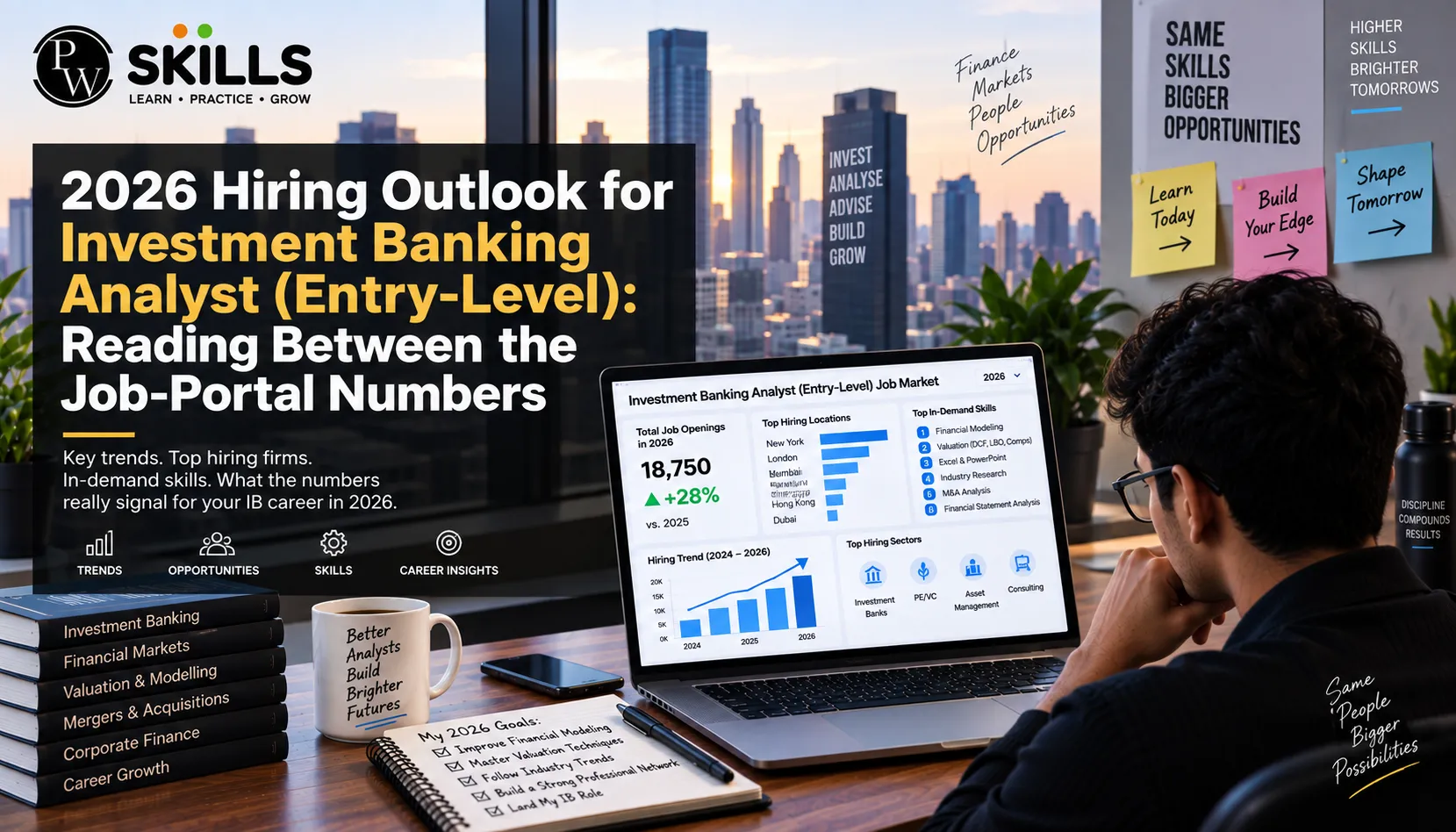
Entry-level candidates targeting investment banking analyst positions face a dynamic job market in 2026. While job portals display high posting volumes, securing a role requires more than submitting standard resumes. Recruiters now look for candidate profiles that blend core accounting logic with advanced technology tools.
A Financial Modeling with AI Course can help candidates build these skills by improving financial modeling, forecasting, and data analysis abilities. This article breaks down actual market demand, essential technical skills, and key strategies to help you break into the industry successfully.
What is a Financial Modeling with AI Course?
AI financial modeling course helps learners build practical skills in financial modeling, valuation, forecasting, data analysis, and AI automation. It teaches how to use tools such as Excel, Python, and AI to create faster and more flexible financial models. The course helps finance graduates and professionals prepare for modern roles in investment banking, corporate finance, valuation, and FP&A.
How Does a Financial Modeling with AI Course Prepare You for 2026 Investment Banking Jobs?
The overall market for entry-level investment banking analysts shows a steady rebound, but the exact skills required by top employers have shifted significantly. Standard job portals often post high volumes of openings, yet candidates report intense competition during screening stages.
Hiring managers no longer evaluate applicants solely on basic accounting principles or manual spreadsheet construction. Instead, they prioritize candidates who demonstrate high speed and precision in financial analysis. Enrolling in an AI financial modeling course helps aspiring analysts learn automated data extraction, dynamic scenario modeling, and advanced valuation frameworks.
Evolving Skill Requirements in 2026
|
Traditional Skills |
Modern Practical Edge |
|
Manual Data Entry |
Automated Data Collection |
|
Static Spreadsheets |
Dynamic Scenario Modeling |
|
Basic Ratio Analysis |
Predictive Analytics |
|
Basic Valuation Methods |
Automated AI Workflows |
Job portal metrics can often present a misleading picture of entry-level hiring. Many publicly listed analyst roles receive hundreds of applications within hours. However, recruiters filter out a majority of candidates who lack practical execution skills.
Modern financial teams require analysts to process large datasets, run complex sensitivity analyses, and generate clean presentations efficiently. Completing a specialized AI financial modeling course equips candidates with practical capabilities that directly match what hiring teams test during technical interview rounds.
How Does a Financial Modeling with AI Course Match Investment Banking Trends?
Several market shifts are actively altering how investment banks evaluate new hires. First, financial institutions rely heavily on automated tools to accelerate preliminary deal screening, pitch book creation, and due diligence. Second, regulatory frameworks and market volatility require risk assessment models to run multiple stress-test scenarios simultaneously.
-
Automated Data Processing: Investment banks handle vast amounts of unstructured financial data. Analysts must know how to ingest, clean, and format data automatically.
-
Real-Time Scenario Analysis: Deal teams demand rapid updates during merger negotiations. Candidates who can adjust parameters dynamically stand out during technical tests.
-
Enhanced Forecasting Accuracy: Integrating predictive analytics with traditional valuation techniques allows teams to project cash flows with greater reliability.
Tracking Business Analyst (Finance) Jobs News reveals that recruiters are consolidating entry-level financial roles. Firms increasingly favor candidates who handle both traditional financial analysis and technical automation tasks. This shift makes specialized training essential for applicants wanting to secure interviews.
|
Industry Trend |
Traditional Method |
AI-Integrated Approach |
Employer Value |
|
Data Collection |
Manual input from filings |
Automated ingestion scripts |
Saves hours per deal cycle |
|
Valuation Modeling |
Static discounted cash flow models |
Dynamic, scenario-driven models |
Improves decision-making speed |
|
Pitch Preparation |
Manual slide formatting |
Automated chart generation |
Reduces error rates in materials |
What Skills Does a Financial Modeling with AI Course Covers?
To stand out in the 2026 hiring market, entry-level analysts need a robust combination of traditional core finance concepts and dynamic technical capabilities. Academic degrees provide theoretical knowledge, but practical execution requires hands-on practice with workplace tools. Taking a focused AI financial modeling course bridges this preparation gap effectively.
Core Entry-Level Analyst Skills
|
Skill Area |
Key Skills |
|
Financial Core |
Three-Statement Modeling |
|
Financial Core |
DCF & LBO Valuation |
|
Financial Core |
Financial Ratio Analysis |
|
Tech Stack |
Advanced Excel / VBA |
|
Tech Stack |
Dynamic AI Prompts |
|
Tech Stack |
Automated Reporting |
-
Three-Statement Modeling: Building fully integrated income statements, balance sheets, and cash flow statements without calculation errors.
-
Valuation Methodologies: Performing Discounted Cash Flow (DCF), Comparable Company Analysis (Comps), and Precedent Transactions analysis accurately.
-
Automated Analytics: Utilizing AI-assisted workflows to process financial reports and identify anomalous data patterns quickly.
-
Sensitivity & Scenario Analysis: Crafting dynamic models that allow senior leadership to stress-test revenue and margin assumptions instantly.
According to insights aligned with the CFA Institute Investment Professional Outlook, employers prioritize candidates who display high analytical rigor alongside modern software skills. Analysts who quickly build reliable models allow deal teams to execute transactions faster, directly impacting firm revenue.
How Does a Financial Modeling with AI Course Help With Job Searches?
Job portal statistics can often confuse fresh graduates entering the job market. A high number of job listings does not automatically mean easy entry into the field. Employers frequently use automated applicant tracking systems (ATS) to filter resumes based on specific technical keywords and practical project experience.
The primary hiring-outlook-hook for 2026 is simple: while overall entry-level headcount may appear stable, hiring managers are far more selective about practical execution skills. Candidates who present a portfolio of completed financial models gain a substantial advantage over those relying solely on GPA or general business degrees.
Recruitment Selection Funnel
|
Stage |
Purpose |
|
Job Portal Applications |
100s of generic submissions |
|
ATS Keyword Screening |
Filters out non-technical profiles |
|
Practical Modeling Test |
Verifies speed, logic, and accuracy |
|
Final Deal Team Interview |
Selects job-ready candidates |
When reviewing job postings, pay close attention to specific required skills rather than broad job titles. Listings mentioning automated forecasting, dynamic financial analysis, or advanced valuation techniques clearly indicate that the hiring team values modern modeling capabilities.
What Is the Career Path After a Financial Modeling with AI Course?
Starting as an entry-level investment banking analyst opens up various long-term career opportunities in high-growth finance sectors. Mastering financial modeling early accelerates career progression significantly.
Investment Banking Career Path
|
Career Stage |
Career Progression / Options |
|
Entry-Level IB Analyst |
Senior Analyst / Associate |
|
Entry-Level IB Analyst |
Private Equity / Hedge Funds |
|
Entry-Level IB Analyst |
Corporate Development / FP&A |
|
Senior Analyst / Associate |
Vice President / Director |
|
Vice President / Director |
C-Suite Finance (CFO) |
-
Investment Banking Associate: Moving from basic data preparation to leading deal execution, negotiating terms, and managing client relationships.
-
Private Equity & Venture Capital: Transitioning to the buy-side to evaluate potential buyout targets and drive portfolio company growth.
-
Corporate Finance & FP&A: Joining established corporations to lead strategic capital budgeting, long-term forecasting, and organic growth planning.
Completing a practical AI financial modeling course helps professionals transition smoothly into these advanced roles by giving them strong quantitative foundations early in their careers.
How to Choose a Financial Modeling with AI Course for Investment Banking?
Selecting the right training program requires evaluating course structure, practical exercises, and overall alignment with industry demands. Generic finance courses often focus purely on theory, leaving graduates unprepared for real-world modeling tests administered during recruitment drives.
-
Hands-On Project Work: Ensure the course includes building complete, real-world financial models from scratch rather than just reviewing pre-built templates.
-
Practical Tool Integration: Look for programs that teach Excel efficiency alongside modern automation and AI-driven data tools.
-
Industry-Aligned Curriculum: Verify that the topics cover DCF valuations, dynamic scenario analysis, and LBO fundamentals used by real-world deal teams.
-
Interview and Portfolio Support: Choose programs that offer practical guidance on building a project portfolio to present to potential employers.
Investing time in a structured, practical program ensures that your resume reflects the exact technical skills that hiring managers seek in 2026.





FAQs
What is the primary focus of a Financial Modeling with AI Course?
How does learning automated financial modeling improve investment banking job prospects?
Do I need prior coding experience to enroll in a Financial Modeling with AI Course?
What roles can I apply for after completing this training?
How do modern trends in Business Analyst (Finance) Jobs News affect new candidates?





Get Free Counselling Today
and Clear up all your Doubts
 Live & recorded classes available at easeDashboard for progress trackingLakhs of practice questions

