

2026 Hiring Outlook for Valuation Analysts: Reading Between the Job-Portal Numbers
 Hardik Gupta18 Sept, 2026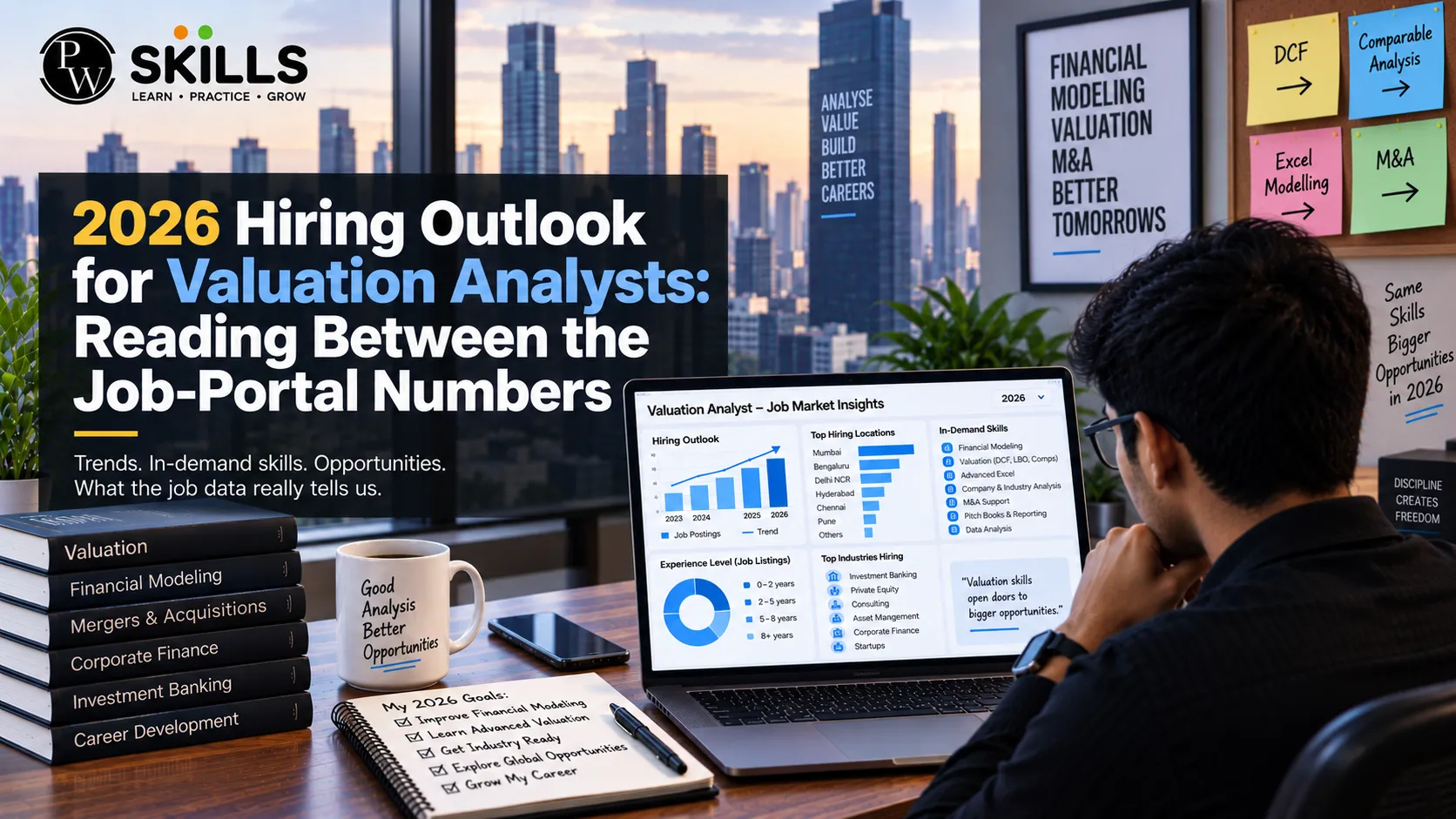
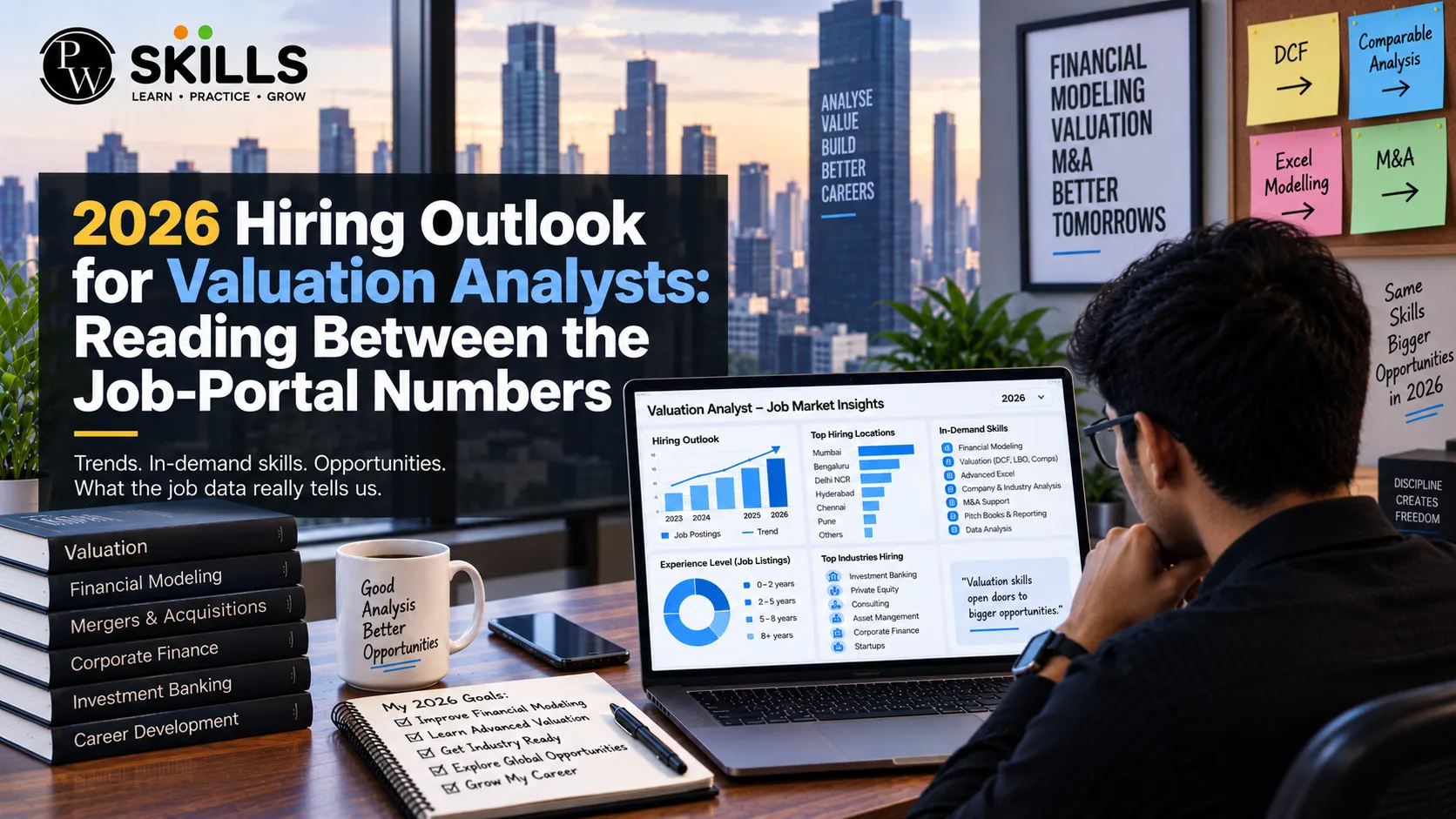
Modern hiring portals present a complex picture for finance professionals. While headline job counts appear steady, the skill sets requested by top employers are undergoing a major transformation. Valuation analyst positions now demand a mix of traditional accounting knowledge, quantitative analysis, and artificial intelligence skills.
A Financial Modeling with AI Course helps professionals build these skills and prepare for modern finance roles. Understanding these shifts is essential for navigating the current job market, as corporate finance teams, investment banks, and advisory firms expect analysts to perform complex financial evaluations faster than ever.
What Is the Financial Modeling with AI Course?
The AI financial modeling course equips finance professionals with the technical capabilities required by modern corporate employers. Traditional financial modeling focuses heavily on manual Excel inputs, historical data compilation, and static forecasting. Adding artificial intelligence into the process shifts the analyst's role from data entry to strategic interpretation.
Traditional vs. AI-Powered Modeling
|
Traditional Modeling |
AI-Powered Modeling |
|
Manual data extraction |
Automated data ingest |
|
Static formula building |
Machine-learning forecasts |
|
Error-prone manual checks |
Automated anomaly detection |
|
Hours spent formatting |
Real-time dynamic visuals |
Modern investment and valuation workflows rely on automated data scraping, predictive algorithm integration, and machine learning models to project future cash flows. Key highlights of an AI-driven valuation workflow include:
-
Automated Data Processing: Extracting financial statements, earnings call transcripts, and market metrics automatically.
-
Predictive Revenue Modeling: Using machine learning algorithms to forecast seasonal demand and macroeconomic sensitivity.
-
Enhanced Risk Analysis: Running Monte Carlo simulations and multi-variable stress tests within seconds.
-
Faster Valuation Execution: Reducing the time needed to build Discounted Cash Flow (DCF) and Leveraged Buyout (LBO) frameworks.
Employers favor candidates who possess these competencies because they reduce errors and accelerate decision-making. Completing an AI financial modeling course demonstrates to recruiters that an applicant can deliver high-level strategic support without requiring months of introductory training.
How Does the Financial Modeling with AI Course Align with Financial Analyst Jobs?
Recent Financial Modeling with AI Course + Financial Analyst Jobs News highlights a clear trend across global financial centers: routine analytical tasks are becoming automated, while demand for strategic advisory capabilities is rising. Recruitment data across major employment hubs shows that job descriptions for financial analysts, valuation associates, and corporate strategy specialists increasingly request familiarity with AI tools.
Financial Analyst Job Demand
|
Role Type |
Technical Requirement |
|
Traditional Valuation Analyst |
Basic Excel, Accounting Basics |
|
Next-Gen AI Valuation Analyst |
Python/AI Tools, Dynamic Scenarios |
|
M&A Advisory Specialist |
Algorithmic Deal Structuring |
Industry coverage points to three primary shifts driving candidate selection:
-
Automation of Standard Spreadsheets: Companies are replacing basic, static spreadsheet modeling with dynamic, data-linked frameworks.
-
Focus on Real-Time Business Valuation: Organizations require continuous corporate valuation updates rather than annual, static reports.
-
Emphasis on Strategic Storytelling: Job boards list narrative building, data visualization, and AI-driven scenario planning as top candidate requirements.
Taking an AI financial modeling course directly addresses these industry updates. Candidates who understand prompt engineering for financial queries, automated data parsing, and AI-assisted DCF modeling stand out in corporate recruitment pipelines.
How Does a Financial Modeling with AI Course Match AI Finance Hiring Trends?
The Hiring-outlook-hook in financial recruitment centers on productivity and specialized technical capability. Hiring managers face tighter deal timelines, higher deal complexity, and larger volumes of market data. As a result, candidates who rely solely on legacy spreadsheet methods struggle to meet modern performance benchmarks.
Key market pressures driving this hiring shift include:
-
Tighter Deal Windows: Private equity firms and investment banks must evaluate targets in days rather than weeks.
-
Big Data Integration: Valuations now require processing alternative data, such as web traffic, supply chain metrics, and sentiment analysis.
-
Cost Efficiency: Finance departments aim to do more with leaner teams by using automated workflows.
By learning to blend financial theory with artificial intelligence, valuation analysts position themselves as high-value assets. The Hiring-outlook-hook favors professionals who treat AI tools as co-pilots to double their output, improve accuracy, and deliver actionable insights.
How Does a Financial Modeling with AI Course Match PwC India Workforce Trends?
The PwC India Workforce Report provides valuable context regarding how professionals view skill development and technological adoption in the workplace. The research indicates that employees across sectors recognize the urgent need to upgrade their capabilities to stay competitive.
According to workforce sentiment data, a significant portion of professionals prioritize upskilling to protect their long-term career growth. Key takeaways from the findings include:
-
Skill Scarcity vs. Demand: Employers face shortages of talent capable of applying modern tech solutions to business problems.
-
Workplace Upskilling Priorities: Employees actively seek out learning opportunities that combine functional domain expertise with technological execution.
-
Autonomy and Value Creation: Professionals who master modern tools report higher job satisfaction because they spend less time on repetitive data entry.
Workforce Up-Skilling Insights
|
Metric Focus |
Industry Insight |
|
Talent Shortage Solution |
Automation combined with upskilling |
|
Employee Career Priority |
Practical, tech-driven skill sets |
|
Workflow Efficiency |
Shift from manual input to strategy |
Applying these findings to corporate finance, enrolling in an AI financial modeling course offers a structured path to bridge the gap between traditional finance education and industry requirements. Upskilling in automated forecasting and digital valuation aligns directly with the workforce trends highlighted by the report.
How Does a Financial Modeling with AI Course Help You Stand Out on Job Portals?
Optimizing a professional profile on career portals requires more than listing standard accounting degrees. Recruiters search job databases using targeted key terms, software proficiencies, and specialized skill tags.
To maximize visibility on job platforms, prospective valuation analysts should focus on four core steps:
-
Highlight Specialized Certifications: Feature completion of an AI financial modeling course prominently in summary sections and resume headlines.
-
Detail Specific AI Applications: List concrete technical proficiencies, such as AI-assisted financial statement analysis, automated scenario modeling, and Python-based forecasting.
-
Quantify Operational Impact: Frame past achievements around efficiency gains, such as reducing valuation model build times or improving forecast accuracy using predictive tools.
-
Target Modern Job Titles: Apply for roles such as Financial Automation Analyst, AI Finance Specialist, or Quantitative Valuation Associate alongside traditional analyst positions.
By aligning resume keywords with active recruiter queries, candidates significantly improve their placement in automated candidate tracking systems.





FAQs
What is covered in a Financial Modeling with AI Course?
How does learning AI financial modeling impact job search outcomes?
Are traditional valuation methods being completely replaced by AI?
Is coding required to perform AI-driven financial modeling?
Why are employers prioritizing AI-skilled valuation analysts in 2026?







Get Free Counselling Today
and Clear up all your Doubts
 Live & recorded classes available at easeDashboard for progress trackingLakhs of practice questions

