

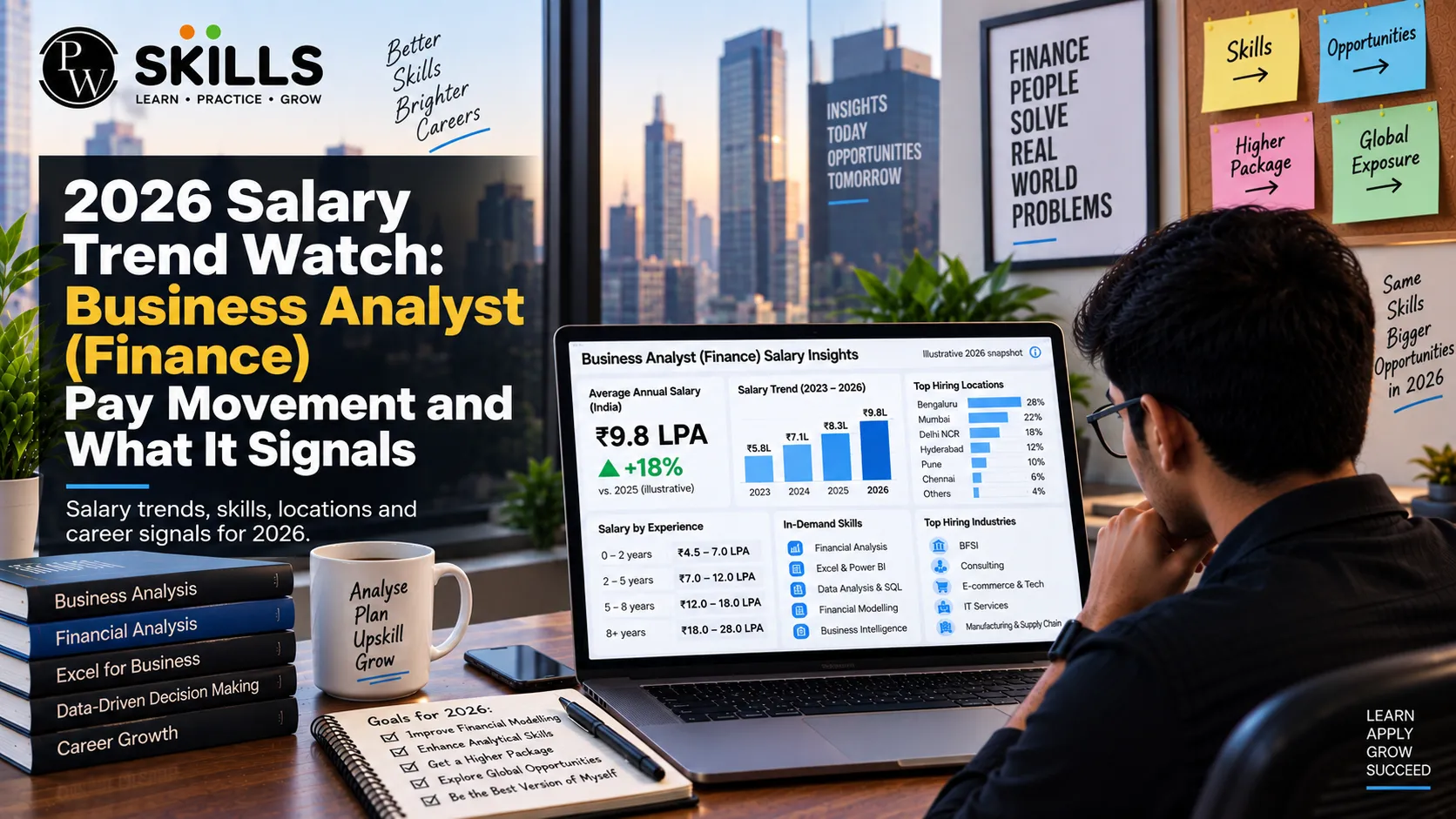
2026 Salary Trend Watch: Business Analyst (Finance) Pay Movement and What It Signals
 Hardik Gupta18 Sept, 2026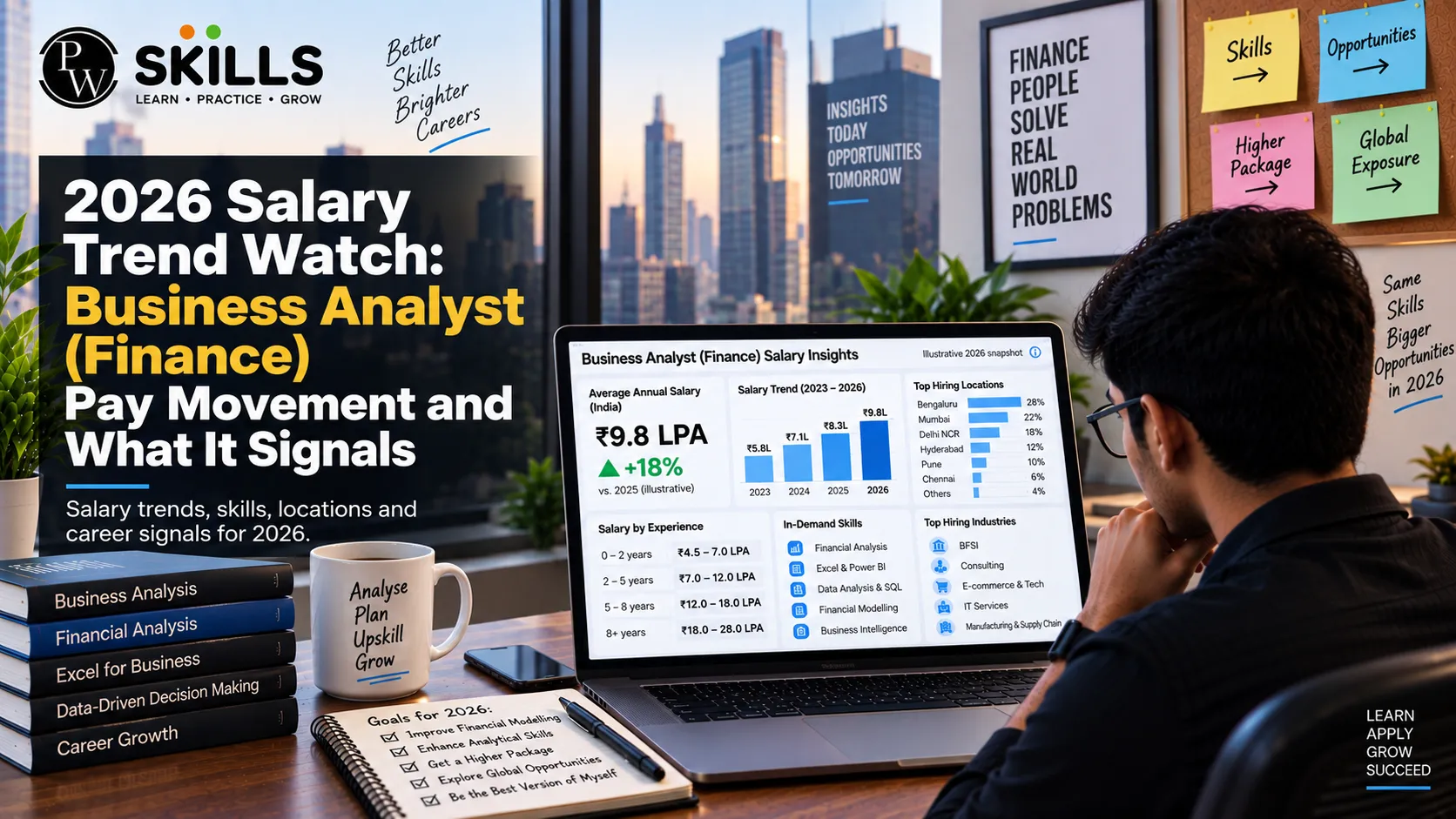
Financial roles are moving away from traditional data entry and manual spreadsheet calculations. Modern corporate finance teams demand fast insights, dynamic scenario testing, and automated forecasting.
A Financial Modeling with AI Course helps Business Analysts build these modern skills and adapt to changing finance technology. This salary trend watch examines compensation shifts and explains how mastering AI-based financial tools can help analysts protect their earning potential.
Overview of Financial Modeling with AI Course
Learn how modern finance teams are building, analyzing, and stress-testing financial models with AI at the core. This course goes beyond traditional spreadsheet modeling to show how Excel, Python, automation, and AI can work together to turn complex financial data into faster, smarter insights.
From forecasting revenues and cash flows to valuation, scenario planning, and decision analysis, learners gain practical experience in building models that adapt to changing business conditions. The course also explores AI-powered workflows that can streamline repetitive tasks, enhance analysis, and support better financial decision-making.
Designed for the evolving finance landscape, the course prepares learners to apply these skills across FP&A, corporate finance, investment banking, valuation, and financial analysis roles.
How Does a Financial Modeling with AI Course Support 2026 Salary Growth?
Salary growth for financial analysts depends on their ability to use advanced analytics and automation tools. Traditional financial modeling relies on historical spreadsheets and static formulas. Today's corporate environments require real-time risk assessment and automated variance analyses.
Key drivers changing compensation structures include:
-
Automation Integration: Routine ledger consolidation and basic reporting are now automated, shifting analyst responsibilities toward strategic interpretation.
-
Complex Data Handling: Organizations process vast amounts of unstructured financial data, requiring analysts to use structured databases and modern analytical workflows.
-
Accelerated Forecasting Cycles: Annual planning cycles are being replaced by rolling forecasts updated in real time.
-
Higher Skill Requirements: Companies offer salary premiums to candidates who combine core corporate finance knowledge with modern data processing techniques.
Professional development programs like an AI Financial Modeling Course help finance professionals bridge the gap between traditional accounting techniques and modern analytics.
How Does a Financial Modeling with AI Course Improve Finance Salary Potential?
Compensation for financial business analysts varies based on technical capabilities, experience, and domain expertise. Analysts who focus solely on basic spreadsheet management earn baseline market rates. Those who master automated workflows and advanced risk evaluation command higher packages.
|
Job Level |
Key Responsibilities |
Focus Area |
Pay Movement Trend |
|
Junior Business Analyst |
Reporting, basic variance analysis |
Data collection & maintenance |
Standard market rates |
|
Mid-Level Business Analyst |
Rolling forecasts, capital allocation models |
Process efficiency & automation |
Moderate increase |
|
Senior Financial Analyst |
Strategic planning, capital structures |
Strategic business decisions |
Above-average growth |
|
Valuation Analyst |
Asset valuation, deal structuring |
Transaction risk & M&A |
High premium |
Professionals looking to stand out in competitive job markets often use specialized training like an AI Financial Modeling Course to build advanced analytical skills.
How Does a Financial Modeling with AI Course Match Deloitte India BFSI Outlook Trends?
The Deloitte India BFSI Outlook highlights major shifts across banking, financial services, and insurance sectors. Financial institutions are modernizing their technology infrastructures and operational processes.
Deloitte India BFSI Outlook Drivers
|
No. |
Outlook Driver |
Industry Insight |
|
1 |
Operational Modernization |
Transition from legacy systems to agile platforms. |
|
2 |
Advanced Risk & Compliance |
Automated stress-testing and dynamic portfolio monitoring. |
|
3 |
Demand for High-Skilled Talent |
Preference for analysts with automated workflow expertise. |
Core sector developments include:
-
Operational Modernization: Banks and insurance providers are moving from legacy accounting systems to automated digital platforms.
-
Risk Management Focus: Regulatory standards demand continuous risk monitoring and real-time stress testing.
-
Evolving Talent Requirements: Hiring teams prioritize analysts who can build adaptive risk models over those limited to manual data entry.
Finance professionals can align their career progression with these sector shifts by taking an AI Financial Modeling Course.
How Does a Financial Modeling with AI Course Prepare You for Valuation Analyst Jobs?
Recent Valuation Analyst Jobs News shows growing demand for specialized financial evaluation skills across private equity, corporate M&A, and investment banking. Asset valuation requires rapid analysis of dynamic market variables, changing interest rates, and fluctuating cash flows.
Important market developments include:
-
Deal Structuring Complexity: Private capital markets require detailed dynamic models to evaluate complex investment structures.
-
Speed to Insight: Investment teams need rapid turnaround times for valuation assessments during deal negotiations.
-
Scenario Stress Testing: Risk teams expect detailed evaluations across multiple macroeconomic scenarios.
Valuation Analyst Skill Requirements
|
Skill Requirement |
Outcome |
|
Traditional DCF Analysis + Automated Scenario Testing |
Faster, High-Precision Asset Valuations |
Developing expertise through an AI Financial Modeling Course provides the technical foundation needed for these analytical roles.
How Does a Financial Modeling with AI Course Help Increase Salary?
A strong Salary-hook in modern financial hiring relies on demonstrating clear business impact rather than listing routine duties. Companies offer competitive salary packages to candidates who reduce reporting cycle times and improve forecast accuracy.
Key factors that boost compensation negotiations include:
-
Automated Dashboard Creation: Replacing manual slide decks with real-time reporting dashboards.
-
Enhanced Forecast Precision: Reducing variance gaps in revenue and expense projections using advanced analytical tools.
-
Cross-Functional Communication: Translating complex financial data into actionable strategic insights for business leaders.
-
Continuous Skill Upgrading: Completing practical programs like the AI Financial Modeling Course to remain aligned with market expectations.





FAQs
What is the average salary range for a Business Analyst in Finance?
How does taking a Financial Modeling with AI Course impact career growth?
Why are Valuation Analyst roles seeing increased market demand?
What key trends are highlighted in the Deloitte India BFSI Outlook?
What skills serve as an effective Salary-hook during compensation reviews?







Get Free Counselling Today
and Clear up all your Doubts
 Live & recorded classes available at easeDashboard for progress trackingLakhs of practice questions

