

2026 Hiring Outlook for Financial Analysts: Reading Between the Job-Portal Numbers
 Hardik Gupta18 Sept, 2026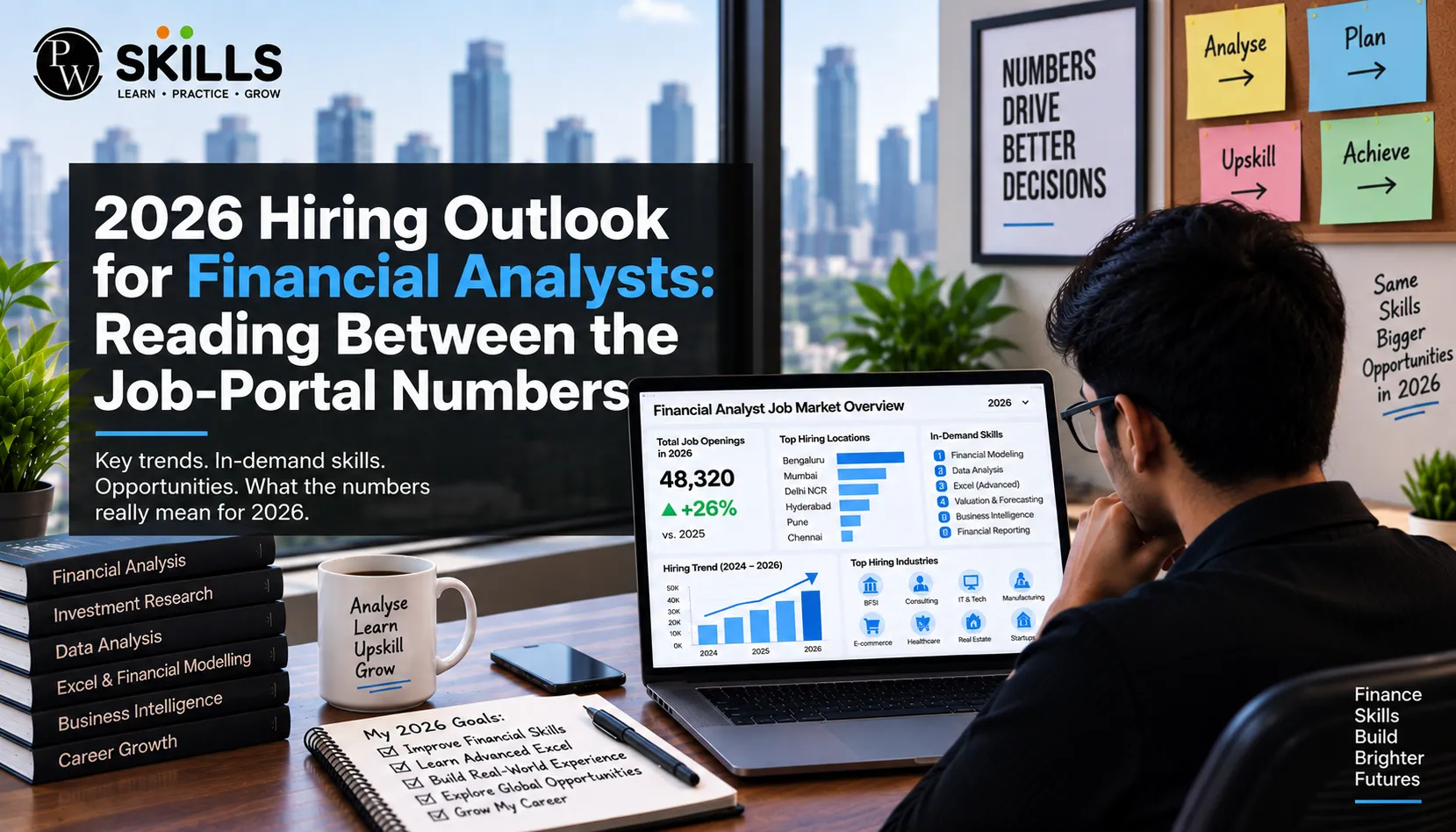
Traditional spreadsheets and legacy forecasting methods no longer satisfy corporate demands. Today, companies want professionals who can combine core corporate finance with modern automated analytics. Enrolling in a comprehensive Financial Modeling with AI Course helps aspiring analysts master automated valuation, predictive forecasting, and data-driven decision-making to stand out in a competitive job market.
Why Is Financial Modeling with AI Course Important?
AI financial modeling course is important because modern finance teams use AI, automation, and data tools to improve financial analysis and forecasting. It helps learners build skills in financial modeling, valuation, predictive analysis, data processing, and AI-based automation. These skills can reduce manual work, improve decision-making, and help finance professionals prepare for modern roles in corporate finance, FP&A, investment banking, and valuation.
How Does a Financial Modeling with AI Course Match 2026 Finance Hiring Trends?
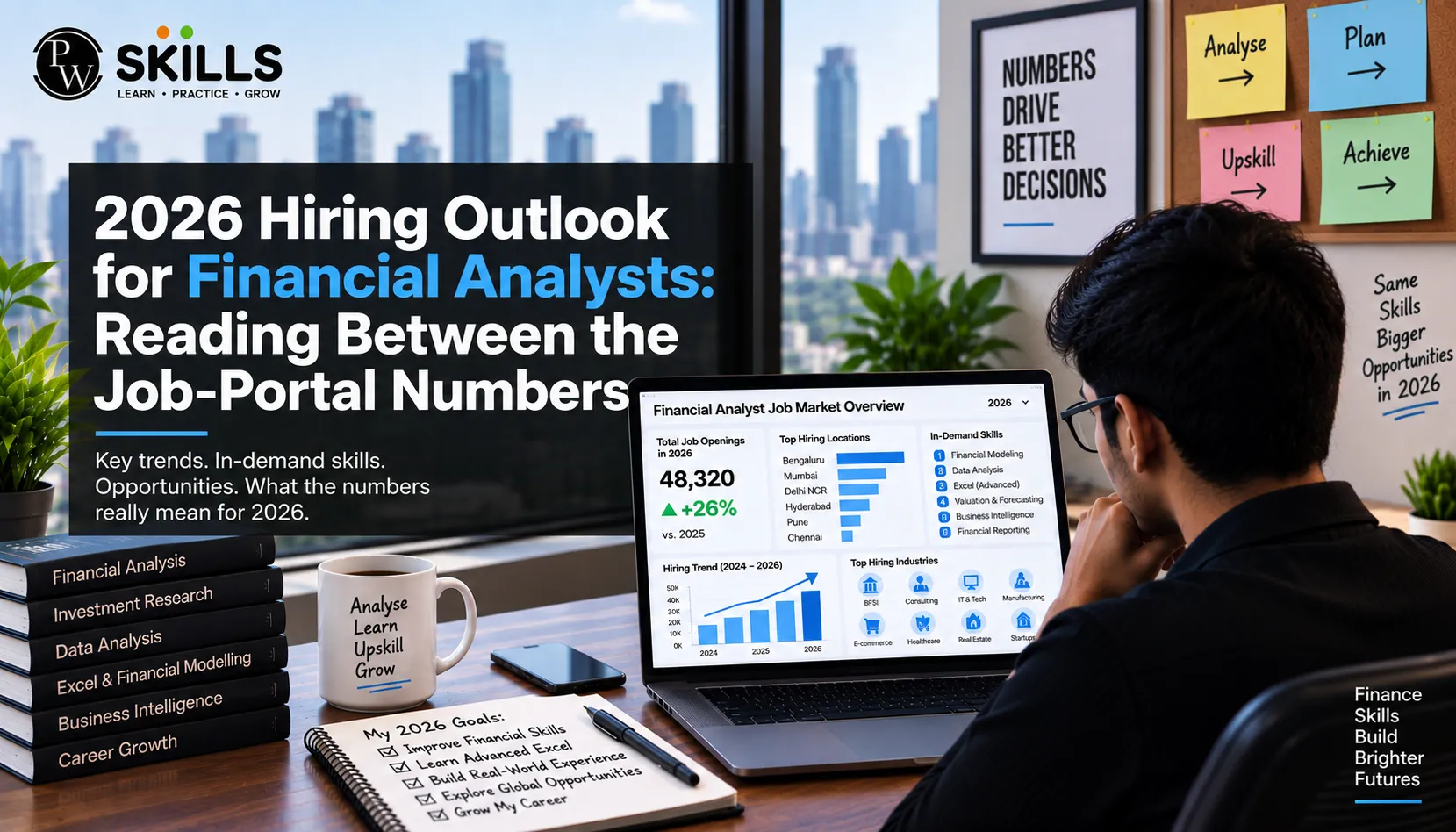
Job portals present a deceptive view of the current corporate landscape. A quick search reveals thousands of open roles for entry-level and mid-level analysts, yet candidate conversion rates remain surprisingly low. Companies are not just looking for individuals who can build static financial statements. They need professionals who can evaluate complex business scenarios in real time.
The 2026 Skill Shift
|
Traditional Analyst |
Future-Ready Analyst |
|
Manual Data Entry |
Automated ETL Pipelines |
|
Static Excel Spreadsheets |
Dynamic AI-Assisted Models |
|
Historical Reporting |
Predictive & Scenario Analysis |
|
Basic Ratio Calculations |
Real-Time Executive Dashboards |
Recent Financial Modeling with AI Course + Corporate Finance Analyst Jobs News highlights a deliberate transition toward lean, tech-driven finance teams. Employers expect new hires to handle multi-scenario risk analysis, automated variance tracking, and instant board-level reporting. Candidates who rely solely on legacy accounting skills face prolonged job hunts, while those with advanced technical capabilities often receive multiple offers.
How Does a Financial Modeling with AI Course Address the NSDC-FICCI Skill Gap?
The findings from the NSDC-FICCI Skill Gap Report highlight a critical mismatch between academic curricula and actual industry requirements in the Banking, Financial Services, and Insurance (BFSI) sector. The report emphasizes that traditional education fails to prepare students for modern corporate environments.
|
Key Competency Area |
Industry Expectation |
Identified Skill Gap |
Recommended Solution |
|
Financial Modeling |
Dynamic, automated multi-scenario modeling |
Reliance on manual, static spreadsheets |
Specialized practical training |
|
Rapid handling of unstructured data |
Limited to basic Excel formulas |
AI-driven data extraction |
|
|
Forecasting |
Predictive rolling forecasts |
Historical trend extrapolation |
Machine learning integrated tools |
|
Business Valuation |
Real-time discount rate adjustments |
Formulaic textbook valuation |
Practical case-study applications |
Addressing these gaps requires more than basic classroom instruction. Employers expect professionals to independently build, audit, and optimize complex financial models using modern productivity tools.
Why Choose a Financial Modeling with AI Course?
To remain competitive in today's job market, financial analysts must update their technical toolkits. Completing an AI financial modeling course bridges the gap between theoretical finance and practical, high-efficiency corporate execution.
AI-Integrated Financial Workflow
|
Workflow Stage |
Process |
|
1 |
Raw Financial Data |
|
2 |
AI Data Extraction |
|
3 |
Automated Cleaning |
|
4 |
Dynamic AI Model |
|
5 |
Interactive Dashboard |
|
6 |
Executive Insights |
1. Automated Data Ingestion and Cleaning
Manual data entry is one of the biggest time sinks in corporate finance. Modern, tech-enabled finance professionals use intelligent algorithms to pull data directly from raw financial statements, PDF reports, and enterprise databases, cutting preparation time by up to 80%.
2. Enhanced Predictive Forecasting
Standard linear regression models often miss sudden market shifts. AI-assisted models process macroeconomic variables, industry trends, and historical performance simultaneously, producing far more accurate rolling forecasts and sensitivity analyses.
3. Rapid Valuation and Scenario Building
Building Discounted Cash Flow (DCF) or Leveraged Buyout (LBO) models manually can take days. Advanced prompt engineering and specialized financial tools allow analysts to draft baseline models in minutes, giving them more time to focus on strategic analysis and interpretation.
What Skills Do Employers Expect From a Financial Modeling with AI Course Graduate?
Recruiters evaluate candidates based on practical execution rather than theoretical knowledge. When evaluating applicants, hiring managers look for several key technical and strategic competencies:
-
Advanced Spreadsheet Architecture: Designing clean, scalable, and audit-ready workbooks without broken links or circular references.
-
Prompt Engineering for Finance: Crafting precise queries for generative tools to analyze financial disclosures, SEC filings, and quarterly earnings transcripts.
-
Integrated Three-Statement Modeling: Seamlessly linking the Income Statement, Balance Sheet, and Cash Flow Statement under dynamic operational assumptions.
-
Visual Data Storytelling: Converting complex numeric outputs into executive dashboards that clearly communicate key performance indicators to non-financial stakeholders.
Mastering these skills through a targeted AI financial modeling course signals to recruiters that you can deliver immediate value without requiring extensive onboarding.
How Does a Financial Modeling with AI Course Prepare You for Corporate Finance Jobs?
Integrating smart automation into daily finance workflows transforms how core corporate functions operate:
Investment Banking and M&A
Transaction teams use automated algorithms to run quick target screens, evaluate synergies, and model complex capital structures. Analysts can test dozens of debt-to-equity combinations in real time during live negotiation rounds.
Corporate Financial Planning & Analysis (FP&A)
FP&A teams use predictive modeling to automate variance analysis. Instead of manually explaining why quarterly expenses exceeded budgets, automated systems immediately highlight the underlying cost drivers.
Equity Research and Asset Management
Research analysts leverage intelligent natural language processing to scan hundreds of earnings call transcripts simultaneously, identifying shifts in management tone and flagging emerging operational risks faster than traditional methods allow.





FAQs
What is the primary focus of a Financial Modeling with AI Course?
How are entry-level investment banking hiring standards changing in 2026?
What is the key takeaway from the latest Deloitte India BFSI Outlook regarding finance talent?
Can beginners enroll in a Financial Modeling with AI Course without prior coding experience?
How does understanding the hiring-outlook-hook help job seekers?





Get Free Counselling Today
and Clear up all your Doubts
 Live & recorded classes available at easeDashboard for progress trackingLakhs of practice questions

