

How AI Video Creation Skills Can Transform Your Creative Portfolio in 2026
 Gunika Shah29 Aug, 2026
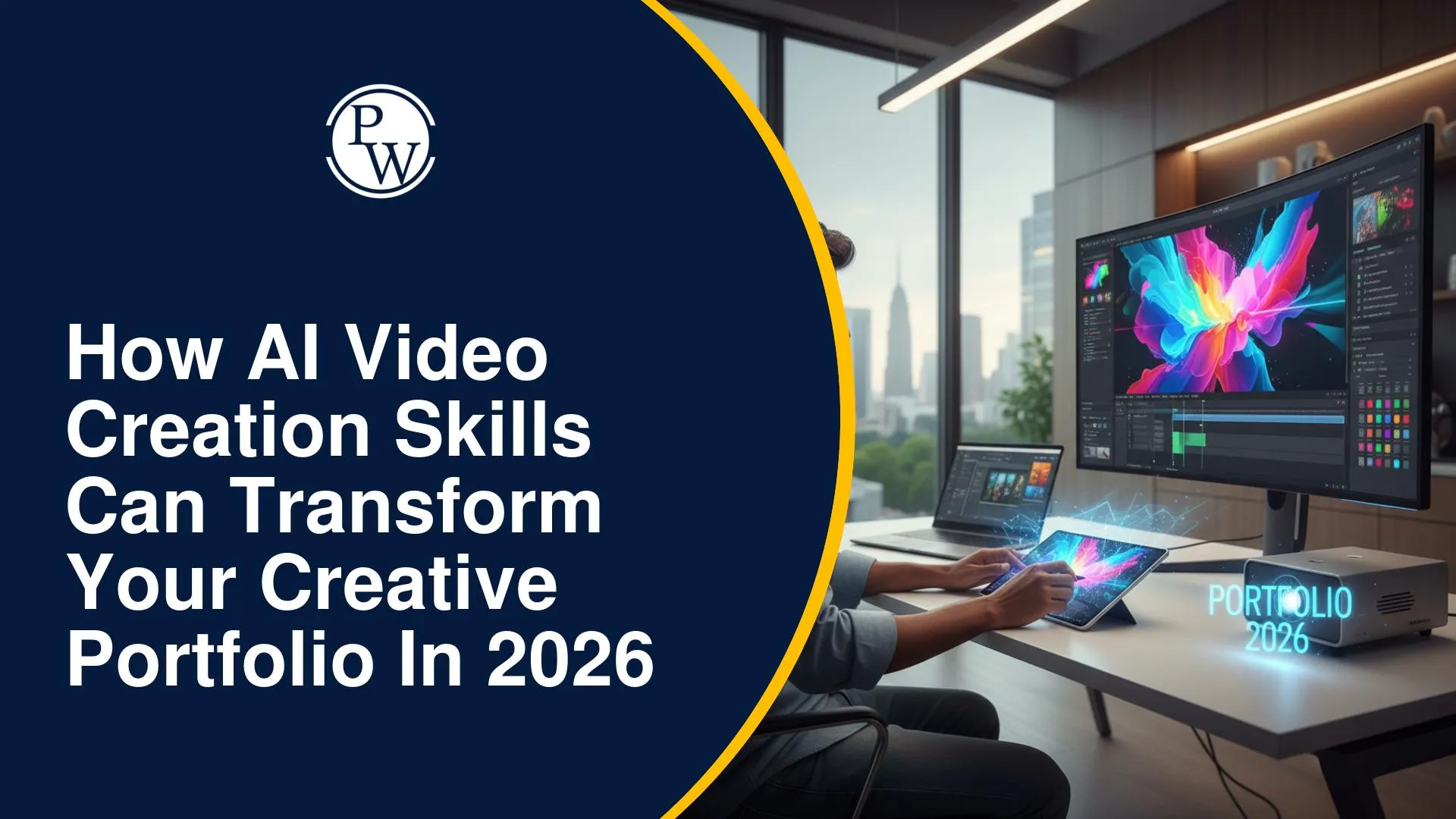
Knowing how to use an AI video tool is useful, but a creative portfolio needs to show what you can actually make. A finished explainer, marketing video, music video, or short narrative provides stronger proof of your creative and technical abilities.
AI video creation in 2026 can bring ideas, scripts, generated visuals, sound, and editing together within one creative workflow. These skills can be applied across short videos, explainers, marketing projects, trailers, music videos, and longer-form content. With practical learning through PW Skills, creators can develop these abilities and apply them to portfolio-ready projects.
Why Are AI Video Creation Skills Valuable for Your Portfolio?
AI video creation allows one project to demonstrate several creative abilities at once.
|
Skill |
What It Shows |
|
Visual direction |
|
|
Scriptwriting |
Story and structure |
|
Visual creation |
|
|
Sound |
Voice, music, and atmosphere |
|
Pacing and final execution |
|
|
Storytelling |
How all elements work together |
AI video creation can involve text-to-image, image-to-video, and text-to-video workflows, giving creators more control over settings, visual styles, actions, and effects. Your portfolio can therefore show how you use AI to make creative decisions rather than simply listing the tools you know.
Which AI Video Projects Should Your Portfolio Include?
Choose projects that demonstrate different abilities instead of filling your portfolio with similar generated clips.
-
Short Marketing Video
Shows concise messaging, audience awareness, pacing, and editing.
-
Explainer Video
Demonstrates research, scripting, narration, and the ability to simplify complex information through clear visuals and storytelling.
-
Music Video
Shows how you combine generated visuals with music, rhythm, transitions, and editing.
-
Trailer or Short Narrative
Demonstrates scene planning, visual consistency, storytelling, sound, and editing. Planning each scene around its visuals, audio, and narration can also show how well you manage a complete creative workflow.
-
1–4 Minute Creative Video
Shows whether you can connect multiple clips into a longer, coherent piece. This format can work well for marketing videos, music videos, explainers, and short narrative projects.
How Do You Turn AI-Generated Clips Into Portfolio-Ready Videos?
Generating AI clips is only the beginning. A finished video also requires you to organise scenes, add voiceovers or music, use cuts and transitions effectively, and include titles or credits where needed.
A practical process includes:
-
Define the purpose and audience.
-
Plan the script or scenes needed.
-
Generate the visuals and clips.
-
Add voice, music, or other audio.
-
Edit for pacing and consistency.
-
Review and polish the final video.
The process can also change with the project. A music video may depend more on visuals, rhythm, and editing, while story-led content requires greater attention to research, scripts, structure, and scenes.
What Makes an AI Video Portfolio Stand Out?
Do not show only the final video. Give enough context for someone to understand the creative decisions behind it.
For your strongest projects, include:
-
Brief: What did you need to create?
-
Audience: Who was it made for?
-
Process: How did you approach the script, visuals, sound, and editing?
-
Creative choices: Why did you choose that style or format?
-
Final output: What did you eventually create?
Avoid raw AI generations, repetitive projects, and long lists of tools without finished work. Your portfolio should answer “What can you create?”, not simply “Which AI tools have you used?”
How Can PW Skills Help You Build an AI Video Portfolio?
PW Skills can help learners develop AI-assisted video creation skills through practical workflows rather than focusing only on individual tools.
-
Create Videos from Ideas
Practise turning an initial concept into a clear video plan and visual direction.
-
Work with AI-Assisted Creation
Build familiarity with AI-generated visuals, video elements, voiceovers, captions, and other components.
-
Improve Editing and Storytelling
Work on pacing, audio, scene organisation, and narrative decisions that help turn generated material into a complete video.
-
Build Portfolio-Ready Work
Apply these skills through creative projects that demonstrate what you can actually produce.
AI video creation can give you more ways to demonstrate creativity in 2026, but generating a clip is only the starting point. A stronger portfolio shows how you combine ideas, visuals, sound, storytelling, and editing to produce purposeful work. Building these skills with PW Skills can help you move from experimenting with AI tools to creating projects worth showcasing.
FAQ's
1. What AI video creation skills should I show in my portfolio?
2. What AI-generated videos can I add to a creative portfolio?
3. Do I need video editing skills if I use AI video tools?
4. How can PW Skills help with AI video creation?





Get Free Counselling Today
and Clear up all your Doubts
 Live & recorded classes available at easeDashboard for progress trackingLakhs of practice questions

