

Best Online Video Editing Courses in 2026: Skills and Topics to Look For
 Hardik Gupta30 Sept, 2026
The best online video editing courses depend on having the most important skills in a competitive digital environment. Today’s creators, students and aspiring freelancers need to know more than just how to cut and trim. Choosing and following an appropriate learning route bridges the gap between the output of an amateur hobbyist and that of a professional industry. This article gives you the basic subjects, software packages and training structures you need to succeed.
What Skills Do the Best Online Video Editing Courses Teach?
Learning editing involves much more than arranging clips on a timeline. Today's digital ecosystem demands a mix of technical precision and creative storytelling. The best courses should help learners understand how different editing choices affect the way viewers experience a video. This includes learning how to build a clear sequence, maintain a smooth flow, and match visuals with the purpose of the content.
Core Competencies to Learn
-
Visual Storytelling: Structuring narrative arcs, hooks, and pacing to keep audiences engaged from start to finish.
-
Audio Synchronisation and Design: Cleaning background noise, aligning voice tracks, and adding impactful sound effects.
-
Colour Grading: Balancing hues and applying looks to set the right emotional tone for the narrative.
-
Timeline Editing: Organising clips, transitions, audio layers, and other assets efficiently on the editing timeline.
-
Video Formatting: Understanding aspect ratios, resolutions, frame rates, and export settings for different platforms.
-
Basic Motion Graphics: Creating simple titles, text animations, lower thirds, and visual elements that improve video presentation.
A good course should also include regular editing practice instead of focusing only on theory. Learners can improve faster by working on different formats such as YouTube videos, Instagram Reels, advertisements, interviews, tutorials, and short promotional videos. This variety helps students understand how editing techniques change according to the audience and platform.
Pick up these skills and make your work stand out on YouTube, Instagram and the commercial client channel. It also provides trainees with a solid foundation before progressing into more complex areas like motion graphics, color correction, sound design and AI-assisted editing.
Which Software Do the Best Online Video Editing Courses Cover?
An effective course must teach reliable, professional software tools used by production studios worldwide. However, learners do not necessarily need to learn every editing application at once. The better approach is to become comfortable with one main editing platform and then understand the workflow of other commonly used tools.
Key Software Packages
-
Adobe Premiere Pro: The industry benchmark for timeline manipulation, multi-cam editing, and third-party plugin integration.
-
DaVinci Resolve: Renowned for advanced colour correction, audio production via Fairlight, and robust editing suites.
-
Motion Graphics Tools: Software or embedded workspaces handling visual effects, titles, and lower thirds.
Courses may also introduce learners to tools for thumbnail design, audio editing, screen recording, or motion graphics. Understanding how these tools work together can make the complete post-production process easier to manage.
Students should also learn practical software features such as importing and organising media, using shortcuts, creating sequences, working with layers, applying transitions, adjusting audio levels, adding captions, and exporting videos in the correct format. These skills are useful across different types of editing projects.
Familiarity with these tools makes transitioning into professional environments seamless. It also helps learners spend less time figuring out basic software functions and more time improving their editing decisions, storytelling, and creative output.
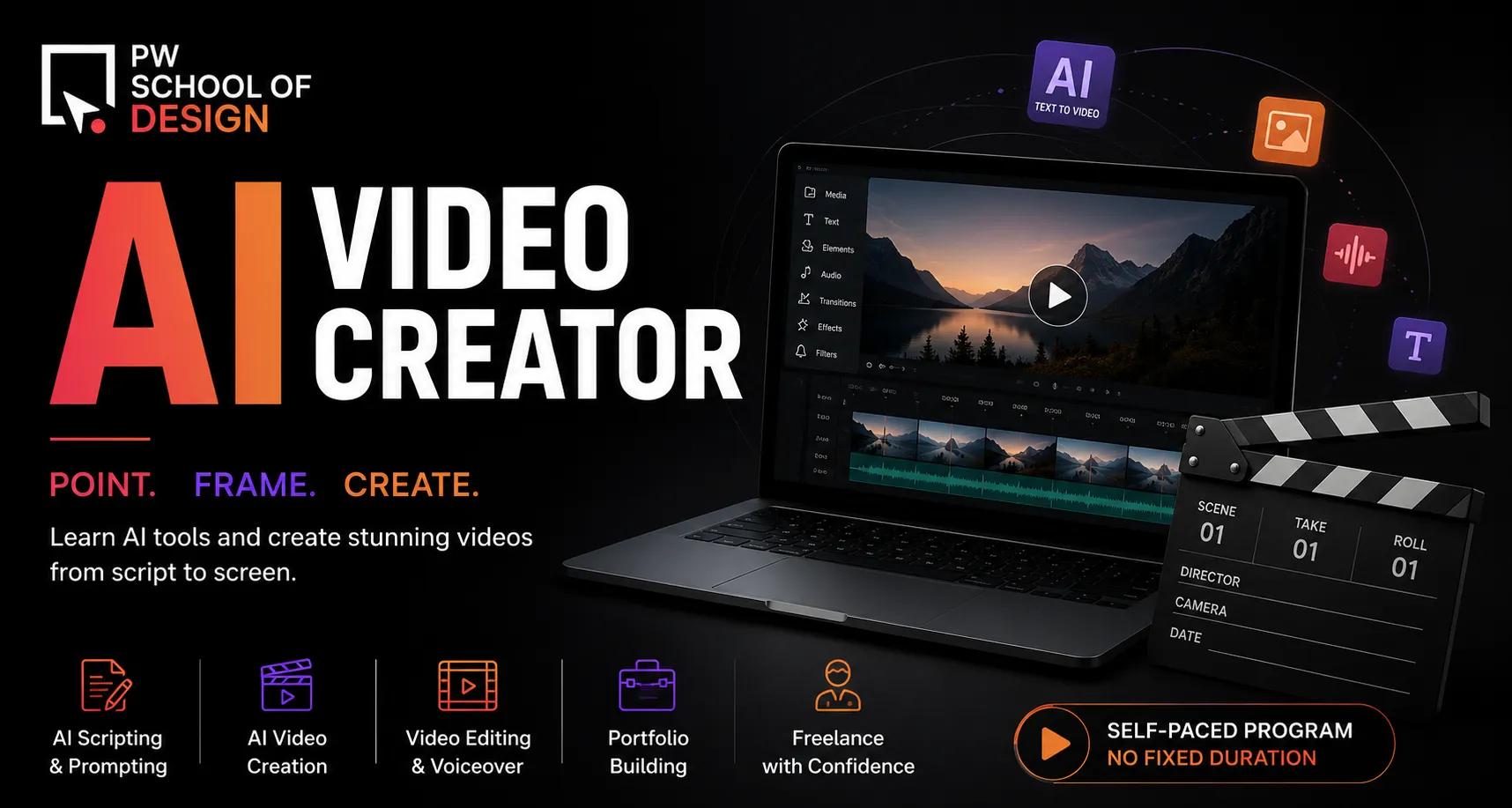
Also Explore our Course : AI Video Creator Course Online
How AI Is Used in the Best Online Video Editing Courses
Technology changes fast, and contemporary curricula now integrate artificial intelligence to streamline repetitive tasks. AI is becoming part of many editing workflows, but it does not replace the need for human creative decisions. Learners still need to understand storytelling, pacing, visual quality, and audience requirements before using automated tools.
Leveraging Smart Workflows
-
Automated Captions: Generating accurate subtitles instantly to boost short-form video retention.
-
AI-Assisted Editing: Utilizing smart reframing, audio clean-up, and prompt-driven content creation.
-
Workflow Efficiency: Saving hours on initial rough cuts so editors can focus entirely on creative polish.
-
Content Repurposing: Adapting longer videos into shorter clips or platform-specific formats with the help of AI tools.
-
Audio Enhancement: Using AI-based features to reduce unwanted noise and improve speech clarity.
The best online video editing courses should explain where AI can save time and where manual editing is still important. For example, AI can help generate captions or identify sections of a recording, but the editor needs to review the output for accuracy, timing, tone, and visual consistency.
Learning this balance can help students build a more practical workflow. Instead of depending completely on automation, they can use AI for repetitive tasks while spending more time on storytelling, creative direction, and final quality checks.
Embracing these smart tools keeps you ahead of industry curves and maximizes productivity.
How the Best Online Video Editing Courses Help Build a Portfolio
Theoretical knowledge alone rarely secures freelance clients or corporate roles. Practical experience remains vital. A portfolio gives learners a way to demonstrate their editing skills through actual projects rather than relying only on certificates or course completion records.
Maximising Practical Training
-
Real-World Simulations: Editing complete viral-style reels, short-form promos, or long-form narrative pieces.
-
Portfolio Checkpoints: Structuring finished assignments neatly so they can be showcased directly to recruiters.
-
Client Acquisition Guidance: Learning how to present work professionally and pitch services to prospective brands.
Learners should aim to include their strongest work rather than adding every project they complete. A portfolio can include short-form videos, YouTube edits, advertisements, educational content, interviews, or storytelling projects. Each sample should highlight a specific editing skill and show the learner's ability to work with different formats.
Feedback is another important part of practical video editing training. Mentor or peer reviews can help learners identify problems with pacing, audio, transitions, visual consistency, and storytelling. Making improvements based on this feedback can gradually make the portfolio stronger and more professional.
A structured certification combined with a solid portfolio provides practical evidence of your capabilities to the market.
FAQs
What are the best online video editing courses available today?
How do I choose the right online course for beginners?
Why is a video editing certification valuable for my career?
Can I learn video editing online without prior experience?
What tools should an video editing course include?





Get Free Counselling Today
and Clear up all your Doubts
 Live & recorded classes available at easeDashboard for progress trackingLakhs of practice questions

