

DCF Modeling Explained for Beginners
 Praveen Singh31 Jul, 2026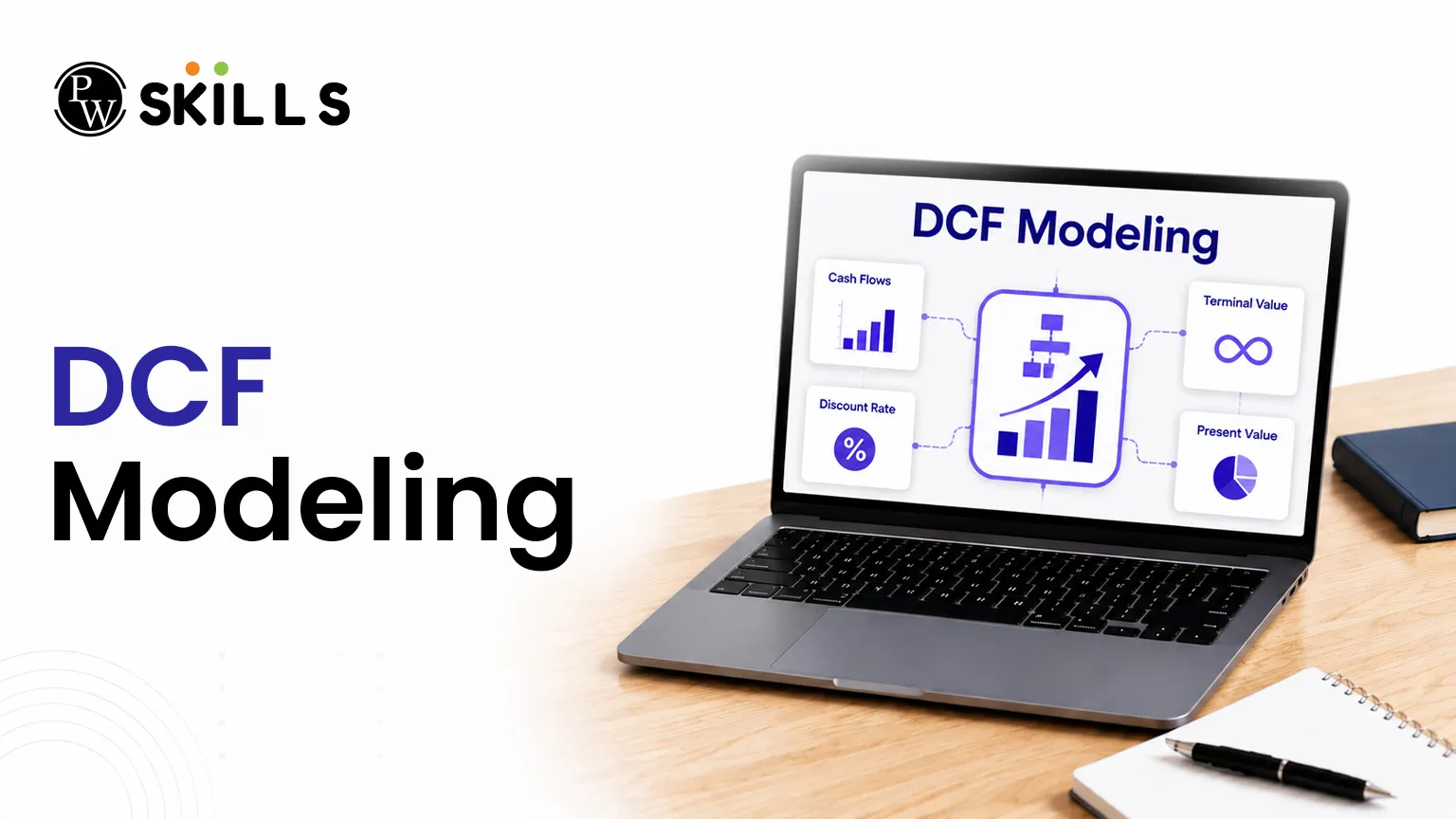
Before making investment or business decisions, understanding a company's true value is essential. DCF Modeling helps estimate a company's intrinsic value by forecasting future cash flows and discounting them to the present. Learning it equips aspiring finance professionals with a practical valuation technique used for informed financial analysis and decision-making.
What is DCF Modeling?
This framework operates on a simple principle: a business is worth the sum of its future cash flows, adjusted for the time value of money. The core philosophy is that a pound today is worth more than a pound tomorrow due to potential earning capacity, inflation, and risk.
When you build a discounted cash flow model, you take future projected cash flows and bring them back to today's value. The resulting metric is known as the Net Present Value (NPV). In the realm of investment banking and corporate development, this structure allows analysts to bypass short-term market noise. Instead, it provides an objective valuation based purely on internal financial health.
Key Components of DCF Modeling
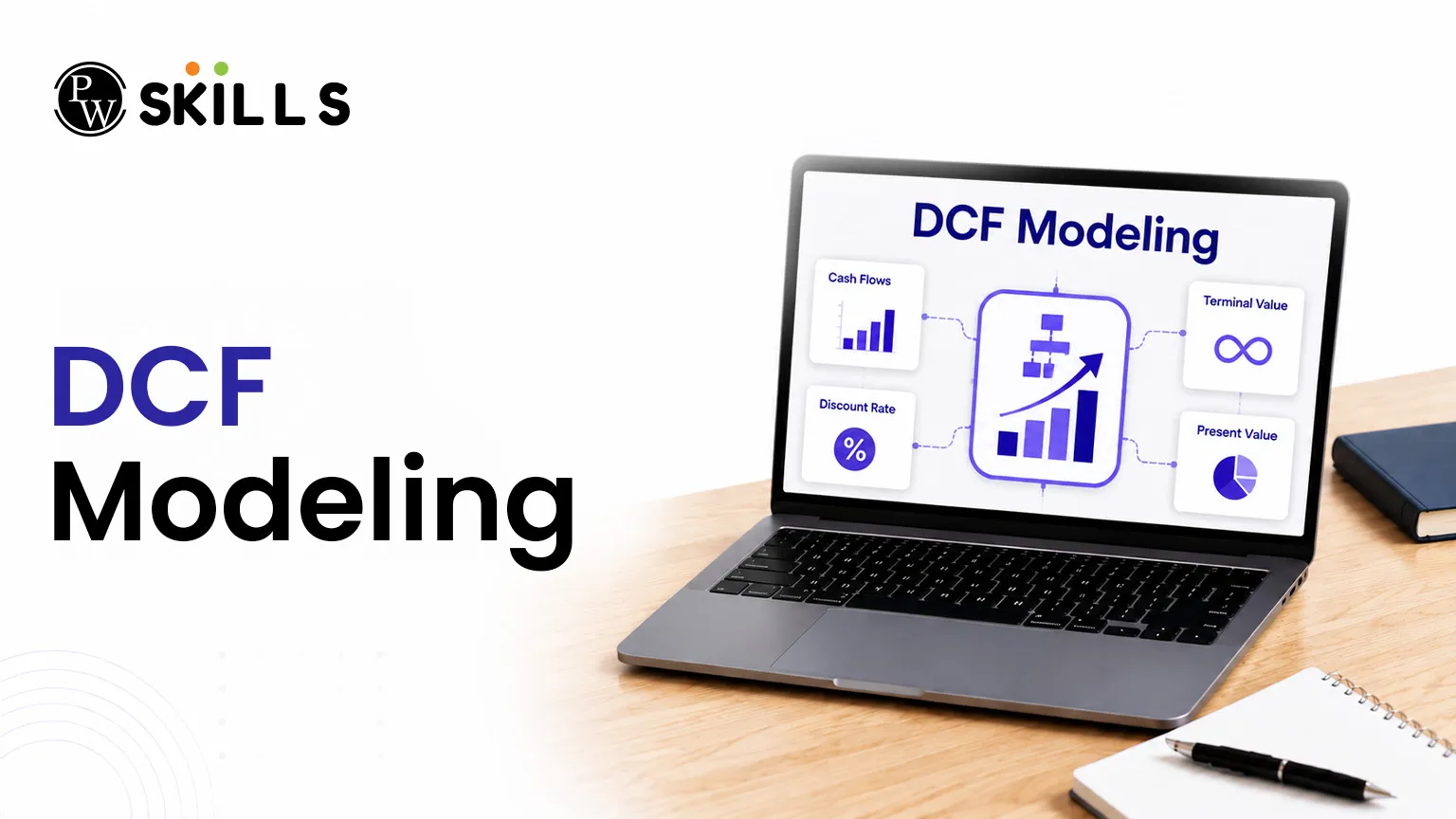
You must break down the framework into its individual building blocks. Every professional discounted cash flow analysis relies on four distinct pillars:
1. Unlevered Free Cash Flow (FCFF)
This is the raw cash a business generates after accounting for operational expenses and capital expenditures (CapEx). It is "unlevered" because it looks at the cash available to all capital providers—both debt and equity holders—before deducting interest payments. This provides an apples-to-apples operational comparison across companies.
2. The Forecast Period
Analysts typically forecast financial performance over a 5-year to 10-year horizon. This window must be long enough for the business to reach a steady, normalised state of growth, yet short enough to maintain realistic forecasting accuracy.
3. The Discount Rate (WACC)
To bring future money back to today's value, you need a discount rate. In standard techniques, this is the Weighted Average Cost of Capital (WACC). WACC represents the blended cost of a company's debt and equity, reflecting the overall risk profile of the investment. A higher risk profile increases WACC, which reduces the present value of future cash flows.
4. Terminal Value (TV)
A business does not simply vanish after the 5-year forecast window. Terminal Value represents the estimated worth of all cash flows beyond the explicit forecast period, continuing into perpetuity. It often makes up a substantial portion of the total corporate valuation.
How to Build a DCF Modeling Framework
Building a reliable financial architecture requires structural precision. Learn these foundational steps to build a functional model in Excel:
Step 1: Establish Financial Modeling Basics and Forecast Revenue
Your model begins by looking at historical trends. Analyse past growth patterns and establish logical assumptions for the next 5 years.
-
Estimate top-line revenue growth based on market demand and historical averages.
-
Project future operating expenses (COGS and SG&A) to calculate Earnings Before Interest and Taxes (EBIT).
Step 2: Calculate Unlevered Free Cash Flow
Transform your operational projections into actual cash metrics by adjusting EBIT for non-cash items and structural investments:
|
Order |
Financial Line Item |
Operational Adjustment |
|
1 |
EBIT |
Starting operating profit metric |
|
2 |
Less: Taxes |
Apply the corporate effective tax rate |
|
3 |
Add: Depreciation & Amortisation |
Add back non-cash expenses |
|
4 |
Less: Capital Expenditures (CapEx) |
Deduct cash spent on fixed assets |
|
5 |
Less/Add: Change in Working Capital |
Adjust for shifts in inventory, receivables, and payables |
|
Output |
Unlevered Free Cash Flow |
The baseline cash available for discounting |
Step 3: Determine the Terminal Value
Calculate the enterprise value beyond the initial 5-year period. You can choose between two main methodologies:
-
Perpetual Growth Method: Assumes the company will continue to grow at a stable, conservative rate indefinitely (typically tied to long-term GDP growth or inflation).
-
Exit Multiple Method: Assumes the business is sold at the end of the forecast period using an EV/EBITDA multiple derived from comparable public companies.
Step 4: Discount the Cash Flows to Today's Value
Apply your calculated WACC to every individual year of projected cash flow, as well as the Terminal Value. In professional Excel workflows, analysts routinely use the XNPV function because it accurately accounts for unevenly spaced cash flows and partial "stub periods" in financial calendars.
Step 5: Calculate Enterprise Value and Equity Value
Sum the net present values of your 5-year forecast period and your Terminal Value. This combined figure gives you the total Enterprise Value (EV). To find the true equity value (the value available specifically to shareholders), implement the following financial math:
Equity Value = Enterprise Value − Net Debt
Where Net Debt equals total debt minus cash balances. Divide this final equity value by the company's total outstanding shares to arrive at an estimated intrinsic share price.
Benefits of DCF Modeling
Why do top tier financial institutions rely so heavily on DCF Modeling? The system offers profound advantages over basic valuation metrics:
-
Focuses on Intrinsic Worth: Unlike relative valuation metrics (like simple P/E ratios), a discounted cash flow model measures the company's internal capacity to produce actual cash. It is independent of temporary market distortions or emotional investor sentiments.
-
Highly Customizable Architecture: Analysts can adjust individual operational drivers—such as shifting profit margins, changing tax environments, or planned asset expansions—to see immediate impacts on corporate value.
-
Enables In-Depth Sensitivity Analysis: Once your baseline structure is built, you can layer on scenario analyses. This helps you understand how the valuation changes if revenue growth slows down or if the discount rate spikes due to wider economic shifts.





DCF Modeling Explained for Beginners FAQs
What is the difference between unlevered and levered cash flow in DCF Modeling?
Why is WACC used as the primary discount rate in a discounted cash flow analysis?
How does Terminal Value affect overall valuation techniques?
Can beginners use AI to assist with financial modeling basics?
What are the main limitations of relying solely on DCF Model?









Get Free Counselling Today
and Clear up all your Doubts
 Live & recorded classes available at easeDashboard for progress trackingLakhs of practice questions

