

AI vs Traditional Financial Analysis
 Varun Saharawat30 Jun, 2026
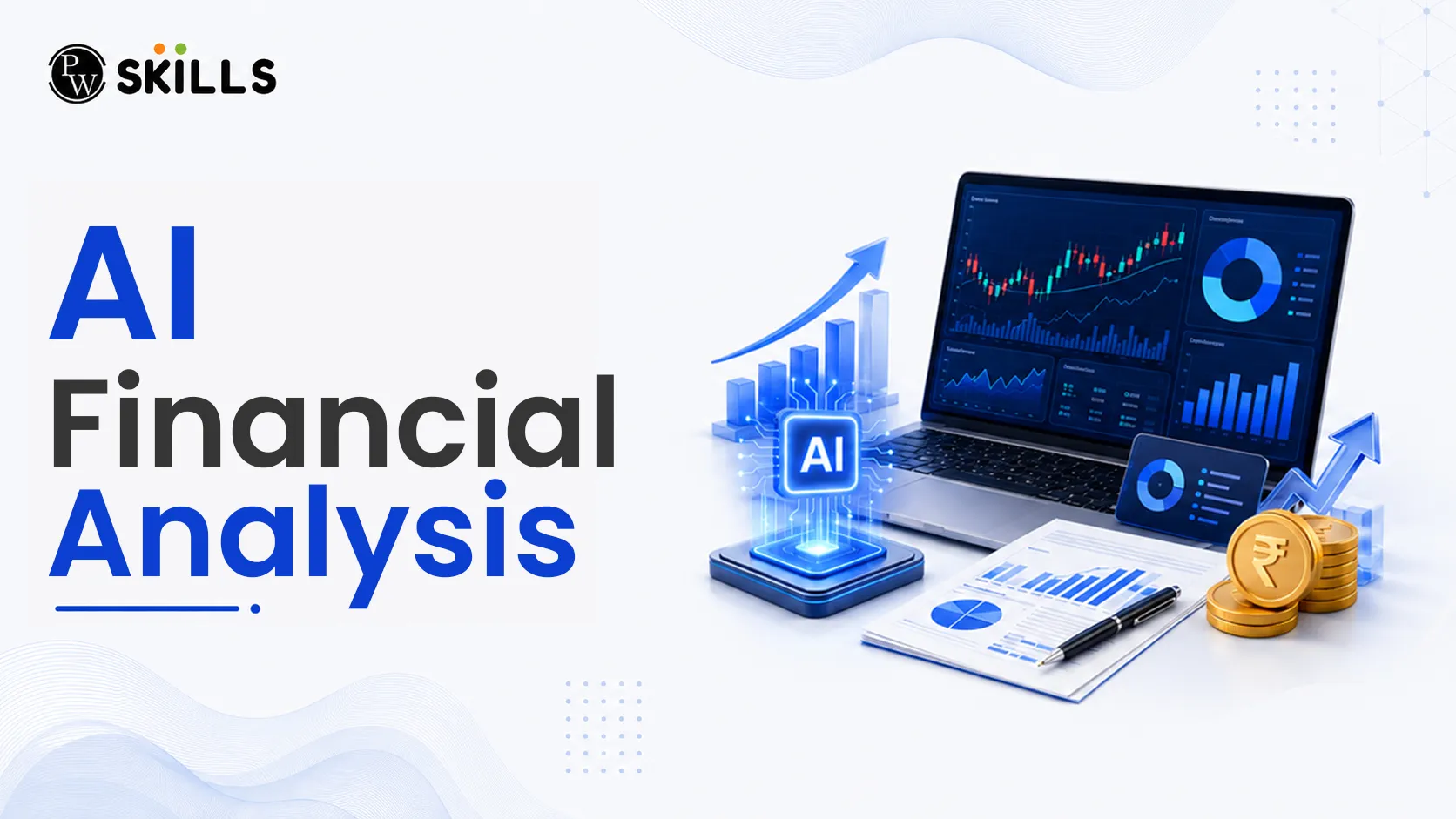
Finance departments today operate in an environment where information moves faster than ever before. Organizations generate vast quantities of financial records, market intelligence, and operational data daily, making manual processing increasingly inefficient.
Adopting advanced AI Financial Analysis solutions addresses these challenges by automating repetitive processes, improving forecast accuracy, and helping organizations make proactive financial decisions based on real-time intelligence.
Overview of AI Financial Analysis
Before exploring specific applications, it is important to understand how AI-driven financial systems differ from conventional approaches. Artificial intelligence in financial analysis combines machine learning, predictive analytics, natural language processing, and automated data management to evaluate financial information more efficiently than traditional methods.
Instead of relying solely on historical records, intelligent systems continuously process both internal and external datasets. These platforms identify hidden trends, detect anomalies, and generate forecasts that adapt as new information becomes available. By integrating finance technology into everyday operations, organizations can gain faster access to actionable insights and improve overall decision-making capabilities.
How AI Financial Analysis Improves Traditional Financial Analysis?
To appreciate the value of automation, it is necessary to understand how traditional financial analysis operates. Conventional financial management relies heavily on historical financial statements, including balance sheets, profit-and-loss reports, and cash-flow summaries. Analysts manually gather information from different sources and consolidate it into spreadsheet models.
This process often follows fixed assumptions and predefined formulas. Forecasts are typically based on historical performance trends, making them less responsive to sudden market changes. Since analysts determine which variables to evaluate, important influencing factors may be overlooked. Furthermore, spreadsheet-based systems require continuous manual verification, increasing the risk of errors and delays.
Modern finance technology transforms financial workflows by automating data collection, analysis, and forecasting. Rather than depending on static spreadsheets, organizations can use intelligent systems that continuously process information and update projections automatically.
The following comparison highlights the differences between conventional financial analysis and AI-powered systems:
|
Feature |
Traditional Financial Analysis |
AI Financial Analysis |
|
Data Collection |
Manual gathering and spreadsheet consolidation of structured data. |
Automated data ingestion from APIs, databases, and external sources. |
|
Data Preparation |
Extensive manual formatting, validation, and cleaning. |
Automated cleansing, normalization, and data processing. |
|
Variable Selection |
Analyst-selected variables based on experience and assumptions. |
Machine learning identifies hidden drivers and relationships automatically. |
|
Model Validation |
Manual review of formulas and assumptions. |
Statistical testing and performance-based validation metrics. |
|
Forecast Generation |
Single forecast scenario based on historical patterns. |
Multiple predictive scenarios with probability-based outcomes. |
|
Updates |
Requires manual revisions when new information arrives. |
Continuous learning and automatic forecast adjustments. |
How AI Financial Analysis Insights Are Generated?
The effectiveness of AI-driven insights comes from a structured analytical framework that converts raw information into meaningful business intelligence. Modern AI systems follow several key stages to produce accurate financial predictions.
Automated Data Integration
Intelligent platforms collect information from accounting systems, market databases, economic indicators, customer transactions, and external publications. This creates a unified data environment for comprehensive analysis.
Natural Language Processing (NLP)
Advanced NLP models analyze text-based information such as news reports, earnings calls, regulatory announcements, and customer feedback. These qualitative inputs are converted into measurable indicators that improve forecast precision.
Intelligent Feature Discovery
Rather than relying exclusively on human assumptions, machine learning algorithms evaluate numerous variables simultaneously to identify relationships that influence financial performance.
Machine Learning Modeling
Predictive models analyze historical patterns, seasonal fluctuations, and market behaviors. Technologies such as neural networks and time-series forecasting help identify future trends more accurately.
Scenario-Based Forecasting
Instead of producing a single estimate, AI systems generate multiple potential outcomes. Each scenario includes probability assessments that help organizations evaluate risks and opportunities more effectively.
Benefits of AI Financial Analysis
AI Financial Analysis helps businesses process large volumes of financial data quickly and accurately. It improves forecasting, identifies patterns, and enables better data-driven financial decisions.
By reducing manual effort and errors, AI allows analysts to focus on strategic planning and risk management.
-
Faster processing of large financial datasets.
-
Improved forecasting accuracy through predictive modeling.
-
Real-time monitoring of financial performance indicators.
-
Automated identification of risks and unusual activities.
-
Reduced dependence on manual data entry and spreadsheet maintenance.
What are the Practical Applications of AI Financial Analysis?
Organizations across industries are adopting artificial intelligence in financial analysis to improve operational efficiency, strategic planning, and financial control. These solutions provide continuous visibility into business performance and market conditions.
Predictive Forecasting and Business Planning
Traditional forecasting often relies on periodic reviews and static assumptions. AI-powered systems continuously monitor changing market conditions, consumer behavior, and economic indicators. This allows organizations to adjust forecasts quickly and make informed business decisions.
Multi-Scenario Risk Simulations
Financial planning frequently involves evaluating uncertainties such as interest-rate fluctuations, inflation, supply-chain disruptions, or changes in consumer demand. Automated platforms simulate multiple possibilities simultaneously, enabling leaders to prepare for different outcomes before challenges arise.
Fraud Detection and Anomaly Monitoring
Machine learning systems establish patterns of normal financial behavior and identify unusual transactions automatically. Early detection of anomalies allows finance teams to investigate issues before they become significant risks.
Automated Reporting and Narrative Creation
AI-powered reporting tools convert complex datasets into understandable business summaries. These systems generate executive-ready reports, reducing the time spent preparing presentations and written financial analyses.
Enhanced Operational Efficiency
By automating routine processes such as budget preparation, reconciliation, and data validation, organizations can redirect resources toward higher-value strategic initiatives and financial planning activities.
How to Implement AI Financial Analysis in Business Operations?
Organizations seeking to adopt intelligent financial systems should follow a structured implementation process to maximize effectiveness and maintain data quality.
Evaluate Existing Processes
Identify repetitive, time-consuming tasks within current financial workflows that could benefit from automation and predictive analytics.
Choose Appropriate Technology
Select solutions that align with business objectives, whether focused on forecasting, risk analysis, reporting automation, or strategic planning.
Establish Strong Data Governance
Ensure historical and operational data is accurate, secure, and compliant with applicable regulations before integrating AI-powered systems.
Develop Workforce Capabilities
Finance professionals should learn how to interpret AI-generated outputs, manage analytical tools, and incorporate automated findings into decision-making processes.
Continuously Review Performance
AI models require regular monitoring and optimization to remain aligned with evolving business priorities and market conditions.





FAQs
1. How does AI Financial Analysis differ from traditional financial analysis?
2. Can finance technology analyze unstructured information?
3. How do AI-driven insights improve risk management?
4. Will AI Financial Analysis replace financial analysts?
5. What are the first steps in implementing AI Financial Analysis?







Get Free Counselling Today
and Clear up all your Doubts
 Live & recorded classes available at easeDashboard for progress trackingLakhs of practice questions

