

Traditional Marketing vs Digital Marketing, Key Differences, Examples, Advantages
 Varun Saharawat30 Oct, 2025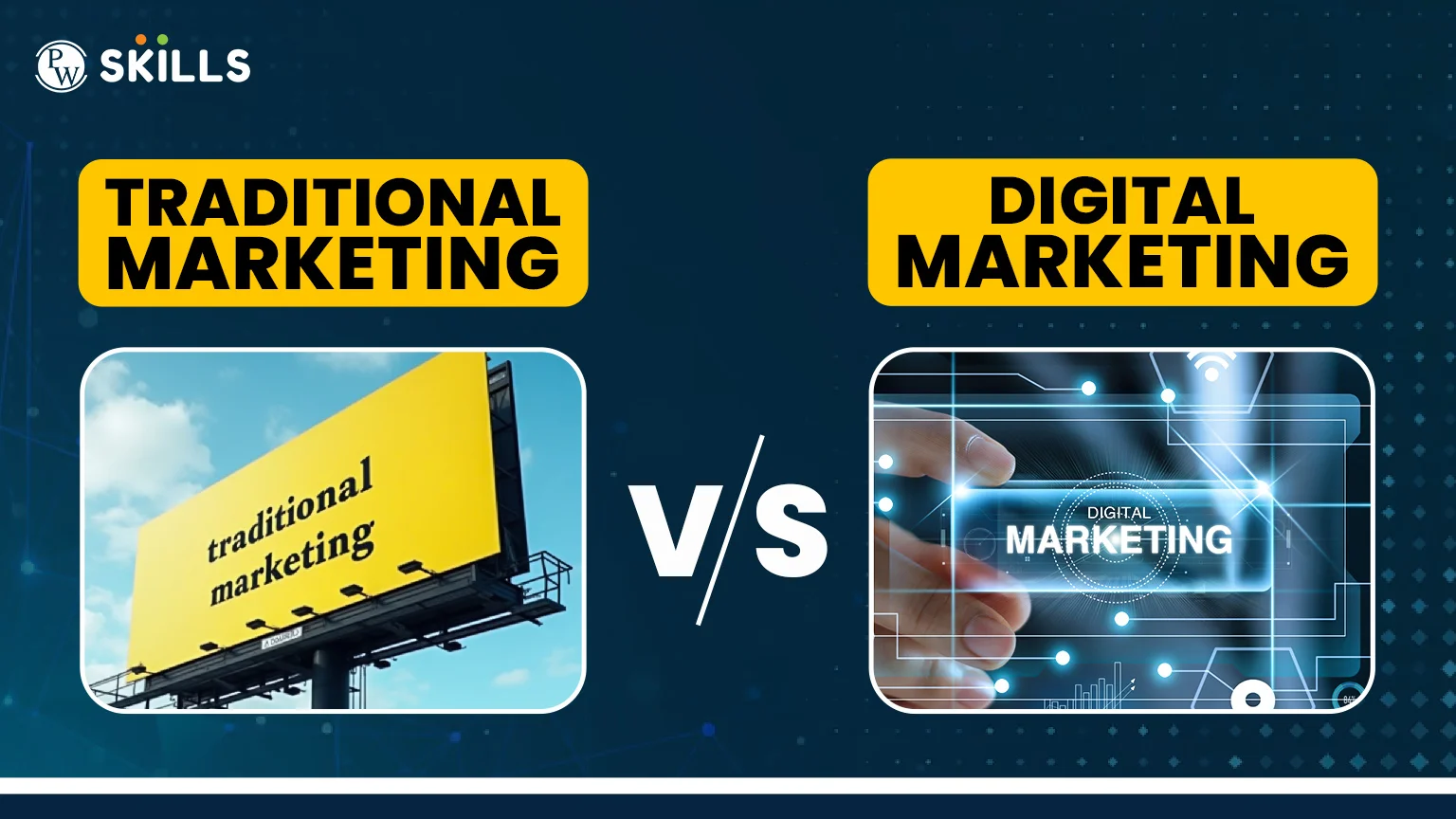
Traditional Marketing vs Digital Marketing: Marketing is the process of promoting products or services to potential customers. For years, businesses used traditional marketing methods like TV ads, radio spots, newspapers, and billboards to get their message across. These methods worked well for a long time, but they were often expensive and hard to track in terms of results.
As technology advanced, digital marketing took center stage. Digital marketing uses tools like websites, social media, email campaigns, and search engine optimization (SEO) to reach a wider and more targeted audience. Unlike traditional marketing, digital marketing is more affordable, flexible, and easier to measure in real time.
Both traditional and digital marketing have their own benefits. Understanding their key differences can help businesses decide which strategy will work best for their goals. Check complete details about Traditional Marketing vs Digital Marketing, advantages, examples, and which is better for you below.
What is Traditional Marketing?
Traditional marketing refers to offline methods used to promote products, services, or brands before digital media became popular. These methods focus on reaching a broad audience through mass media and include strategies like:- TV and radio ads
- Newspaper ads
- Billboards
- Direct mail
- Event sponsorships
What is Digital Marketing?
Digital marketing is the process of promoting products, services, or brands using online channels such as websites, social media, search engines, email, and digital ads. Unlike traditional marketing, digital marketing allows businesses to target specific audiences, track performance, and adjust campaigns in real time. Common digital marketing strategies include:- Search Engine Optimization (SEO) to improve website rankings
- Pay-Per-Click (PPC) advertising to drive targeted traffic
- Content marketing to engage customers with valuable information
- Social media marketing to build relationships with customers
Difference Between Traditional Marketing and Digital Marketing
Traditional Marketing and Digital Marketing are two main approaches businesses use to promote their products and services. The following are the key differences between Traditional Marketing vs Digital Marketing:|
Traditional Marketing vs Digital Marketing |
||
|
Aspect |
Traditional Marketing | Digital Marketing |
| Definition | Uses offline channels like TV, radio, newspapers, and billboards to promote a brand. |
Uses internet-based platforms such as websites, social media, search engines, and email. |
|
Engagement |
Low engagement, mostly one-way communication. | High engagement through interactive and real-time communication. |
| Conversion Rate | Slow conversions due to broader, less targeted reach. |
Fast conversions using targeted strategies and call-to-actions (CTAs). |
|
Nature |
Static – content and ads cannot be updated after release. | Dynamic – ads and content can be changed or optimized anytime. |
| Return on Investment | Difficult to measure – lacks clear tracking tools. |
Easy to measure ROI with tools like Google Analytics and other tracking platforms. |
|
Effectiveness & Cost |
More expensive and less effective for modern audiences. | Less expensive and more effective with precise targeting and low-budget options. |
| Targeting | Standardized targeting – reaches general audience. |
Customized targeting – based on demographics, interests, and user behavior. |
|
Tracking Performance |
Not possible – hard to analyze results. | Fully trackable – you can monitor clicks, impressions, and engagement metrics. |
| Reach | Limited to local or regional areas. |
Global reach – can target users worldwide instantly. |
|
Ad Tweaking |
Not possible to edit once an ad is published. | Easily editable and optimizable in real-time. |
| Results Speed | Delayed results – takes time to see impact. |
Immediate results – real-time data and instant feedback. |
|
Communication |
One-way communication – brand to consumer. | Two-way communication – brands and consumers can interact directly. |
| Interruptions | Ads are hard to skip (e.g., TV or radio commercials). |
Ads are easily skippable if not engaging. |
|
Advertising Methods |
TV ads, radio, newspapers, magazines, billboards, direct mail. | Social media marketing, SEO, PPC, email marketing, content marketing. |
| Consumer Preference | Preferred by older generations, offers a tangible and trusted experience. |
Preferred by younger audiences, offers convenience and interactivity. |
|
Longevity |
Print and billboard ads have long-lasting visibility. | Digital campaigns need frequent updates to stay relevant. |
| Personalization | Limited personalization in ads and messages. |
Highly personalized content using AI and data insights. |
|
Brand Awareness |
Builds strong offline brand recognition over time. |
Creates quick awareness through viral content and online reach. |
Traditional Marketing vs Digital Marketing Examples
Traditional and digital marketing use different channels to reach audiences, each with its own set of tools and methods. Below are some common examples of both approaches.Traditional Marketing Examples
Traditional marketing uses offline methods to promote products and services through physical and broadcast media.- Newspaper Ads
- Magazine Ads
- Television Commercials
- Radio Advertising
- Billboards
- Posters
- Direct Mail (brochures, catalogs, postcards)
- Event Sponsorships
- Cold Calling
- Telemarketing
- Flyers
- Pamphlets
Digital Marketing Examples
Digital marketing uses online platforms to connect with audiences through digital content, ads, and interactive campaigns.- Search Engine Optimization (SEO)
- Social Media Marketing (Facebook, Instagram, LinkedIn)
- Email Marketing
- Pay-Per-Click (PPC) Advertising
- Content Marketing (blogs, videos, infographics)
- Influencer Marketing
- Affiliate Marketing
- Online Webinars
- Virtual Events
- YouTube Advertising
- Mobile App Advertising
- Retargeting Ads
Advantages of Traditional Marketing
The following are the advantages of Traditional marketing:- Physical visibility: Traditional marketing materials such as newspapers, brochures, and billboards create a strong physical presence that audiences can see, hold, and keep.
- Trust and credibility: People often trust traditional advertisements more than online ads, especially those found in newspapers, TV, and radio which are seen as more reliable.
- Local audience targeting: Traditional marketing is highly effective for targeting local customers through regional newspapers, radio stations, and community events.
- Stronger brand recall: Printed ads and outdoor advertising like posters and billboards are often remembered longer due to their continuous visibility.
- Effective for older demographics: Older age groups are more familiar and comfortable with traditional media, making it easier to reach them through print and broadcast.
- Fewer digital distractions: Traditional ads are not surrounded by pop-ups, notifications, or online clutter, allowing the message to stand out clearly.
Advantages of Digital Marketing
The following are the advantages of Digital Marketing:- Global audience reach: Digital marketing allows businesses to promote products and services to people around the world, breaking geographical barriers.
- Cost-effective advertising: Online marketing campaigns are generally more affordable than traditional media, making them ideal for small and medium-sized businesses.
- Advanced audience targeting: Digital tools like Google Ads and Facebook Ads help marketers show their messages to specific users based on age, location, interests, and behaviour.
- Real-time performance tracking: Businesses can measure the success of their campaigns instantly through analytics, including clicks, impressions, traffic, and conversions.
- Higher user engagement: Digital platforms like social media encourage two-way communication, allowing businesses to interact directly with customers.
- Multiple marketing strategies: Marketers can use a variety of techniques such as search engine optimization (SEO), email marketing, pay-per-click (PPC), and content marketing to achieve different goals.
- Faster conversions: Digital campaigns guide users through the customer journey quickly, often resulting in faster sales and lead generation.
- Easy campaign updates: Digital ads and content can be changed, paused, or optimized at any time based on live performance data.
- Valuable customer insights: Tools like Google Analytics help businesses understand user behavior, preferences, and buying patterns to improve future marketing strategies.
- Level playing field: Digital marketing enables small businesses to compete with larger companies through smart strategies, creative content, and targeted outreach.
🧠 General Digital Marketing
- Introduction to Digital Marketing
- Digital Marketing Basics
- Digital Marketing Strategy
- What is Digital Marketing?
- Digital Marketing Explanation
- What are the 4 Types of Digital Marketing?
- Digital & Social Media Marketing
- Digital Marketing Services
- Digital Marketing Plan
- Digital Marketing Course & Placement
- Digital Marketing Modules
- Digital Marketing Jobs in India
- Digital Marketing Firms
- Top 20 Digital Marketing Interview Questions (2025)
- 15 AI Tools to Supercharge Digital Marketing
- Digital Marketing Books
- Digital Tools
- Digital Platform
- Learn Digital Marketing
- Digital Marketing Tutorial
- How Does Digital Marketing Work
- Components of Digital Marketing
- Digital Marketing What Is
- Kinds of Digital Marketing
- Digital Marketing Types
- Marketing Digital Marketing
- Digital Marketing Marketing
- Father of Digital Marketing
- Traditional Marketing vs Digital Marketing
- Digital Marketing Examples
Which is Better- Traditional Marketing or Digital Marketing?
Choosing between Traditional Marketing and Digital Marketing depends on your business goals, audience, and budget. Both marketing methods have unique benefits and limitations, and understanding them can help you decide the right strategy. There is no single best choice. The better option depends on your specific needs:- Choose Traditional Marketing if you want to build local brand presence, target offline audiences, or create a trustworthy image.
- Choose Digital Marketing if you need a cost-effective, measurable, and scalable strategy for a global audience. Many successful businesses today use a hybrid marketing approach, combining both traditional and digital methods to maximize visibility, engagement, and results.
- 14 Benefits of Digital Marketing in 2025, Complete List
- What is Growth Marketing? Strategy, Examples, Advantages, and Key Aspects
- What Are Retargeting Ads? Types, Benefits, How They Work & Examples
- What is Google Tag Manager, Uses, Benefits & How it Works
Learn Digital Marketing With PW Skills
PW Skills offers a Digital Marketing with AI course focused on covering topics such as SEO, content marketing, paid advertising, and analytics. The course includes step-by-step lessons and practical projects designed to provide a clear understanding of how digital marketing works. Join now to start your path towards digital marketing and growing your career!




Traditional Marketing vs Digital Marketing FAQs
What is traditional marketing with an example?
What is the difference between digital marketing and traditional marketing?
Should I choose traditional marketing or digital marketing?
What are the 7 P's of digital marketing?





Get Free Counselling Today
and Clear up all your Doubts
 Live & recorded classes available at easeDashboard for progress trackingLakhs of practice questions

