

Software Development Models: Finding the Right Fit
There are many software development models, such as the waterfall model, agile, devOps, Spiral, and many more which are used in the development of software applications by an organization. Every model has its own efficiency, advantages, and limitations. Let us get an overview of Software development models in this article.
 Varun Saharawat30 Oct, 2025
In the vast landscape of software development, choosing the right software development models can feel like picking the perfect outfit for a major event. It has to fit well, align with your goals, and complement the context you are operating.
With so many options available, from Agile to Waterfall, how do you determine the right fit for your project? Let us go through the software development models and uncover how to make the best choice.
Why Do Software Development Models Matter?
Imagine building a house without a blueprint. Chaotic, right? Software development models act as the blueprints for creating software. They provide structure, streamline communication, and guide teams toward successful delivery. Choosing the wrong model can lead to wasted time, misaligned expectations, and even project failure. Software development models provide the much-needed structure and direction to ensure a smooth, efficient process of creating software. Software development models matter because they:- Provide a clear framework: A structured model breaks the project into manageable phases or steps, ensuring that teams know what to focus on at each stage. This clarity reduces ambiguity and fosters alignment among all stakeholders.
- Streamline Communication: A well-chosen model creates a shared understanding between developers, designers, testers, and stakeholders. For instance, Agile’s iterative cycles keep everyone in sync through frequent updates, while Waterfall’s sequential stages define clear handoff points.
- Mitigate Risks: Models like the Spiral emphasize risk assessment, helping teams identify potential challenges early in the process. This proactive approach prevents small issues from escalating into costly problems.
- Ensure Resource Optimization: By providing a roadmap, development models help allocate resources, such as time, money, and talent, effectively. Lean Development, for example, focuses on delivering maximum value with minimal waste.
- Enhance Quality: Models like V-Model integrate testing at every phase, ensuring continuous quality assurance. This reduces the chance of critical bugs or flaws going unnoticed until the later stages.
- Support Scalability and Flexibility: Whether dealing with a small startup app or a large enterprise solution, choosing the right model ensures that the process scales according to the project’s needs. Agile and DevOps excel in adapting to dynamic and evolving requirements.
Popular Software Development Models
Some of the most popular software development models that help in creating a blueprint for the software are mentioned below:1. Waterfall Model
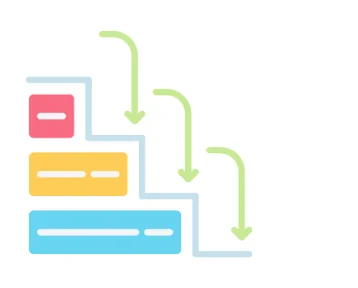 The waterfall model is best for projects with well-defined requirements and little room for change. The waterfall model contains linear and sequential features; it flows through defined stages, including requirements, design, implementation, testing, deployment, and maintenance.
The considerations in the waterfall model are that while predictable, its rigidity makes it less suited for projects where requirements may evolve.
The waterfall model is best for projects with well-defined requirements and little room for change. The waterfall model contains linear and sequential features; it flows through defined stages, including requirements, design, implementation, testing, deployment, and maintenance.
The considerations in the waterfall model are that while predictable, its rigidity makes it less suited for projects where requirements may evolve.
Features of Waterfall Software Development Models
- Waterfall models follow a serial or linear approach where each phase must be completed to move to the next stage.
- The different phases of software development models are design, implementation, testing, deployment and maintenance.
- Extensive software documentation is carried out in the process of the waterfall model.
- This model works best when requirements are stable and well defined at the starting phase of development.
2. Agile Model
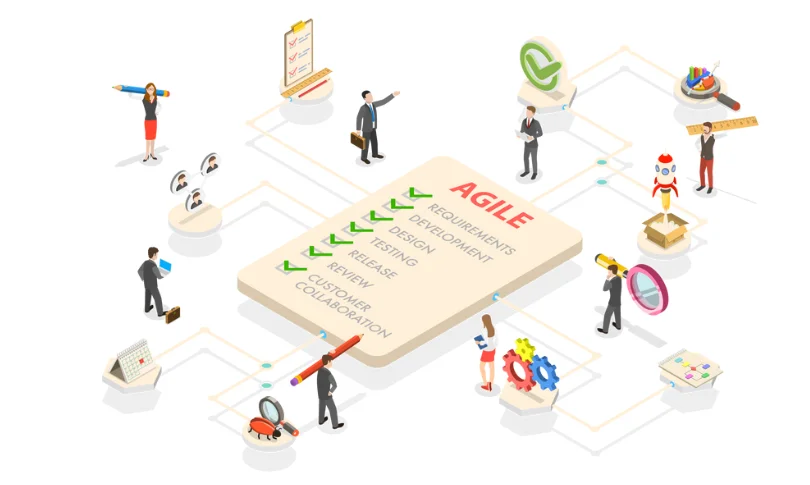 The agile model is best for dynamic environments requiring flexibility and collaboration. The agile model is iterative and incremental. Agile emphasizes adaptability, customer feedback, and cross-functional teamwork.
Scrum and Kanban are popular frameworks within Agile. Agile’s iterative nature works well for ongoing projects but requires high stakeholder engagement and disciplined teams.
The agile model is best for dynamic environments requiring flexibility and collaboration. The agile model is iterative and incremental. Agile emphasizes adaptability, customer feedback, and cross-functional teamwork.
Scrum and Kanban are popular frameworks within Agile. Agile’s iterative nature works well for ongoing projects but requires high stakeholder engagement and disciplined teams.
Features of Agile Software Development Models
- Agile follows an incremental and iterative approach to deliver the functional software after each cycle.
- It involves effective customer collaboration in the development process.
- It is set to encourage communication between developers, testers, and stakeholders.
- It relies on customers feedback to make improvements and bug fixes in the software application.
3. DevOps Model
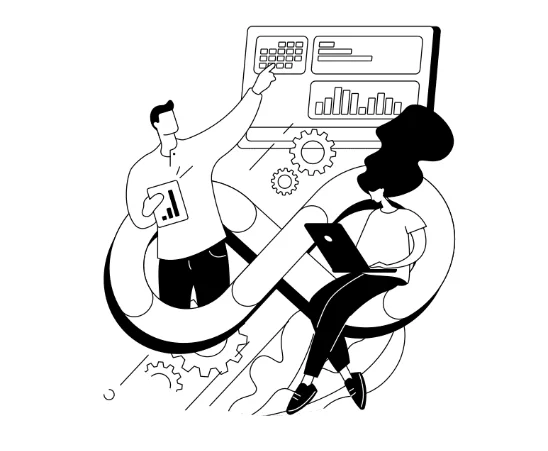 The DevOps model is best for projects emphasizing continuous delivery and continuous integration. Combining the development and operations, DevOps fosters collaboration, automation, and monitoring to achieve faster, more reliable software delivery. Implementing DevOps may require cultural shifts and investments in automation tools.
Features of DevOps software Development Models
- It bridges the gaps between the development and operation teams.
- It paid more emphasis on CI/CD integration and deployment techniques.
- It is based on continuous monitoring and feedback loops for improvement in application.
- It relies on continuous delivery, updates, improvement, integration and deployment.
- It offers automation in testing, deployment and building of software applications at a large level.
4. Spiral Model
 The Spiral Model is best for high-risk projects needing extensive risk management. The Spiral model is a hybrid of iterative and Waterfall Models, the Spiral model emphasizes risk assessment in each cycle. The Spiral model is resource-intensive and works best for complex, large-scale projects.
Features of Spiral Software Development Models
- Spiral models pays more emphasis on identifying and mitigating risks at every phase of development.
- It focus on iterative development and combines iterative and waterfall models.
- The phases of spiral models are planning, risk analysis, engineering, evaluation all repeated in spirals.
- It involves prototyping to create and register feedback.
5. Lean Development
The Lean Development model is best for startups and projects aiming to maximize value with minimal waste. The Lean Development model is inspired by lean manufacturing. This model focuses on delivering only what is necessary, ensuring efficiency and customer value. The Lean Development model requires a disciplined approach to avoid over-simplification.Features of Lean Software Development Models
- These software model models work best for startups.
- It works on the principle of low waste or minimizing waste and maximizing value output.
- It prioritizes delivering value to the customers and emphasizes more on aligning development goals.
- Some of the waste processes are excessive documentation, waiting time, partial completion of work, and more.
6. V-Model (Verification and Validation)
The V-Model is best for projects with stringent quality requirements. This V-Model is an extension of the Waterfall Model. The V-Model integrates testing into every development phase, ensuring quality assurance throughout. Like the Waterfall model, it is inflexible but ensures robust deliverables.Features of Waterfall Software Development Models
- It involves planned testing and parallel development for each phase.
- It moves from requirement analysis to maintenance with corresponding testing phase.
- It works in highly controlled environments where quality assurance is required at every stage.
How to Choose the Right Model
Choosing the right software development model according to your requirements is crucial. Some of the major steps to choosing an appropriate model consist of:Understand Your Project’s Nature
Analyze whether your project is straightforward with clearly defined requirements or subject to frequent changes. Stable, well-defined projects might align better with Waterfall or V-Model, whereas evolving projects suit Agile or Spiral.Identify Stakeholder Expectations
Determine the level of involvement your stakeholders prefer if they are hands-on and expect regular updates. Agile could be the right choice. For less interactive stakeholders, models like Waterfall or Lean may work better.Evaluate Team Dynamics
Assess your team’s working style. Structured teams may excel with Waterfall or V-Model, while flexible teams might thrive in Agile or DevOps environments. Factor in team expertise, as some models require specialized knowledge.Consider Industry Standards
Certain industries, such as healthcare, finance, or defense, have strict compliance and regulatory needs. Models like V-Model or Waterfall may better suit these environments due to their focus on thorough documentation and quality control.Assess Resource Availability
Evaluate the tools, budget, and expertise at your disposal. For example, implementing DevOps might require investment in automation tools and team training, while Lean development requires minimal overhead but strong discipline.Prioritize Risk Management
If your project involves high levels of uncertainty or risk, Spiral’s iterative risk analysis can help mitigate potential pitfalls. Conversely, low-risk projects can rely on simpler models like Waterfall or Agile.Combining Models: A Hybrid Approach
Sometimes, one size doesn’t fit all. Many teams opt for hybrid approaches, blending elements from multiple models to meet their unique needs. For example, combining Agile’s flexibility with the structure of the Waterfall Model can work wonders for projects requiring both adaptability and clear milestones. Also, if we see a DevOps-Agile combination: While Agile fosters rapid iterations and collaboration, integrating DevOps ensures continuous integration, deployment, and monitoring, making it ideal for projects requiring frequent updates and deployments.



🔥 Trending Blogs
Software Development Models FAQs
Q1. How do I choose a software development model?
Ans. Choosing the right software development model according to your requirements is crucial. Some of the major steps to choosing an appropriate model consist of understanding project needs, evaluating team dynamics, considering industry standards, and prioritizing risk management.
Q2. What are software development models?
Ans. Software development models act as the blueprints for creating software. They provide structure, streamline communication, and guide teams toward successful delivery.
Q3. Why is choosing the right software development model important?
Ans. Choosing the wrong model can lead to wasted time, misaligned expectations, and even project failure. Software development models provide the much-needed structure and direction to ensure a smooth efficient process of creating software.


Talk to a counsellorHave doubts? Our support team will be happy to assist you!



Get Free Counselling Today
and Clear up all your Doubts
Talk to Our Counsellor just by filling out the form.
Join 15 Million students on the app today!
 Live & recorded classes available at easeDashboard for progress trackingLakhs of practice questions

