

OOP Concepts Explained for Beginners
 Study Abroad27 May, 2026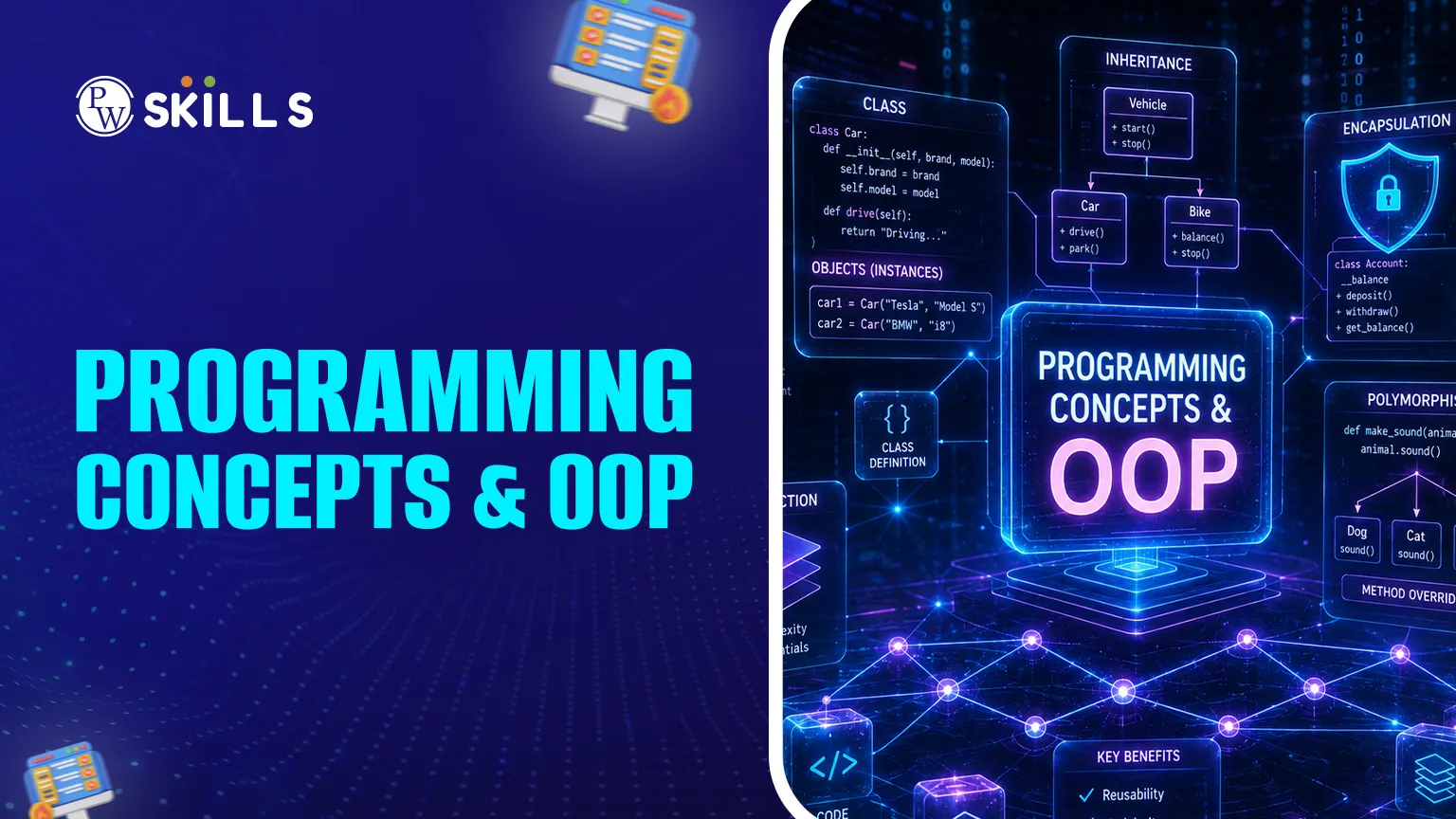
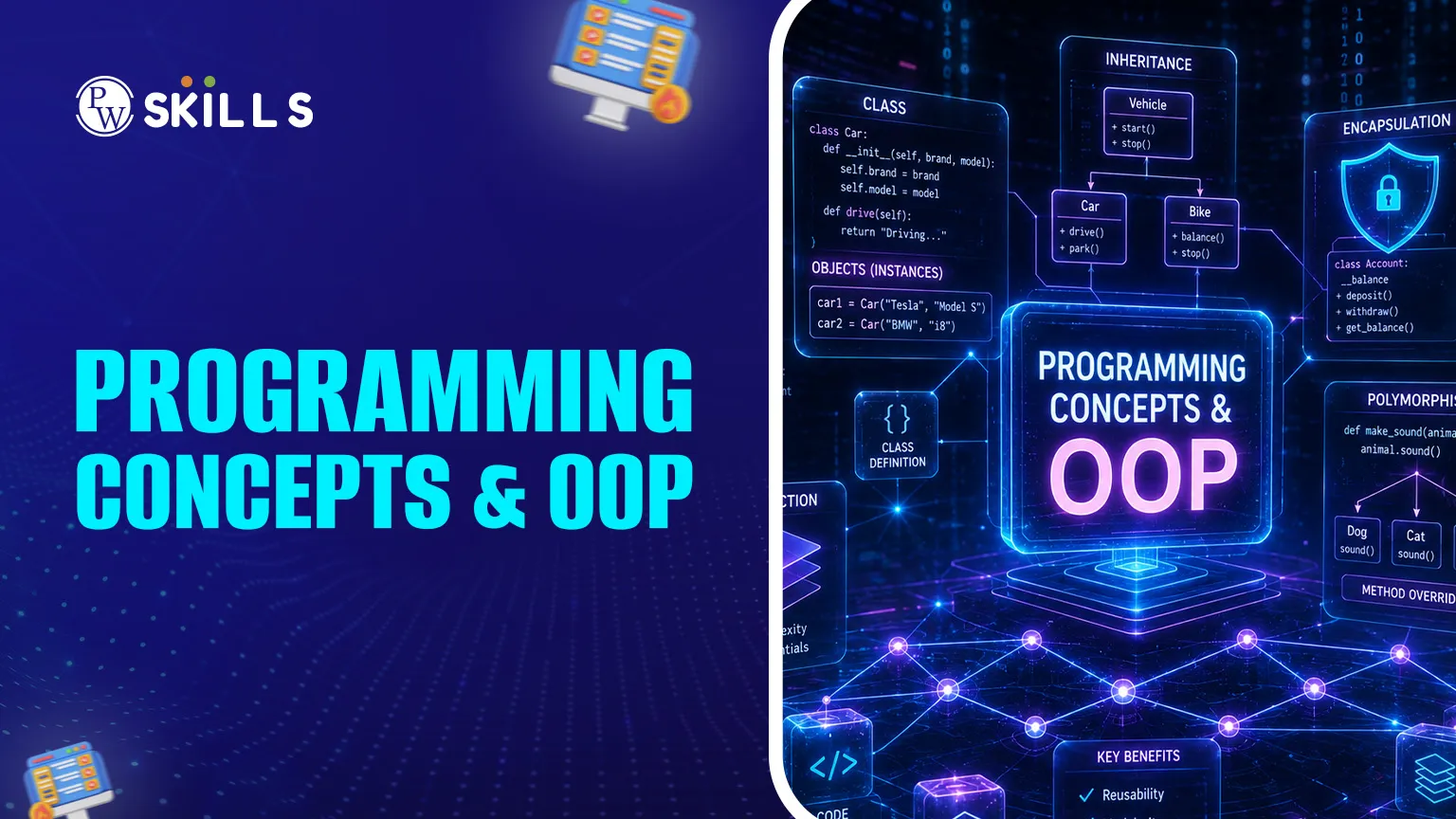
Learning to code often feels like trying to assemble a complex machine without a manual. Many students struggle with messy, repetitive code that becomes impossible to manage as projects grow. This is where mastering Programming Concepts & OOP (Object-Oriented Programming) becomes essential.
By treating code as a collection of "objects" rather than just a long list of instructions, you can build software that is organized, reusable, and easy to debug. This article simplifies these core principles to help you transition from a basic coder to a structured developer.
Overview of Programming Concepts & OOP
Object-Oriented Programming is a paradigm based on the concept of "objects," which can contain data and code. Data is represented as fields (often called attributes), and code as procedures (often called methods).
In traditional procedural programming, you write a list of instructions for the computer to follow. In contrast, the programming concepts and OOP basics focus on creating modular units. Think of a "Car" as a class. It is a blueprint that defines what a car is. A specific Tesla or Ford in your driveway is an "object" of that class.
To understand how this works in practice, you need to be familiar with the two building blocks that form the foundation of any object-oriented system:
-
Classes: These act as the blueprint or template for creating objects. They define the properties and behaviours that the objects created from them will have.
-
Objects: These are instances of a class. If "Dog" is the class, then a Golden Retriever named "Buddy" is the object.
Also Read:
Features of Programming Concepts & OOP
When choosing a language for your projects, you will notice that different languages implement programming concepts and OOP features in various ways. However, most modern languages like Java, Python, and C++ share these core functionalities:
-
Method Overloading: This allows a class to have more than one method with the same name, provided their argument lists are different.
-
Access Modifiers: Tools like "Public," "Private," and "Protected" help you control who can see or change your data.
-
Constructors: Special methods that run automatically when an object is created to set up its initial state.
-
Interfaces: These define a set of methods that a class must implement, acting as a contract for behaviour.
Principles of Programming Concepts & OOP
The real power of this approach lies in its four main pillars. These programming concepts and OOP principles are designed to make your code more secure and less redundant.
1. Encapsulation
Encapsulation is the practice of keeping data (variables) and the methods (functions) that act on the data wrapped together in a single unit or "capsule." This restricts direct access to some of an object's components, which is crucial for preventing accidental data modification.
2. Abstraction
Abstraction involves hiding the complex inner workings of a program and only showing the necessary features to the user. For instance, when you press a button on a remote, you don't need to know how the internal circuitry works; you only care that the channel changes.
3. Inheritance
Inheritance allows one class to derive properties and characteristics from another class. This promotes reusability. For example, if you have a class called "Vehicle," a "Car" and a "Truck" can inherit features like "Engine" and "Wheels" from it without you having to rewrite that code.
4. Polymorphism
Polymorphism means "many forms." It allows different classes to be treated as instances of the same class through inheritance. It specifically allows one entity (such as a method) to perform different tasks depending on the object it acts on.
Why Use Programming Concepts & OOP?
If you are still wondering why we use this system, here is a simplified explanation of programming concepts and OOP. Imagine building a house with Lego bricks versus a single block of clay.
If you use clay and make a mistake, you might have to start over. If you use Lego (objects), you can swap out one specific brick (a class) without ruining the rest of the structure. This "modularity" is why professional software is built this way. It allows large teams to work on different "bricks" simultaneously without stepping on each other's toes.
Examples of Programming Concepts & OOP
Seeing these theories in action makes them much easier to grasp. Use the following programming concepts and OOP examples to visualise how code structures represent real-world items.
The Smartphone Example
Imagine you are designing a system for a mobile phone.
|
Concept |
Real-world Application |
|
Class |
The general design/blueprint of a smartphone. |
|
Object |
Your specific iPhone 15 or Samsung Galaxy. |
|
Attributes |
Screen size, battery capacity, and colour. |
|
Methods |
MakeCall(), SendMessage(), and TakePhoto(). |
The Library System
In a library application, you might have a "Book" class. Each specific book, like "Harry Potter" or "The Great Gatsby," is an object. These objects inherit properties from a broader "Media" class, which might also include "DVDs" or "Magazines."
Programming Concepts & OOP Interview Questions
Preparing for a technical role involves more than just writing code; you must explain the "why" behind your choices. Review these programming concepts and OOP interview questions to sharpen your technical communication.
-
Difference between Class and Object: A class is the conceptual template, while an object is the physical manifestation of that template in memory.
-
Static vs Dynamic Binding: This refers to whether the computer decides which method to call at compile time (static) or at run time (dynamic).
-
Composition vs Inheritance: While inheritance is an "is-a" relationship (a Car is-a Vehicle), composition is a "has-a" relationship (a Car has-an Engine). Composition is often preferred for more flexible designs.
Tips for Programming Concepts & OOP
Starting your journey requires a shift in mindset. Follow these programming concepts and OOP guide to start thinking in terms of objects rather than just logic flows.
-
Identify the Entities: Look at the problem you are solving and identify the "nouns." Are you building a bank app? Your entities are Accounts, Customers, and Transactions.
-
Define Behaviours: What can these entities do? An Account can "Deposit" or "Withdraw." These become your methods.
-
Identify Shared Traits: Do your entities share common features? Both "Savings Accounts" and "Current Accounts" have an account number. This suggests you should use inheritance.
-
Protect Your Data: Use private variables and public "getter" and "setter" methods to ensure your data stays valid and safe from external interference.




FAQs
What is the main advantage of using OOP?
Can a class exist without an object?
Is Python a purely object-oriented language?
What is a constructor in OOP?
What is the difference between an interface and an abstract class?





Get Free Counselling Today
and Clear up all your Doubts
 Live & recorded classes available at easeDashboard for progress trackingLakhs of practice questions

