

How AI-assisted coding From Full Stack Development with AI Course Applies on the Job
 Hardik Gupta18 Jul, 2026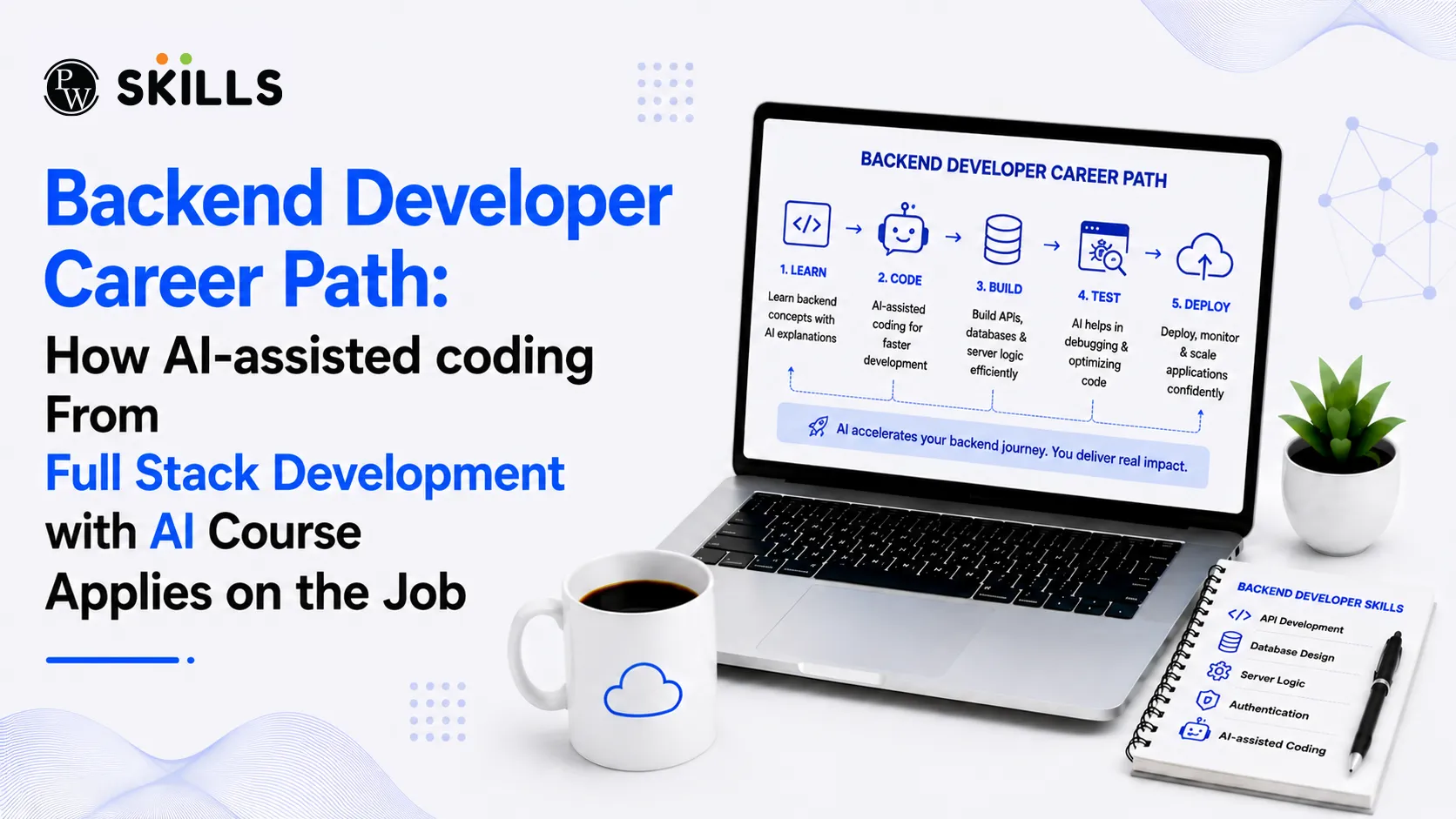
Modern software engineering moves at an incredible speed. Many aspiring programmers struggle to bridge the gap between writing simple code and managing large-scale, production-ready backend systems. Keeping up with database optimisation, security protocols, and server logic can feel overwhelming.
A Full Stack Development with AI Course solves this problem by training you to build robust backend architectures while leveraging artificial intelligence to speed up the process. By mastering AI-assisted workflows, you learn to write efficient code faster, handle complex data pipelines, and stand out in a competitive technology market.
What Is the Backend Developer Career Path After a Full Stack Development with AI Course?
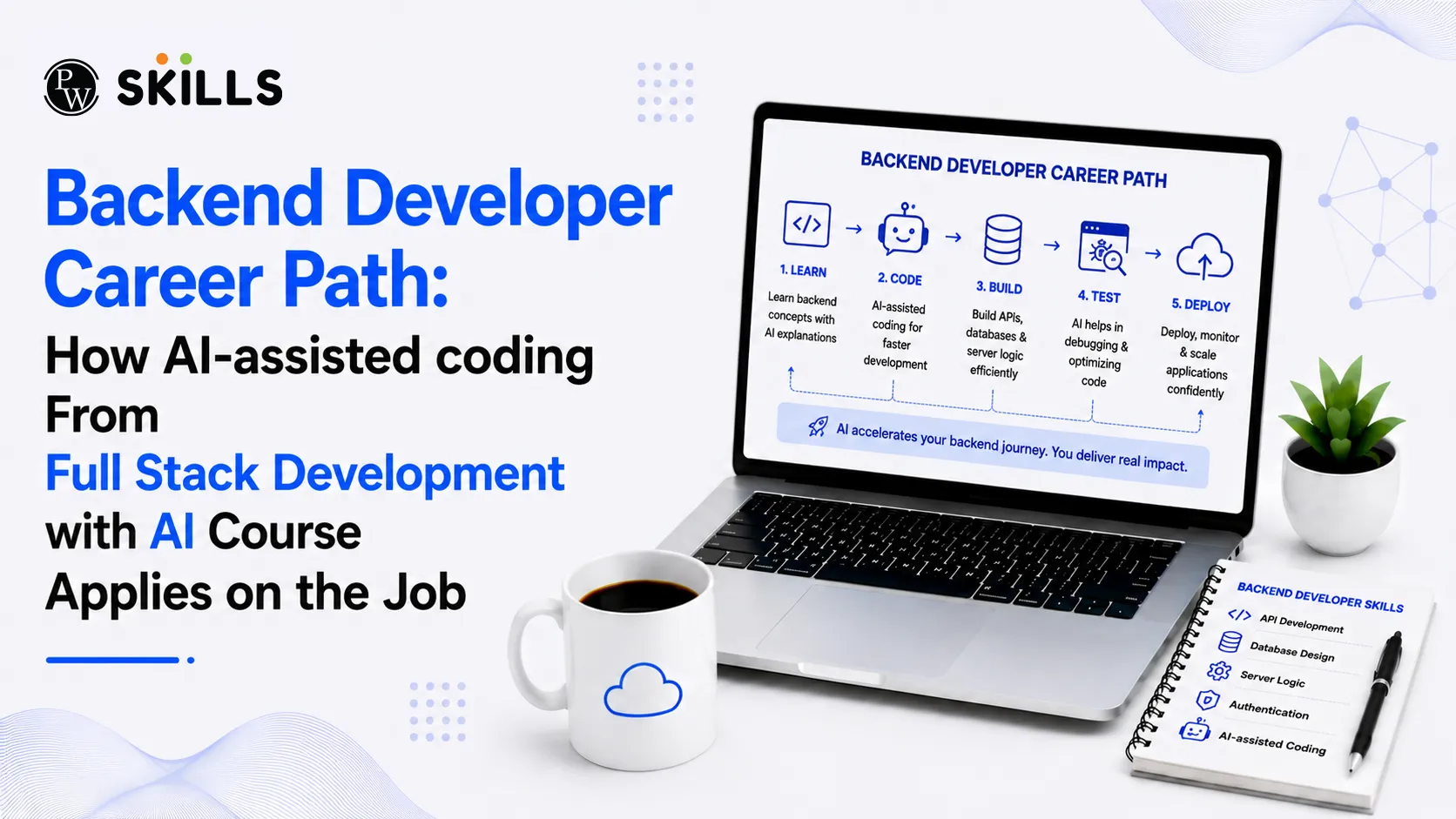
The role of a backend developer has evolved significantly. Traditionally, engineers spent hours writing boilerplate code, setting up basic routing, and configuring servers manually. Today, backend specialists focus heavily on architecture design, system security, and data integration while AI tools handle repetitive coding tasks.
Understanding both server-side logic and modern tools is essential for career longevity. Enrolling in a comprehensive AI full-stack development course teaches you how to design scalable structures. It shows you how to use artificial intelligence as a collaborative partner to debug complex errors, generate testing scripts, and optimise database queries.
This career path typically begins with junior developer roles, where professionals manage basic APIs and database updates. As skills grow, engineers progress to senior positions, taking responsibility for cloud infrastructure, microservices, and overall application performance. The integration of intelligent automation means developers can now manage larger systems with greater efficiency.
How Does a Full Stack Development with AI Course Teach AI-Assisted Coding for Backend Jobs?
Selecting the right educational program requires looking at the curriculum's depth. A high-quality course must balance fundamental engineering concepts with modern automation tools.
Look for programs that focus deeply on database management, server configuration, and API development rather than just covering basic syntax. The training should demonstrate exactly how AI tools can enhance your coding workflow without replacing your core problem-solving logic.
Backend Skills Covered in the Training
A modern developer needs to master several core technical pillars. The table below outlines the primary areas you should focus on during your training.
Before diving into development, look at the fundamental skills you will need to master:
|
Skill Area |
Core Focus |
AI Application |
|
Server Logic |
Creating APIs, handling routing, managing user authentication. |
Generating boilerplate code and initial endpoint setups. |
|
Database Management |
Writing SQL/NoSQL queries, indexing, structuring tables. |
Optimising complex queries and generating mock test data. |
|
System Security |
Encryption, token validation, secure data transmission. |
Scanning source code for potential vulnerabilities. |
Importance of Hands-on Practical Projects
Theoretical knowledge is never enough to secure a professional role. The best training environments emphasise building actual applications from scratch, such as e-commerce backends or real-time chat servers.
Working on real projects teaches you how to handle unexpected errors, manage server crashes, and integrate diverse data streams. Using smart automation tools during these projects helps you learn to read, refactor, and improve code that you did not write from scratch.
Why Does a Full Stack Development with AI Course Create More Career Opportunities?
On the job, backend engineers use automation utilities to streamline daily operations. Instead of typing out standard configuration files, developers use natural language prompts to generate initial code skeletons.
This shift allows technical professionals to focus their mental energy on high-level system design and security compliance. Smart tools act as a pair programmer, suggesting optimal methods and identifying syntax mistakes in real time.
Automated Code Generation and Boilerplate Setup
Setting up a new backend service often involves creating numerous repetitive files and directory structures. Smart engineering tools dramatically reduce this preparation time.
-
Rapid Prototyping: Build functional API structures in a fraction of the usual time.
-
Standardised Code: Ensure that basic files follow industry-standard naming conventions and formats.
-
Error Reduction: Avoid typos and minor syntax mistakes during the initial project setup phase.
Smart Debugging and Code Refactoring
Finding a hidden bug in thousands of lines of code is one of the most time-consuming parts of development. Modern automation utilities speed up this diagnostic process significantly.
When an error occurs, developers can feed the stack trace into an intelligent assistant to locate the exact line causing the failure. The tool can suggest alternative algorithms that consume less memory or process data faster, ensuring your backend runs smoothly under heavy user loads.
Why Does a Full Stack Development with AI Course Create More Career Opportunities?
Completing an AI full-stack development course makes you a versatile asset for technology teams. Companies prefer hiring professionals who understand the entire ecosystem, even if they choose to focus primarily on server-side logic.
This comprehensive understanding enables smoother collaboration across teams. A backend specialist who knows how the front end requests and displays data can build more efficient endpoints, reducing latency and saving server resources.
Frontend Developer Jobs with Full Stack Skills
Having an understanding of the entire application architecture allows backend developers to easily pivot or assist in other areas if project demands shift.
Key Point: Mastering a Full Stack Development with AI Course + Frontend Developer Jobs synergy means you can step in to connect user interfaces directly to your custom APIs without waiting for a separate client-side team.
This dual capability is highly valued in agile environments where rapid deployment is critical. You become a bridge between visual design and deep server logic, making you indispensable during critical product launches.
Responsive and Dynamic User Interfaces
A complete engineer understands how data formatting impacts the final user experience across different devices.
-
Data Optimization: Send lightweight JSON payloads that load quickly on mobile connections.
-
State Management: Design backend responses that make it simple for front-end frameworks to update UI elements dynamically.
-
Integration Skills: Apply your knowledge from a Full Stack Development with AI Course + Responsive UI development workflow to ensure that server data renders perfectly on screens of all sizes.
What Are the Daily Responsibilities After a Full Stack Development with AI Course?
The daily routine of a modern engineer involves a mix of strategic planning, architectural design, and automated coding workflows.
Developers start their day reviewing system logs and performance metrics to identify potential bottlenecks. They use intelligent tools to draft documentation, explain complex functions, and write automated tests to ensure system stability.
Databases and Scaling Infrastructure
Backend professionals spend a significant portion of their time ensuring that data remains secure, accessible, and organized.
They write migration scripts, update database schemas, and configure caching layers to reduce server strain. Using automated assistants allows them to test how databases behave under simulated high-traffic conditions, preventing real-world outages.
Secure and Efficient APIs
APIs serve as the digital doorways to your application, making security a top priority for every backend specialist.
Engineers must implement strict rate-limiting, user validation, and data scrubbing protocols to protect against malicious attacks. Automated tools continuously scan these API endpoints for common security vulnerabilities before the software goes live.
What Are the Best Career Tips After a Full Stack Development with AI Course?
Building a long-term career requires continuous adaptation and a commitment to learning new methodologies.
-
Master the Fundamentals: Never rely entirely on automated tools; you must understand the core engineering principles to validate the code generated.
-
Learn System Architecture: Focus on how microservices communicate, how load balancers distribute traffic, and where data bottlenecks occur.
-
Build a Public Portfolio: Store your real-world projects on public repositories to demonstrate your practical abilities to hiring managers.
-
Practice Prompt Engineering: Learn how to write precise, detailed instructions to get the best possible code suggestions from automation utilities.




FAQs
Do I need to be an expert mathematician to become a successful backend developer?
Can I focus exclusively on the backend after completing a full-stack training program?
How does understanding front-end concepts help me write better backend code?
Will automated coding tools completely replace backend developers in the future?
How long does it typically take to learn these modern full stack development methods?




 Live & recorded classes available at easeDashboard for progress trackingLakhs of practice questions

