

AI-assisted coding Explained: Why Full Stack Development with AI Course Teaches It Early
 Hardik Gupta18 Jul, 2026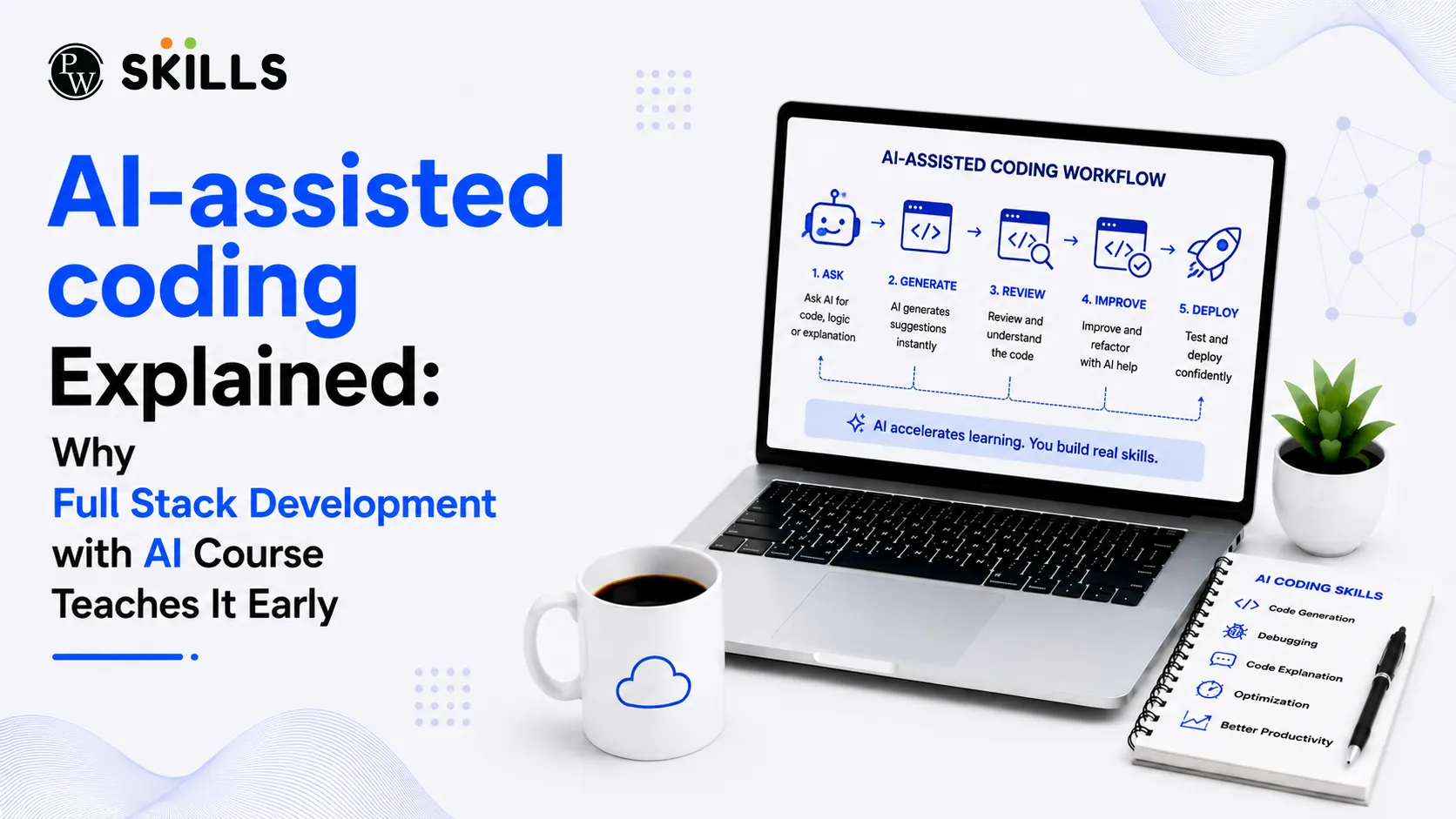
Building your first complete web application feels like trying to assemble a puzzle in the dark. You have to manage front-end designs, handle back-end databases, and fix endless syntax errors all at once. For many beginners, this overwhelming volume of coding logic leads to quick burnout.
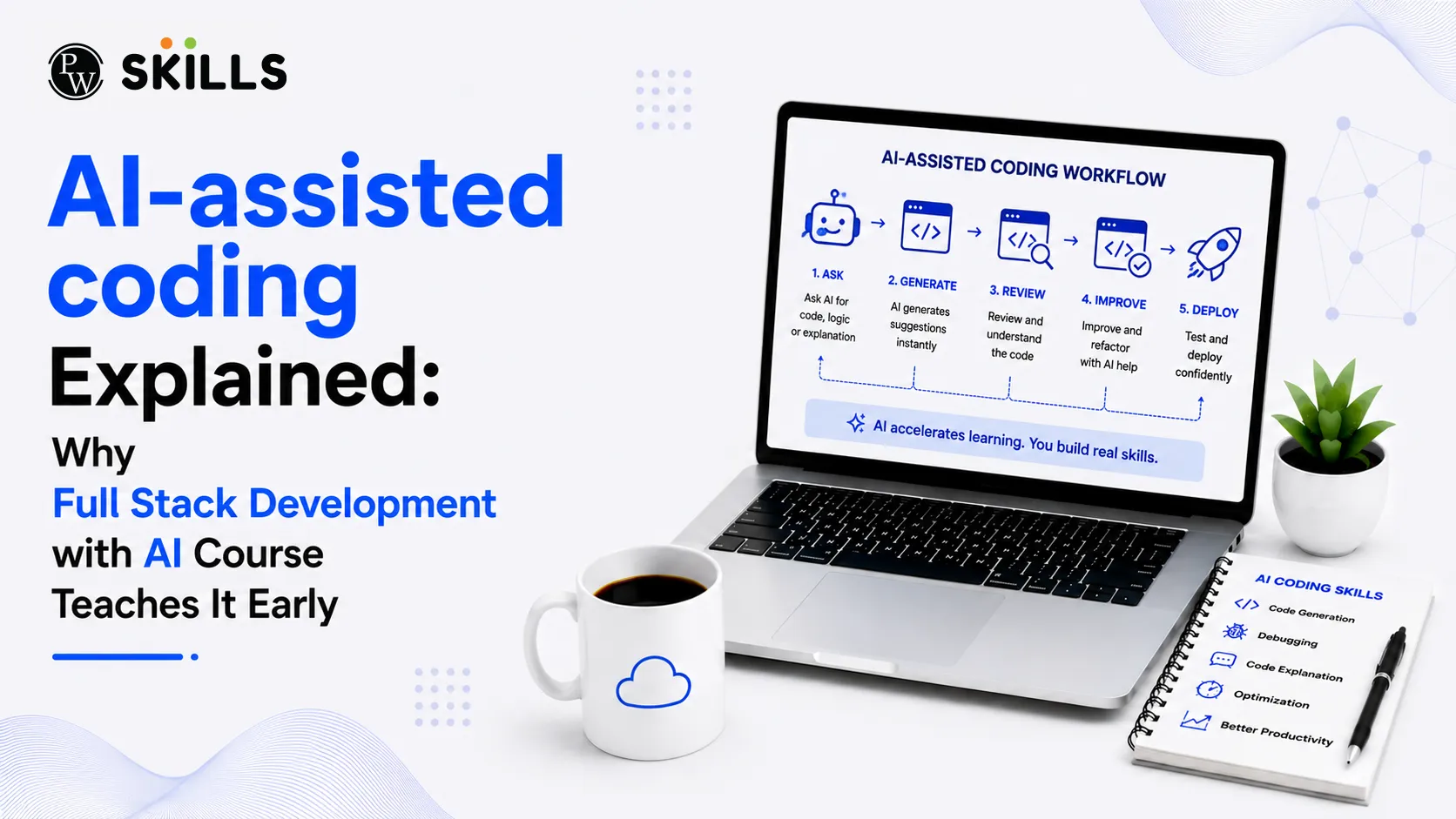
A modern Full Stack Development with AI Course solves this exact problem by introducing intelligent coding assistants early in the curriculum. Instead of spending days hunting for missing semicolons, students learn to collaborate with smart tools to write cleaner code faster. This approach shifts the educational focus from rote memorization to creative problem-solving and systems architecture.
Why is the Full Stack Development with AI Course Important?
The AI Full Stack Development Course is important because it prepares learners for the modern software industry, where developers are expected to build complete applications and use artificial intelligence to improve speed and productivity.
Traditional programming education often focuses only on coding syntax, but today's companies need professionals who can manage frontend interfaces, backend systems, databases, APIs, cloud deployment, and AI-powered workflows together. This course helps bridge that gap by teaching both technical fundamentals and modern development practices used by leading engineering teams.
Why Does a Full Stack Development with AI Course Teach AI-Assisted Coding Early?
The traditional path to becoming a software engineer involves months of manual syntax drilling before touching advanced architecture. However, integrating automation tools from day one changes how students internalise programming concepts.
Early exposure to intelligent tools helps bridge the massive gap between writing simple code snippets and building complete production-ready software.
Accelerating the Learning Curve for Beginners
Learning to program involves understanding two distinct elements: computational logic and language syntax. Syntax errors often frustrate beginners, causing them to abandon their studies before mastering the core logic.
Intelligent assistants act as an interactive, round-the-clock tutor. When a student struggles with a loop or an object method, these systems provide instant explanations and corrected code blocks. This real-time feedback loop allows learners to progress through fundamental programming concepts at double the usual speed.
Shifting Focus from Syntax to Software Architecture
When you enter the professional tech space, companies rarely pay you just to type out boilerplate code. They hire you to design scalable systems, secure data streams, and create seamless user experiences.
By offloading repetitive typing to automation tools, students can dedicate their energy to grand design patterns. You learn how different layers of an application communicate, how data flows from a user click to a database entry, and how to structure code for long-term maintenance.
Developing Real-World Debugging Skills
Writing code is only half the job; fixing broken code occupies the rest of a developer's day. AI tools excel at scanning thousands of lines of code to spot logical bugs, security flaws, or inefficient routines instantly.
Learning to prompt these systems for debugging purposes teaches students how to read and audit code critically. Rather than relying on guesswork, learners discover how to interpret error logs and systematically refine their applications.
How Does a Full Stack Development with AI Course Prepare You for Full Stack Developer Jobs?
The tech landscape shifts rapidly, and the engineering roles of today look very different from those of the past decade. Companies now actively seek professionals who know how to combine human creativity with algorithmic speed.
Expectations of Modern Employers
Monotonous coding tasks are quickly becoming automated, altering what engineering managers look for during hiring cycles. Technical teams require individuals who can deploy features rapidly without sacrificing structural quality.
-
Higher Output Standards: Teams now expect developers to build prototypes in hours rather than days.
-
Cross-Functional Skills: The line between front-end and back-end work is blurring due to automated assistance.
-
System Oversight: Developers spend more time reviewing, testing, and refining code than writing it from scratch.
Understanding a Full Stack Development with AI Course + Full Stack Developer Jobs is simple: companies want developers who use AI to boost their daily output. Job seekers who master these tools stand out because they require less onboarding time and deliver functional features much faster.
Code Generator to Code Reviewer
As automation handles more baseline drafting, the human developer transitions into the crucial role of a quality assurance supervisor. You become the editor who ensures the software remains secure, accessible, and aligned with business goals.
This shift means tomorrow's engineers must possess great analytical skills. You need to know when an automated suggestion is elegant and when it introduces a hidden security vulnerability or performance bottleneck.
What Technical Skills Will You Learn in a Full Stack Development with AI Course?
A comprehensive training program balances classic engineering principles with cutting-edge automation techniques. Students master the foundational languages of the web while learning how to guide artificial intelligence to generate optimum outputs.
The curriculum covers multiple engineering tiers to ensure students can handle every phase of application creation independently.
Front-End Interface Design and Layout
The user interface represents the visible face of any digital platform. Students discover how to build responsive, accessible, and visually clean web pages that adapt beautifully to both desktop environments and mobile screens.
-
Semantic HTML5: Structuring web content accurately so search engines and screen readers can interpret it.
-
Responsive CSS3: Utilizing modern layout models like Flexbox and Grid to build flexible, dynamic designs.
-
Modern JavaScript: Adding complex interactivity, handling user events, and managing local browser data smoothly.
Back-End Logic and Database Management
The server-side layer acts as the invisible engine of your application. This component processes user authentication, manages heavy business logic, and ensures information is securely stored and retrieved without data corruption.
-
Server Runtime Environments: Building fast, asynchronous server applications using robust modern runtimes.
-
Database Systems: Storing application data securely within structured relational setups or flexible non-relational configurations.
-
State Management: Tracking user sessions, managing login states, and keeping data synchronised across the ecosystem.
Automated Test Generation and Deployment
A feature is only valuable if it runs reliably in a live production environment. Students learn to use automated assistants to write comprehensive test suites that check code for flaws before it ever reaches a user.
You will discover how to configure continuous delivery pipelines that automatically build, test, and host your web applications on cloud platforms. This setup ensures your updates deploy smoothly with zero manual intervention or downtime.
How Does a Full Stack Development with AI Course Teach REST APIs?
An application's frontend and backend must talk to each other seamlessly to deliver a good user experience. This communication relies entirely on the design and implementation of clean application programming interfaces.
Learning the synergy between a Full Stack Development with AI Course + Building REST APIs allows students to construct highly reliable data bridges between distinct systems.
Designing Structured Data Endpoints
Representational State Transfer endpoints serve as the standard communication channels of the modern internet. They allow your user-facing interface to request, save, update, or delete information from the central database safely.
Automation tools help developers draft these endpoints by generating clean routing code based on simple plain-English instructions. You can describe the data structure you need, and the system will output the necessary architecture instantly.
Implementing Secure User Authentication
Protecting user data remains the top priority for every modern web company. Developers must implement strict validation systems to ensure individuals can only access their personal information.
-
Token Verification: Issuing temporary, encrypted access tokens when users log into their accounts securely.
-
Password Hashing: Transforming raw user passwords into unreadable cryptographic strings before saving them to databases.
-
Route Protection: Blocking unauthorized visitors from accessing premium, private, or administrative server endpoints.
Optimising Database Queries for Speed
When millions of users interact with an application simultaneously, poorly written database queries can cause massive server slowdowns. Learning how to fetch data efficiently prevents these system crashes.
Smart coding assistants can analyze your database structure and recommend optimal indexing strategies or rewritten queries. This automated assistance ensures your application retrieves massive chunks of information in milliseconds, keeping the user experience snappy.
How Does a Full Stack Development with AI Course Future-Proof Your Career?
The software industry evolves constantly, and relying purely on old development methodologies leaves engineers exposed to industry displacement. Embracing automated processes ensures your skills remain highly relevant for years to come.
Understanding the connection between a Full Stack Development with AI Course + Why it matters highlights the long-term career benefits of adaptive technological education.
Automation Wave in Tech
Fears surrounding artificial intelligence replacing human engineers usually stem from a misunderstanding of what developers actually do. Tools automate the repetitive syntax, not the critical thinking or strategic planning.
Engineers who know how to manage these automated systems become incredibly valuable assets to engineering teams. By learning these skills now, you ensure you are the professional managing the automation rather than someone replaced by it.
Drastically Increasing Personal Project Output
When you can build complete applications rapidly, your capacity to innovate grows exponentially. A single developer can design, test, and launch a fully functional startup prototype in a fraction of the historical timeline.
This elevated productivity allows you to build a massive, diverse portfolio of live projects. A rich portfolio gives you concrete proof of capability to show hiring managers, helping you secure premium roles easily.
Adapting Quickly to New Programming Frameworks
New JavaScript frameworks and backend tools launch every single year, making constant adaptation mandatory for developers. AI assistants excel at translating logic from one programming language or library to another instantly.
If you understand core full-stack principles and know how to prompt intelligent tools, you can switch between different codebases effortlessly. This agility makes you an incredibly versatile engineer capable of working on any tech stack.



FAQs
Do I need prior coding experience before joining a Full Stack Development with AI Course?
Will learning AI-assisted coding ruin my fundamental programming skills?
What types of full stack developer jobs can I apply for after graduation?
How does building REST APIs change when using automated coding assistants?
Why is it better to learn full stack development with AI instead of a traditional coding bootcamp?




 Live & recorded classes available at easeDashboard for progress trackingLakhs of practice questions

