

Announcement : JavaScript Free Course Series Announcement | Full Stack Development Free Course

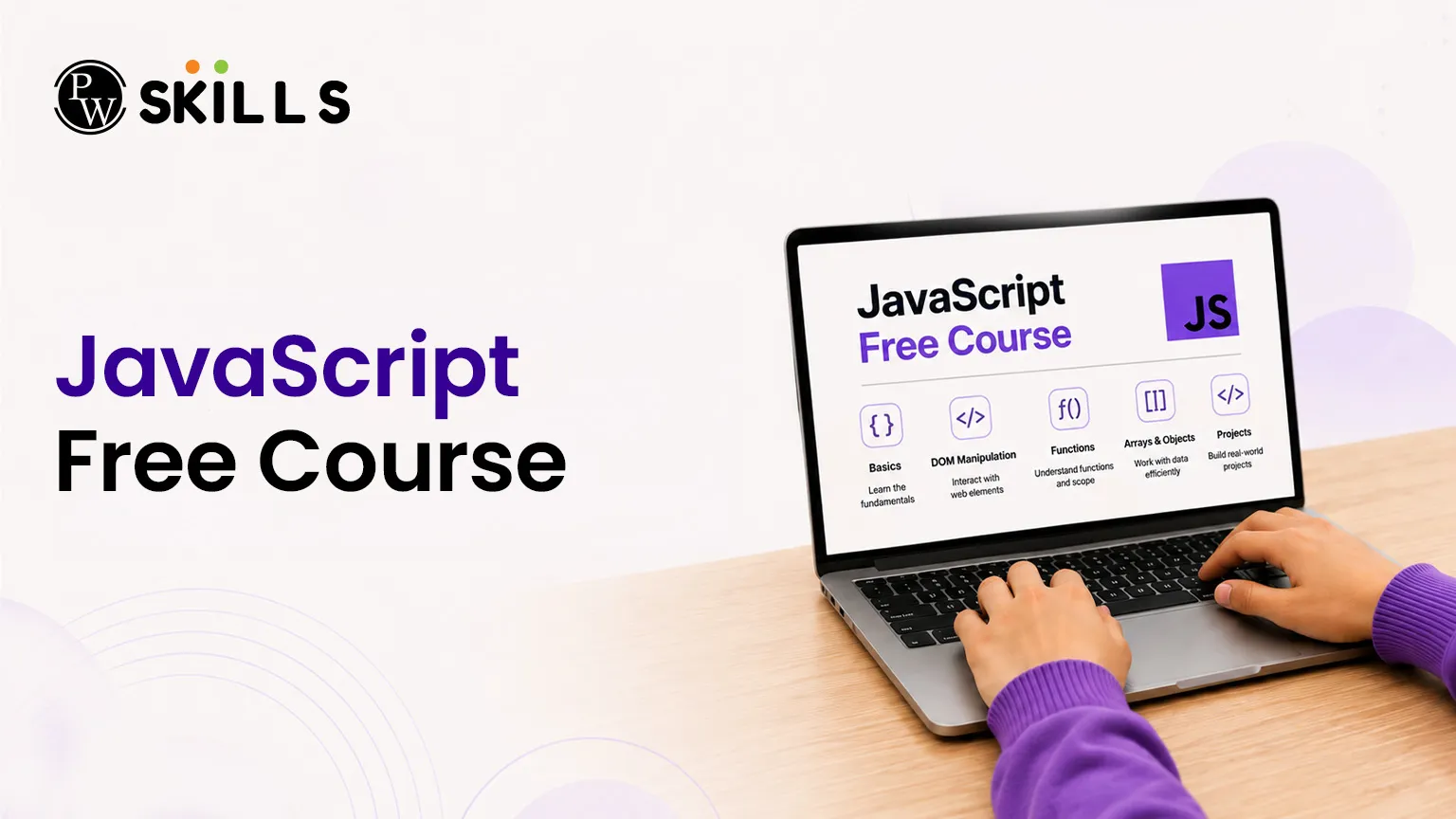
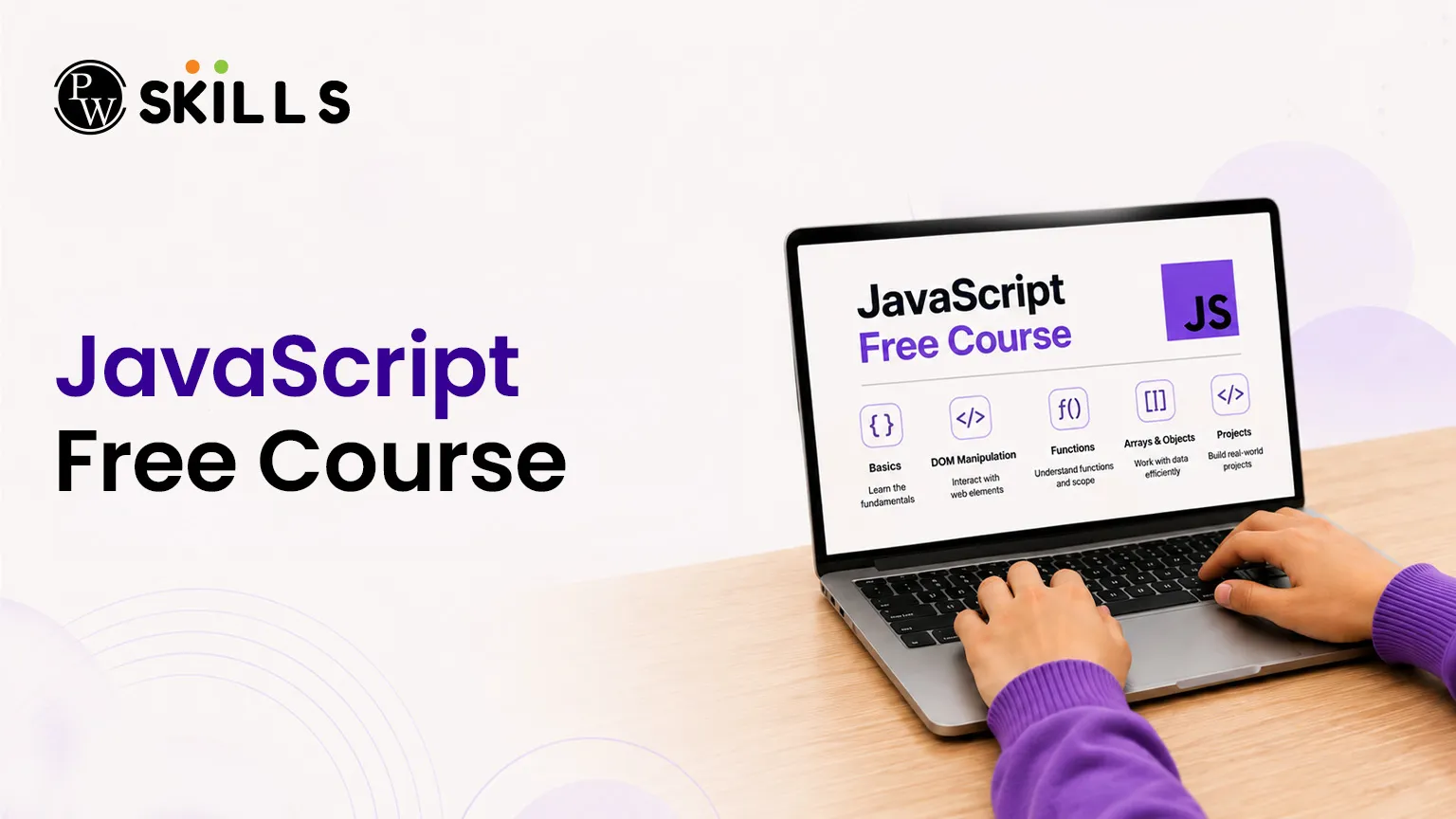
JavaScript is one of the most important technologies for modern web development, powering everything from interactive websites to full-stack applications. However, many beginners struggle to find a clear learning path that connects basic programming concepts with real-world development skills.
A structured JavaScript full-stack development learning journey helps developers build strong foundations, understand frontend and backend workflows, and prepare for practical projects and technical interviews. This article covers essential JavaScript concepts, advanced features, and performance techniques required to become a job-ready developer.
Importance of a JavaScript Free Course
To develop interactive web applications, you need to have a good hold of scripting languages that work seamlessly in client-side and server-side environments. This comprehensive training series provides a complete breakdown of the key concepts to ensure programming competency.
Complete Learning Progression
The curriculum is logically organised to build confidence before tackling complex software architecture. There are three clearly defined phases that learners can move through seamlessly:
-
Core Language Fundamentals: Variables, data types, control flow mechanisms, and modular function structures.
-
Browser Runtime & DOM: Learning execution contexts, the call stack, memory management, and real-time page manipulation.
-
Asynchronous Integration: Connecting frontend interfaces to external servers using modern web request models.
What Does a JavaScript Free Course Cover?
A strong software engineering journey relies on deep fundamental knowledge. This segment targets foundational principles required to supply direct instructions to computer software platforms.
1. Basic Foundations and Variables
It is helpful to know how computers store and handle memory. The first chapters discuss data structures divided into separate primitives and non-primitives.
-
Variables & Scope: Allocation using classic and modern scoping methodologies.
-
Operators: In-depth execution of arithmetic, comparative, logical, bitwise, and ternary assignment operators.
-
Control Flow structures: Managing processing branches using standard conditional blocks and multi-case switch evaluation statements.
2. Deep Dive Into Modern Functions
Functions are the building blocks of dynamic development frameworks. The syllabus contains several functional declarations for efficient handling of the states of practical applications:
Before you begin, consider the following unique features of structural code blocks:
|
Function Type |
Core Operational Characteristic |
Primary Application Environment |
|
Declaration / Expression |
Standard hoisted structures defining reusable logical steps. |
Baseline application architecture and modular code design. |
|
Arrow Functions |
Compact syntax structures utilizing lexical binding parameters. |
Short inline operations and cleaner callback handling. |
|
Callback Functions |
Functional blocks are passed directly as arguments into other tasks. |
Handling asynchronous triggers and event-driven responses. |
|
Higher-Order Functions |
Advanced operations accepting or returning functional structures. |
Processing collection arrays and complex algorithm chains. |
How to Learn DOM with a JavaScript Free Course?
Transitioning from simple script executions to creating interactive user interfaces requires interacting with browser structures. This segment details how web pages update in real-time based on live user inputs.
Document Interaction and Execution Contexts
Before implementing front-facing components, understanding the browser's execution engine is critical. The course explains technical mechanics like the call stack, global execution contexts, scope chains, and closure boundaries to explain how systems keep track of active variables.
Event Management and Page Modification
Handling active user interactions involves mastering intermediate structural models. The learning path details exactly how to manage component states via structured web layers:
-
Document Manipulation: Real-time generation, updates, and removal of interface items.
-
Event Propagation: Deep exploration of event capturing and event bubbling mechanics.
-
State Persistence: Retaining active user settings locally via responsive storage mechanisms inside the browser.
Practical Projects with a JavaScript Free Course
Theoretical knowledge becomes meaningful only when applied to real-world scenarios. This free JavaScript tutorial bridges that gap by moving away from isolated coding exercises and focusing on building functional, portfolio-ready web components.
Building Interactive Web Applications
To solidify your understanding of data structures, loops, and DOM manipulation, the training includes step-by-step guidance on constructing practical tools. These exercises help you visualize how backend logic directly coordinates with frontend user interfaces.
-
Dynamic Todo Application: Teaches array methods, object structuring, and structural DOM manipulation to add, track, and remove tasks.
-
E-Commerce Product Filter: Demonstrates high-order array methods like filter and map to sort products based on user criteria in real time.
-
Interactive Weather Dashboard: Combines event listeners with API integration to fetch live weather data and update the user interface dynamically.
How to Learn Full Stack Development with JavaScript Free Course?
A production-ready FSD course must cover performance scaling alongside standard coding. Building enterprise-grade platforms requires a deep understanding of browser resource management.
Async Architecture and Web API Integrations
Modern web services rely heavily on non-blocking architectures. This module shifts focus away from standard synchronous scripts toward flexible async systems designed to process external web data:
-
Callback Chains: Understanding foundational asynchronous patterns and managing nested loops.
-
Promises: Standardizing structural states to catch system errors gracefully.
-
Async / Await Syntax: Crafting clean asynchronous commands that read like standard linear code.
-
API Integration: Dispatching live data requests to fetch and render server information dynamically.
System Optimization and Engineering Workflows
High-traffic applications must remain highly responsive. The curriculum highlights premium engineering techniques to optimize browser performance:
-
Prototype Inheritance: Understanding constructor properties, factory functions, and memory distribution.
-
Debouncing Implementation: Limiting the execution rate of frequent digital calls during heavy inputs like typing.
-
Throttling Mechanisms: Guaranteeing stable execution intervals during continuous events like page scrolling.




FAQs
What are the main prerequisites required before starting this free JavaScript tutorial?
Does this curriculum help prepare students for technical job interviews?
How does this program support a full stack development course pathway?
What practical front-end tools are taught in this FSD course syllabus?
Why is performance optimization included in this language learning path?





Get Free Counselling Today
and Clear up all your Doubts
 Live & recorded classes available at easeDashboard for progress trackingLakhs of practice questions

