
The Difference Between Bookkeeping and Accounting
 Varun Saharawat30 Jun, 2026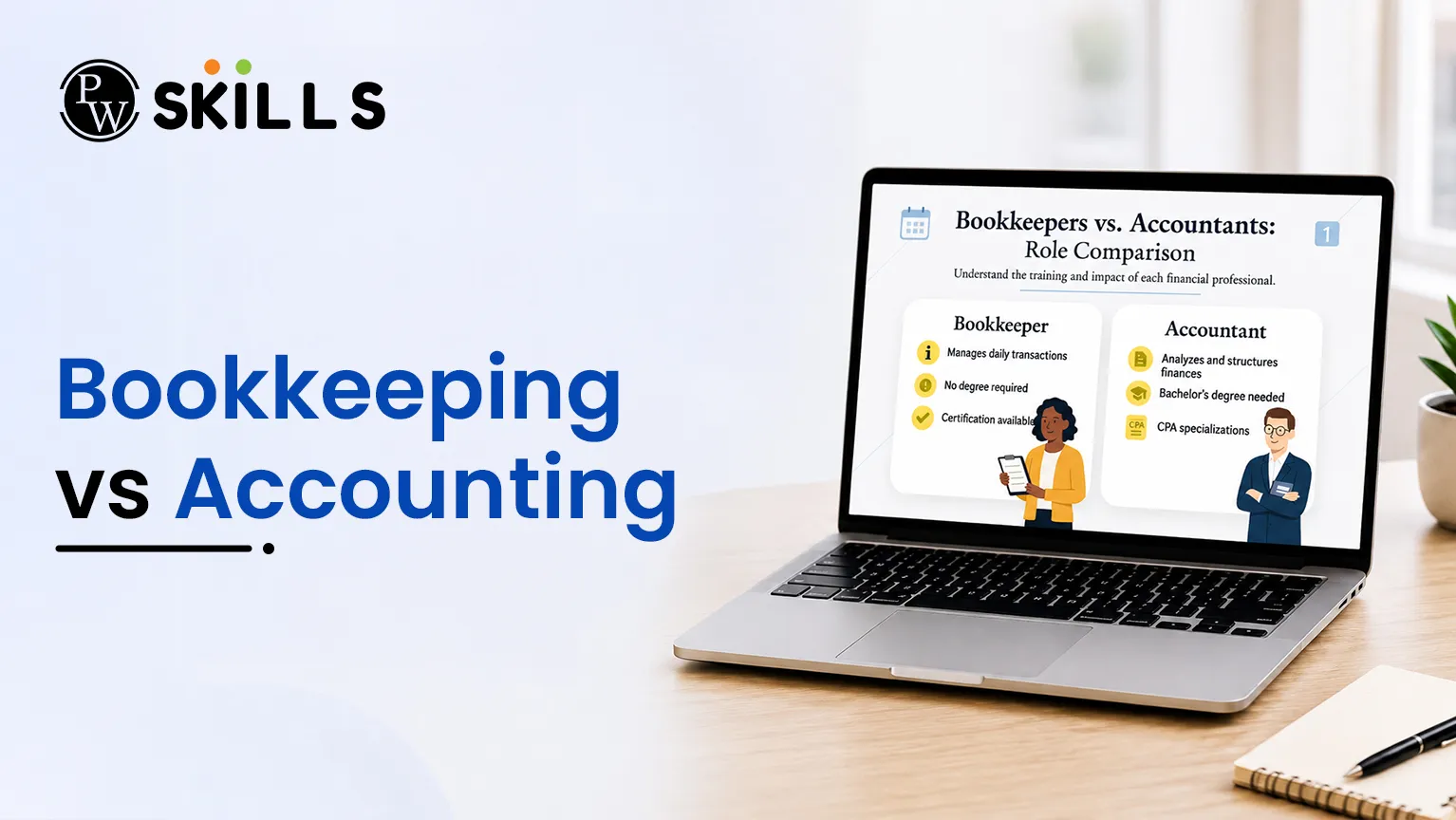
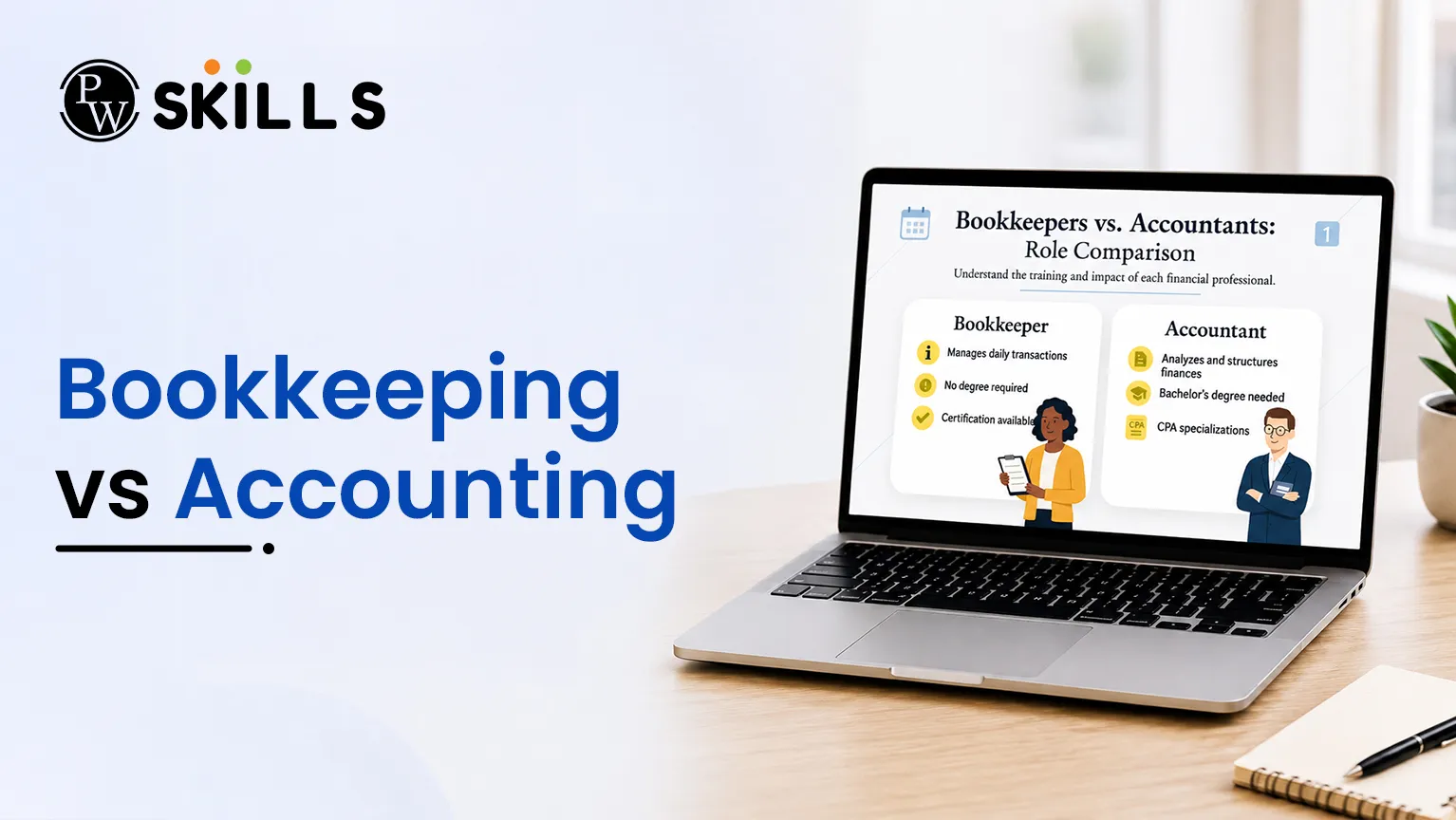
Managing business finances can feel overwhelming when you cannot tell where tracking ends and planning begins. Many people confuse the concept of Bookkeeping vs Accounting, assuming they are the exact same job.
Together, they help keep a business financially healthy and provide different career paths for finance professionals.
What Is Bookkeeping in Financial Records?
Bookkeeping is all about keeping track of financial information. It is completely related to administrative work and the perfect recording of the daily financial records. Without proper bookkeeping, no business can have a sound financial base.
Core Duties of a Bookkeeper
Bookkeepers handle the daily paperwork and data entry that keep a business organized. Their primary focus is on maintaining an accurate, chronological log of all cash flows.
-
Recording Daily Transactions: Writing down every sale, purchase, and payment made by the business.
-
Managing Invoices: Sending bills to clients and recording payments received.
-
Processing Payroll: Ensuring employees are paid correctly and on time.
-
Balancing Ledgers: Maintaining the general ledger to track all accounts.
-
Reconciling Bank Statements: Matching bank statements with internal records to catch errors.
What Is Accounting in Financial Records?
Accounting takes the raw data collected by the bookkeeper and turns it into actionable insights. It focuses on the bigger financial picture, using past data to model future business strategies. It helps business owners understand whether they are making a profit and where they can cut costs.
Core Duties of an Accountant
Accountants look at the numbers to find trends, develop forecasts, and make sure they’re legal. They advise management at a senior level on the basis of financial health.
-
Analyzing Financial Statements: Reviewing balance sheets and income statements to evaluate performance.
-
Preparing Tax Returns: Ensuring the business files taxes correctly and follows local tax regulations.
-
Creating Budgets: Helping businesses allocate funds efficiently for upcoming quarters.
-
Conducting Audits: Verifying that financial reports match actual business operations.
-
Financial Forecasting: Predicting future revenue and expenses to guide business growth.
Main Differences Between Bookkeeping vs Accounting
The easiest way to understand how these two functions differ is to look at their scope and objectives. Bookkeeping provides the raw material, while accounting builds the final report.
The following comparison table breaks down the distinct operational differences between these two financial roles:
|
Feature |
Bookkeeping |
Accounting |
|
Primary Focus |
Recording and organizing financial data. |
Analyzing and interpreting financial reports. |
|
Objective |
To keep financial transactions orderly. |
To gauge financial health and assist decisions. |
|
Data Nature |
Present and past transactional data. |
Future planning based on past data. |
|
Required Tools |
Data entry software and digital ledgers. |
Advanced analytical tools and tax software. |
|
Skill Level |
Low to moderate specialized training. |
High-level analytical skills and degrees. |
How Bookkeeping and Accounting Cooperate in Daily Business?
These two functions are not independent; they are stages of the same financial pipeline. Bookkeeping is the first phase, and accounting is the second phase. An accountant cannot work without the data supplied by a bookkeeper, and bookkeeping without accounting is just a list of numbers.
The workflow moves sequentially from simple recording to high-level analysis:
-
Transaction Occurs: A customer buys a product or a vendor sends a bill.
-
Bookkeeper Records It: The entry is placed into the journal and posted to the ledger.
-
Accountant Reviews It: The accountant checks the data at the end of the month or quarter.
-
Strategic Insights Shared: The accountant creates a report helping executives make business decisions.
What is the Role of Accounting Fundamentals in Financial Analysis?
Entry-level data entry is the backbone of financial tracking, but it is the framework of advanced accounting processes that makes these numbers a meaningful corporate strategy. Without a systematic transformation, raw transaction logs are worthless for an executive to make expansion plans.
This change ensures that all historical entries are consistent with legal requirements and standardised reporting practices.
The following list is about the obvious and sequential stages in which the recorded bookkeeping data is fed into the analytical pipeline:
-
Adjusting Journal Entries: Accountants review the ledger to account for unrecorded expenses or earned revenues that occurred during the fiscal period.
-
Trial Balance Verification: A comprehensive check is performed to ensure total debits equal total credits, catching formatting or numerical errors made during daily recording.
-
Financial Statement Preparation: The verified data is compiled into official balance sheets, income statements, and cash flow statements.
-
Tax Compliance Adaptation: Financial records are adjusted to match country-specific tax regulations, maximizing legal deductions and calculating liability accurately.
Understanding this technical transition is crucial for individuals looking to advance their professional capabilities. To master these transitional procedures, professionals frequently look into specialized training, such as enrolling in a comprehensive Finance, Tax, and Accounting Course to build hands-on expertise.
Career Paths for Bookkeeping vs Accounting
Because the roles demand different skills, their educational requirements and career trajectories vary significantly. Entry-level recording jobs require less formal education than analytical financial roles.
Requirements for a Bookkeeper
Becoming a bookkeeper is relatively accessible. Many professionals enter the field with a high school diploma or an associate's degree.
-
Basic Training: Certification courses in popular financial software are highly valued.
-
Skill Focus: Exceptional attention to detail, organization, and basic numeracy skills.
-
Career Growth: Can transition into accounting roles after completing further professional studies.
Requirements for an Accountant
Advancing in accounting careers requires a more structured academic background and formal certifications.
-
Degree Requirements: A bachelor’s degree in finance, business, or accounting is standard.
-
Professional Certifications: Becoming a Chartered Accountant or Certified Public Accountant provides a higher earning potential.
-
Skill Focus: Strong analytical abilities, problem-solving skills, and knowledge of tax laws.
To build the necessary expertise for these roles, students often pursue structured training. Enrolling in a comprehensive Finance, Tax, and Accounting Course can provide the practical skills needed to manage complex accounting processes successfully.




FAQs
Can a bookkeeper do the work of an accountant?
Is bookkeeping harder than accounting?
Which role is better for small businesses starting out?





Get Free Counselling Today
and Clear up all your Doubts
 Live & recorded classes available at easeDashboard for progress trackingLakhs of practice questions

