
Why PW Skills Finance, Tax & Accounting Course Is Ideal for Modern Finance Careers
 Varun Saharawat13 Jun, 2026
The modern corporate sector values practical skills more than theoretical knowledge and leaves many graduates unprepared for real-world tasks in finance and compliance.
The PW Skills Finance Tax and Accounting Course fills this gap, providing industry-focused training to develop the accounting, taxation and software skills needed for successful corporate careers.
What Is the PW Skills Finance Tax and Accounting Course?
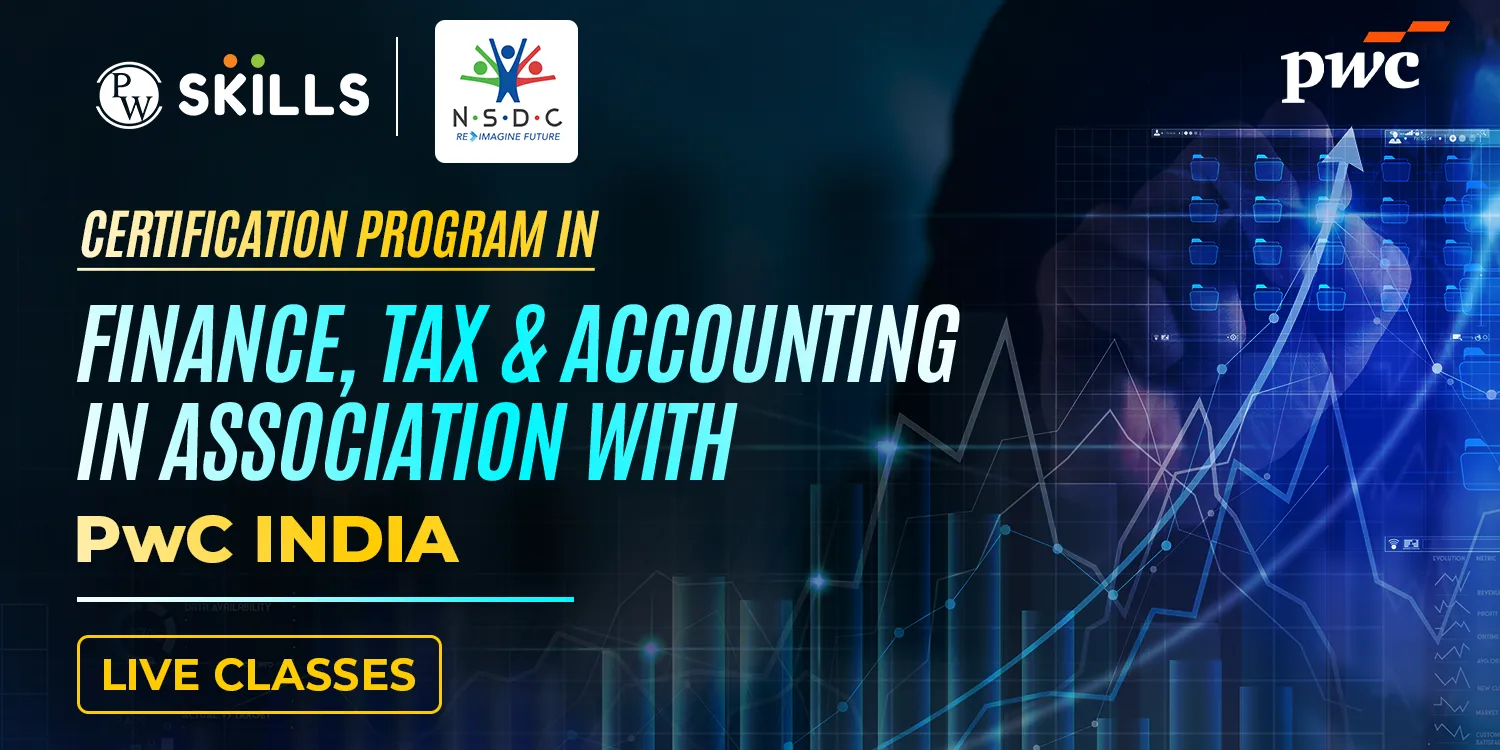
The Certification Program in Finance, Tax and Accounting is a comprehensive 4-month professional upskilling track. It equips graduates, corporate aspirants, and independent small business owners with real-world administrative competencies. The course departs from abstract business theories to focus entirely on daily operational execution.
The program uses a flexible blended delivery model. Videos during the week are pre-recorded and cover core concepts. Weekend masterclasses are live and interactive. This balanced structure enables working professionals and college students to master advanced material without interrupting their current routines.
Hands-on validation of technical tools reinforces learning. Participants gain practical experience using industry-standard digital systems such as Microsoft Excel and Zoho Books. These applications, in particular, are the baseline infrastructure of modern corporate tracking, and certified candidates are ahead in the operational aspects of job placement drives.
Why Choose the PW Skills Finance Tax and Accounting Course?
The curriculum is of enormous value; it is strictly aligned with the operational frameworks of the corporations. The entire syllabus is co-created with PwC India so that students imbibe the day-to-day workflows followed in top professional service corporates.
This premium collaboration brings corporate learning from mere academic definitions to an actual industry onboarding sequence.
Blended Learning Model
The system teaches fundamental laws using recorded presentations, making the standard learning highly personalised. Weekend masterclasses feature live case assessments, where experienced leaders break down actual corporate challenges. This mix allows students to understand tough corporate strategies at their own comfortable pace.
Industry Certificate
One big highlight is still the formal completion document issued by PwC Academy. This professional validation is the irrefutable evidence of functional competence. Having a leading professional services brand validate your credentials takes a normal corporate application package and turns it into a profile that stands out for recruiters.
Learn about Essential Tools
It’s rare for corporate teams to manually record transactions. New hires are expected to navigate digital ledgers right away without the need for constant oversight by their employer. This professional program helps candidates gain operational speed on active software systems, allowing them to analyse complex corporate data with ease.
Industry Skills You Learn in the PW Skills Finance Tax and Accounting Course
The corporate accounting landscape is quickly moving towards cloud automation and real-time compliance tracking. Today, businesses are not looking for simple bookkeepers who manually record historical cash transactions. Companies today need people with a variety of skills who can make sense of financial information and help minimise tax burdens.
To keep ahead in a taxation career, you must keep abreast of changing regulations and digital filing systems. The automation platforms are taking care of the basic transaction entries, and the human role is more on the strategic corporate advisory side. This course helps bridge that transition by teaching you great analytical skills in addition to standard accounting practices.
Skills Covered in the PW Skills Finance Tax and Accounting Course
The integrated education framework builds particular core competencies. Each educational segment has a significant functional corporate execution focus. The following section describes the major operational areas included in this professional upskilling program.
Building Modern Accounting Literacy
First, participants learn basic transaction logs, double-entry bookkeeping structures and general ledger policies. This covers the handling of the complex rules of corporate depreciation and the difference between capital outflows and normal revenue expenditures. These structural habits guarantee that all generated corporate balance sheets will be correct.
Corporate Financial Analysis
True professional development is about transforming operational data into strategic direction. Students learn to manage capital budgeting processes, working capital cycles, and investment valuation models. This gives them the ability to evaluate internal project yields using discounted cash flow strategies and weighted average cost of capital tools.
Direct and Indirect Taxation Competence
The framework provides intensive training on real-world tax practices. It details the entire goods and services tax regime, input tax credit claims and regular monthly filing processes. Learners also get to know about corporate income tax deductions, tax deducted at source rules and active compliance management frameworks.
Tools and Practical Projects Included in the PW Skills Finance Tax and Accounting Course
Modern corporate environments require hands-on familiarity with active software. This upskilling track removes abstract calculations, training students on the digital platforms used by real accounting teams.
Candidates complete multiple real-world case studies based on active corporate scenarios from PwC India. These assignments mirror genuine workplace challenges, requiring students to fix real balance sheet discrepancies and build complex tax returns. Working through these practical exercises builds deep occupational confidence.
Before exploring the technical applications, it is helpful to review the core tools embedded within the curriculum. The following bullet points show the specific technological applications included in this training tract.
-
Advanced Microsoft Excel: Master nested formulas, lookups, pivot tables, and financial modeling macros to automate corporate data pipelines.
-
Zoho Books Accounting Suite: Run end-to-end cloud bookkeeping, generate digital invoices, record cash journals, and track automated trial balances.
-
Tax Portal Sandboxes: Learn the step-by-step methods for processing corporate direct taxes, monthly filings, and input tax credit claims.
Who Should Join the PW Skills Finance Tax and Accounting Course?
The professional training framework satisfies the learning objectives of diverse user groups. The course layout helps individuals from any background build deep corporate competency.
-
Ambitious Fresh Graduates: College students wanting to move past basic textbooks and build competitive, corporate-ready skills for recruitment.
-
Domain Career Changers: Dedicated professionals from non-financial tracks who want a structured pathway into corporate financial systems.
-
Active Corporate Executives: Working professionals trying to refresh their corporate skills and secure faster internal promotions.
-
Independent Entrepreneurs: Small business owners looking to manage internal cash flows and corporate tax filings without third-party reliance.
-
Workforce Returnees: Professionals restarting their careers after an extended break who need to update their knowledge of modern tax regulations.
Job Opportunities After the PW Skills Finance Tax and Accounting Course
Completing this advanced curriculum opens up a wide variety of clear professional career tracks. Employers actively seek candidates who combine deep structural theory with tool competence. The table below lists the primary career pathways available to certified candidates.
At least two lines of context must be provided here to preview the upcoming information. The table below maps specific job descriptions, primary responsibilities, and expected target sectors to help learners pick their path.
|
Job Target Profile |
Core Operational Responsibility |
Primary Target Industry Sector |
|
Corporate Accountant |
Ledger maintenance, statutory compliance, and balance sheet generation |
Private corporations, manufacturing |
|
Taxation Consultant |
Managing goods and services tax filings, tax deducted at source compliance, and audit support |
Professional advisory firms |
|
Financial Analyst |
Capital budgeting models, working capital management, and variance analysis |
Investment groups, tech enterprises |
|
Internal Auditor |
Verification of internal controls, risk reporting, and system evaluation |
E-commerce, multi-national logistics |
|
Accounts Executive |
Vendor payables, client billing, bank statement reconciliation |
Startups, medium-scale enterprise |



FAQs
What is the overall learning format of the PW Finance Tax and Accounting Course?
Which digital software packages will I learn to operate during this program?
Will I receive an official industry certification upon finishing this course?
Is this learning framework helpful for building a taxation career?
What career support can I expect after completing the program?





Get Free Counselling Today
and Clear up all your Doubts
 Live & recorded classes available at easeDashboard for progress trackingLakhs of practice questions

