
Accounting Fundamentals for Beginners

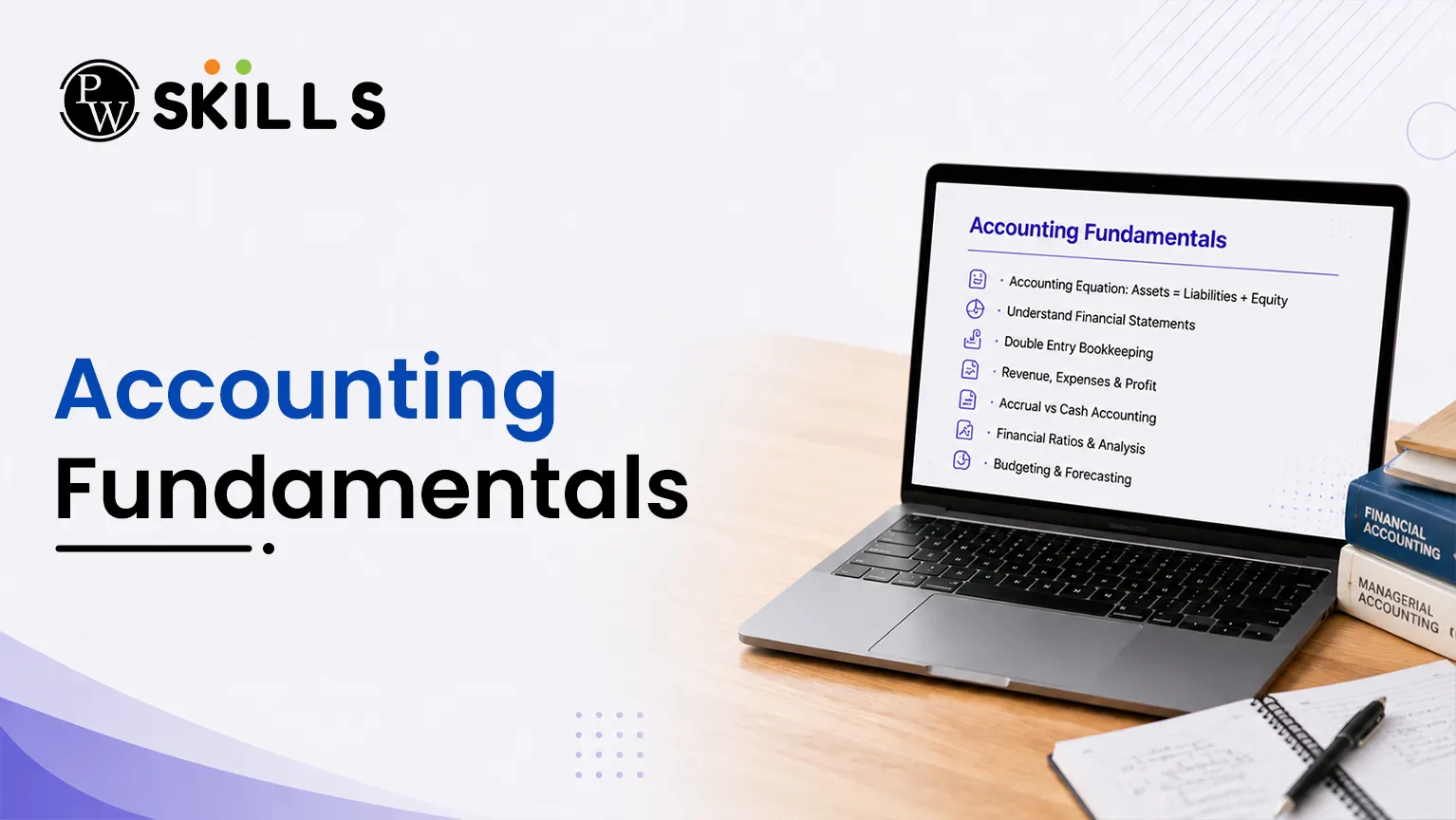
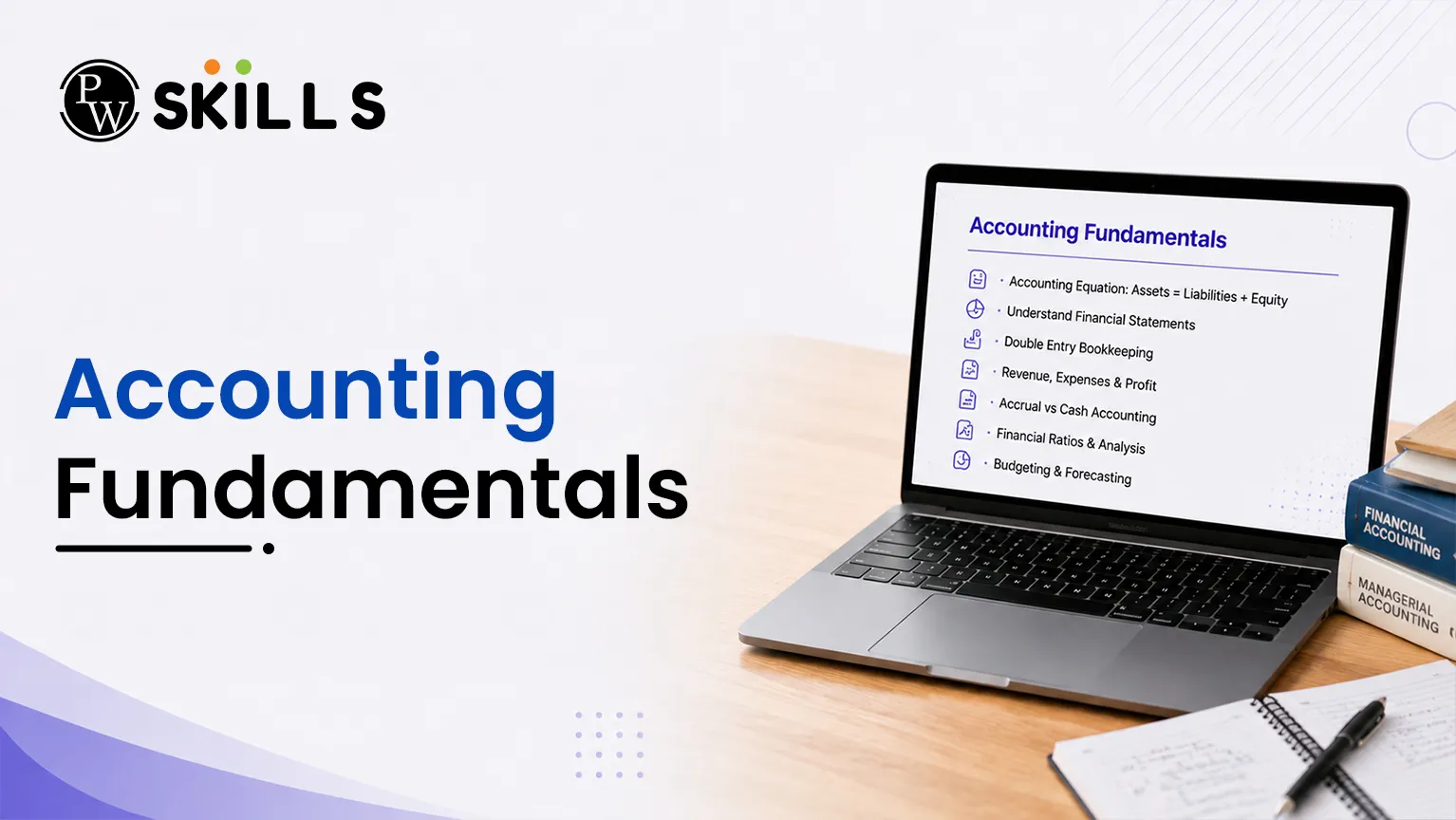
It can be hard to manage your business’s finances without a good understanding of the basics of accounting. Many new people have problems in basic money management like tracking expenses, cash flow, and understanding financial statements.
This article offers a comprehensive introduction to accounting fundamentals, covering the key distinctions between bookkeeping and accounting, the basic accounting principles, and the use of financial statements to guide business decisions.
Why Should You Learn Accounting Fundamentals?
Understanding financial data is essential for running a successful business or launching a corporate career. When you learn accounting fundamentals, you gain the ability to track financial health, make smart investment decisions, and ensure legal compliance.
-
Better Decision Making: Reliable data helps you plan future business growth accurately.
-
Career Opportunities: Financial literacy opens doors in corporate finance, banking, and taxation sectors.
-
Investor Confidence: Clear financial records attract potential stakeholders and lenders easily.
Bookkeeping Accounting Fundamentals You Must Know
All financial systems rely on structured rules to keep data accurate. These bookkeeping concepts ensure every penny coming in and out of a business is properly accounted for. Without these basic building blocks, financial reporting becomes chaotic and unreliable.
The Double-Entry System
Every business transaction has at least two accounts. For each debit entry, there must be an equal and corresponding credit entry. It always balances the basic accounting equation to a T.
Debits and Credits
The language of financial tracking is essentially the debits and credits. A debit increases asset or expense accounts. A credit increases liability, equity, or revenue accounts. To avoid common mistakes on the balance sheet, remember this simple rule.
How Accounting Fundamentals Support Financial Reporting?
To keep financial records consistent across different industries, professionals follow standardised rules. These standard accounting principles guarantee that financial statements are accurate, transparent, and easy for external auditors to verify.
The Accrual Concept
This rule states that revenues and expenses are to be recorded when incurred and not when cash is actually received or paid. For example, a sale is recorded when a product is delivered, even if the customer will pay next month.
The Principle of Matching
This means that businesses have to match expenses with the time period of the revenues they help generate. It gives a very realistic picture, month to month, of what profit you are making, matching your costs right against your earnings.
The Principle of Conservatism
This guideline suggests that in cases of financial uncertainty, expenditures should be recorded early, but revenue should be recognised only when it is fully certain. This conservative approach stops a business from overestimating its current financial health.
Accounting Fundamentals and Financial Statement Analysis
Financial statements summarise raw transaction data into meaningful information. By learning to read these types of documents, you will be able to evaluate the real stability, operational efficiency, and cash flow trends of any company.
The Balance Sheet
The balance sheet acts as a financial snapshot of a business at a specific moment in time. It lists everything the company owns, everything it owes, and the net worth belonging to the owners.
The Income Statement
The profit and loss statement is often called the income statement. It shows total revenues earned minus total expenses incurred over a given period. It shows you whether a business is making money or losing money.
The Cash Flow Statement
This report follows the real movement of cash in and out of a business through operating, investing, and financing activities. It tells you if a company has enough liquid cash to pay its immediate bills.
Also Check: Things You Need to Know About Financial Statements and Analysis
How Debits and Credits Work in Accounting Fundamentals?
Understanding how to apply debits and credits is crucial for error-free record-keeping. Different account types respond differently to financial changes, which can initially confuse new learners.
The list below outlines how specific accounts react to debit and credit entries:
-
Assets: Increased with a debit entry; decreased with a credit entry.
-
Liabilities: Decreased with a debit entry; increased with a credit entry.
-
Equity: Decreased with a debit entry; increased with a credit entry.
-
Revenue: Decreased with a debit entry; increased with a credit entry.
-
Expenses: Increased with a debit entry; decreased with a credit entry.
What is Accounting Cycle in Accounting Fundamentals?
The accounting cycle is a step-by-step, continuous sequence of identifying, recording, and processing a company's financial events. It repeats every financial year to keep records updated and accurate.
The following sequence highlights the essential stages required to complete a full financial cycle:
-
Identify Transactions: Gather receipts, invoices, and bank statements from daily business operations.
-
Record Journal Entries: Log every transaction chronologically using the double-entry format.
-
Post to General Ledger: Transfer the journal entries into individual accounts for better organization.
-
Prepare Unadjusted Trial Balance: Check that total debits match total credits across all accounts.
-
Adjust Entries: Record accrued revenues and unpaid expenses at the end of the period.
-
Create Financial Statements: Generate the final balance sheet and income statement for stakeholders.
-
Close the Books: Reset temporary revenue and expense accounts to zero for the upcoming period.
What is the Difference Between Bookkeeping and Accounting Fundamentals?
Bookkeeping is often mistaken for a wider financial management process. Although they are related, their roles in the business cycle are quite different. Grasping these accounting basics will help make sense of how financial data travels from simple daily entries to complex boardroom reports.
The following is a table of how we went from daily record-keeping to strategic financial analysis:
|
Feature |
Bookkeeping |
Accounting |
|
Primary Focus |
Recording daily financial transactions. |
Analyzing and interpreting financial data. |
|
Process Involved |
Journal pricing, ledger posting, and invoicing. |
Preparing financial statements and tax filing. |
|
Tools Used |
Daybooks, receipts, and basic ledgers. |
Financial metrics, balance sheets, and audits. |




FAQs
What is the basic accounting equation?
Why is the accrual method preferred over the cash method?
What is a trial balance used for?
What constitutes a business asset?





Get Free Counselling Today
and Clear up all your Doubts
 Live & recorded classes available at easeDashboard for progress trackingLakhs of practice questions

