
2026 Hiring Outlook for Finance Executives: Reading Between the Job-Portal Numbers
 Hardik Gupta10 Sept, 2026
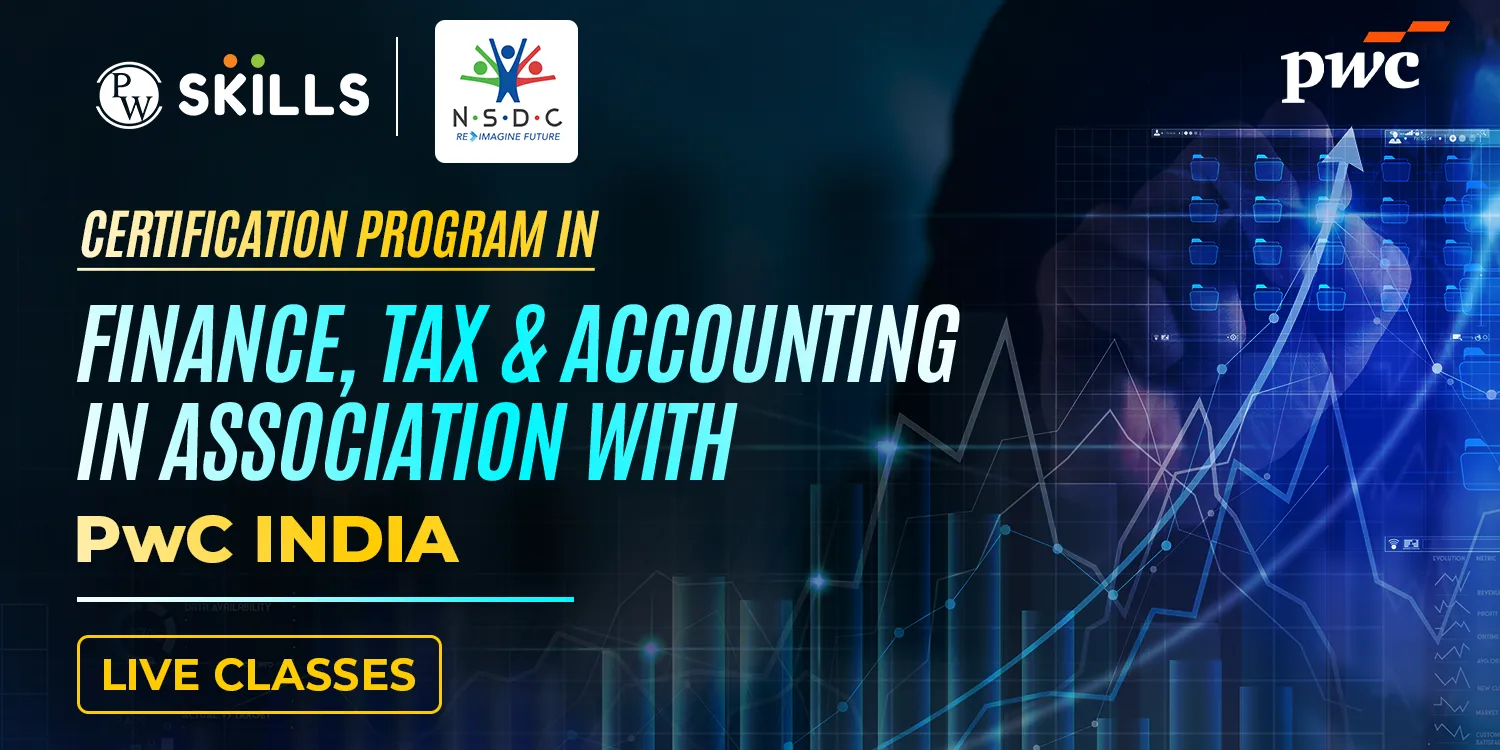
Academic qualifications are not enough for careers in contemporary finance, tax and accounting. Employers are increasingly seeking candidates who can manage statutory compliance, digital reconciliation, financial software and real-world tax workflows with very little supervision. A Finance, Tax and Accounting Course (with PwC India) helps to bridge this gap, by combining accounting knowledge with practical skills, aligned to current workplace requirements.
Finance Hiring Trends in 2026 with Finance, Tax and Accounting Course (with PwC India)
Recent employment market analyses indicate a major shift in how corporate finance teams evaluate candidates. Basic manual bookkeeping and data entry roles are rapidly disappearing due to cloud automation. Companies now require multi-skilled professionals who understand automated accounting systems, complex digital workflows, and real-time statutory compliance.
The NSDC-FICCI Skill Gap Report 2020 highlights growing gap between commerce graduates and the requirements of the industry. Employers often say that candidates may understand the fundamentals of accounting theory but lack practical experience with real tax scenarios, digital invoicing platforms and ledger software.
|
Traditional Graduates |
Modern Corporate Need |
|
• Theoretical Ledgers |
• Cloud Accounting Tools |
|
• Manual Bookkeeping |
• Real-Time Compliance |
|
• Rote Tax Definitions |
• Direct Portal Filings |
|
• Static Excel Basics |
• Advanced Analytics |
To capture high-growth opportunities, professionals must look beyond basic job descriptions. Adapting to modern corporate demands involves upgrading functional skills to match digital finance standards.
NSDC-FICCI Skill Gaps with Finance, Tax and Accounting Course (with PwC India)
The operational landscape of corporate finance requires quick, error-free execution. Understanding key areas where job seekers face technical deficits helps candidates target their learning effectively.
|
Operational Area |
Academic Benchmark |
Corporate Expectation |
|
Taxation |
Theoretical tax laws |
Direct portal filings & TDS calculations |
|
Accounting Software |
Manual journal entries |
Fluency in Tally, Zoho Books, and ERP systems |
|
Static textbook formulas |
Advanced Excel formulas, pivot tables, and Power BI |
|
|
Statutory Reconciliation |
Basic trial balance |
Input Tax Credit (ITC) matching & GSTR-2B audits |
To address these critical industry deficits, practical learning frameworks like this course focus directly on practical tool execution, statutory compliance, and digital ledger management.
Corporate Finance Jobs with Finance, Tax and Accounting Course (with PwC India)
Corporate hiring drives in 2026 highlight a steady rise in specialized positions. Businesses require dedicated teams to prevent financial penalties and manage complex tax reporting frameworks.
Corporate Accounts Executives
Accounts Executives manage daily operational ledgers, track cash flows, process accounts payable (AP) and accounts receivable (AR), and prepare trial balances. Employers look for candidates who can operate enterprise resource planning (ERP) platforms and resolve bank reconciliation discrepancies independently.
Taxation Analysts and Compliance Officers
Tax Analysts evaluate direct and indirect tax liabilities, calculate withholding tax (TDS/TCS) schedules, and prepare periodic filings. Candidates equipped with structured training from this course stand out during recruitment because they understand real corporate audit and tax workflows.
GST Practitioner Jobs News with Finance, Tax and Accounting Course (with PwC India)
Recent industry tracking and Finance, Tax and Accounting Course (with PwC India) + GST Practitioner Jobs News highlight a surge in demand for certified compliance experts. The transition to mandatory e-invoicing and real-time e-way bill generation has created a continuous requirement for skilled practitioners across retail, manufacturing, and tech sectors.
-
Mandatory Portal Compliance: Every registered business must file periodic returns, driving stable demand for qualified compliance officers.
-
Input Tax Credit Management: Companies require experts who can reconcile internal purchase registers against GSTR-2A and GSTR-2B data to prevent lost tax credits.
-
Corporate Audit Readiness: Maintaining clear audit trails and verifying tax entries protects businesses from costly compliance penalties.
-
Higher Earning Potential: Specialized tax roles offer better career progression and higher initial compensation compared to routine bookkeeping positions.
Completing specialized modules through the course helps learners build hands-on expertise in direct portal workflows, preparing them for dedicated tax roles.
Finance, Tax and Accounting Course (with PwC India) Career Skills
Bridging the space between academic preparation and workplace execution requires dedicated, practical upskilling. This course offers a 4-month blended learning program designed to make candidates job-ready.
|
Stage |
Focus Area |
Key Coverage & Skills |
|
Stage 1 |
Core Accounting & Software |
Tally, Zoho Books & Advanced Excel |
|
Stage 2 |
GST Filings, TDS/TCS & Returns |
|
|
Stage 3 |
Real PwC India Case Studies |
Audit Workflows & Reconciliation |
|
Stage 4 |
Placement & Resume Alignment |
Tool Assessments & Mock Interviews |
Key operational highlights of this practical program include:
-
Co-Created Curriculum: Learn workflows, statutory compliance rules, and audit methodologies co-developed with experts from PwC India.
-
Hands-On Software Practice: Understand industry-standard platforms including Tally, Zoho Books, Microsoft Excel, and Power BI for automated financial reporting.
-
Real-World Case Studies: Resolve complex corporate accounting scenarios and perform live bank reconciliations using realistic corporate datasets.
-
Flexible Blended Format: Combine pre-recorded foundational lessons during the week with live, interactive weekend masterclasses.
-
Dedicated Career Support: Receive resume alignment, practical tool assessments, and targeted interview preparation to present your skills confidently to recruiters.
Growth-Focused Finance Jobs with Finance, Tax and Accounting Course (with PwC India)
Not every finance job offers the same long-term career potential. Candidates should look beyond salary and job title to understand the responsibilities, tools, and learning opportunities attached to a role. A growth-focused position usually provides exposure to accounting software, tax compliance, financial reporting, audits, and business analysis.
Before applying, check whether the role includes:
-
Tax and compliance exposure: Look for responsibilities involving GST, TDS, reconciliations, and statutory filings.
-
Technology usage: Roles using ERP platforms, Tally, Excel, Power BI, or automated accounting tools can build stronger digital finance skills.
-
Financial reporting: Exposure to MIS reports, financial statements, budgeting, and variance analysis can support progression into analytical roles.
-
Cross-functional work: Interaction with tax, audit, operations, and management teams can broaden your understanding of business finance.
-
Clear career progression: Check whether the organisation provides opportunities to move into senior accounting, taxation, audit, FP&A, or finance management positions.
This course can help candidates develop the practical skills needed to evaluate and perform these responsibilities, making it easier to target roles that offer meaningful career progression rather than routine transactional work.



FAQs
1. How does the Finance, Tax and Accounting Course with PwC India help meet 2026 hiring expectations?
2. Why are insights from the NSDC-FICCI Skill Gap Report important for finance job seekers?
3. How do updates from GST Practitioner Jobs News reflect career growth opportunities?
4. Which software tools are taught in the Finance, Tax and Accounting Course (with PwC India)?
5. Can fresh graduates apply for corporate finance roles after taking the Finance, Tax and Accounting Course with PwC India?





Get Free Counselling Today
and Clear up all your Doubts
 Live & recorded classes available at easeDashboard for progress trackingLakhs of practice questions

