
5 Finance Hiring Stats From 2026 That Justify Learning Finance, Tax and Accounting Course
 Hardik Gupta17 Oct, 2026
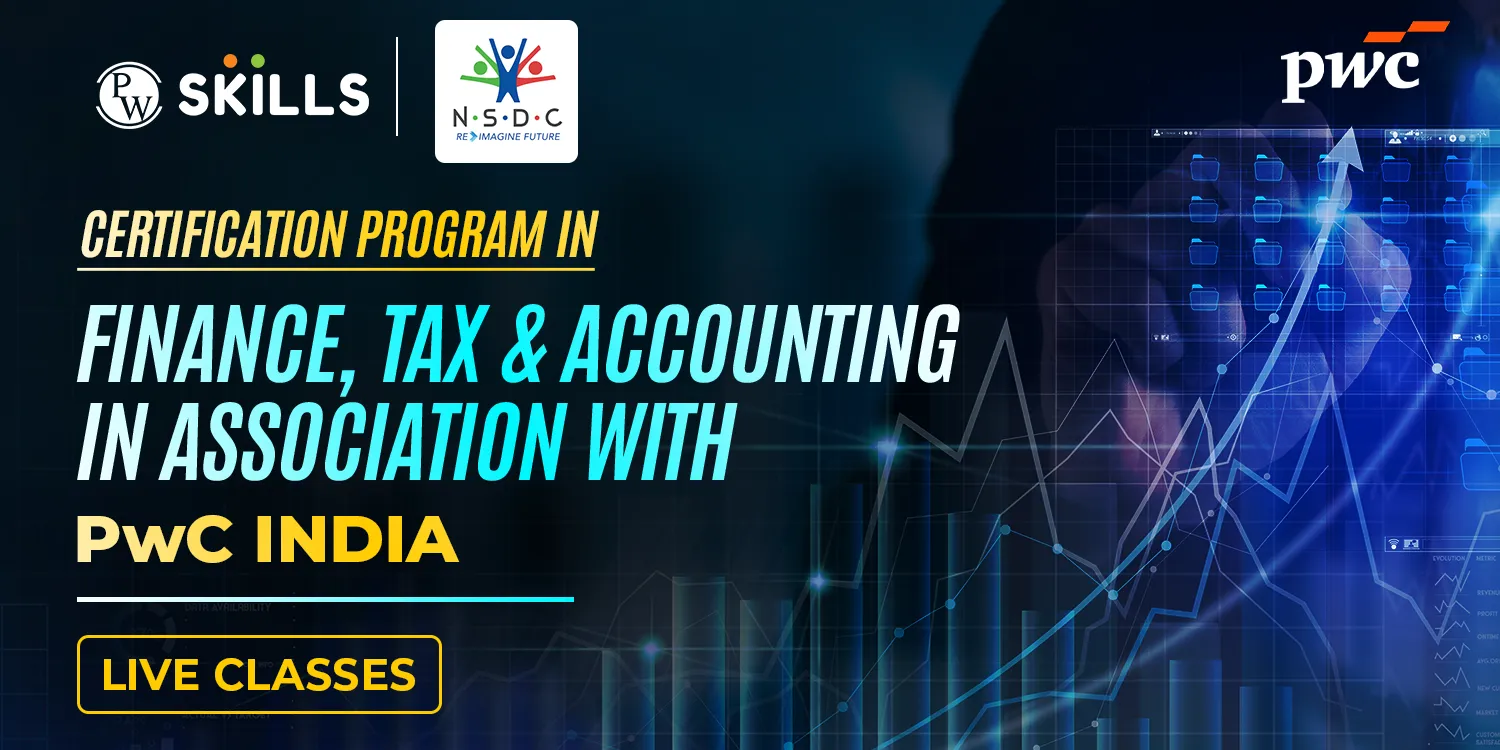
If you want a career in corporate finance, you need to have hands-on knowledge of accounting and a good understanding of tax compliance. The Finance Tax and Accounting Course enables the students and graduates to become proficient in bookkeeping, GST, income tax, financial reporting and accounting software. This training can equip learners for entry-level jobs by linking classroom topics to day-to-day financial and accounting responsibilities.
Importance of Finance Tax and Accounting Course for Employers
Corporate recruiting managers always prefer job applicants who can manage live financial workflows from day one. Typical academic curriculum could not give you adequate hands-on training on industry-standard platforms, hence extending corporate onboarding cycles. The Finance, Tax and Accounting Course + Audit Associate Jobs News also points to the importance of practical accounting knowledge and job-specific abilities for those looking to land an audit and finance employment.
-
Operational Software Skills: Today’s finance teams are working with digital ledgers and cloud platforms – not manual journal entries.
-
Statutory Compliance Accuracy: The prompt submission of direct and indirect taxes avoids significant corporation penalties.
-
Financial Decision Support: Translating raw balance sheet items into actionable business projections aids executive decision-making.
Building these core competencies through this course ensures your resume immediately catches the eye of corporate talent acquisition teams.
Finance Tax and Accounting Course Skills for Audit and Tax Jobs
Recent recruiting patterns point to a growing shortage of qualified personnel in audit departments and tax consultancy businesses. The ICAI Annual Report also gives useful insights into the accounting profession and its changing role in financial compliance. Statutory compliance frameworks are expanding, with businesses required to have correct accounting records and transparent internal reporting systems.
|
Professional Role |
Enterprise Focus & Key Duties |
Essential Software Tools |
|
Audit Associate |
Internal control evaluation, ledger verification, compliance sampling |
Advanced Excel, Audit Software |
|
Income tax returns, GST filings, advance tax calculation |
Zoho Books, Government Portals |
|
|
Capital budgeting, valuation modeling, variance analysis |
Microsoft Excel, Power BI |
|
|
Corporate Accountant |
Ledger maintenance, trial balance generation, balance sheet preparation |
TallyPrime, Zoho Books |
Candidates with formal training in audit sampling, general ledger policies and statutory compliance get jobs much faster. These responsibilities are directly trained through an exclusive course that provides you with complete expertise in creating full-cycle corporate financial statements.
5 Finance Tax and Accounting Statistics
The corporate sector and tax system in India produce significant activity in accounting, reporting and compliance. The following government statistics are provided to give some perspective to learners considering this course. They are indicative of the size of tax administration and business formalization and are not to be taken as direct measures of vacancies.
1 Income Tax Return Filings Increased by 36%
As to the Press Information Bureau, India filed around 9.19 crore income tax returns for FY 2024-25 including revised filings against 6.72 crore in FY 2020-21. That’s a 36 per cent rise in five years. The statistics demonstrate the magnitude of income tax reporting and the importance of knowing how to prepare tax returns and comply with the law.
2 GST Collections Reached ₹22.08 Lakh Crore
According to the GST backgrounder of the Government of India, gross GST collections in FY 2024-25 were Rs 22.08 lakh crore, up by 9.4% over the previous financial year. The volume of collection of indirect taxes makes the GST ideas, invoice records, reconciliations, and compliance processes as significant areas of accounting expertise.
3 India Had More Than 1.51 Crore Active GST Registrations
The same government report recorded over 1.51 crore active GST registrations as of 30 April 2025. Businesses registered under GST must follow the requirements applicable to their operations, making knowledge of GST records, returns, and input tax credit useful for accounting and taxation work.
4 More Than 7.83 Crore Enterprises Were Registered on Udyam and UAP
As of 28 February 2026, 7.83 crore firms had registered on the Udyam Registration Portal and Udyam Assist Platform, the Ministry of Micro, Small and Medium firms said. These registrations are a reflection of the scope of formalization of India’s corporate ecosystem. Accounting abilities can help organizations keep financial records, track spending and meet reporting requirements.
5 More Than 3.87 Crore Income Tax Returns Were Processed Within Seven Days
In its 2024 evaluation of the Department of Revenue, the Ministry of Finance said that more than 3.87 crore income tax returns were completed within seven days. The study also cited measures on digital filing and taxpayer support. This indicates the need of precise records and knowledge of digital tax processes, but not a specific employment trend.
Taken together, these figures show the scale of India’s tax administration and business activity. This course can help learners develop relevant practical skills in bookkeeping, GST, income tax, reconciliations, and accounting software. Career outcomes will still depend on the learner’s experience, proficiency, and the requirements of individual employers.
How a Finance Tax and Accounting Course Supports Career Growth
Completing a structured learning pathway changes how recruiters evaluate your profile. Upskilling programs designed alongside industry partners prepare candidates to solve complex corporate challenges with confidence.
Practical Tool Mastery and Cloud Accounting
Automated platforms handle routine transactional entries, freeing finance professionals to focus on higher-level analytical tasks.
-
Zoho Books & Digital Ledgers: Generating invoices, managing supplier expenses, and running real-time ledger reconciliations.
-
Advanced Microsoft Excel: Applying dynamic lookup formulas, index/match functions, and pivot tables to summarize large corporate datasets.
-
Automated Reconciliation: Reconciling multi-currency bank feeds and resolving ledger variances quickly.
Direct and Indirect Taxation Competency
Understanding complex tax regulations turns a standard accountant into an invaluable corporate advisor.
-
Direct Taxation: Calculating Tax Deducted at Source (TDS), Tax Collected at Source (TCS), advance corporate tax schedules, and individual income tax returns.
-
Indirect Taxation: Navigating Goods and Services Tax (GST) registration, input tax credit claims, and monthly return filings.
Joining an industry-backed course provides direct experience in these vital areas, enabling you to step seamlessly into junior and mid-level enterprise roles.
Finance Tax and Accounting Course Projects for Practical Learning
Talent acquisition teams are moving away from purely academic testing during job interviews. Hiring managers place greater value on candidate portfolios that feature practical case studies, financial models, and real-world accounting projects. This Stat-roundup-hook highlights the growing importance of demonstrating practical skills and applying financial knowledge to workplace tasks.
You get the technical confidence to do well in job interviews by working through formulas like as Discounted Cash Flow (DCF), Net Present Value (NPV) and Weighted Average Cost of Capital (WACC. A specialized training will actually teach you how to utilize these specific valuation models, and will give you an edge over the candidates who just memorized the textbook.



FAQs
What core topics are included in a Finance Tax and Accounting Course?
Who is eligible to take this financial training program?
Is previous programming or advanced mathematics experience required?
Which job profiles become accessible after completing the course?
How does learning software like Zoho Books improve employment prospects?





Get Free Counselling Today
and Clear up all your Doubts
 Live & recorded classes available at easeDashboard for progress trackingLakhs of practice questions


