
What Every New Investor Should Learn Before Buying Stocks
 Varun Saharawat3 Jul, 2026
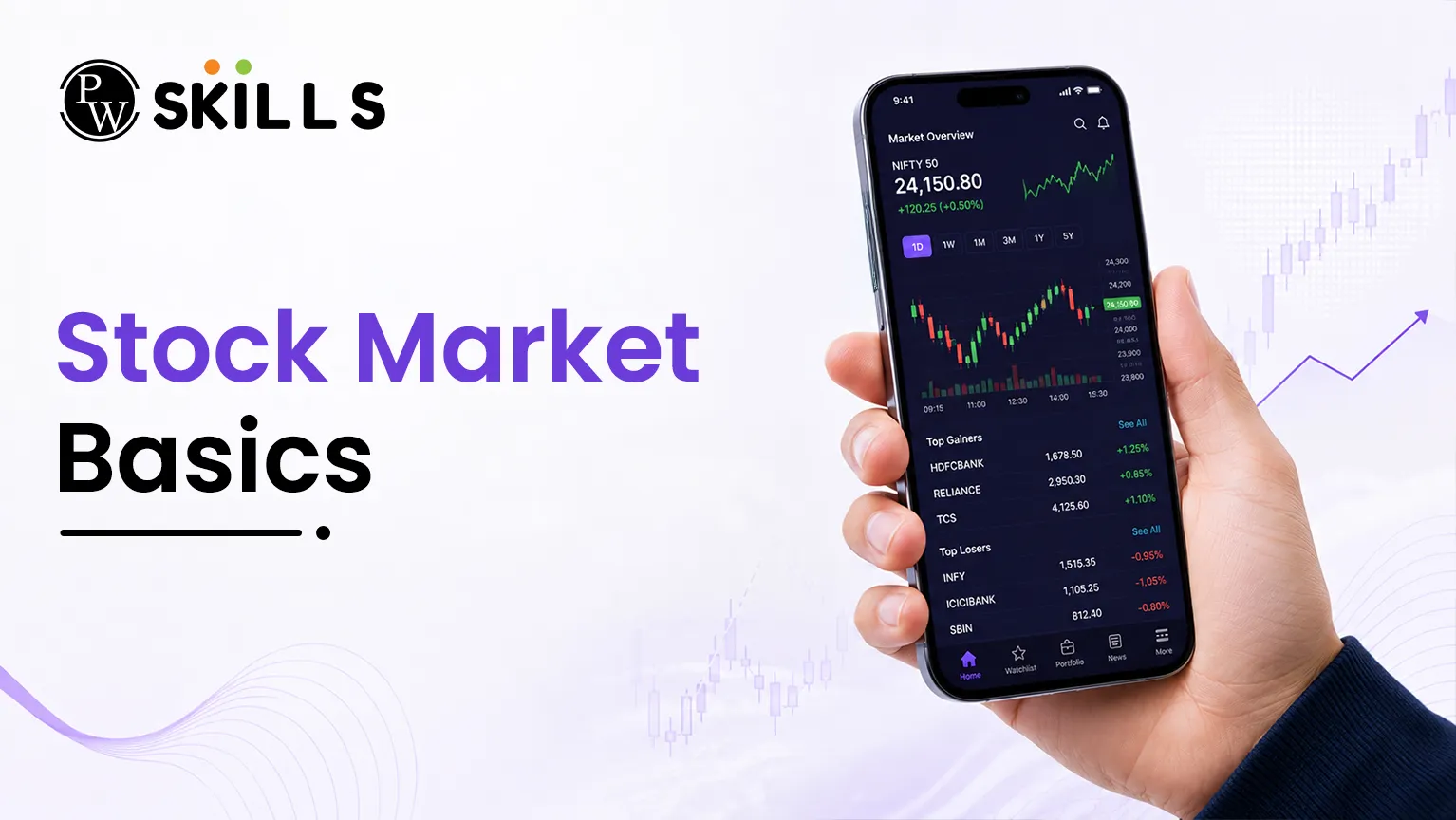
Understanding the financial market can feel confusing when you see stock symbols, changing prices, and market news every day. Many people start investing without a clear plan and often lose money because they do not understand how the market works. To avoid these mistakes, learning Stock Market Basics is the first and most important step.
Overview of Stock Market Basics
The stock market allows companies to raise money and gives investors an opportunity to grow their wealth. Before starting investing in stocks, it is important to understand how shares work, how markets operate, and how risk affects your investments. Learning the basics helps beginners build a strong foundation and make smarter financial decisions in the future.
Every company needs money to run daily operations, launch new products, or expand into new markets. Some businesses use bank loans, while others raise money from the public. When you buy a stock, you purchase a small ownership share in that company and become a shareholder.
Investing in Stocks Through Public Shares
Companies issue shares to raise money without taking on too much debt. This process connects businesses that need funds with people interested in stock investing. The stock market works through two main sections, where shares are first issued and then traded.
The Primary Market: This is where companies issue new shares to the public for the first time. An Initial Public Offering (IPO) takes place here, allowing investors to buy shares directly from the company.
The Secondary Market: After the IPO, shares move to the secondary market. Investors buy and sell shares among themselves through registered brokers without involving the company directly.
Stock Market Basics Trading Terms
To understand trading, you need to know a few important terms that affect stock prices every day.
Ask Price: The lowest price at which a seller is willing to sell a share.
Bid Price: The highest price a buyer is willing to pay for a share.
Spread: The difference between the bid price and ask price. A smaller spread often means higher trading activity and better liquidity.
Stock Market Basics and Types of Stocks
Not all stocks perform the same way during market changes. A good stock market education includes learning how stocks are grouped and how each category behaves under different market conditions.
Read In Detail - Personal Finance & Stock Market | How market Works | Complete Finance Ready Series
Stock Market Basics and Market Capitalisation
Market capitalisation shows the total value of a company's shares. It is calculated by multiplying the share price by the total number of shares available in the market.
Large-Cap Stocks: These belong to well-established companies with strong financial performance and stable growth. They usually have lower risk and steady returns.
Mid-Cap Stocks: These are medium-sized companies that are growing quickly. They offer a balance between growth opportunities and risk.
Small-Cap Stocks: These are smaller companies with high growth potential. However, they also carry higher risks and larger price swings.
Stock Market Education and Stock Categories
Stocks can also be grouped based on how companies use their profits and respond to economic changes.
|
Equity Category |
Primary Operational Focus |
Typical Dividend Payout |
Risk Profile |
|
Growth Shares |
Reinvesting profits into business growth |
Very low or none |
Higher volatility |
|
Value Shares |
Trading below their estimated value |
Regular and steady |
Moderate risk |
|
Cyclical Shares |
Depend on economic conditions |
Changes with business cycles |
Linked to economic growth |
|
Defensive Shares |
Provide essential products and services |
High and consistent |
Lower downside risk |
Stock Market Basics and Market Indices
One of the best ways to measure an investment's performance is by comparing it with the overall market. Since tracking every listed company is difficult, investors use market indices as benchmarks.
Stock Market Education and Market Indices
A stock market index is a tool used to measure the performance of a selected group of stocks. It helps investors understand whether the market is generally moving up or down.
For example, the NIFTY 50 and Sensex in India, or the FTSE 100 in the United Kingdom, track leading companies across different industries. A rising index usually shows a strong economy, while a falling index may indicate weaker market confidence.
Beginner Investing Tips for Diversification
Putting all your money into one company or one sector can be risky. One of the most important beginner investment tips is to build a diversified portfolio. A portfolio is a collection of different investments owned by an individual.
Spreading your money across shares, bonds, mutual funds, and different industries can reduce risk. If one sector performs poorly, investments in other sectors can help balance overall returns.
Read In Detail - Stock Market Analysis - Overview, Uses, Types, and Assumptions
Stock Market Basics Analysis Methods
Choosing the right stock requires proper research rather than guessing or following market rumors. Investors generally use two common methods to evaluate stocks.
Stock Market Education Through Fundamental Analysis
Fundamental analysis focuses on a company's financial strength, management quality, and future growth potential. Investors study balance sheets, profit reports, and cash flow statements to estimate the real value of a company.
The goal is to find good companies that may be trading below their true value and hold them for long-term growth.
Stock Market Basics and Technical Analysis
Technical analysis focuses on stock price movements and trading volume instead of company financial data. Investors use charts and indicators to identify patterns and market trends.
For example, a rising moving average may suggest an upward trend, while a falling average may indicate a downward trend. This method is often used for short-term trading decisions.
Stock Market Basics and Different Investing Strategies
The length of time you plan to hold a stock often determines your investment style. The market offers opportunities for both short-term traders and long-term investors.
Investing in Stocks for Short-Term Trading
Short-term trading requires regular monitoring and quick decisions. These methods are generally considered higher risk and may not be suitable for beginners.
Day Trading: Buying and selling shares within the same trading day to benefit from short-term price movements.
Scalping: Making many small trades throughout the day to earn small profits from tiny price changes.
Swing Trading: Holding stocks for several days or weeks to benefit from expected market movements.
Beginner Investing Tips for Long-Term Wealth
Long-term investing focuses on buying shares of strong companies and holding them for many years. This strategy benefits from compound growth and has historically produced steady returns over long periods.
Long-term investing also reduces trading costs and allows investors to benefit from economic growth without worrying about daily market fluctuations.
Stock Market Investing Tips to Manage Risks Effectively
Building an investment portfolio requires discipline and clear rules. Good risk management helps protect your money during uncertain market conditions.
Beginner Investing Tips for Managing Risk
Before making your first investment, decide how much money you can afford to invest without affecting your daily needs. Never invest money needed for rent, bills, emergencies, or important expenses.
Using stop-loss orders can also help reduce losses. These orders automatically sell a stock if its price falls below a selected level.
Beginner Investing Tips for Controlling Emotions
Markets move through periods of growth and decline. These are commonly known as bull markets and bear markets.
A bull market happens when stock prices rise, and investor confidence is strong. A bear market occurs when prices fall, and investors become cautious. Emotional decisions, such as buying during excitement or selling during fear, often lead to losses.
Following a well-researched investment plan can help you avoid emotional mistakes and stay focused on long-term goals.




FAQs
What is the difference between a stock and a share?
How do dividends work for investors?
What is an Initial Public Offering (IPO)?
How does inflation affect long-term stock investments?
What does a broker do in stock trading?





Get Free Counselling Today
and Clear up all your Doubts
 Live & recorded classes available at easeDashboard for progress trackingLakhs of practice questions

