
The Complete Beginner's Guide to Stock Market Investing

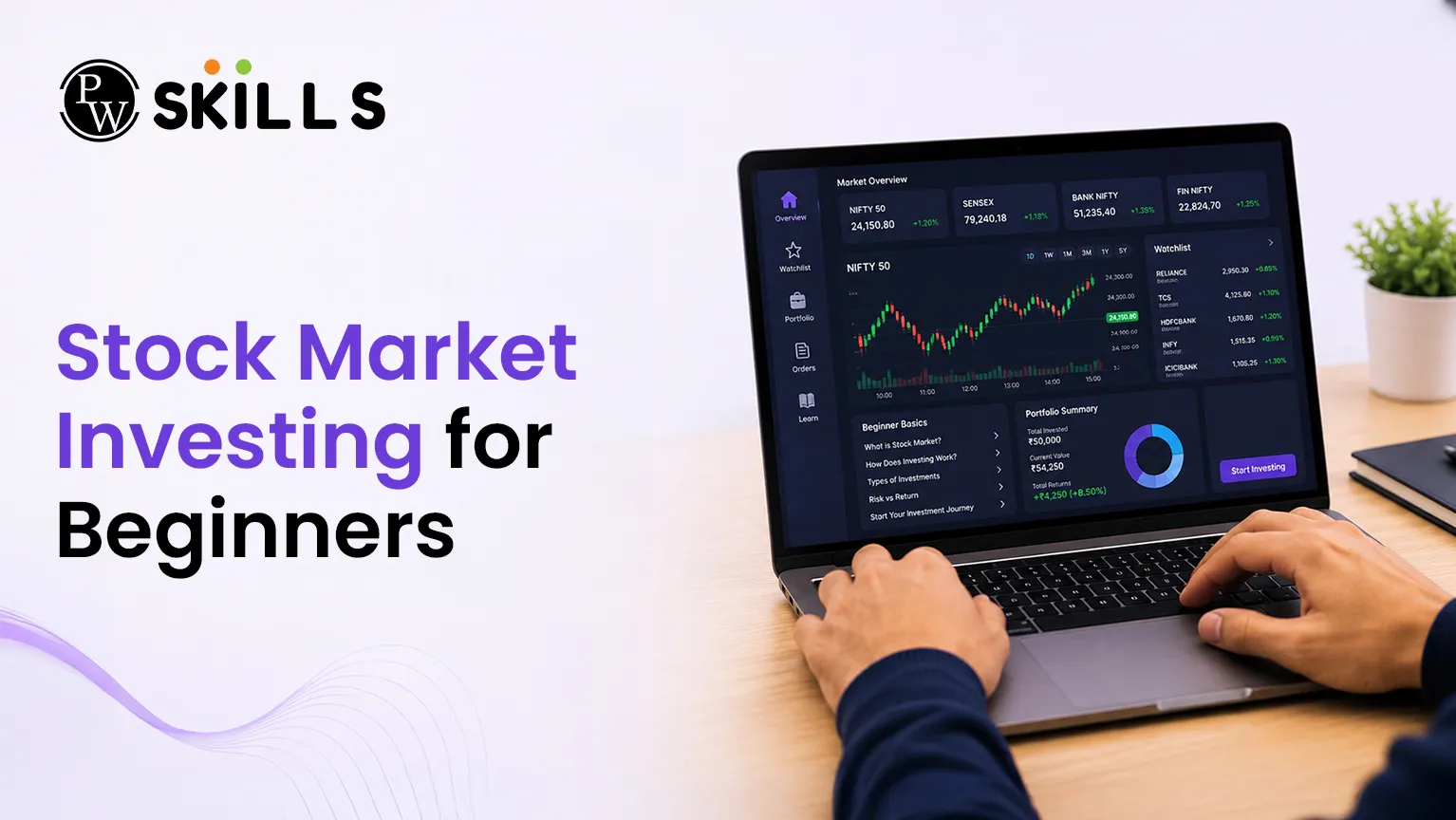
Entering the financial markets can feel completely overwhelming for newcomers who face a confusing wall of financial jargon and volatile price charts. Many individuals want to grow their personal wealth effectively but lack the necessary confidence to execute trades or evaluate corporate performance safely.
This comprehensive article simplifies the entire landscape by breaking down the core concepts of Stock Market Investing for Beginners.
Importance of Stock Market Investing for Beginners
To master the investing basics, you must first understand what a stock actually represents. All companies need money to run their business smoothly. Quite often, the profit acquired from selling regular goods or services is simply not sufficient to meet the ongoing working capital requirements or long-term expansion plans of an organisation.
To solve this capital shortfall, companies invite normal people to put some money into their business so that they can run it efficiently. In return for this financial contribution, the public investors get a direct share of whatever profit the company makes in the future.
Defining Stocks and Shares
When you put your money into a business, you receive an equity stake. Stocks are simply an investment method used to build long-term wealth over time. When you invest in the stock of a company, it means you own a specific share in the company that issued the stock. This equity stake represents a fractional slice of ownership in that corporate entity, allowing you to participate in its commercial journey.
Stock Market vs Share Market
Many people use the terms share market and stock market interchangeably, but there is a slight technical distinction between the two that beginner investors should know:
-
Share Market: This is a specific platform where equity shares of various companies are issued, allocated, and traded among buyers and sellers.
-
Stock Market: This is a broader, all-encompassing platform. The stock market lets an individual trade not only in corporate shares but also in bonds, mutual funds, derivatives, and other financial instruments.
What are the Main Concepts of Stock Market Investing for Beginners?
Navigating the financial ecosystem requires a firm grasp of essential terminology and operational systems. Without these fundamentals, tracking performance or executing basic orders becomes incredibly difficult.
Primary and Secondary Markets
The financial market is divided into two distinct operational segments where securities are created and traded:
-
Primary Market: This is the initial platform where firms float their new stock options and bonds for the general public to acquire. This process creates entirely new securities.
-
Secondary Market: In this segment, investors trade existing securities without involving the companies that issued them in the first place. These peer-to-peer transactions happen entirely with the help of registered intermediaries.
Key Trading Terminology
Before placing your first transaction via a digital platform, you must learn the standard vocabulary used by market participants every single day:
-
Initial Public Offering (IPO): This is the selling of securities to the public in the primary market for the very first time. It serves as the largest source of funds with long or indefinite maturity for an expanding company.
-
Stock Broker: An investment advisor or specialized entity that executes transactions, such as the buying and selling of stocks, on behalf of their clients.
-
Bid Price: The absolute highest price a buyer is willing to pay to buy a specified number of shares of a stock at any given time.
-
Ask Price: The lowest price at which a seller is willing to sell their specific shares of stock to an interested buyer.
-
Closing Price: This refers directly to the very last price at which a specific stock trades during a regular daily trading session.
-
Equity: The net value that would be received by the shareholder if all of the company's assets were liquidated and all of its outstanding corporate debts were paid off completely.
-
Dividend: A distribution of cash or rewards that a successful company provides directly to its shareholders out of its accumulated corporate profits.
-
Portfolio: A comprehensive collection of a wide range of assets that are owned by investors, which can include valuables ranging from gold, stocks, funds, derivatives, property, cash equivalents, and bonds.
-
Moving Average: A popular stock indicator commonly used for technical analysis to smooth daily price data by creating a constantly updated average price over a set period. A rising moving average indicates that the security is in an uptrend, while a declining moving average indicates a clear downtrend.
Market Conditions and Options
Markets shift constantly based on macroeconomic health and collective investor behaviour. These shifts create distinct cycles and trading products:
-
Bull Market: A market condition where companies tend to generate more revenue, the broader economy grows, and consumers are much more likely to spend money freely.
-
Bear Market: A prolonged market downturn characterized by falling asset values, economic stagnation, and widespread investor pessimism.
-
Call Option: A derivative financial contract that gives the investor the specific right to purchase the underlying security at a fixed price.
-
Put Option: A derivative financial contract that gives the investor the right to sell shares of the underlying security at a predetermined level. Both of these options let investors profit from specific movements in a stock's price.
Types of Stock Market Investing for Beginners to Understand
Stocks are not all identical; they are categorised based on various structural criteria to help market participants build balanced portfolios. These primary criteria include market capitalisation, ownership structures, financial fundamentals, price volatility, profit-sharing methods, and broader economic trends.
Common vs Preferred Stocks
The most fundamental division in corporate ownership relates to the specific rights granted to the asset holder:
-
Common Stocks: These securities entitle their owners to vote at official shareholder meetings and receive variable dividends. If a company performs exceptionally well, common stockholders benefit from unlimited upside potential.
-
Preferred Stocks: Preferred stockholders usually do not have voting rights at corporate meetings. However, they receive fixed dividend payments before common stockholders do, and they have strict priority over common stockholders if the company goes bankrupt and its assets are liquidated.
Specialty Categories of Equities
To navigate a standard stock market guide, you must learn how different equities behave under varying economic conditions. Businesses are broadly grouped into four distinct categories based on their growth trajectories and operational models:
|
Stock Category |
Primary Characteristics |
Dividend Behaviour |
Ideal Target Audience |
|
Growth Stocks |
Earnings are growing at a faster rate than the market average; high expansion focus. |
Rarely pay dividends; profits are reinvested into operations. |
Long-term investors seeking capital appreciation. |
|
Income Stocks |
Established corporations with stable, highly predictable revenue models. |
Pay dividends consistently to distribute corporate profits. |
Investors seeking regular cash flow, such as retirees. |
|
Value Stocks |
Possess a low price-to-earnings (PE) ratio; cheaper than market peers. |
Varies; can pay steady dividends while out of favour. |
Bargain hunters are expecting a market price rebound. |
|
Blue-Chip Stocks |
Large, well-known corporations with a solid history of steady growth. |
Generally, they pay dividends reliably over many decades. |
Conservative participants want low price volatility. |
Benefits of Stock Market Investing for Beginners
Every single investment vehicle carries a unique balance of positive rewards and potential drawbacks. Developing an analytical mindset helps you balance these opposing forces effectively without exposing your hard-earned capital to unnecessary danger.
Potential Benefits of Equities
Investing in the corporate sector provides several distinct financial advantages that can help individuals outpace inflation over extended horizons:
-
Potential Capital Gains: This involves earning substantial returns from owning a stock that grows in value over time, allowing you to sell it later for a profit.
-
Potential Income from Dividends: Regular cash distributions paid by established corporations provide a steady, passive income stream without requiring you to liquidate your underlying asset shares.
-
Lower Tax Rates: Many regulatory jurisdictions offer reduced tax rates on long-term capital gains compared to standard income tax brackets, helping you preserve more of your investment profits.
-
Corporate Wealth Creation: Listing of securities allows individuals to invest directly in businesses with massive potential for wealth creation, giving normal citizens a chance to co-own highly successful global enterprises.
Potential Risks of Equities
While the upside can be highly attractive, the financial markets present structural hazards that every participant must acknowledge before allocating funds:
-
Capital Depreciation: Share prices for a company can fall dramatically due to poor operational management or systemic economic shifts, sometimes dropping all the way to zero.
-
Liquidation Position: If a company goes entirely broke or files for bankruptcy, common shareholders are the absolute last to be paid out of the remaining assets, meaning you may never get your initial money back.
-
Price Volatility: The value of your individual shares will go up and down daily based on shifting sentiment, and corporate dividends may vary or be canceled entirely during severe recessions.
How to Start Stock Market Investing for Beginners?
Taking your first steps requires choosing an appropriate procurement channel and establishing a rigorous methodology for analyzing corporate opportunities.
Channels for Acquiring Shares
There are four common pathways through which public individuals can purchase corporate equities securely:
-
Discount or Full-Service Brokers: Brokers buy and sell shares for customers for a specified fee, known as a commission. Many modern brokers run accessible websites and mobile applications where you can manage your holdings seamlessly.
-
Direct Stock Plans Through Companies: Some public corporations allow you to buy or sell their stock directly through their internal treasury departments without using an external broker. However, some firms limit direct stock plans to active employees or existing shareholders, and many enforce strict minimum amounts for purchases or account levels.
-
Dividend Reinvestment Plans: These specialized arrangements allow you to buy more shares of a stock you already own by automatically reinvesting your dividend payments back into the company. You must sign a formal agreement with the company to activate this feature.
-
Stock Funds: These are a specific type of mutual fund that invests primarily in an aggregated basket of stocks. Stock funds are offered by professional investment companies and can be purchased directly from them or via a broker.
Researching Public Companies
Before deploying capital into any equity asset, it is an excellent idea to research the underlying company and study its historical performance thoroughly. One of the absolute best sources of official information is a company’s annual report.
You should consistently review a company's annual report to learn about its core business activities, whether it is making a clear profit or loss, and its explicit management strategy for the future. If you are confused about where to start or how to interpret these corporate financial updates, upskilling programs can provide structured guidance under the mentorship of experienced investors.
Common Approaches to Market Engagement
Depending on your personal time availability and financial objectives, you can engage with public markets through several distinct operational strategies:
-
Day Trading: Buying and selling equity shares within the exact same trading day to profit from ultra-short-term price fluctuations.
-
Scalping: A high-speed strategy focused on skimming tiny profits from dozens of trades throughout the day by holding assets for mere minutes.
-
Swing Trading: Holding corporate securities for several days or weeks to capture a specific upward or downward price swing.
-
Momentum Trading: Finding stocks that are moving significantly in one clear direction on high volume and riding that trend until it shows signs of breaking.
-
Position Trading: A long-term approach where investors hold assets for months or years, focusing entirely on major macroeconomic trends and fundamental corporate growth.



FAQs
What is the primary difference between a stock market and a share market?
How do beginner investors make money from stock market investing for beginners?
What are growth stocks according to a standard stock market guide?
Why do companies choose to issue an IPO on the public exchange?
What should individuals analyze before executing their initial investing basics strategy?





Get Free Counselling Today
and Clear up all your Doubts
 Live & recorded classes available at easeDashboard for progress trackingLakhs of practice questions

