

Will AI Replace Video Editors? The Research Says Human Creativity Still Wins
 Hardik Gupta6 Aug, 2026
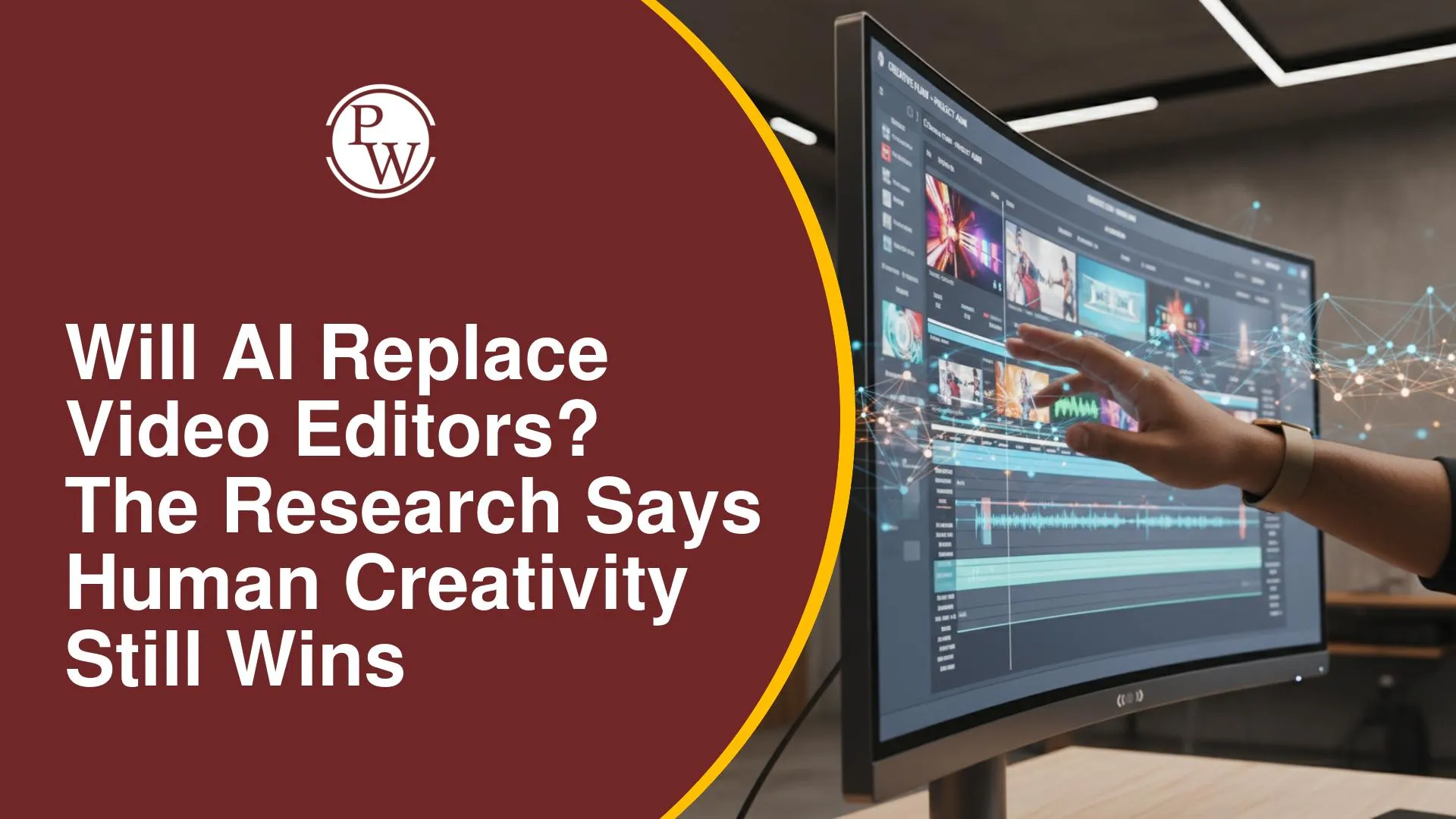
Generative AI (GenAI) is rapidly changing many industries. Its quick adoption sparks debates about job displacement, especially in creative fields. Many ask: Will AI Replace Video Editors? The Research Says Human Creativity Still Wins. This technology offers new tools and efficiencies. However, it also raises important concerns. This blog explores how GenAI impacts video creation, its benefits, and challenges, focusing on the human element.
Broad Uses of GenAI in Creative Industries
GenAI tools are widely used in creative sectors. They help automate structured tasks. These tools also increase cognitive capacity for unstructured work. GenAI can improve learning experiences.
GenAI reduces cognitive load by automating routine tasks. Examples include creating social media content and personalized emails. It also generates video thumbnails and helps with repetitive VFX tasks. This boosts overall productivity. However, creators caution against over-reliance. For unstructured tasks, GenAI assists with ideation and problem-solving. It acts as a collaborative tool for refining ideas. Yet, human emotion and intuition remain irreplaceable. GenAI can also personalize learning, offering feedback and advice. It simulates scenarios for skill development. But widespread use risks homogeneity without human input.
GenAI in Video Creation: Tools and Applications
The creative economy is growing quickly. Open-source tools like Blender and Krita boosted growth. Now, GenAI tools such as TensorFlow and Dall-E are highly influential.
GenAI supports all stages of video production. For development, tools like Perplexity and ElevenLabs help. Pre-production uses Character.ai for scriptwriting. Midjourney assists with storyboarding. Luma aids location scouting. During production, Luma helps with filming complex shots. Move and Wonder Studio capture motion. Post-production relies on Otter.ai for transcription. Topaz cleans archive footage. ElevenLabs creates voiceovers. Adobe Podcast AI enhances audio. Lalal.ai separates vocals. Soundraw generates music. For distribution, Flawless and HeyGen provide dubbing. GenAI also helps with marketing. It speeds up rapid prototyping. It creates context-specific content. This technology democratizes video production. It simplifies complex software. It also lowers costs for equipment and sets. A study on YouTube creators found GenAI used for generating, upscaling, suggesting, and writing content. Key tools include LLMs, image, video, and audio processors.
Benefits and Opportunities of GenAI
GenAI offers many benefits across industries. These include enhancing divergent thinking, improving decision-making, and democratizing access.
GenAI enhances creative thinking. It produces novel outputs by identifying patterns. It helps challenge creative biases. Tools like Deep Dream Generator automate mockups. They inform color schemes. GenAI assists brainstorming ideas and headlines quickly. It also improves decision-making. GenAI makes data analysis cheaper and widely available. This empowers more workers to make high-stakes decisions. It can recommend new content ideas. GenAI also democratizes the creative industry. It allows non-experts to develop ideas. It lowers entry barriers for many. Creators with disabilities find new ways to express art. Non-native English speakers use it for grammar and presentations. This fosters inclusivity.
Also Explore our Course : AI Video Creator
Concerns in Using GenAI for Video Creation
GenAI brings new challenges. These include creative displacement anxieties, skill gaps, and issues with intellectual property rights.
Creative Displacement Anxiety (CDA) is a major concern. Creators fear job loss. This leads to doubts about self-worth. They might experience imposter syndrome when using AI tools. Motivation to create can decline. Skills may atrophy. The supply of artistic references could diminish. Economic anxiety is also prevalent. Many creatives worry about how Will AI Replace Video Editors? The Research Says Human Creativity Still Wins offers a counterpoint, highlighting AI as a tool rather than a wholesale replacement. While GenAI enhances efficiency, human creativity remains unique. Displacement impacts junior creatives most. Background actors and graphic designers also face threats. Skill gaps emerge from new technology. Education needs to adapt. Training in prompt engineering and entrepreneurial skills is crucial. Intellectual property (IP) rights are another complex area. Ownership of AI-generated works is unclear. The use of copyrighted content for training AI models is debated. Laws vary across countries. Creators demand clear mandates on AI use. They also seek transparency and attribution for AI-assisted work.
Future Pathways for GenAI in Creativity
For GenAI to have a meaningful impact, several pathways need exploration. These include supporting technical skills. They involve providing flexible tools and systemic support. Also, improving accessibility and access to resources is vital. Strong legal and systemic guardrails are necessary.
Support systems are crucial for technical skills. Platforms and educational institutions should offer training. Continuous learning helps creatives adapt. Integrating GenAI into existing software aids adoption. Tools need flexibility. They must offer high creative control. Emphasis on creative problem-solving and entrepreneurship helps creators navigate the industry. This includes prompt engineering and marketing. GenAI also offers novel modalities for innovation. Interactive performances are possible. Accessibility needs to improve. Tech platforms should offer free access models. Localization and support services are important. Community organizations can provide training. Clear legal mandates are needed for transparency and attribution. Internal policies for platforms can promote equity. Protecting culturally significant artifacts is also paramount.
FAQs
Q1. Does AI replace human video editors?
Q2. What are the main benefits of GenAI in video creation?
Q3. What are the key concerns about GenAI in creative fields?
Q4. How does GenAI impact intellectual property (IP) rights and ownership?





Get Free Counselling Today
and Clear up all your Doubts
 Live & recorded classes available at easeDashboard for progress trackingLakhs of practice questions

