

From Prompt to Production: How to Build AI Video Creation Skills That Companies Need
 Hardik Gupta6 Aug, 2026
Generative Artificial Intelligence profoundly influences creative industries. Video creation is seeing rapid changes due to GenAI tools. These tools automate tasks and enable new content forms. This blog explores GenAI's impact, its benefits, and inherent challenges. Understanding these shifts is crucial. It highlights the need to build AI video creation skills for future success.
Understanding Generative AI
GenAI is a subset of AI that creates new data. It analyzes large datasets and generates fresh content. Unlike basic AI, GenAI uses unsupervised learning. It imitates patterns to produce images, videos, audio, or code from simple text inputs. This technology deeply transforms creative spaces.
GenAI in Video Production Workflows
GenAI tools increasingly integrate into video production. They support tasks from concept to final output. For instance, tools like TensorFlow assist with animation and scene composition. Dall-E helps generate images. In pre-production, GenAI aids scriptwriting and storyboarding. During production, it helps with filming complex shots and motion capture. Post-production benefits from automated transcription and audio cleaning. GenAI also enhances distribution through dubbing and video translation.
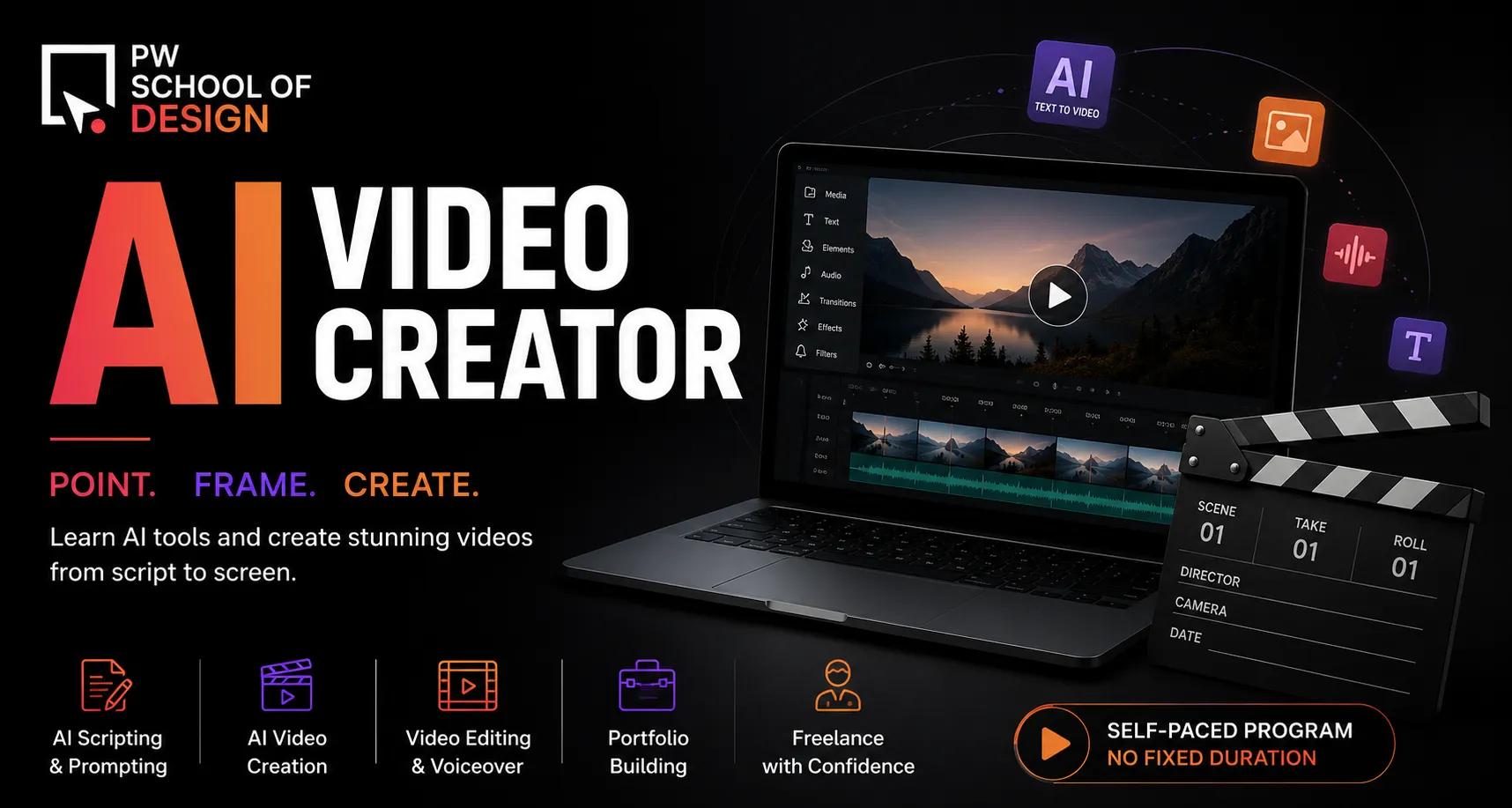
Explore our course : AI Video Creator
Benefits and Opportunities for Creators
GenAI offers many advantages to video creators. It enhances divergent thinking, helping generate novel ideas. The technology improves decision-making by providing fast data analysis. GenAI also democratizes video creation. It lowers entry barriers and reduces production costs. This accessibility empowers more individuals. It fosters ecosystem advancement and innovation across the industry.
Concerns and Challenges
Despite its benefits, GenAI raises concerns for video creators. Many fear creative displacement and job loss. Junior roles, often involving routine tasks, are most vulnerable. Skill gaps emerge as traditional expertise shifts. Intellectual property rights also pose major challenges. Questions arise about ownership of AI-generated content. Ethical issues surrounding training data use also require attention.
From Prompt to Production: Building AI Video Creation Skills
The evolving landscape demands new capabilities. Creatives must adapt by building essential AI video creation skills. This includes mastering prompt engineering for AI tools. Understanding art styles and visual references becomes critical. Educational institutions and community platforms must offer relevant training. These programs should equip individuals with both technical and entrepreneurial skills. Continuous learning helps navigate this dynamic industry. Clear legal and systemic support structures are also vital.
FAQs
What is the biggest impact of GenAI on video creation?
What key skills should video creators develop for GenAI?
Will GenAI replace human jobs in video production?
How does GenAI democratize video creation?
What are the main ethical issues with GenAI in video?





Get Free Counselling Today
and Clear up all your Doubts
 Live & recorded classes available at easeDashboard for progress trackingLakhs of practice questions

