
Deloitte Python Developer Salary in 2026: Pay, Skills and Career Growth
 Hardik Gupta26 Sept, 2026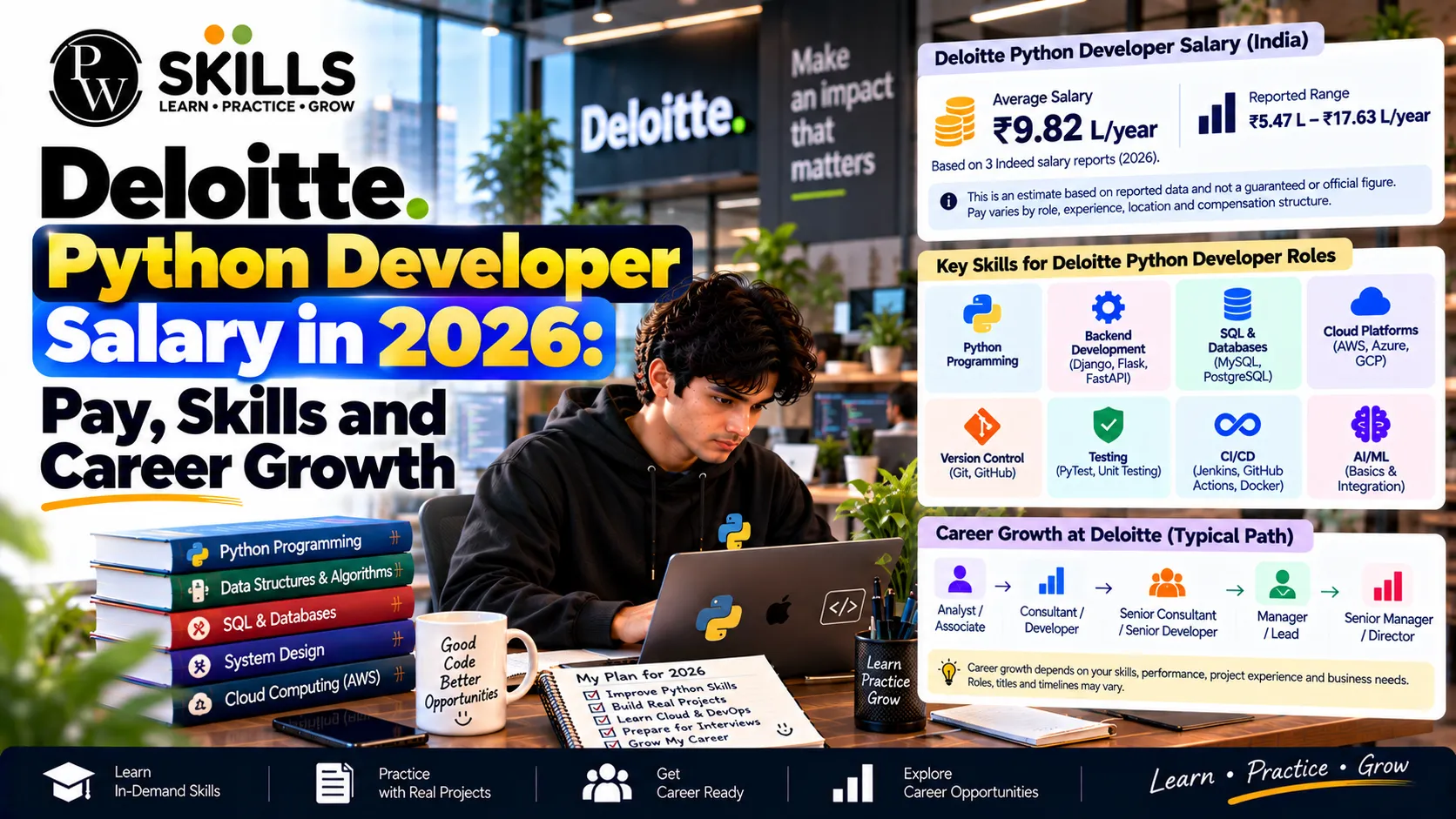
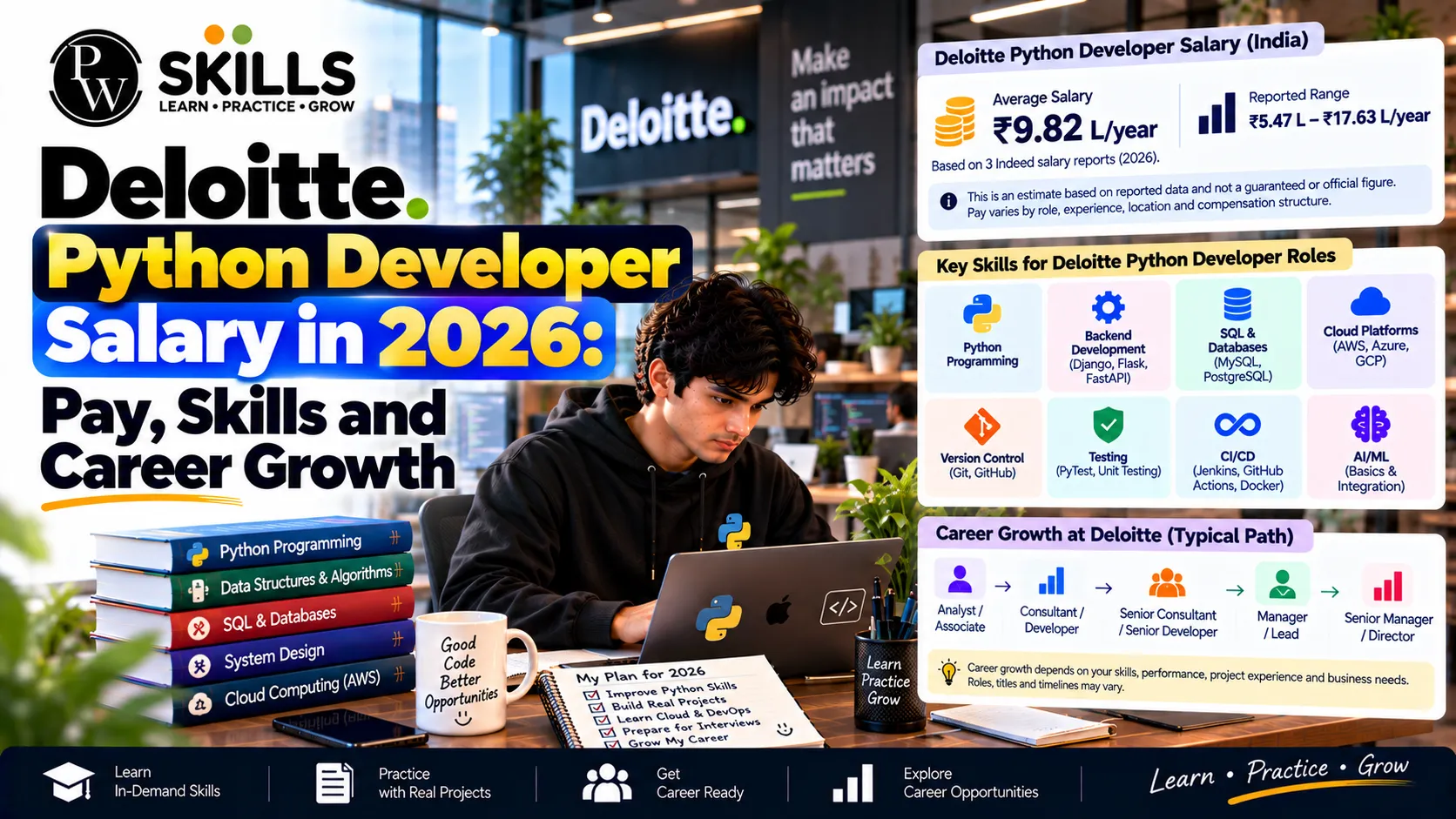
Knowing Deloitte Python developer salary can help students and early career professionals to strategize their technology career. Salary might also vary by experience, technical skills, location and the requirements of the role. Armed with this knowledge, candidates will better understand the wage increases and the abilities that are required to achieve a successful career as a Python developer.
Deloitte Python Developer Salary by Experience Level
Large consultancies have flexible compensation structures, influenced by factors such as professional tenure, technical accountability and project complexity. Entry-level professionals usually begin with competitive base figures, whereas experienced consultants create intricate architectures that provide significant income rewards. Deloitte Python Developer Salary in Different Tiers Deloitte Python Developer Salary in Various Tiers shows viable growth paths for devoted programmers.
-
Entry Level (Analyst / 0 to 2 Years Experience): Fresh graduates or junior engineers generally secure base compensation packages ranging from INR 6 Lakhs to INR 9 Lakhs per annum. Performance bonuses and joining perks add incremental value to the initial annual CTC.
-
Mid Level (Consultant / 3 to 6 Years Experience): Mid-tier developers who demonstrate independent delivery capability and database management expertise command packages between INR 12 Lakhs and INR 18 Lakhs per annum.
-
Senior Level (Senior Consultant / 7+ Years Experience): Seasoned technical leads and cloud architects overseeing multi-module deployments secure earnings scaling from INR 22 Lakhs to over INR 35 Lakhs per annum.
The following data table maps the compensation structure clearly across various professional tiers:
|
Professional Tier |
Experience Range |
Average Annual CTC |
Core Focus Areas |
|
Analyst |
0 to 2 Years |
INR 7 Lakhs to INR 9 Lakhs |
Scripting, bug fixing, basic automation |
|
Consultant |
3 to 6 Years |
INR 12 Lakhs to INR 18 Lakhs |
API development, database integration, testing |
|
Senior Consultant |
7+ Years |
INR 22 Lakhs to INR 36 Lakhs |
System architecture, client interaction, team leadership |
Skills That Can Improve Deloitte Python Developer Salary
It takes more than knowing fundamental syntax to obtain a high-end developer wage. Enterprise development environments necessitate clean code writing, robust testing methods and seamless cloud connectivity. Building relevant Python developer skills makes candidates stand out in technical screening rounds.
-
Core Python and Data Structures: Mastery in complex data structures, decorators, generators and object-oriented programming paradigms is the core of enterprise software engineering.
-
Web Frameworks: Developers should be familiar with popular backend frameworks like Django or Flask for building large enterprise web apps effectively.
-
Database Management: Proficiency in writing optimized SQL queries, working with relational databases, and handling NoSQL structures is mandatory for data-heavy corporate projects.
-
Cloud and DevOps Integration: Knowing how to deploy applications on platforms like Amazon Web Services or Azure using Docker containerisation significantly boosts hiring potential.
-
API Design and Testing: Building secure RESTful APIs and writing test scripts using PyTest guarantees software reliability across distributed enterprise environments.
By providing structured programs to develop these technical skills, professionals are better placed to move faster to higher income categories. Coding assessments definitely favor those who understand data structures and Python syntax.
Deloitte Python Developer Salary Trends and Career Growth
The technological landscape evolves rapidly, directly impacting future compensation structures and professional trajectories. Tracking the trajectory of Deloitte Python developer salary 2026 trends indicates an increasing premium placed on automation and artificial intelligence integration. Enterprises increasingly look for professionals who can merge traditional software engineering with intelligent data analytics.
-
Rise of AI-Assisted Development: Developers who understand how to integrate machine learning libraries such as Pandas, NumPy, and Scikit-Learn into core backend services experience faster promotions.
-
Continuous Upskilling Demand: Technology stacks shift constantly, requiring engineers to update their framework knowledge every few years to remain competitive in the job market.
-
Structured Mentorship and Leadership: True Python developer career growth moves beyond coding into architectural decision-making, client consulting, and cross-functional team management.
-
Microservices Architecture: Modern enterprise applications rely heavily on microservices, making container orchestration tools like Kubernetes vital for developers targeting senior roles.
Professionals who adapt quickly to emerging tech stacks secure leadership positions much faster than peers who stick strictly to legacy coding frameworks. Strategic technical alignment with cloud infrastructure yields long-term career stability.
Factors That Affect Deloitte Python Developer Salary
Many internal and external factors influence the final salary offers in the recruitment process. By understanding these characteristics, candidates may negotiate effectively and align their career ambitions with realistic market norms.
-
Geographic Location: The salary packages differ dependent on the delivery location or city of the office with tech hubs such as Bengaluru, Hyderabad, Gurugram providing competitive remuneration tweaks.
-
Educational Background and Certifications: Holding specialized degrees from tier-one institutes or possessing globally recognized cloud certifications can positively influence initial offers.
-
Negotiation and Technical Assessment Scores: Performance during live coding rounds and system design evaluations plays a massive role in determining where a candidate lands within a specific salary band.
-
Project Delivery Models: Working on high-stakes global client projects often translates to better performance-linked incentives and faster compensation reviews.
Analyzing a standard Deloitte salary for Python developer packages highlights that technical versatility combined with strong problem-solving aptitude remains the most reliable pathway to maximizing financial returns.
Ways to Increase Deloitte Python Developer Salary
Candidates can improve their earning potential by combining strong Python knowledge with practical development and business skills. Instead of focusing only on years of experience, professionals can build capabilities that help them take on more complex projects and responsibilities.
-
Build Practical Projects: Work on real-world Python applications that demonstrate problem-solving, API development, database management, or automation skills.
-
Learn Cloud Technologies: Develop familiarity with cloud platforms, containers, and deployment practices to prepare for modern software development environments.
-
Strengthen Problem-Solving: Regularly practise data structures, algorithms, and coding problems to improve technical assessment performance.
-
Develop Communication Skills: Clear communication helps developers explain technical solutions, work with clients, and collaborate effectively with cross-functional teams.
-
Keep Learning: Staying updated with Python frameworks, AI tools, cloud technologies, and development practices can support career progression over time.
A combination of technical expertise, project experience, and strong workplace skills can help Python developers take on higher-level responsibilities and work towards better compensation as their careers progress.







FAQ
How does overall experience influence a Python developer's salary?
Which Python developer skills are most valued during technical interviews?
Can candidates negotiate their initial Deloitte salary for Python developer offers?
What factors drive long-term Python developer career growth in multinational corporations?
 Live & recorded classes available at easeDashboard for progress trackingLakhs of practice questions


