
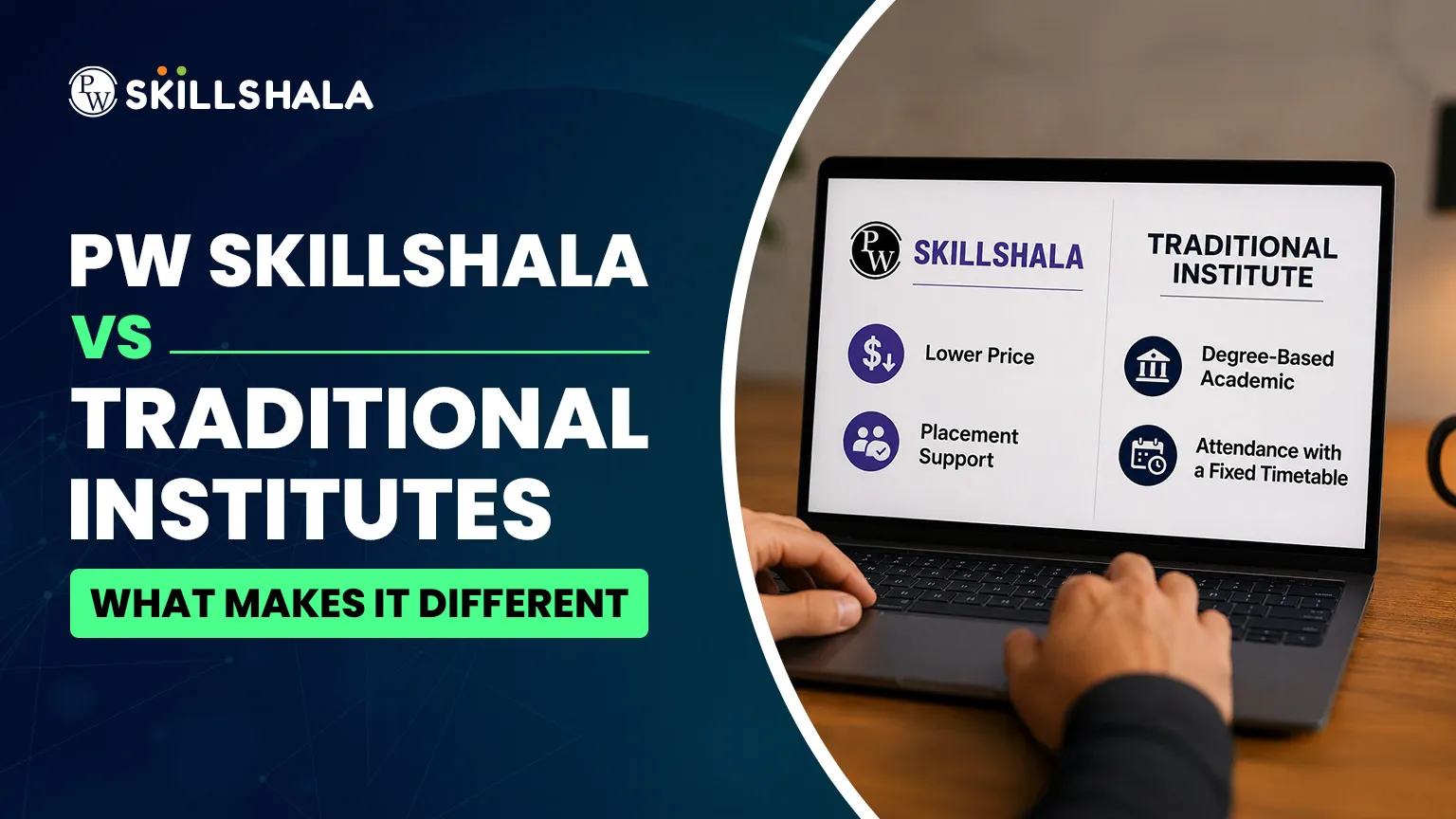
PW Skillshala vs Traditional Institutes: What Makes It Different
 Study Abroad23 May, 2026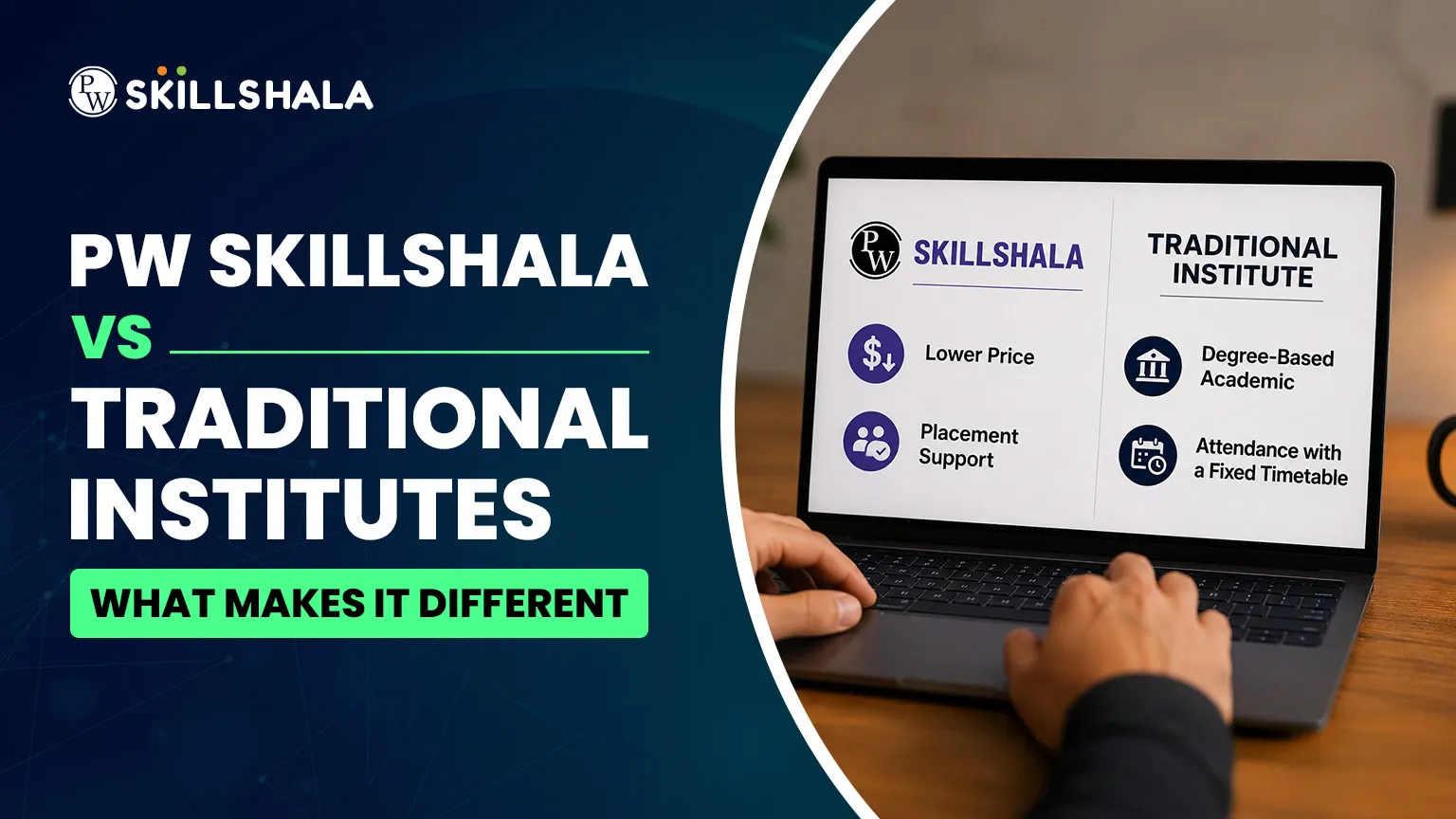
Students today are not only looking for courses.
They are looking for direction.
Many learners already have access to online videos, recorded lectures, PDFs, and tutorials. But even after spending months learning, they still feel confused when it comes to projects, resumes, portfolios, interviews, and job-readiness.
This is where the conversation around PW Skillshala vs other institutes becomes important.
PW Skillshala was introduced through Kaam Ki Baat as PW Skills’ offline career-readiness ecosystem, with a focus on mentorship, practical learning, projects, resume support, and job-readiness.
The event itself was designed around one key idea.
Students do not need another generic launch.
They need trust, clarity, and proof.
Why Students Compare PW Skillshala vs Other Institutes
Many traditional institutes still follow a predictable structure.
Students attend lectures.
Notes are shared.
Assignments are submitted.
Then students are expected to figure out the rest on their own.
But today’s hiring environment has changed.
Recruiters now look for:
-
Projects
-
Portfolio proof
-
Practical understanding
-
Role-specific tools
-
Resume clarity
-
Communication
-
Problem-solving ability
This creates a gap between learning and employability.
The Skillshala launch repeatedly focused on this issue through discussions around resume gaps, portfolio gaps, and job-readiness.
PW Skillshala vs Other Institutes for Skill-Based Learning
The biggest difference highlighted during the launch was approach.
Many institutes focus heavily on content delivery.
PW Skillshala focused on:
-
Practical learning
-
Offline mentorship
-
Practical exposure
-
Resume support
-
Portfolio-building
-
Data Analytics projects
-
Community and doubt-solving
The launch positioned Skillshala not only as a place to learn, but as a place to prepare for real career situations.
PW Skillshala vs Other Institutes for Practical Training
One phrase repeatedly connected with Skillshala during the event was build-first learning.
That idea changes the student experience completely.
Instead of learning only through lectures, students are encouraged to build something practical.
At the event itself, the Data Analytics workshop was structured as a hands-on project experience. Students were expected to work on dataset understanding, cleaning, analysis, dashboard/report creation, and resume packaging.
This matters because students often understand concepts better when they apply them.
A project also creates proof.
And proof is what recruiters usually want to see.
PW Skillshala vs Other Institutes for Offline Training
Even though online learning has grown quickly, many students still struggle with consistency.
Some learners watch videos but never practise.
Some start courses but stop midway.
Some understand concepts but cannot apply them independently.
This is why in-person training was positioned as a major Skillshala advantage.
The launch specifically highlighted the need for offline mentorship and practical learning.
Offline learning can help students through:
-
Structured schedules
-
Real-time interaction
-
Immediate doubt-solving
-
Classroom discipline
-
Peer learning
-
Guided workshops
-
Better accountability
For many students, this environment helps them stay more focused and career-oriented.
PW Skillshala vs Other Institutes for Mentorship and Guidance
Another major difference discussed during the launch was mentorship.
Many students feel lost while learning because they do not know:
-
Which skill to focus on
-
Which projects to build
-
How to improve resumes
-
What recruiters expect
-
How to prepare for interviews
This is where mentorship becomes important.
Skillshala’s launch highlighted mentorship as one of its six major USPs, along with Data Analytics projects, faculty support, resume support, doubt-solving, and community.
Mentorship helps students avoid random learning paths.
It also gives learners a chance to ask practical questions instead of only consuming recorded content.
How PW Skillshala Uses Real Industry Projects
One interesting difference in the launch strategy itself was the event flow.
The event did not begin by directly promoting the institute.
Instead, it first focused on student problems.
The event flow was designed around:
-
Career confusion
-
Resume gaps
-
Portfolio proof
-
Skills vs employability
-
Future tech careers
-
Job-readiness challenges
Only after discussing these problems did the launch introduce Skillshala as the solution.
This made the event feel more practical and student-focused.
PW Skillshala vs Other Institutes for Hands-On Experience
Traditional learning environments sometimes stop at teaching concepts.
But students still need to prepare for actual hiring situations.
That is why the Resume Reality Check became an important part of the event.
Selected resumes were reviewed anonymously so students could understand:
-
Why resumes get rejected
-
What recruiters notice first
-
What projects are missing
-
Why portfolio proof matters
-
How measurable outcomes improve resumes
This type of practical feedback is useful because students often do not realise where their resume feels weak.
Why Projects Matter More Today
A certificate alone does not always create confidence during interviews.
Projects usually make a bigger impact.
A project helps students explain:
-
What tools they used
-
What dataset they worked on
-
What business problem they explored
-
What insights they found
-
How they solved issues
-
What output they created
This is why the Data Analytics workshop became one of the strongest proof points of the launch.
Students were expected to build something portfolio-ready instead of only listening to theory.
PW Skillshala vs Other Institutes for Community Learning
Learning becomes easier when students are surrounded by others working towards similar goals.
Traditional institutes sometimes feel disconnected from actual career preparation.
Skillshala highlighted community as one of its core support systems.
Peer learning can help students through:
-
Group discussions
-
Collaborative practice
-
Shared motivation
-
Better consistency
-
Exposure to different ideas
-
Real classroom interaction
This can improve both learning and confidence.
PW Skillshala vs Other Institutes for Placement Preparation
Another major difference in the PW Skillshala and other institutes is the focus on employability.
The launch event repeatedly connected learning with outcomes.
The panel discussion itself focused on:
The Future of Tech Careers: Beyond Coding, Skills, Portfolios & Job Readiness
That topic reflects a larger shift happening across industries.
Students are now expected to show:
-
Skills
-
Projects
-
Portfolio depth
-
Practical understanding
-
Communication
-
Career clarity
This is why Skillshala positioned itself around career-readiness instead of only classroom learning.
Final Takeaway
The biggest difference between PW Skillshala and many traditional institutes is not only the course structure.
It is the learning approach.
PW Skillshala focuses on helping students move from learning to building, from projects to portfolios, and from confusion to career direction.
Through practical learning, mentorship, in-person training, resume support, and practical workshops, the model aims to prepare students for real-world career expectations instead of only course completion.
| PW Skillshala Resume Review Session | PW Skillshala Panel Discussion |
| PW Skillshala Launch Event in Noida | PW Skillshala Kaam Ki Baat |


