
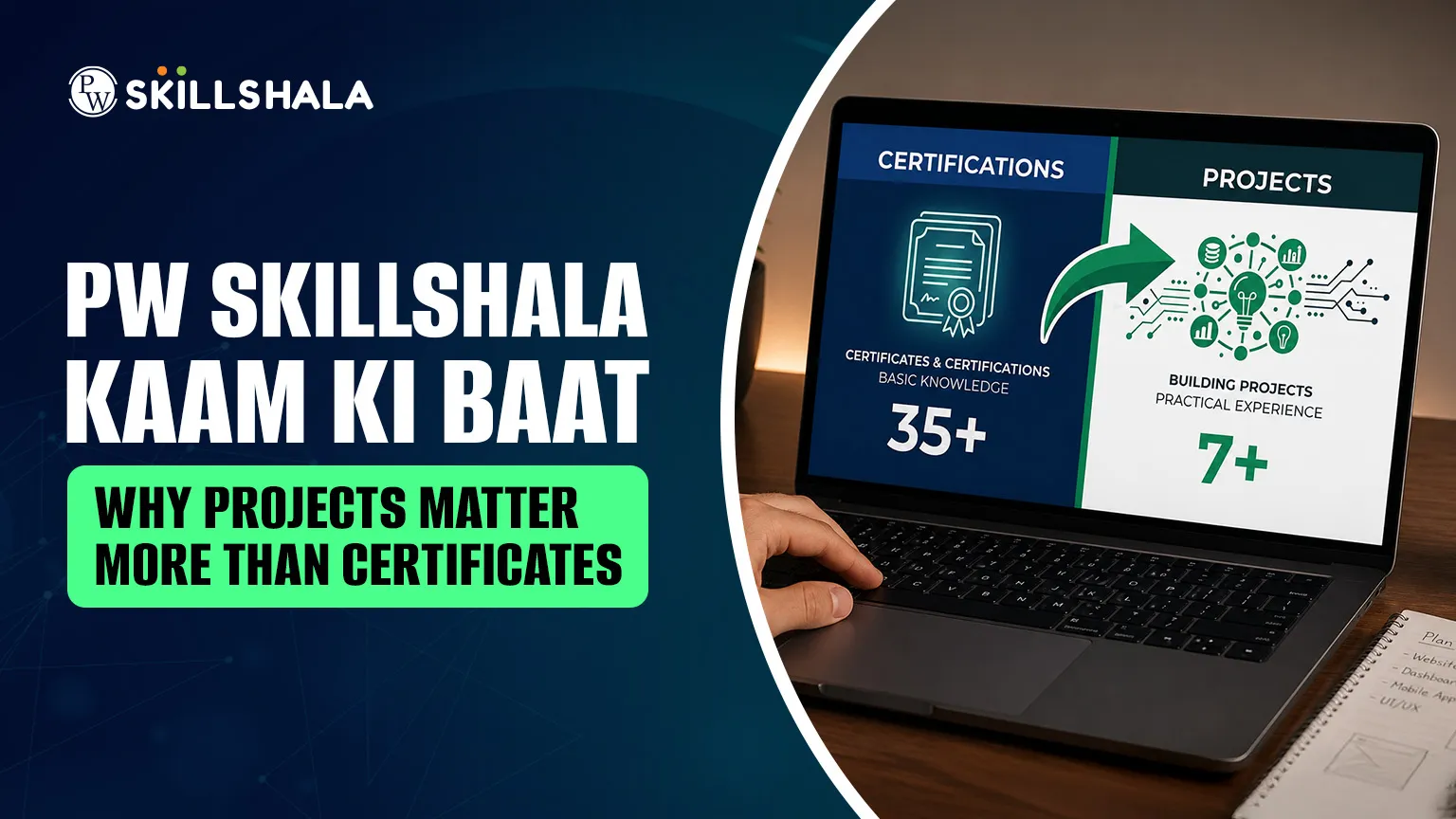
PW Skillshala Kaam Ki Baat: Why Projects Matter More Than Certificates
 Study Abroad23 May, 2026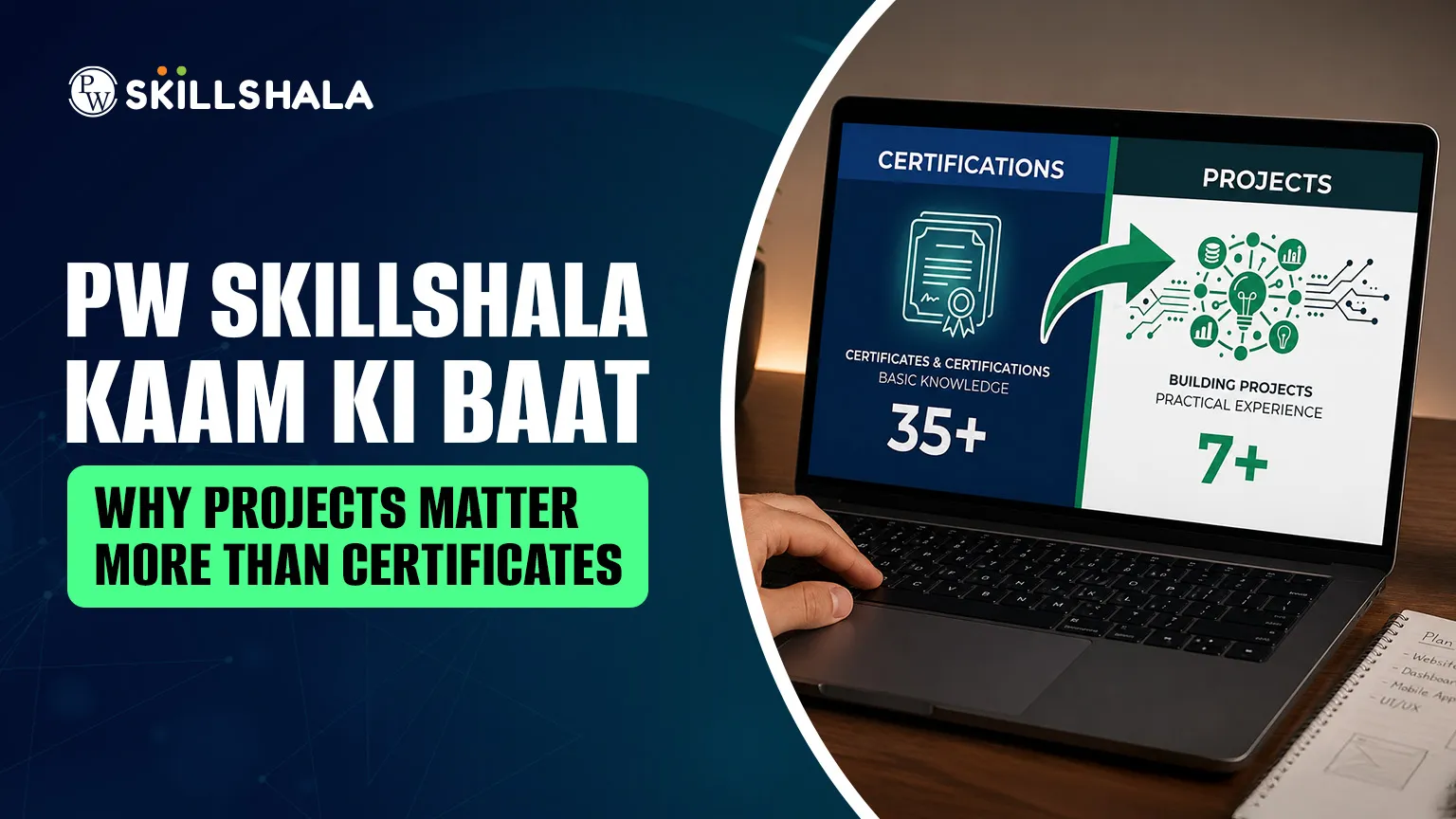
Many students complete online courses, collect certificates, and still feel unsure when it is time to apply for jobs.
The reason is simple.
A certificate tells recruiters that a student completed a course.
A project shows what the student can actually do.
At PW Skillshala Kaam Ki Baat, this idea was one of the strongest themes across the event. The launch focused heavily on practical learning, portfolio building, resume improvement, and project-based exposure through workshops, mentorship, and career-readiness discussions. The event also included a dedicated Data Analytics project workshop where students could build a portfolio-ready project and understand how to present it professionally.
PW Skillshala Projects Overview
The main purpose behind PW Skillshala projects is to help students move beyond passive learning.
Watching videos and reading notes can help with concepts.
But practical work helps students understand how those concepts are used in real situations.
This is why project-based learning matters.
When students work on projects, they learn how to:
-
Solve real problems
-
Handle tools and datasets
-
Think logically
-
Explain their work clearly
-
Make decisions during execution
-
Present outcomes professionally
A project creates experience.
Even if the student is a fresher, the project becomes proof of practical exposure.
Why Certificates Alone Are Not Enough
Certificates still have value.
They show consistency and completion.
But recruiters usually look deeper.
A hiring team may ask:
-
What project did the student build?
-
Can they explain their process?
-
Did they work with real datasets or tools?
-
What challenge did they solve?
-
Can they present insights clearly?
-
Is there portfolio proof?
A certificate without practical work often feels incomplete.
That is why many students struggle during interviews.
They know the theory.
But they cannot explain application.
This gap becomes more visible in skill-based careers.
Project-Based Learning Benefits for Students
One major benefit of project-based learning is confidence.
Students become more comfortable when they build something themselves.
For example, during the Data Analytics workshop planned for Kaam Ki Baat, students were expected to go through steps such as:
-
Understanding a dataset
-
Cleaning data
-
Analysing information
-
Finding insights
-
Creating dashboards or reports
-
Packaging the project for resumes
This process helps students learn more naturally.
Instead of memorising answers, they begin understanding workflows.
That confidence becomes useful later during interviews, discussions, and internships.
How Projects Help Build a Strong Student Portfolio
A portfolio is becoming more important across career fields.
Today, many recruiters prefer seeing practical work before shortlisting candidates.
That is why portfolio building was an important part of the PW Skillshala event structure.
A portfolio can include:
-
Data Analytics dashboards
-
Coding projects
-
Case studies
-
Reports
-
GitHub repositories
-
Websites
-
Campaign samples
-
Presentation decks
-
Research summaries
Projects help students create these assets.
Without projects, many portfolios remain empty or generic.
With projects, students can show real effort and learning progression.
How Projects Improve Resume Strength and Job Readiness
A resume becomes stronger when it includes practical proof.
Many resumes fail because they only list skills.
For example:
-
Python
-
SQL
-
Excel
-
Data Analytics
-
Communication Skills
This does not tell the recruiter enough.
But when a student adds project details, the resume becomes clearer.
For example:
-
Analysed sales trends using Excel and Power BI
-
Cleaned customer data and created performance dashboards
-
Built a report to identify regional revenue patterns
Now the recruiter understands what the student actually worked on.
This is why PW Skillshala focused on resume support and project packaging during the event.
What Students Learned at Kaam Ki Baat
The event was designed around one important student problem.
Many learners know something.
But they do not know how to present it professionally.
The sessions, workshops, and discussions focused on helping students understand:
-
Why resumes get rejected
-
Why portfolios matter
-
How projects improve visibility
-
What recruiters notice first
-
Why practical training is important
-
How mentorship supports learning
-
What job-readiness really means
The Resume Reality Check segment especially highlighted how weak project explanation and missing portfolio proof reduce the impact of a resume.
How Practical Training Improves Learning Effectiveness
Practical training helps students connect theory with execution.
Without practice, concepts remain isolated.
With projects, students begin seeing how tools work together.
For example, a Data Analytics learner may understand:
-
How raw data looks
-
Why cleaning matters
-
How visualisation improves understanding
-
How business insights are generated
-
Why storytelling is important in reporting
This type of learning stays longer because students actively work through the process.
That is different from only reading notes or watching tutorials.
Why Recruiters Prefer Project-Based Proof
Recruiters often receive many similar resumes.
Most candidates mention the same skills.
Projects help students stand out because they create conversation points.
A recruiter can ask:
-
Why did you choose this project?
-
What problem did you solve?
-
Which tools did you use?
-
What challenges did you face?
-
What insight did you find?
-
What would you improve next time?
A student who has genuinely worked on a project can answer naturally.
That creates trust.
Certificates may help open the door.
But projects often help continue the conversation.
PW Skillshala Offline Mentorship and Build-First Learning Approach
PW Skillshala was introduced during Kaam Ki Baat as an offline career-readiness ecosystem focused on mentorship, community, projects, resume support, faculty guidance, and practical exposure.
The event highlighted a build-first learning approach.
That means students are encouraged to build while learning instead of waiting until the end.
This approach can help students:
-
Learn faster through practice
-
Ask better questions
-
Improve confidence
-
Understand mistakes early
-
Create portfolio-ready work
-
Stay more engaged during learning
Mentorship also becomes more useful when students are actively working on something practical.
PW Skillshala Job Readiness vs Learning Focus
One of the strongest messages from the event was this:
Job readiness is not only about completing content.
It is about proving capability.
That proof usually comes through:
-
Projects
-
Portfolios
-
Resume clarity
-
Communication
-
Practical understanding
-
Consistent application
This is why PW Skillshala projects are positioned as part of career preparation rather than just classroom activity.
Final Takeaway from PW Skillshala Kaam Ki Baat
Certificates still matter.
But they are no longer enough by themselves.
Students need practical exposure that helps them show how they think, solve problems, and apply skills.
That is why project-based learning, portfolio building, and practical training were central themes at PW Skillshala Kaam Ki Baat.
Projects give students something real to discuss, present, improve, and grow from.
And in many cases, that practical proof matters more than a certificate line on a resume.
| PW Skillshala Resume Review Session | PW Skillshala Panel Discussion |
| PW Skillshala Launch Event in Noida | PW Skillshala Kaam Ki Baat |


