

What Is Search Engine Marketing in 2026? SEM Explained for Beginners
 Hardik Gupta23 Sept, 2026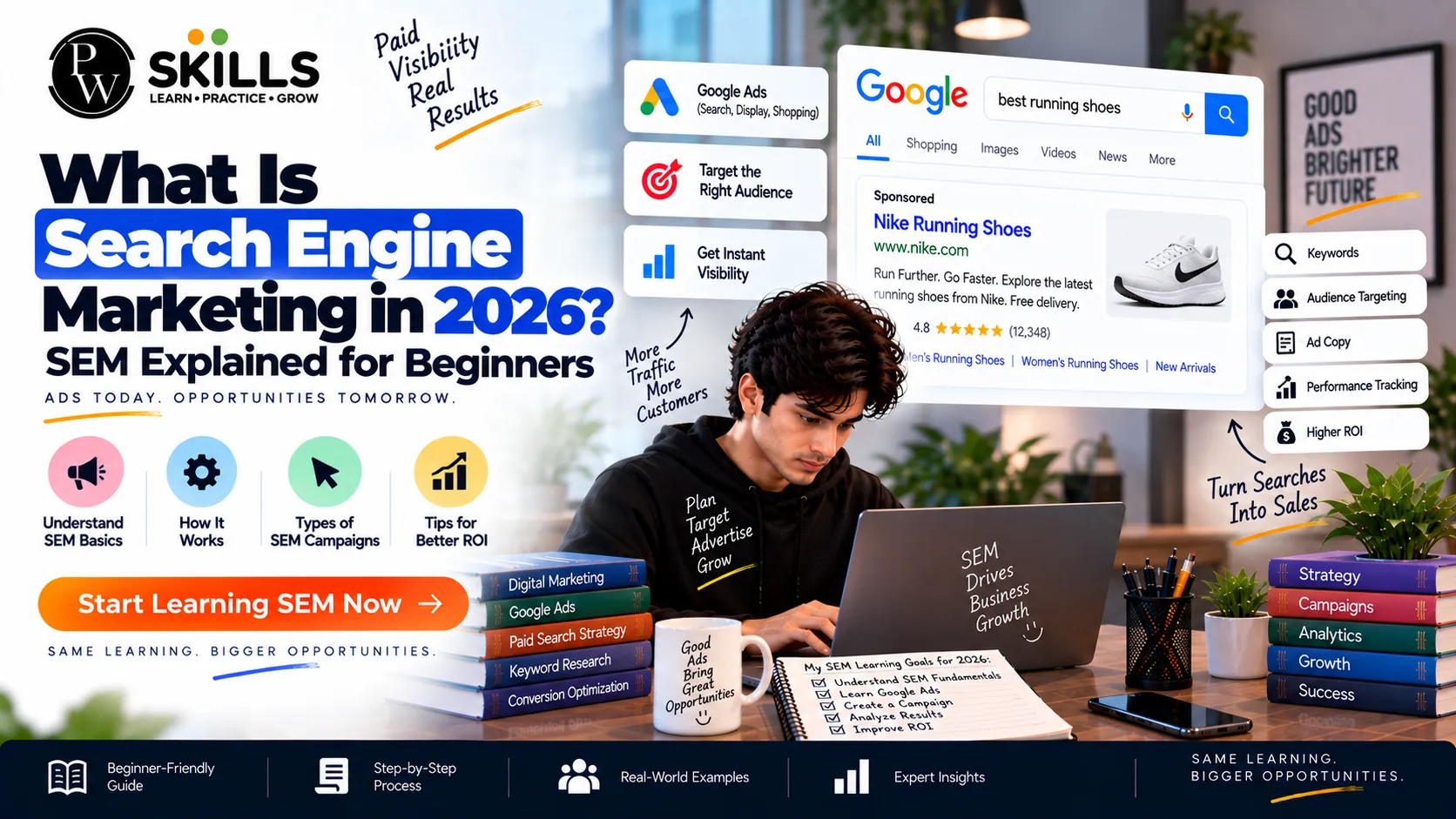
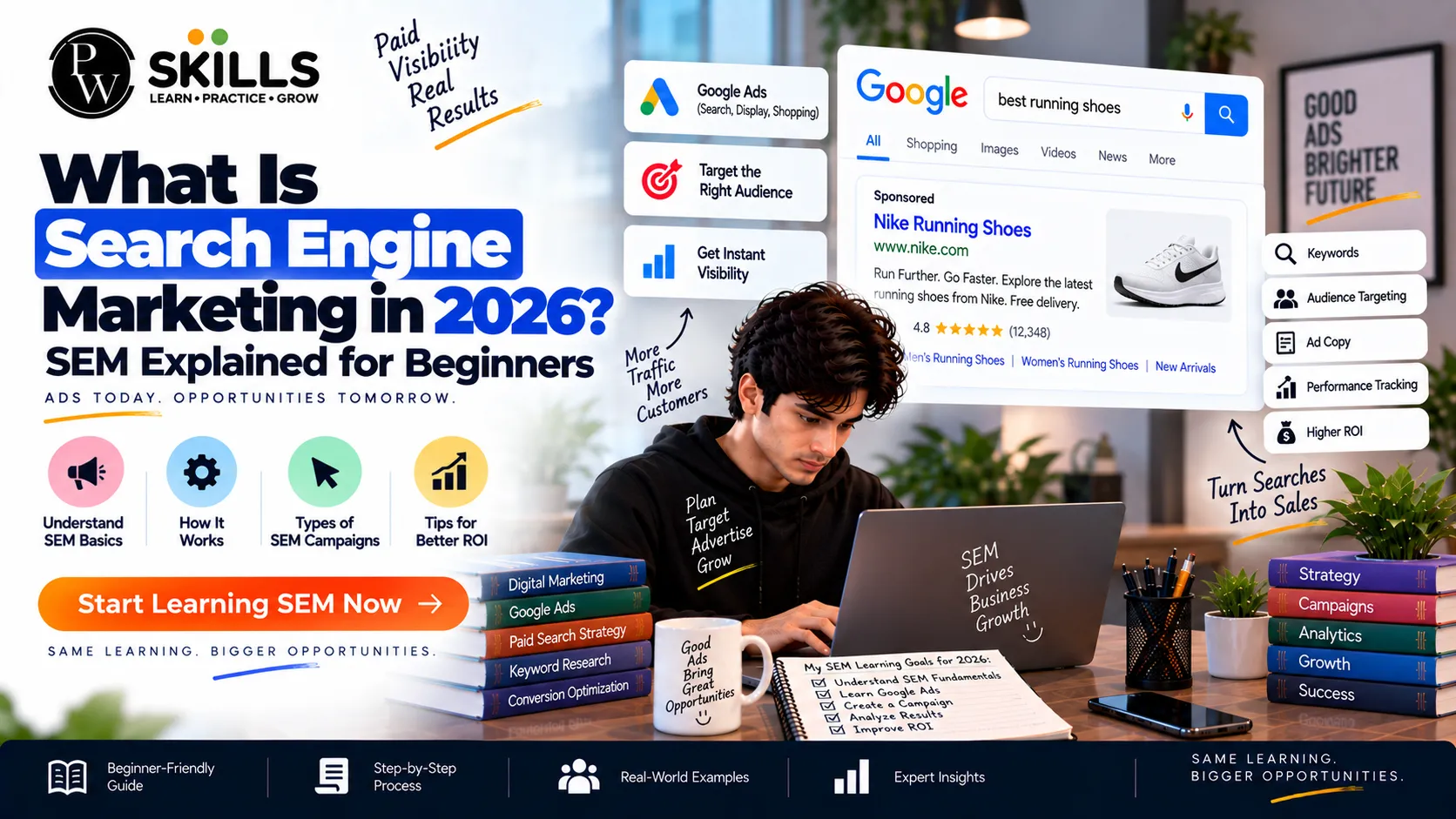
For beginners, online marketing can seem difficult at first. When you search for something on Google, you may notice sponsored results at the top or bottom of the page. These ads are created to reach people based on what they search for.
Understanding what is search engine marketing helps beginners learn how businesses use paid search ads to reach the right audience at the right time.
What is Search Engine Marketing?
Online competition is high, and businesses often want to reach potential customers quickly. Organic search can take time, while paid search campaigns can help businesses show ads for selected searches soon after a campaign is launched. This is why learning what is search engine marketing is useful for students, marketers, and business owners.
-
Quick Visibility: Paid ads can help a business appear in search results soon after a campaign starts.
-
Targeted Reach: Advertisers can choose factors such as location, language, device, audience, and keywords.
-
Easy Tracking: Businesses can track impressions, clicks, conversions, and other campaign results.
-
Budget Control: Advertisers can set campaign budgets and adjust spending based on performance.
These features make SEM useful for businesses that want to reach people who are already searching for related products or services.
Also Check : A–Z Guide to Digital Marketing with AI
What Are the Main Concepts of Search Engine Marketing?
Understanding the basic parts of search engine marketing makes it easier to see how paid search campaigns work. Advertisers choose keywords, create ads, set budgets, and send users to relevant landing pages.
-
Keyword Bidding: Advertisers compete for ad placements by setting bids and budgets for selected keywords.
-
Ad Quality: Factors such as ad relevance, landing page experience, and expected performance can affect how ads are shown.
-
Ad Assets: Additional information such as sitelinks, phone numbers, locations, or other details can make an ad more useful.
-
Ad Copy: A clear headline and description can help users understand what the business offers.
-
Landing Pages: The page users reach after clicking an ad should match the information or offer shown in the advertisement.
Using these elements together can help businesses create more relevant campaigns and use their advertising budgets more carefully.
How Does Search Engine Marketing Work?
Learning how paid search marketing works is important before starting a campaign. A business normally begins by finding keywords related to its products or services. It then creates ads and connects them to suitable landing pages.
-
Keyword Research: Find the words and phrases people may use when searching for a product, service, or solution.
-
Ad Group Structure: Group related keywords and ads together so that the message remains relevant to the search.
-
Ad Creation: Write simple and useful ad copy that clearly explains the product or service.
-
Landing Page Optimisation: Make sure the landing page provides information that matches the advertisement.
-
Performance Tracking: Check clicks, conversions, costs, and other important campaign data.
Regular monitoring is important because a campaign may need changes when certain keywords or ads do not perform as expected.
How Does Search Engine Marketing Help With PPC Marketing?
PPC marketing allows businesses to advertise online while keeping control over their campaign budgets. The term PPC refers to pay-per-click advertising, where advertisers generally pay when someone clicks on an ad.
-
Budget Control: Set campaign budgets and monitor spending to avoid using more money than planned.
-
A/B Testing: Test different headlines, descriptions, offers, or calls to action to see which versions perform better.
-
Conversion Tracking: Track actions such as purchases, registrations, calls, or form submissions after users click an ad.
-
Keyword Refinement: Remove poor-performing keywords and focus more on searches that bring useful visitors.
-
Ad Improvement: Update ad messages based on campaign results and user behaviour.
The goal is not simply to get more clicks. Businesses should also look at whether those clicks lead to useful actions such as sales, inquiries, or registrations.
How Does Search Engine Marketing Work With Google Ads?
For many businesses, Google Ads is an important platform for running paid search campaigns. It provides tools for creating ads, selecting keywords, setting budgets, tracking results, and managing bids.
-
Search Campaigns: Text ads can appear when users search for selected keywords or related searches.
-
Display Advertising: Businesses can also use visual ads across websites and other Google advertising placements.
-
Smart Bidding: Automated bidding uses signals and machine learning to help adjust bids based on selected campaign goals.
-
Campaign Tracking: Marketers can review clicks, conversions, costs, and other performance data.
-
Audience Targeting: Campaigns can use different audience and location settings depending on the advertising goal.
Marketers should regularly review campaign data instead of simply launching an ad and leaving it unchanged. Small improvements to keywords, ads, budgets, and landing pages can help make campaigns more relevant and easier to manage.






FAQ
What is search engine marketing in simple terms?
How does search engine marketing differ from SEO?
Why is paid search marketing important for beginners?
What role does PPC marketing play in campaigns?
How do beginners start learning Google Ads?







Get Free Counselling Today
and Clear up all your Doubts
 Live & recorded classes available at easeDashboard for progress trackingLakhs of practice questions

