

Welcome Email Sequence Guide
 Study Abroad17 May, 2026
Digital marketers realize that the first impression is often the most important one. They trust your brand a lot if they give you their email address. But many businesses don't take advantage of this "honeymoon phase," which makes leads cold and causes a lot of people to unsubscribe. A strong welcome email sequence solves this problem by making the process of welcoming new people routine. This post will show you how to construct a series that gets a lot of clicks and helps you grow your audience.
What is a Welcome Email Sequence?
A welcome email sequence sends a series of pre-written automatic emails to people who sign up for your mailing list. A sequence of messages can tell a tale over several days, but a single welcome message couldn't. It greets the subscriber and gives them the information they need to use your goods or services, like a digital handshake.
The major goal of this series is to get people who don't know you to like you. You can't just say "hi"; you have to make pals. You establish that your emails are worth opening by offering value right away. This dramatically improves your long-term engagement numbers.
Importance Of Welcome Email Sequence Strategy
A well-planned welcome email sequence method makes sure that your messages are not random. Without a plan, your emails could seem like they don't go together or are excessively focused on making sales. A strategic strategy looks at the path of the subscriber and finds out what they need to know at each phase of their first encounter with you.
-
More People Will Open Them: Statistics show that welcome messages are considerably more likely to be opened than regular newsletters.
-
Brand Awareness: It helps you understand your brand's voice and mission early on in the engagement.
-
Less Friction: You can answer common inquiries before they stop someone from making a purchase.
-
After you put it up, it works for you all day, every day, taking care of leads while you do other things.
How To Write a Welcome Email Sequence Flow
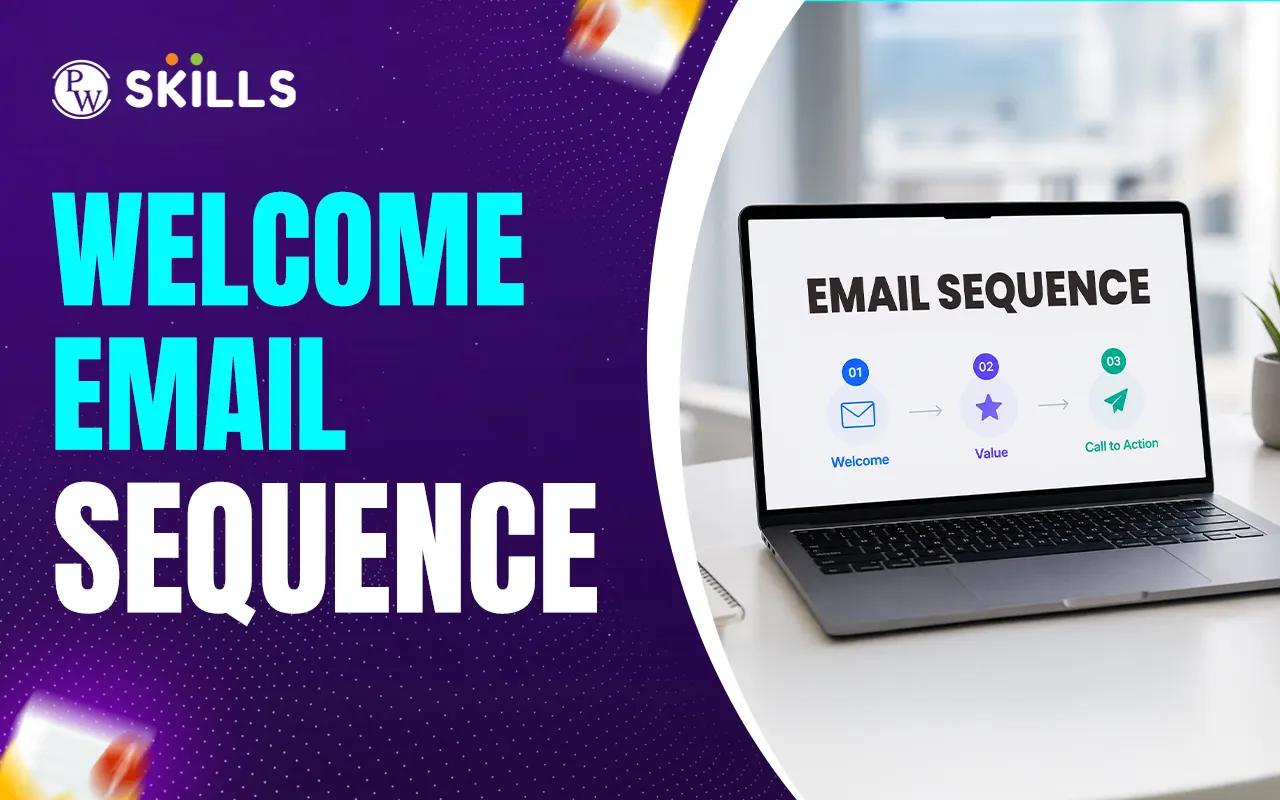
Designing an effective welcome email sequence flow requires a logical progression of information. You cannot ask for a sale in the first five seconds; you must first build a foundation of credibility.
The Initial Welcome
The first email should be sent immediately after signup. This message delivers any promised "lead magnet" (like a discount code or PDF) and confirms that the subscriber is in the right place. Keep it brief, friendly, and focused on fulfilling your initial promise.
The Value Addition
The second email in the flow should provide "unasked-for" value. This could be a helpful tip, a link to a popular blog post, or an educational insight related to your niche. The goal here is to show that you are an expert who provides more than just sales pitches.
The Personal Connection
The third email often works best when it shares the "why" behind your brand. People buy from people. Sharing your origin story or the problem you aim to solve helps humanise your business and creates an emotional bond with the reader.
Welcome Email Sequence Template
To maintain consistency, it helps to work from a welcome email sequence template. While every brand is different, most successful templates follow a similar structural rhythm.
|
Email Number |
Focus Area |
Goal |
|
Email 1 |
Delivery & Welcome |
Deliver the incentive and set expectations. |
|
Email 2 |
Education/Value |
Solve a small problem for the user. |
|
Email 3 |
Brand Story |
Build an emotional connection. |
|
Email 4 |
Social Proof |
Show testimonials or case studies. |
|
Email 5 |
The Soft Sell |
Introduce your main product or service. |
Using a template ensures you don’t miss critical steps, such as adding a clear "Call to Action" (CTA) or a link to your social media profiles.
Tips for Your Welcome Email Sequence
Following welcome email sequence best practices can be the difference between an email that gets read and one that gets deleted.
-
Subject Lines: Use clear, intriguing subject lines. Avoid "spammy" language and keep them under 50 characters for mobile users.
-
Consistency: Match the tone of your emails to the tone of your website and social media.
-
Segmentation: If possible, tailor your sequence based on how the user signed up (e.g., a blog subscriber might get different content than a webinar attendee).
-
Timing: Space your emails appropriately. A common cadence is Day 1, Day 2, Day 4, and Day 6.
-
Simplicity: Don't overwhelm the reader with too many links or images. One primary goal per email is usually best.
How To Implement Welcome Email Sequence Automation
The real power of this marketing tool lies in welcome email sequence automation. By using Email Service Providers (ESPs), you can set triggers that launch the sequence the moment a new contact is added to your list.
Automation removes the risk of human error. It ensures that every single subscriber receives the same high-quality introduction, regardless of when they sign up. Modern automation tools also allow you to track which emails are being opened and which links are being clicked, providing valuable data to refine your approach over time.
Welcome Email Sequence Examples
Looking at welcome email sequence examples from successful brands can provide inspiration for your own campaign.
-
The Minimalist Approach: Some brands use plain-text emails to feel more personal, like a message from a friend. This works well for consultants or service-based businesses.
-
The Visual Powerhouse: E-commerce brands often use high-quality imagery and bold "Shop Now" buttons to drive immediate traffic.
-
The Resource Hub: Some sequences focus entirely on curated content, sending the subscriber "The Best of Our Blog" to establish authority.
-
The Learning Platform Approach: A course or learning platform can send the first email with a demo class, syllabus, study planner, or free resource. The next emails can share study tips, learner success stories, common mistakes, or a reminder to explore the right course.
-
The Product Discovery Approach: A product-based brand can use the sequence to help subscribers choose better. For example, a skincare brand can ask about skin type, a clothing brand can share a size guide, and a home decor brand can show room-wise product picks.
-
The Service Business Approach: A service-based business can use the first email to introduce the team and explain what problem they solve. The next emails can include a checklist, case study, process breakdown, or an invitation to book a call.
-
The Event Registration Approach: If someone signs up for a webinar, workshop, or event, the welcome sequence can confirm registration, share the agenda, introduce the speaker, send reminders, and follow up with a recording or next step after the event.
-
The Community Building Approach: A creator, newsletter, or community page can use the sequence to tell subscribers what kind of content they will receive. It can also invite them to reply, join a group, answer a quick question, or share their biggest challenge.
-
The Freebie Download Approach: If a user downloads a checklist, template, guide, or report, the first email should deliver it clearly. The next emails can explain how to use it, share one useful tip from it, and connect the free resource to a paid product or service later.
Study how these examples use whitespace, bold text, and conversational language to keep the reader moving down the page.



FAQs
How many emails should be in a sequence of welcome emails?
When is the optimum time to send the first email?
Should I give a discount as part of my welcome sequence?
Can I edit my sequence after it's live?
Are welcome sequences and newsletters the same thing?





Get Free Counselling Today
and Clear up all your Doubts
 Live & recorded classes available at easeDashboard for progress trackingLakhs of practice questions

