

Funnel Analysis for Better Conversions
 Study Abroad17 May, 2026
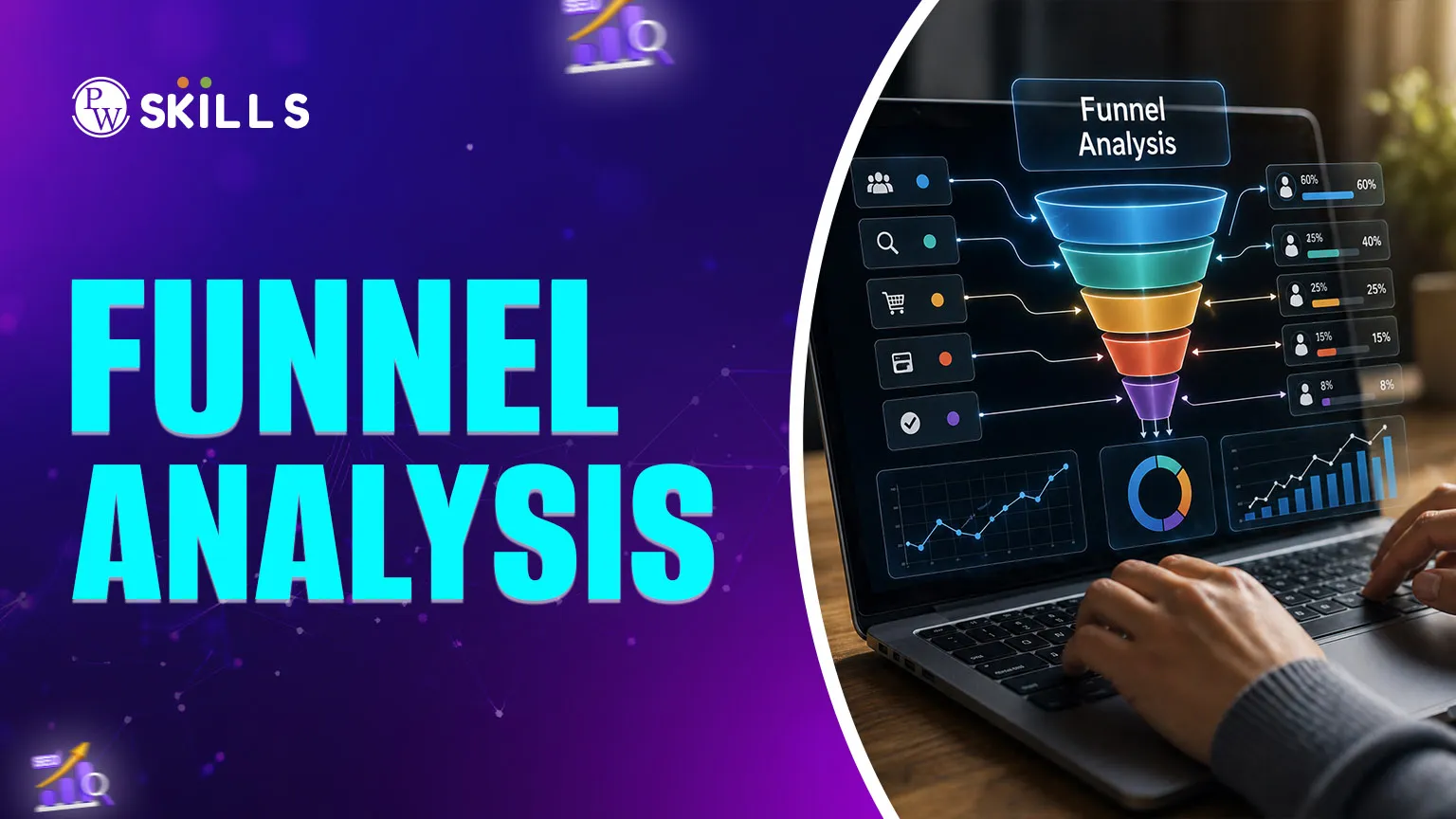
Struggling to understand why visitors land on your site but never complete a purchase? You are likely facing a "leaky" customer journey. Funnel Analysis is the strategic method of tracking the steps a user takes toward a specific goal, such as signing up or buying a product. It allows you to see exactly where people lose interest or encounter issues.
By breaking down the path into measurable stages, you can pinpoint obstacles and improve the user experience. This article will help you master the funnel analysis process to turn more browsers into loyal customers and drive sustainable growth for your digital presence.
Importance of Funnel Analysis
Understanding user behaviour is no longer optional in a competitive digital landscape. When you implement a funnel analysis strategy, you stop guessing and start using data to make decisions. Most users do not buy on their first visit; they move through awareness, consideration, and finally, action.
Without a clear view of these stages, you might spend money on marketing only to lose users at the checkout page. Funnel analysis helps you identify if the problem lies in your landing page, your pricing, or perhaps a technical bug in the payment gateway.
Funnel Analysis Process
To get started, you must follow a structured approach to ensure your data is clean and actionable. The funnel analysis process generally involves four critical steps:
-
Define the Goal: Determine what action you want the user to take. This could be a newsletter signup, a free trial start, or a product purchase.
-
Map the Events: List every click or page view a user must complete to reach that goal.
-
Data Collection: Use analytics tools to track how many users move from one step to the next.
-
Identify Friction: Look for the largest percentage drops. If 90% of people add an item to the basket but only 10% enter payment details, your checkout form is likely too complex.
Funnel Analysis Metrics
To understand the health of your customer journey, you need to monitor specific numbers. These funnel analysis metrics provide a high-level view of your performance:
-
Completion Rate: The percentage of users who finish all steps in the funnel.
-
Drop-off Rate: The percentage of users who leave at a specific stage.
-
Time to Convert: How long it takes for a user to move from the first step to the last.
-
Step-to-Step Conversion: The success rate between two specific consecutive steps.
|
Metric |
Definition |
Importance |
|
Conversion Rate |
Users who complete the final goal |
Measures overall success |
|
Micro-Conversion |
Small wins (e.g., clicking 'Read More') |
Shows user engagement |
|
Abandonment Rate |
Users leaving at the final hurdle |
Highlights checkout friction |
Funnel Analysis Examples
Seeing how this works in real-world scenarios makes the concept easier to grasp. Here are two funnel analysis examples that highlight different business needs:
E-commerce Purchase Journey
In a retail setup, the funnel typically looks like:
-
Homepage visit
-
Product page view
-
Add to cart
-
Enter shipping details
-
Successful payment
If the analysis shows a huge drop after "Add to cart," the business might need to offer free shipping or guest checkout options.
SaaS Lead Generation
For a software company, the journey might be:
-
Blog post read
-
Pricing page view
-
Sign up for a webinar
-
Download whitepaper
-
Request a demo
By tracking this, the team can see which blog posts lead to the most demo requests and double down on that content.
Funnel Analysis Tools
You cannot track these journeys manually. Selecting the right funnel analysis tools is essential for gathering real-time data. Modern platforms offer "drag-and-drop" funnel builders that allow you to visualise the path instantly.
Good tools should offer:
-
Path Exploration: See the different routes users take if they don't follow your "ideal" path.
-
User Segmentation: Compare how mobile users behave vs. desktop users.
-
Retroactive Data: The ability to look at past data to build new funnels.
Funnel Analysis for Marketing
Marketing teams benefit immensely from this data. When performing funnel analysis for marketing, you can see which traffic sources (social media, search engines, or email) produce the highest quality leads.
Instead of just looking at "clicks," you look at "conversions per channel." If your social media ads have a high click rate but a 0% funnel completion rate, you are likely targeting the wrong audience or the landing page doesn't match the ad's promise.
Refine Funnel Analysis Strategy
A successful funnel analysis strategy is not a one-time task. It requires constant monitoring. A funnel analysis method that works is not something you do only once. It needs to be watched all the time. People's buying habits vary over time. A funnel that worked last year might not function today because of new market trends or technical advancements.
Check your steps on a regular basis. Look for "friction points" on your website that may have been caused by new functionality. You can keep your conversion rates high and your users happy by making funnel reviews a monthly habit.
Things that often stop conversions
-
Slow page loads: If a step takes more than three seconds to load, people will leave.
-
Account Creation Required: Making people join up before they can view prices often makes them leave.
-
No Trust Signals: Customers may be scared away if they don't see security badges or reviews when they pay.
Funnel Analysis Tips
If you are new to data analytics, remember that funnels are rarely linear. This funnel analysis guide suggests starting simple. Do not try to track fifty different events at once.
Focus on the "Happy Path" first. The happy path is the shortest, most direct route to conversion. Once you have optimised the direct route, you can start looking at "looped" funnels where users return multiple times before committing.
-
Keep it consistent: Ensure your event naming conventions are the same across all platforms.
-
Talk to users: Quantitative data tells you where they leave; qualitative data (surveys) tells you why.
-
Test and Iterate: Use A/B testing to fix the leaks you found during your analysis.






FAQs
What is the difference between a funnel and a goal?
Can I use funnel analysis to reach goals that don't involve money?
How many stages should a normal funnel have?
Does funnel analysis keep track of each user?
What does it mean for a funnel to be "leaky"?





Get Free Counselling Today
and Clear up all your Doubts
 Live & recorded classes available at easeDashboard for progress trackingLakhs of practice questions

