

SEO vs Search Engine Marketing in 2026: Key Differences Explained
 Hardik Gupta23 Sept, 2026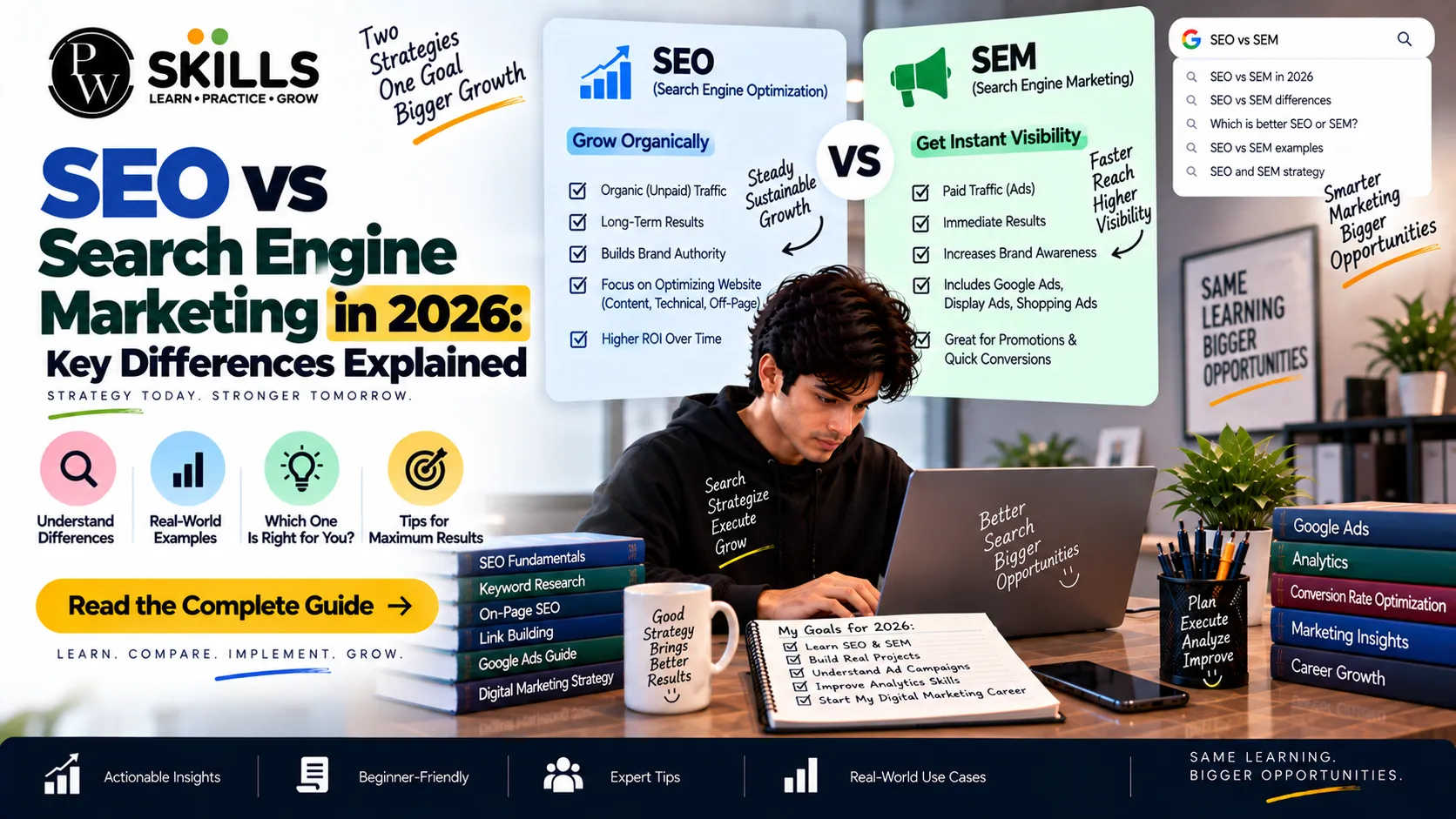
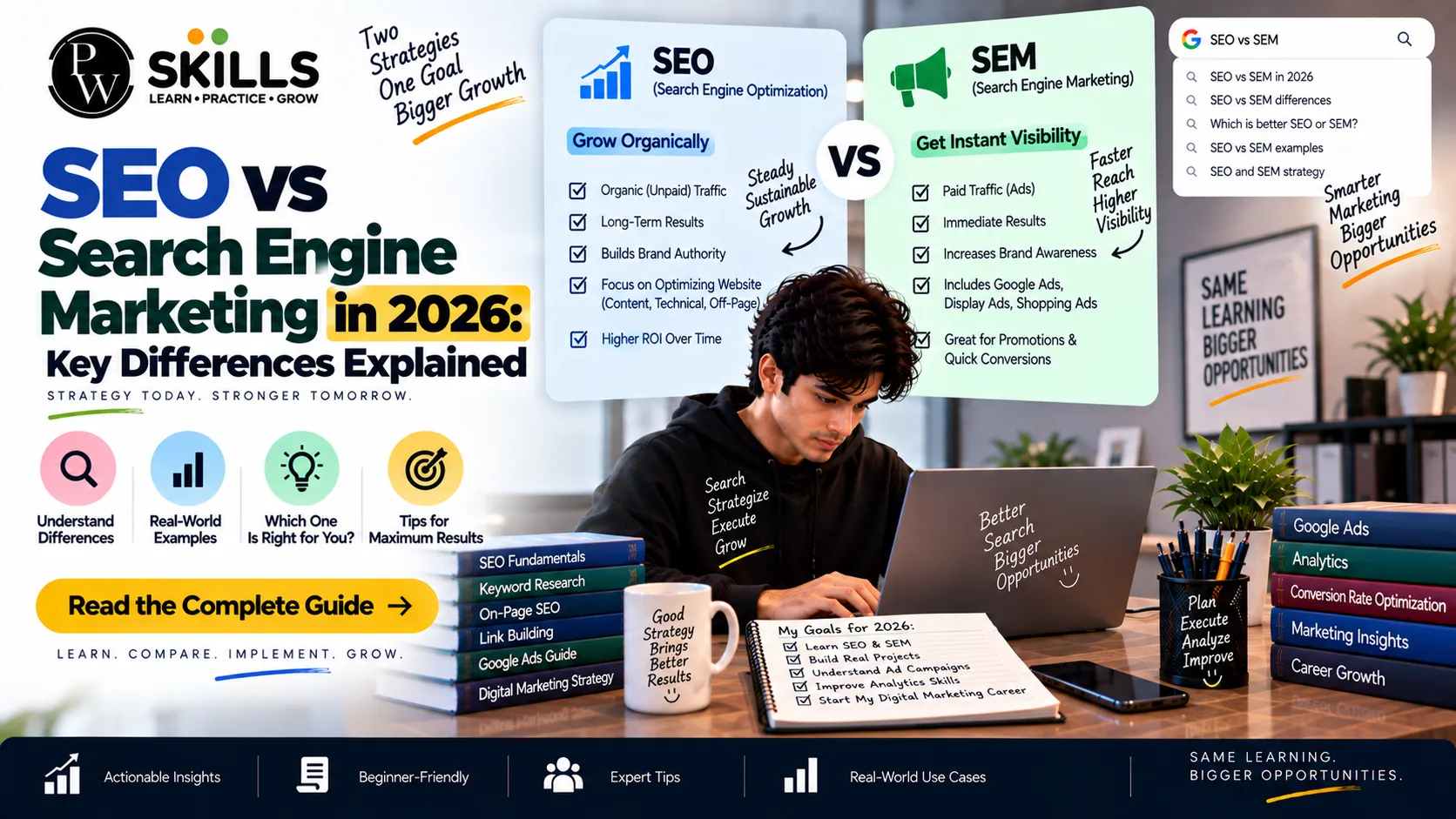
Knowing about SEO search engine marketing can help beginners see how businesses use search engines to reach customers. SEO focuses on improving organic search visibility, while SEM commonly refers to paid search campaigns.
The right approach can depend on business goals, budget, competition, and the time available to achieve results. Learning both can provide a clearer view of search marketing.
Importance of SEO Search Engine Marketing
Search engines are an important way for people to find information, products, services, and businesses online. Because of this, companies need to understand how search visibility works. Knowing SEO search engine marketing helps marketers compare organic traffic with paid traffic and choose methods that match their goals.
SEO can help a website build organic visibility over time, while paid search can provide faster exposure for selected searches. Understanding both methods also helps businesses plan their marketing budgets and decide where to focus their time.
-
Better Search Visibility: Both methods can help businesses reach people searching for related products or services.
-
Different Timeframes: Paid campaigns can start bringing traffic quickly, while SEO usually takes longer to build results.
-
Different Costs: Paid search requires an advertising budget, while SEO mainly requires time, content, technical work, and expertise.
-
Useful Data: Both channels can provide information that helps marketers understand search behaviour and improve their strategies.
What Is SEO Search Engine Marketing?
Search engine optimization, or SEO, is the process of improving a website so that it can appear more prominently in organic search results. Businesses do not pay the search engine for every organic click. Instead, they work on website content, technical factors, and overall relevance.
SEO can include keyword research, useful content creation, internal linking, website speed improvements, technical checks, and earning relevant links from other websites. The exact work depends on the website and the search terms it wants to target.
SEO normally takes time because search engines need to discover, understand, and evaluate website content. Results can also vary based on competition, website quality, search intent, and many other factors.
For example, a business selling fitness products may create useful content around workout equipment, fitness tips, and product-related searches. If the content meets user needs and performs well in organic search, it may bring visitors without paying for each click.
Also Check : A–Z Guide to Digital Marketing with AI
What Is Search Engine Marketing in SEO?
Search engine marketing, commonly called SEM, generally refers to paid advertising on search engines in current digital marketing usage. Businesses create advertisements and choose keywords or other targeting settings to reach potential customers.
Paid search campaigns can provide visibility soon after the ads are approved and the campaigns become active. Businesses can also control budgets, test different advertisements, and track actions such as clicks, leads, and purchases.
Platforms such as Google Ads allow advertisers to create search campaigns for different business goals. Advertisers can select keywords, write ad copy, set budgets, choose locations, and monitor campaign performance.
It is also important to note that the term search engine marketing has historically been used more broadly in some sources to describe search marketing in general, including SEO. However, the SEO vs SEM comparison today commonly uses SEM to mean paid search advertising.
What Is the Difference Between SEO Search Engine Marketing and Paid Search?
Understanding organic vs paid search makes the difference between SEO and SEM easier to understand. The biggest differences are how traffic is gained, how quickly results can appear, and how costs are managed.
|
Factor |
SEO |
Paid Search / SEM |
|
Traffic type |
Organic |
Paid |
|
Payment for clicks |
No direct payment to the search engine for each click |
Advertiser usually pays for clicks or other ad activity, depending on the campaign |
|
Speed |
Usually takes time |
Can provide visibility quickly after launch |
|
Main work |
Content, technical SEO, keywords, links, and website improvements |
Keywords, ads, bidding, budgets, and landing pages |
|
Traffic duration |
Can continue while pages remain useful and visible |
Usually depends on an active campaign and budget |
|
Testing |
Takes longer to gather some results |
Can provide faster campaign data |
SEO can support long-term organic visibility, while paid search can help businesses reach selected searches quickly. Many businesses use both approaches so they can work on long-term growth while also running campaigns for immediate needs.
How to Choose Between SEO Search Engine Marketing and SEM?
The choice between SEO and SEM depends on what a business wants to achieve. A company that needs traffic for a limited-time offer may use paid search to reach relevant users quickly. A business focused on building long-term organic visibility may spend more time developing its SEO strategy.
Budget is another important factor. Paid campaigns need an ongoing advertising budget, while SEO requires investment in areas such as content, website improvements, tools, and skilled professionals.
Businesses should also consider competition. Some keywords may be difficult to rank for organically, while others may have high advertising costs. Reviewing search volume, competition, customer intent, and expected results can help businesses decide how to divide their resources.
Using both methods can also be useful. SEO can build organic visibility over time, while paid search can support product launches, special offers, important keywords, and other short-term goals.






FAQ
What is the primary difference in SEO search engine marketing?
How does SEO vs SEM impact campaign timelines?
Is search engine optimization free?
When should a business use search engine marketing?
Can SEO search engine marketing be used together?








Get Free Counselling Today
and Clear up all your Doubts
 Live & recorded classes available at easeDashboard for progress trackingLakhs of practice questions

