

How Does Digital Marketing with AI Course Turn You Into a Job-Ready Performance Marketer?
 Hardik Gupta22 Oct, 2026
Those entering the business world today tend to see that conventional marketing theories fall short in meeting the pace of industry needs. Employers seek marketers who can easily manage data, budgeting, and automation for targeted audiences.
The conventional method of learning tends to create challenges for new graduates in connecting theory with real-world advertising measurements. This is where a structured training program comes in handy, as it combines creativity and analysis. Through Performance Marketer Career, learners get to learn how to measure return on investment from various channels.
Overview of the Performance Marketer Career
The contemporary world of marketing is much more about measurements, conversions, and data-driven decisions than assumptions. The representatives of this sphere concentrate solely on provoking reactions from customers, such as subscription, lead gathering, and sales through different media.
In order to become a performance marketer, one should know everything about how each cent affects the income of the company. The market of such specialists is constantly growing, as more and more money is invested in measurable advertising campaigns.
-
Focused only on measurable factors, conversion rates, and generating profit.
-
Instead of brand-awareness activities uses budget control and constant monitoring.
-
Uses machine learning techniques to predict consumer behaviour and advertise efficiently.
-
Offers many work possibilities in fields like e-commerce, tech startups, corporate agencies.
What are the Main Responsibilities in a Performance Marketer Career
Daily operations involve managing live campaigns, adjusting bidding strategies, and analysing performance dashboards to improve results. Practitioners monitor user acquisition costs and lifetime value metrics to ensure marketing budgets deliver optimal profitability. Execution requires constant testing of ad creatives, landing pages, and audience segments to identify winning combinations.
-
Allocating and managing advertising budgets across search engines and social platforms.
-
Designing split tests to compare different ad copy, visuals, and calls to action.
-
Monitoring key performance indicators like click-through rates and conversion costs daily.
-
Collaborating with design and content teams to produce high-converting promotional assets.
Skills Required to Start a Performance Marketer Career
Technical expertise is essential for a successful digital advertisement campaign in the dynamic corporate world of today. Future professionals need to cultivate analytical skills along with a good understanding of consumer psychology and digital platforms. Technical proficiency in these areas will enable the candidate to understand and analyze the data of the advertising dashboard effectively.
-
Analytical skills for interpreting the data dashboard and recognizing trends.
-
Basic knowledge of consumer psychology and persuasive writing techniques.
-
Understanding of web tracking pixels, event tagging, and conversion modeling techniques.
-
Technical expertise to use automation platforms backed by an AI in digital marketing course.
How a Digital Marketing With AI Course Prepares You for a Performance Marketer Career
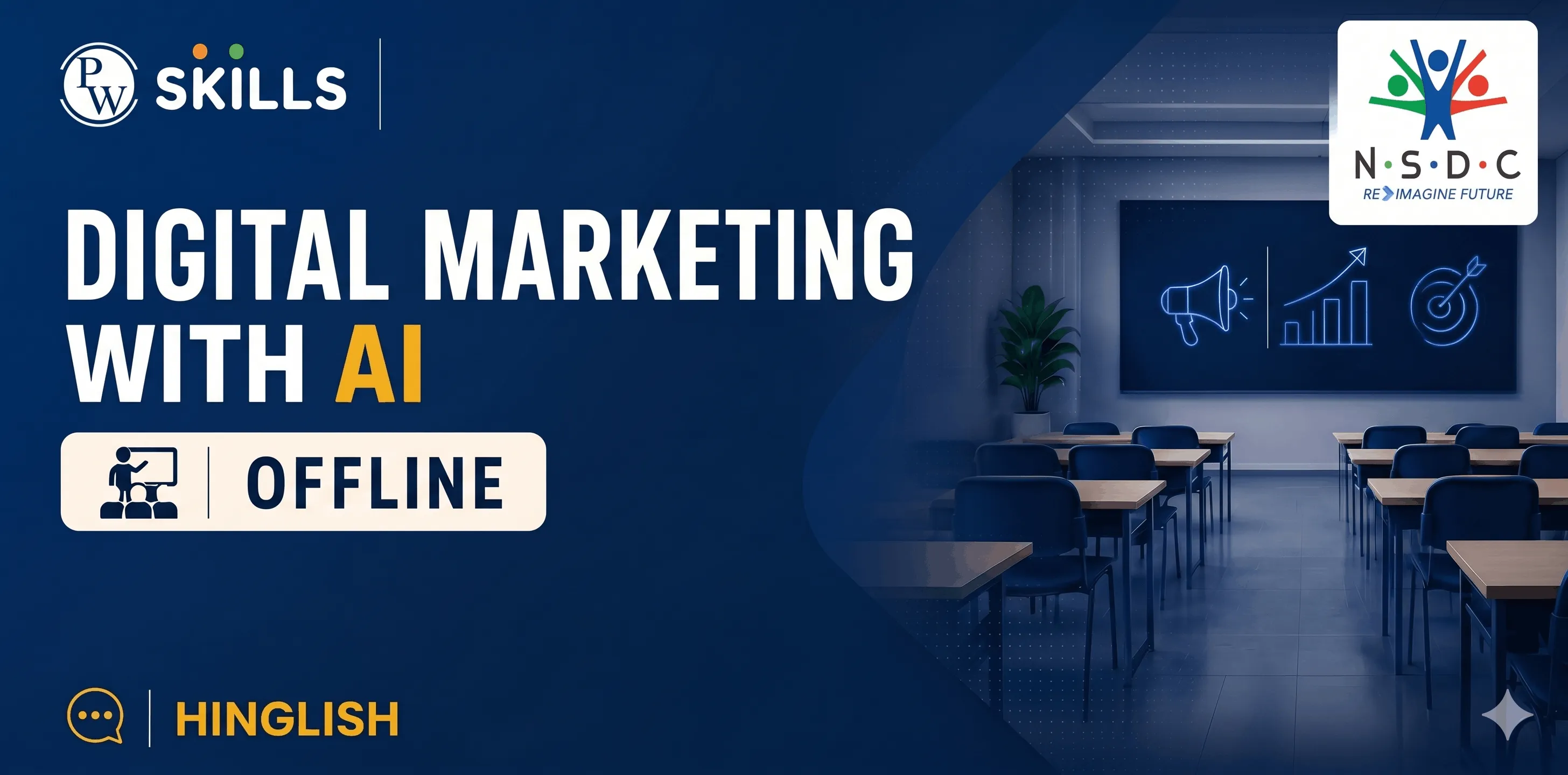
Enrolling in a specialised training programme bridges the gap between academic theory and practical agency work. Students learn to leverage machine learning algorithms to predict customer lifetime value and automate repetitive bidding tasks. This targeted preparation ensures graduates enter interviews equipped with relevant portfolio projects and practical tool experience.
-
Teaches learners how to use predictive analytics for smarter audience targeting.
-
Simplifies campaign optimisation through automated script generation and smart bidding strategies.
-
Provides hands-on experience with industry-standard advertising tools and live project environments.
-
Accelerates transition into lucrative performance marketer jobs through practical skill building.
How to Build a Successful Performance Marketer Career
Entry into the world of digital advertising entails a process of systematic development involving both theoretical education and practice. The learner will need to advance from learning about simple traffic funnels to handling multiple channel campaigns. Going through a systemized developmental sequence guarantees no technical shortcomings prior to attending job interviews.
-
Understand key marketing principles, user funnels, and digital channel dynamics.
-
Get advanced knowledge via digital marketing with AI course and smart tools.
-
Create a portfolio demonstrating practical campaign setups and performance outcomes.
-
Apply for entry-level positions and specialised internships to gain corporate experience.
Tools to Learn for a Performance Marketer Career
Familiarity with industry-standard software separates successful applicants from job seekers who only understand theory. Modern advertising suites require constant interaction with data analytics platforms, customer relationship management software, and automated bidding utilities. Mastering these specific applications makes graduates immediately productive upon entering the corporate workforce.
-
Comprehensive advertising manager suites for deploying paid search and social campaigns.
-
Advanced web analytics platforms for tracking user behaviour and conversion paths.
-
Customer data platforms for segmenting audiences and personalising communication channels.
-
Automated copywriting and generative assistants taught within a digital marketing with ai course.
Tips to Build a Portfolio for a Performance Marketer Career
Potential employers look for individuals based on how well they can showcase their past campaign victories and strategic mind-set. Creating an impressive portfolio includes showcasing personal campaigns, fake campaigns, and data analytics reports. Showing before and after numbers will provide proof of your skills much more effectively than a typical resume.
-
Show all your steps in any mock or real campaign, starting from budgeting and ending with the results.
-
Show how you managed any sudden decreases in conversion rates.
-
Highlight your skills in audience segmentation and digital marketing by showcasing your AI course projects.
-
Make your portfolio brief and ROI-focused.
Also Explore : Digital Marketing with AI Course
Common Mistakes to Avoid When Starting a Performance Marketer Career
Beginning professionals sometimes fall into the trap of concentrating exclusively on creative aspects and forgetting about financial indicators. The other mistake is related to the failure to set up proper tracking, which results in misinterpretation of data and money spent on advertising in vain.
-
Ignoring key metrics like customer acquisition cost and focusing only on vanity numbers.
-
Failing to set up proper conversion tracking pixels before launching live campaigns.
-
Neglecting continuous split testing and relying on a single ad variation for too long.
-
Overcomplicating audience targeting instead of starting broad and narrowing based on data.











Get Free Counselling Today
and Clear up all your Doubts
 Live & recorded classes available at easeDashboard for progress trackingLakhs of practice questions


