

How AI campaign automation From Digital Marketing Course Applies on the Job
 Varun Saharawat25 Aug, 2026
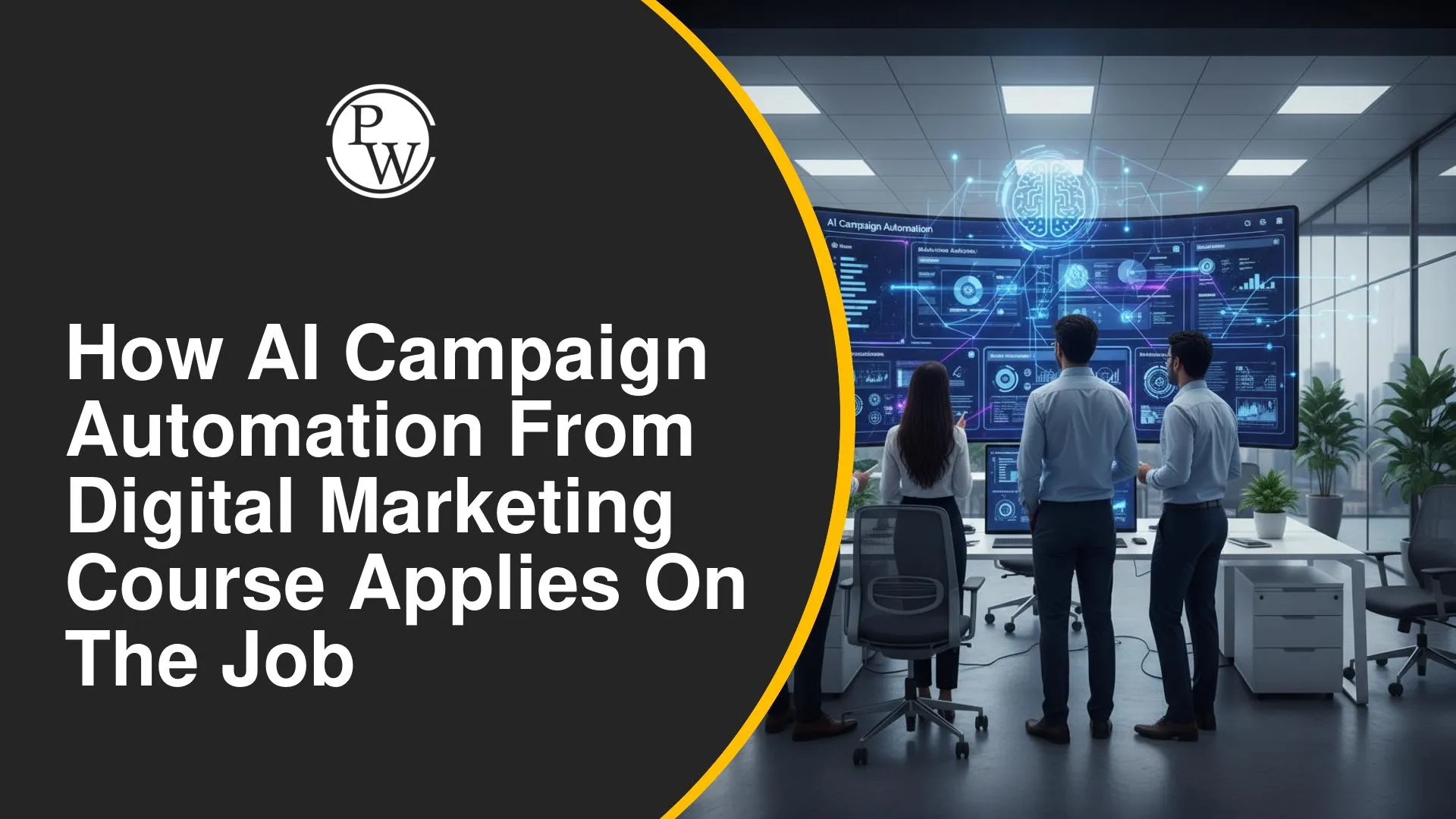
Modern marketing teams demand fast execution and precise content strategies. Early-career professionals often struggle to manage manual research, slow publishing workflows, and complex campaign tracking. By taking a practical Digital Marketing with AI Course, learners discover how artificial intelligence tools streamline campaign execution.
This practical training teaches content creators to automate keyword analysis, draft targeted social media calendars, and build structured workflows. Applying these automated skills on the job helps associates consistently deliver measurable results and quickly advance into higher-paying Digital Marketing Executive Jobs.
How Does a Digital Marketing with AI Course Prepare You for a Content Marketing Associate Role?
A Content Marketing Associate handles the daily execution of an organization's organic growth strategy. This position acts as the bridge between creative ideas and technical distribution. Early-career specialists focus on producing clear, engaging materials that align with brand guidelines and audience needs across digital channels.
Typical daily responsibilities include:
-
Content Generation: Drafting blog posts, newsletters, and social media captions.
-
Keyword Research: Identifying relevant user queries using basic search engine optimization tools.
-
Asset Scheduling: Managing editorial calendars and publishing posts on content management systems.
-
Performance Tracking: Monitoring page views, bounce rates, and social engagement metrics.
Transitioning from manual workflows to tech-driven strategy requires formal training. Through a structured AI Course, professionals learn how machine learning tools simplify high-volume publishing without sacrificing content quality.
How Does a Digital Marketing with AI Course Help With AI Automation?
Campaign automation replaces repetitive, time-consuming marketing tasks with software-driven workflows. Rather than manually drafting dozens of social post variations or reviewing keyword metrics line by line, AI engines analyze patterns in seconds.
Key transformation areas in daily marketing operations include:
-
Prompt-Driven Content Frameworks: Creating multi-channel copy variants from a single core article.
-
Dynamic Content Personalization: Tailoring email subjects and body text based on user segments.
-
Automated Keyword Mapping: Structuring organic content pillars around live search intent.
-
Predictive Performance Analysis: Identifying drop-off points in user engagement before launching campaigns.
Understanding how these systems function allows team members to handle larger campaign volumes efficiently while maintaining consistent messaging standards.
How Does a Digital Marketing with AI Course Help on the Job?
Completing a Course equips entry-level associates with actionable execution models. The skills learned during training directly solve real-world workplace bottlenecks.
|
On-the-Job Challenge |
Traditional Workflow |
AI-Automated Workflow |
|
Editorial Planning |
Manual spreadsheets taking 10+ hours weekly |
Automated prompt matrices generating 30-day calendars |
|
Organic Keyword Research |
Checking individual metrics across multiple web tools |
Automated clustering and search intent mapping |
|
Copywriting & Testing |
Writing 2–3 ad variants manually |
Generating 15+ search-tailored headlines instantly |
|
Performance Reporting |
Pulling manual CSV files from analytics platforms |
Automated dashboards updating real-time KPI metrics |
How Does a Digital Marketing with AI Course Teach SEO?
Search engine visibility is an important part of organic marketing growth. A practical Digital Marketing Course + SEO strategy helps marketers create search-friendly content while using AI tools to make research, planning, and optimization faster.
To improve search visibility, marketers can combine SEO methods with automated workflows:
-
Search Intent Alignment: Creating page content that matches what users are searching for. Clear answers, short sections, and useful bullet points can also improve the chances of appearing in featured search results.
-
Keyword Density Balance: Adding primary and related keywords naturally in headings, content, titles, and descriptions without using keywords too many times.
-
Technical On-Page Structure: Improving page titles, meta descriptions, headings, internal links, image details, and other on-page elements to make content easier for search engines and users to understand.
-
Content Gap Analysis: Using AI and SEO tools to compare competing pages, find missing topics, and add useful information that better answers user searches.
-
Automated Content Optimization: Using AI tools to review content structure, suggest related keywords, and identify areas that may need improvement before publishing.
Implementing a combined AI Course + SEO framework helps marketers create better content, save time on repetitive SEO tasks, and keep automated campaign output focused on both search visibility and user engagement.
How Does a Digital Marketing with AI Course Help Get Digital Marketing Executive Jobs?
Building expertise in automated campaign strategy establishes a clear career trajectory from an entry-level associate to senior execution roles. Employers actively seek professionals who combine strategic creativity with technical software skills.
Content Marketing Associate
│
▼
Digital Marketing Executive
│
▼
Growth Marketing Manager
│
▼
Head of Digital Strategy
Key career growth milestones include:
-
Content Marketing Associate: Focuses on content creation, basic keyword research, and manual social publishing.
-
Digital Marketing Executive: Manages multi-channel acquisition funnels, sets up automated ad architectures, and oversees conversion tracking.
-
Growth Marketing Manager: Directs full-funnel strategy, budget allocation, CAC/ROAS optimization, and retention systems.
Promotions to high-tier Digital Marketing Executive Jobs require proving that your automated campaigns directly lower customer acquisition costs and boost search visibility.
What Skills Does a Digital Marketing with AI Course Teach?
An industry-focused Digital Marketing Course helps learners build practical skills across different areas of digital marketing. These skills help professionals plan campaigns, create content, understand customer behaviour, and measure marketing results.
Key skills developed throughout training include:
-
Full-Funnel Campaign Architecture: Designing complete customer journeys across organic search, paid ads, social media, and email marketing to guide users from awareness to conversion.
-
Generative Prompt Engineering: Creating clear and useful AI prompts for content ideas, campaign calendars, ad copy, social media posts, and other marketing tasks.
-
Analytics & GA4 Event Tracking: Tracking important user actions and measuring key metrics such as ROAS, CPA, conversion rate, engagement, and bounce rate to understand campaign performance.
-
Omnichannel Content Distribution: Reusing and adapting one content asset for LinkedIn, email newsletters, social media platforms, websites, and search engine blogs to reach different audiences.
-
SEO and Keyword Research: Finding relevant keywords, understanding search intent, and creating optimized content that can improve organic visibility and attract the right users.
-
AI-Based Campaign Automation: Using AI tools to automate repetitive tasks such as content planning, audience research, reporting, and campaign performance analysis.





FAQs
1. How does a Digital Marketing with AI Course prepare learners for Digital Marketing Executive Jobs?
2. How does AI help Content Marketing Associates?
3. What does SEO cover in a Digital Marketing with AI Course?
4. Can SEO skills help in Digital Marketing Executive Jobs?
5. Why is AI important for SEO and content marketing?






Get Free Counselling Today
and Clear up all your Doubts
 Live & recorded classes available at easeDashboard for progress trackingLakhs of practice questions

