

Ecommerce SEO Strategy in 2026: How to Improve Product and Category Page Visibility
 Hardik Gupta23 Sept, 2026
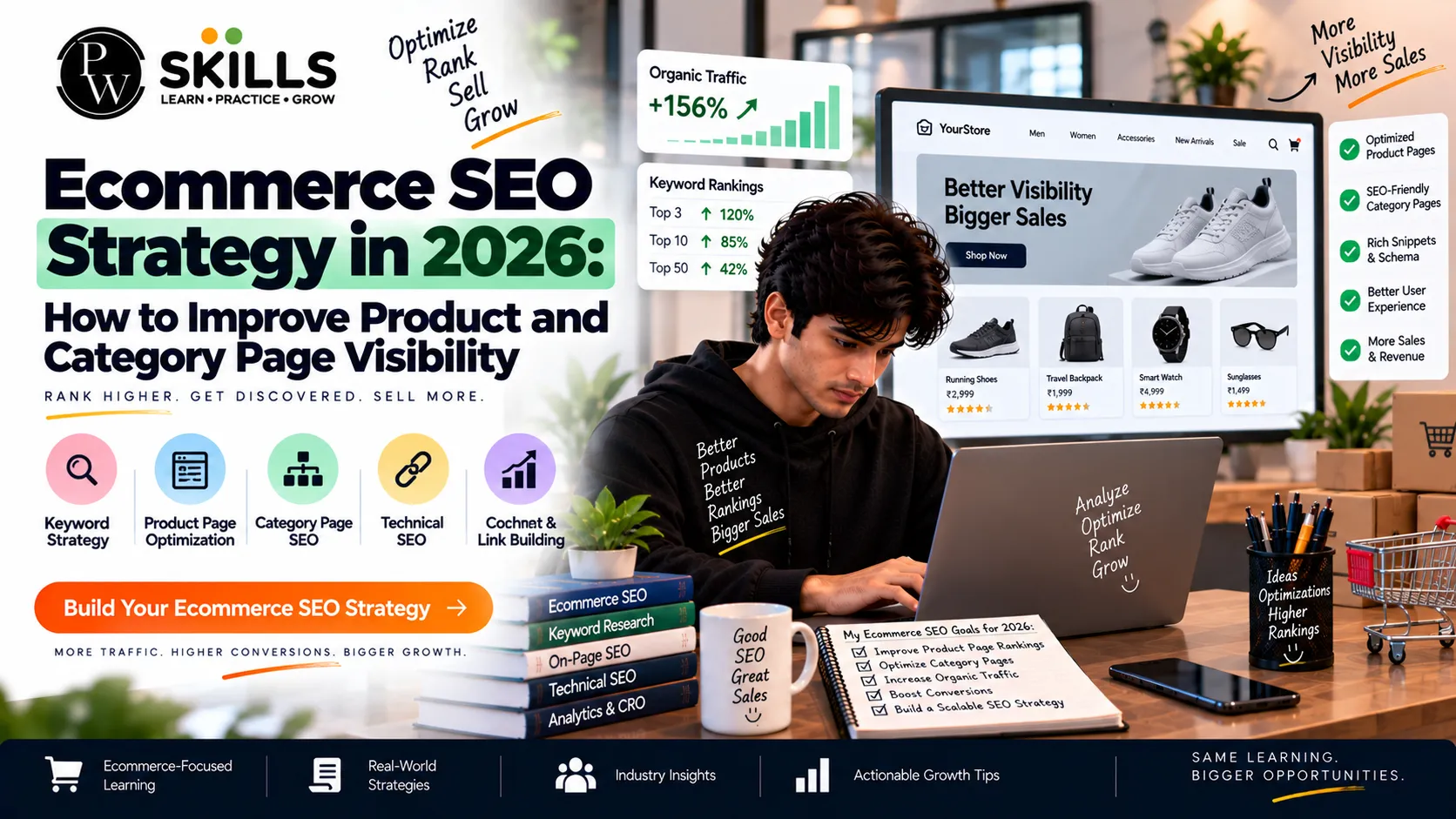
Building a successful online store requires more than adding products and waiting for search traffic. Businesses need a clear ecommerce SEO strategy to improve visibility, attract relevant visitors, and support long-term growth. From technical optimisation to keyword targeting and user experience, a well-planned approach helps online stores improve their search presence and reach potential customers.
Importance of Category Pages in an Ecommerce SEO Strategy
Category pages are an important part of an ecommerce SEO strategy because they organise products around broader search topics. A well-optimised category page can target commercial searches while helping visitors find related products more easily. These pages also create a clear path between the main navigation, sub-categories, and individual product pages.
For instance, an online clothes store could provide categories like men's shoes, women's footwear, or running shoes. All categories should have a defined purpose and a specific search intent, rather than just a collection of things.
Category pages must have unique and helpful material that will enable users and search engines to grasp what the issue is about. You can begin with a brief introduction describing the goods that are covered, and then expand with information to address frequently asked questions or highlight key features.
Internal linking is another important part of category optimisation. Links from main categories to relevant sub-categories and products can make navigation easier and help search engines understand the site's structure.
To improve category pages:
-
Use a clear and descriptive category title.
-
Add the primary keyword naturally to the page title and H1.
-
Write a useful category description instead of relying only on product names.
-
Add relevant internal links to subcategories and products.
-
Use descriptive image alt text where appropriate.
-
Make navigation simple for both users and search engines.
-
Avoid copying the same category description across multiple pages.
|
Optimisation Element |
Best Practice |
Impact on Search Visibility |
|
Include primary commercial keywords and brand modifiers |
High click-through rate |
|
|
H1 Headings |
Use clear, single intent-focused headings |
Better crawler context |
|
Internal Links |
Connect related sub-categories contextually |
Enhanced crawl budget flow |
|
Content Blocks |
Place 150 words of unique copy below product grids |
Keyword contextual relevance |
How to Optimise Product Pages With an Ecommerce SEO Strategy
Product pages are where users often make purchasing decisions, so they need both useful information and clear navigation. This plan should optimise product pages around the actual search terms and questions customers use before buying.
Start with a unique product title that clearly identifies the product. Avoid using vague titles that do not explain what the product is. Product descriptions should also provide useful information instead of simply repeating details already shown elsewhere on the page.
Important product page elements include:
-
Product title
-
Unique product description
-
Relevant keywords
-
Product images
-
Pricing information
-
Availability details
-
Customer reviews
-
Specifications
-
FAQs where useful
-
Structured data
Images are particularly important for ecommerce websites because customers often want to see a product from different angles before purchasing. Compressing large images can also help reduce unnecessary page load time.
Product descriptions should focus on what the customer needs to know. Mention important specifications, materials, sizes, features, compatibility, or other details relevant to the product type.
Reviews can add useful first-hand information and may help shoppers understand how a product performs in real-world use. Where appropriate, structured data can also help search engines understand product information such as price, availability, and reviews.
Also check : A–Z Guide to Digital Marketing with AI
Technical SEO Improvements for an Ecommerce SEO Strategy
Digital storefronts’ technical health affects the effectiveness of search engine crawlers indexing them. Overall plan should include site architecture, crawl depth and use of canonical tags to avoid duplicate content penalties. Large site inventories can create filter based URL parameters which can fracture link equity if not handled correctly.
Fixing these technological issues is part of ongoing online store SEO maintenance. Proper use of robots.txt files and XML sitemap management quickly finds freshly added inventory by search bots. Mobile responsiveness and core web vitals improvements also directly affect user retention and bounce rates, which communicate quality to search algorithms.
Some areas to review include:
-
Website crawlability
-
Mobile usability
-
Page speed
-
Canonical tags
-
Redirects
-
Duplicate URLs
-
Faceted navigation
-
Broken internal links
-
Indexing issues
-
Site architecture
The website structure should remain simple enough for users and search engines to navigate. A common structure is:
Homepage → Main Category → Subcategory → Product Page
This structure helps create clear connections between important pages and can make internal linking easier to manage.
Keyword Research for an Ecommerce SEO Strategy
Keyword research helps businesses understand what potential customers search for before reaching an ecommerce website. A strong strategy should not target the same type of keyword on every page.
Different pages can target different search intents. For example:
-
Category pages can target broader product-category searches.
-
Product pages can target specific product names and variations.
-
Blog pages can target informational searches.
-
Comparison pages can target users evaluating different options.
-
Buying guides can target users who need more information before making a purchase.
Long-tail keywords can also be useful because they are often more specific. A user searching for a particular product type, size, feature, or use case may have a clearer idea of what they want.
When researching keywords, consider:
-
Search intent
-
Relevance to the product or category
-
Search demand
-
Competition
-
Product availability
-
Business value
After identifying relevant keywords, map them to the most suitable pages. Avoid using the same primary keyword across several pages when those pages serve different purposes.
How to Build Internal Links in an Ecommerce SEO Strategy
Continuous tracking transforms standard website maintenance into a dynamic strategy. Search algorithms evolve constantly, requiring regular audits of your SEO parameters. Monitoring conversion rates alongside organic impressions helps isolate which pages need immediate refinement.
A successful routine involves checking indexation errors weekly and refreshing outdated content quarterly. Evaluating user behaviour metrics on key landing pages ensures that your SEO efforts align with what visitors actually demand. Continuous optimisation guarantees sustained visibility across competitive digital landscapes.






FAQ
What is the primary focus of an ecommerce SEO plan?
Why is category page SEO critical for online stores?
How does product page SEO differ from category page optimisation?
What technical elements matter most for online store SEO?
How can professionals understand modern e-commerce SEO techniques?










Get Free Counselling Today
and Clear up all your Doubts
 Live & recorded classes available at easeDashboard for progress trackingLakhs of practice questions

