

Career in Digital Marketing in 2026: Skills, Jobs and Career Opportunities
 Hardik Gupta23 Sept, 2026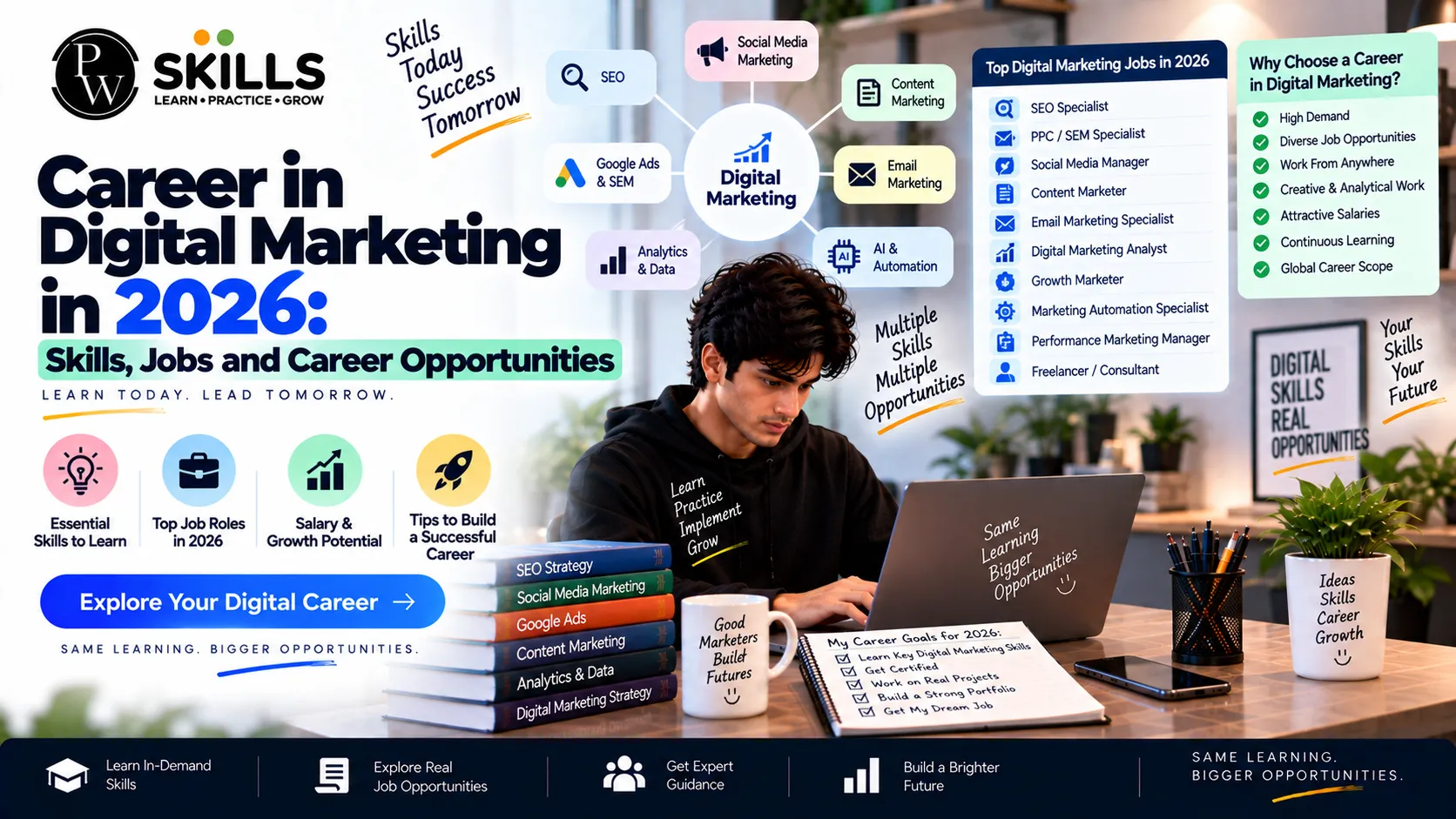
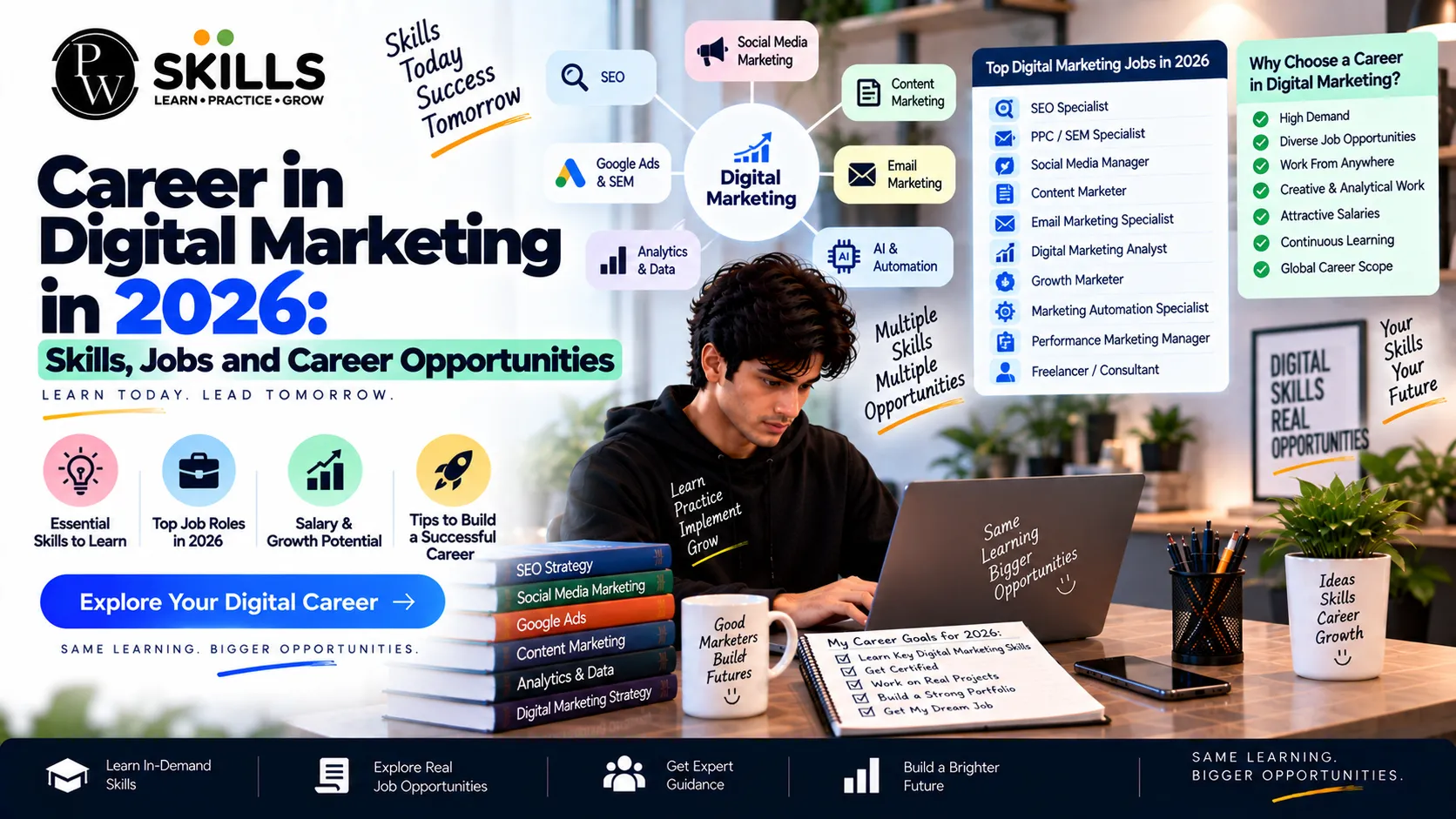
A career in digital marketing can offer different paths based on a learner’s interests and skills. Beginners can explore areas such as SEO, social media, content, paid ads, analytics, and email marketing.
As businesses use more digital channels, professionals also need to understand customer behaviour, campaign performance, data, and AI tools. Building these skills can help learners prepare for different digital marketing jobs and make informed career choices.
Importance of a Career in Digital Marketing
Building a strong career in digital marketing requires more than knowing how to post on social media. Employers may look for candidates who understand marketing basics and can use digital tools to support business goals.
-
Search Engine Optimisation (SEO): Learning keyword research, on-page SEO, technical checks, content optimisation, and search performance.
-
Paid Advertising (PPC): Understanding Google Ads, Meta Ads, campaign setup, audience targeting, budgets, and conversion tracking.
-
Data Analytics: Reading website and campaign data, understanding key metrics, and using reports to improve marketing decisions.
-
AI-Powered Workflow Automation: Using AI tools for tasks such as content ideas, research, reporting, and routine marketing work while checking the output carefully.
Other useful skills include email marketing, conversion rate optimisation, content planning, marketing automation, and basic customer relationship management. Communication and problem-solving skills are also important because digital marketers often work with designers, sales teams, developers, and business managers.
What Jobs Can You Get for a Career in Digital Marketing?
There are many digital marketing jobs, and each role focuses on different parts of the marketing process. Beginners can choose a path based on whether they enjoy data, writing, advertising, technology, or customer engagement.
-
Performance Marketer: Works on paid campaigns, budgets, conversion tracking, and campaign performance.
-
SEO Specialist: Works on keyword research, website optimisation, technical SEO, and organic traffic growth.
-
Content Marketing Associate: Creates and manages blogs, social content, emails, and other marketing materials.
-
Social Media Manager: Plans social content, manages online communities, and tracks social media performance.
Other roles include email marketing specialist, digital marketing analyst, PPC specialist, growth marketer, marketing automation specialist, and content strategist. Job titles and responsibilities can differ between companies, so candidates should always read the complete job description before applying.
Also Explore : Digital Marketing with AI Course
What Are the Career Options in Digital Marketing?
One advantage of a career in digital marketing is the variety of work environments available. Professionals can start in a company, agency, freelance setup, or specialised marketing role and develop their skills over time.
-
Corporate Positions: Work within a company and manage digital campaigns, content, SEO, advertising, or analytics for its own products and services.
-
Agency Roles: Work with different clients and manage campaigns across several industries.
-
Freelancing and Advisory: Provide digital marketing services to businesses independently and manage projects based on client requirements.
-
Specialized Domain Growth: Focus on areas such as conversion rate optimisation, email automation, SEO, performance marketing, or marketing analytics.
The best path depends on personal interests, experience, preferred work style, and long-term goals. Some professionals may also move between these paths as they gain experience.
How to Build Skills for Improving Your Career in Digital Marketing?
Training can help beginners build basic knowledge and practise the tools used in digital marketing. A useful learning programme should connect theory with practical tasks instead of focusing only on definitions.
-
Structured Learning Formats: Choose programmes that cover important areas such as SEO, paid advertising, analytics, content, and social media.
-
Hands-on Tool Mastery: Practise with analytics dashboards, advertising platforms, SEO tools, content tools, and reporting systems.
-
Mentorship and Placement Support: Guidance with projects, resumes, interviews, and career planning can be useful for learners entering the field.
Learners should also build a small portfolio while studying. Projects such as an SEO audit, keyword research report, sample advertising campaign, content calendar, or analytics dashboard can help demonstrate practical skills during job applications.
How to Start a Career in Digital Marketing Without Experience?
Beginners do not always need years of work experience to start learning digital marketing. They can build practical knowledge through personal projects, internships, volunteer work, freelance assignments, and simulated campaigns.
A simple starting path is to learn the basic concepts, practise one or two major tools, create sample projects, and then apply for entry-level positions. Candidates should focus on showing what they can do rather than only listing course names on their resumes.
How to Build a Portfolio for a Career in Digital Marketing?
A portfolio can help employers understand a candidate's practical abilities. It does not need to contain dozens of projects. A few well-explained projects can be enough to show how the candidate approaches a marketing problem.
A beginner portfolio may include:
-
Website or content audit
-
Sample Google Ads campaign
-
Social media content calendar
-
Email marketing campaign
-
Marketing performance report
-
Basic analytics dashboard
Each project should explain the goal, approach, tools used, and results when real results are available. Candidates should not present simulated results as actual business results.



FAQ
What qualifications are needed to start a career in digital marketing?
Which digital marketing jobs offer the highest starting salaries?
How do AI tools impact a digital marketing career today?
Are there flexible learning paths for a digital marketing career?
What core skills are tested during digital marketing interviews?





Get Free Counselling Today
and Clear up all your Doubts
 Live & recorded classes available at easeDashboard for progress trackingLakhs of practice questions

