

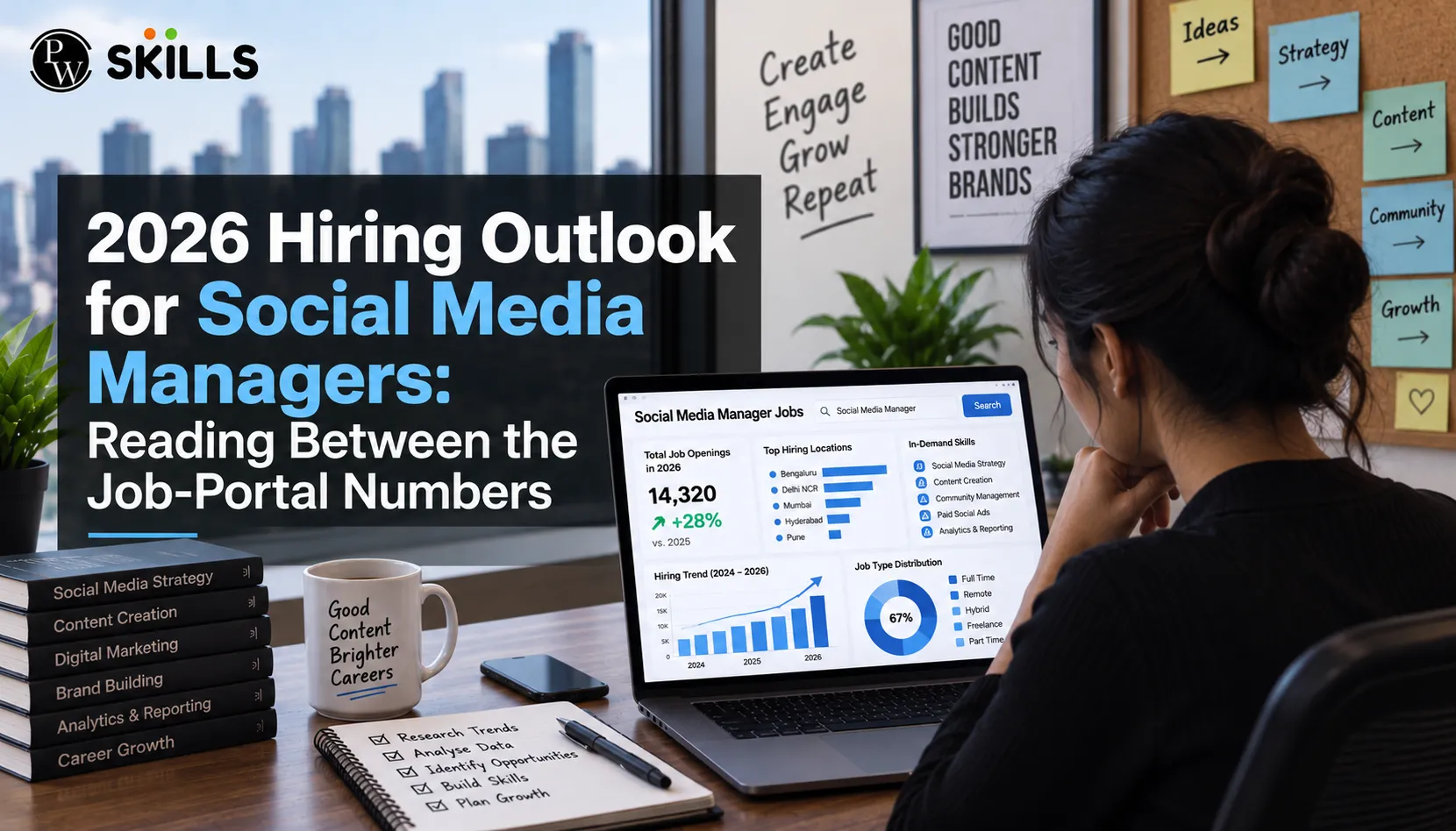
2026 Hiring Outlook for Social Media Managers: Reading Between the Job-Portal Numbers
 Hardik Gupta18 Sept, 2026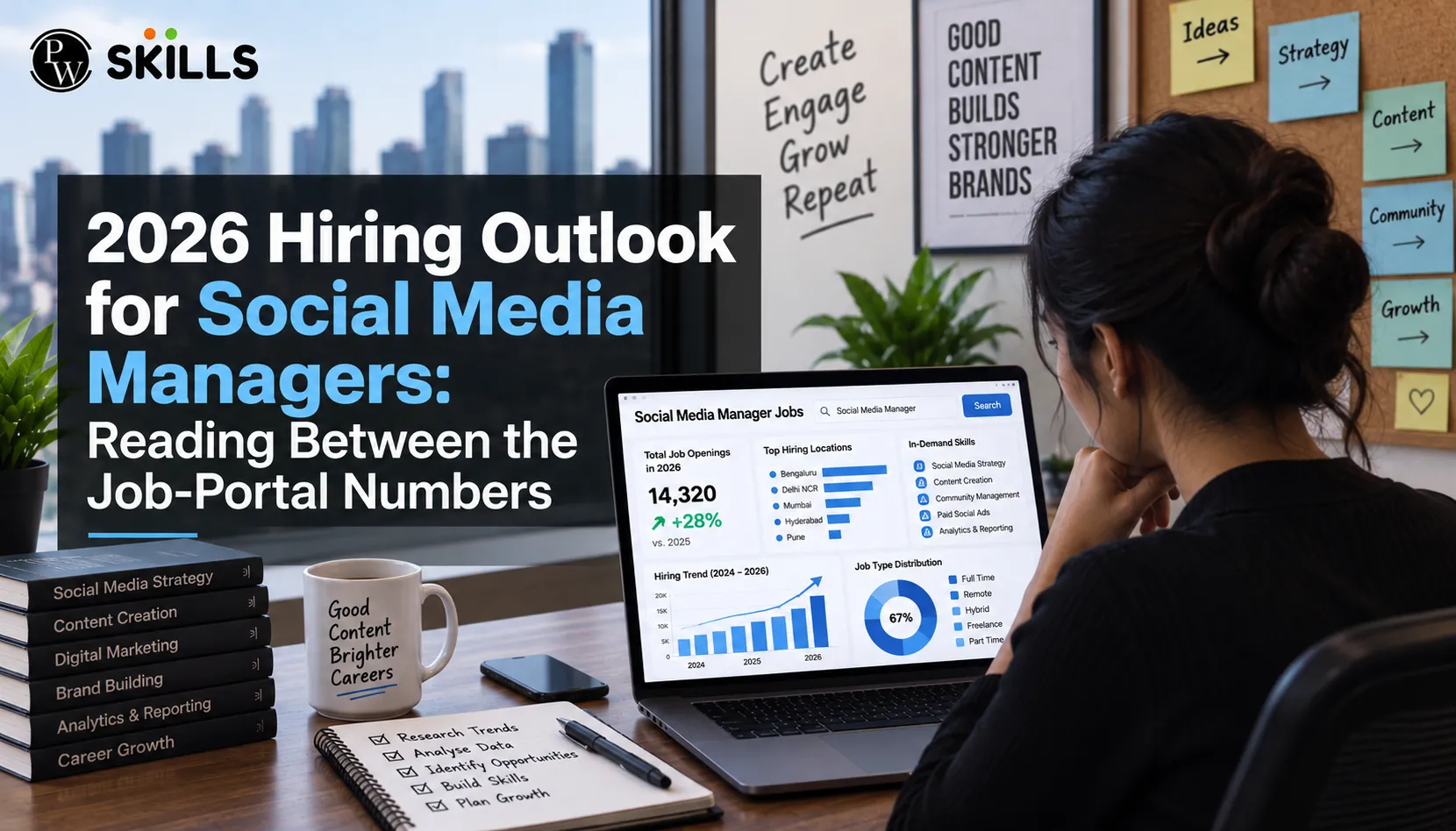
If you are navigating current job portals, you might notice a gap between title descriptions and actual technical requirements. Bridging this skill deficit requires structured upskilling. Enrolling in a Digital Marketing with AI Course gives professionals the practical toolkit needed to meet changing recruiter expectations and secure top-tier roles in today's competitive landscape.
Overview of Digital Marketing with AI Course
AI Digital Marketing Course helps learners build modern digital marketing skills with the use of artificial intelligence. It covers SEO, performance marketing, content creation, marketing analytics, prompt engineering, and social media workflow automation. The course helps professionals understand data, improve campaigns, automate routine tasks, and prepare for changing digital marketing roles.
How Does a Digital Marketing with AI Course Match Social Media Hiring Trends?
The landscape for social media professionals has shifted from pure manual execution to tech-enabled strategy. Portals show a high volume of openings, but the candidate requirements have transformed significantly.
-
Data-driven decision-making: Employers expect candidates to interpret real-time dashboard analytics rather than just reporting basic reach metrics.
-
Content automation: Teams want managers who can use intelligent tools to streamline workflows, draft copy variants, and schedule cross-platform campaigns.
-
Multi-format expertise: High engagement rates depend on short-form video optimization, community management, and paid ad campaign management.
Understanding these shifts helps applicants target their reskilling efforts effectively.
|
Traditional Social Media Role |
Modern Social Media Role (2026) |
|
Manual content scheduling |
Automated workflow orchestration |
|
Basic engagement tracking |
Predictive trend analysis and audience modeling |
|
Generic text and image posts |
AI-assisted creative generation and hyper-personalized copy |
|
Broad reach focus |
Performance marketing and direct ROI tracking |
How Does a Digital Marketing with AI Course Match Google Marketing Trends?
Recent findings from the Google India Marketing Trends Report point to a clear shift in consumer discovery. Visual search, conversational queries, and algorithm-driven discovery feeds now dominate online interaction.
-
Visual and voice queries: Search behaviors are changing rapidly. Audiences rely on smart search mechanisms to evaluate products directly on social platforms.
-
Hyper-personalization: Generic brand messages are yielding lower engagement. Successful campaigns rely on dynamic audience segmentation to tailor content to specific user groups.
-
Integrated campaign strategies: Modern campaigns connect social touchpoints directly to conversion funnels, making cross-channel consistency essential.
Social media managers who understand these insights can build content calendars that mirror evolving online consumer behaviors.
Why Is a Digital Marketing with AI Course Important for Career Growth?
Job portals list hundreds of openings, yet many applicants struggle to convert interviews into offers. The underlying challenge is a skill misalignment. A comprehensive AI Digital Marketing Course addresses this issue by integrating artificial intelligence into foundational marketing workflows.
Master Advanced Automation Tools
Manual posting and standard scheduling tools are no longer sufficient for complex campaigns. Learning to deploy smart automation enables marketers to run multivariate tests, manage cross-platform distribution, and optimize ad spend in real time.
Leverage Predictive Audience Insights
Modern marketing relies on understanding user behavior before trends peak. Training programs cover data models that help managers anticipate viral shifts, optimize posting times, and refine brand messaging based on sentiment analysis.
Standardize Campaign Performance Frameworks
Measuring performance requires more than logging likes and comments. A structured AI Digital Marketing Course teaches professionals how to align social metrics directly with business objectives, such as customer acquisition cost (CAC) and return on ad spend (ROAS).
How Does a Digital Marketing with AI Course Prepares You for Digital Marketing Jobs?
Tracking the latest Digital Marketing Executive Jobs News highlights how corporate hiring structures are evolving. Organizations are increasingly merging traditional social media functions with broader performance marketing teams.
2026 Digital Marketing Stack
|
Core Capabilities |
AI-Enabled Enhancements |
|
Content Strategy |
Dynamic Creative Generation |
|
Community Engagement |
Automated Sentiment Tracking |
|
Ad Campaign Execution |
Predictive Budget Allocation |
Standard digital roles now require cross-functional technical skills. Hiring teams prioritize candidates who can demonstrate hands-on experience with modern marketing technology stacks.
-
Emphasis on Measurable Growth: Employers are moving away from surface-level brand awareness metrics in favor of qualified lead generation.
-
Preference for Hybrid Skill Sets: Job descriptions combine social media strategy with search engine optimization, email automation, and performance marketing.
-
Requirement for Agile Campaign Management: Rapidly changing trends mean teams must test, adjust, and scale campaigns faster than before.
How Does a Digital Marketing with AI Course Help With Job Requirements?
Recruiters frequently use a strategic hiring-outlook-hook in job descriptions to attract top talent while screening for advanced skills. Phrases such as "AI-fluent marketer," "growth strategist," and "data-led content manager" reflect specific operational demands rather than empty buzzwords.
-
Decoding Job Descriptions: Look beyond basic job titles. Identify whether the responsibilities emphasize manual execution or strategic tool integration.
-
Building a Proof-of-Work Portfolio: Present real case studies that show how technical upskilling led to improved engagement rates or reduced campaign costs.
-
Aligning Resumes with Industry Terms: Optimize application materials by highlighting hands-on tools, frameworks, and performance metrics covered in AI Digital Marketing Course.
Candidates who align their skill set with these strategic hiring demands position themselves for better roles and higher compensation packages.
What Modules Does a Digital Marketing with AI Course Cover?
A structured curriculum ensures learners gain practical experience across essential digital marketing pillars.
-
Search Engine Optimization (SEO): Keyword research, on-page structuring, and automated content auditing techniques.
-
Performance Marketing: Setting up, managing, and optimizing paid ad campaigns across search and social channels.
-
Content Generation and Strategy: Prompt engineering, dynamic copy variations, and multi-format content planning.
-
Marketing Analytics: Setting up conversion tracking, reading multi-touch attribution models, and building client dashboards.
-
Social Media Workflow Automation: Integrating scheduling platforms with intelligent data processing tools.
Digital Marketing Skills Framework
|
Skill Area |
Focus |
|
Content & AI Optimization |
Content and AI-based optimization |
|
Performance Marketing |
Performance marketing strategies |
|
Analytics & Reporting |
Data analysis and reporting |
What Career Path Can You Follow After a Digital Marketing with AI Course?
Investing in relevant practical skills creates clear avenues for advancement within agency and in-house marketing structures.
-
Junior Digital Marketing Executive: Focuses on campaign execution, basic copy generation, and weekly reporting support.
-
Social Media Manager: Oversees cross-channel strategy, manages content calendars, and optimizes engagement workflows.
-
Growth Marketing Lead: Directs paid budget allocations, implements advanced automation systems, and manages full-funnel customer acquisition strategies.
-
Digital Marketing Director: Shapes overall brand strategy, manages marketing technology infrastructure, and aligns campaigns with organizational growth targets.
Completing a certified AI Digital Marketing Course gives candidates the competitive foundation needed to advance through these tiers efficiently.



FAQ
What core skills are covered in a Digital Marketing with AI Course?
How does the Google India Marketing Trends Report impact social media strategies?
Are traditional roles changing based on Digital Marketing Executive Jobs News?
What is the significance of the hiring-outlook-hook in job postings?
Will taking a Digital Marketing with AI Course help me transition into a senior role?





Get Free Counselling Today
and Clear up all your Doubts
 Live & recorded classes available at easeDashboard for progress trackingLakhs of practice questions

