

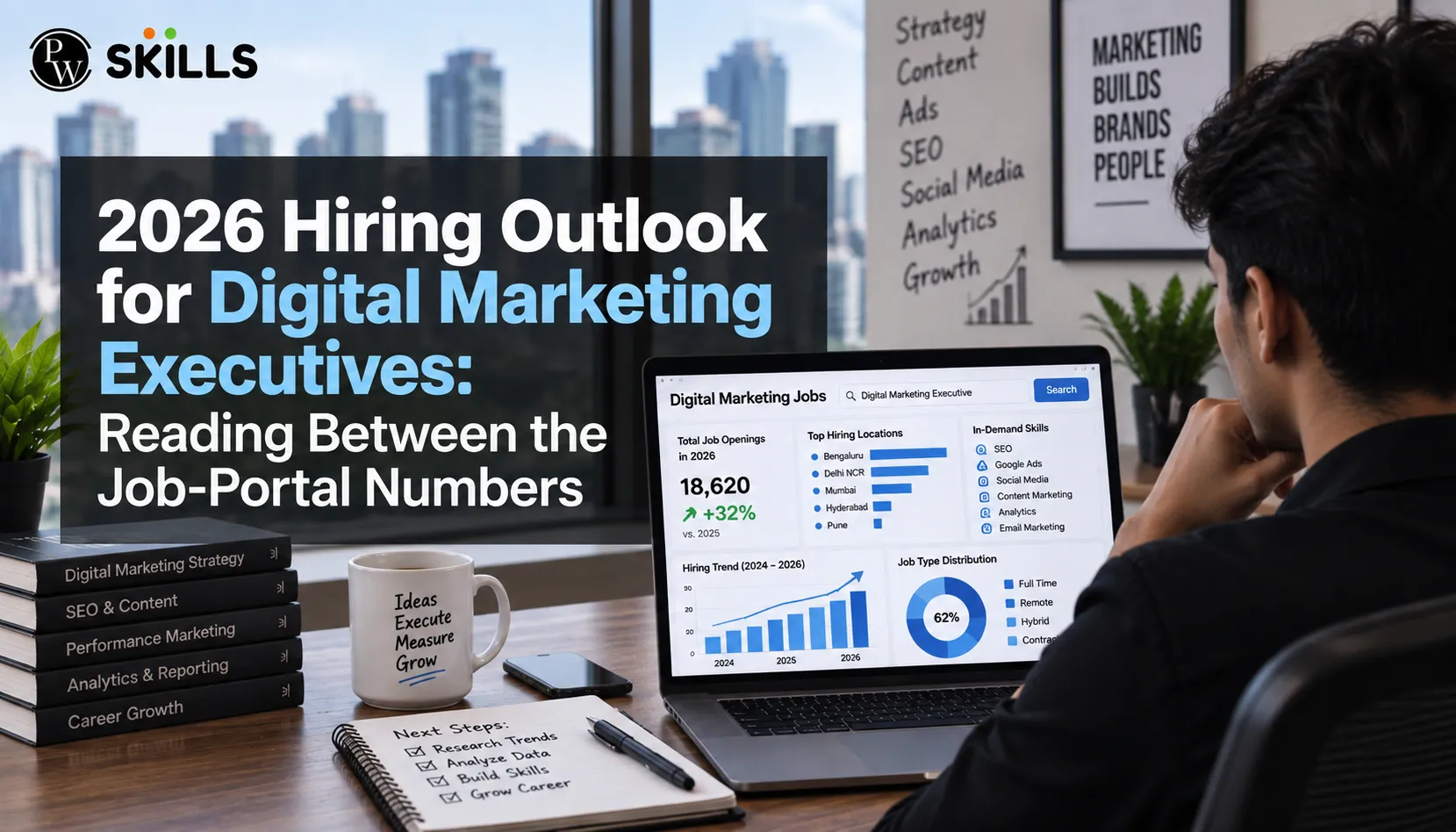
2026 Hiring Outlook for Digital Marketing Executives: Reading Between the Job-Portal Numbers
 Hardik Gupta17 Sept, 2026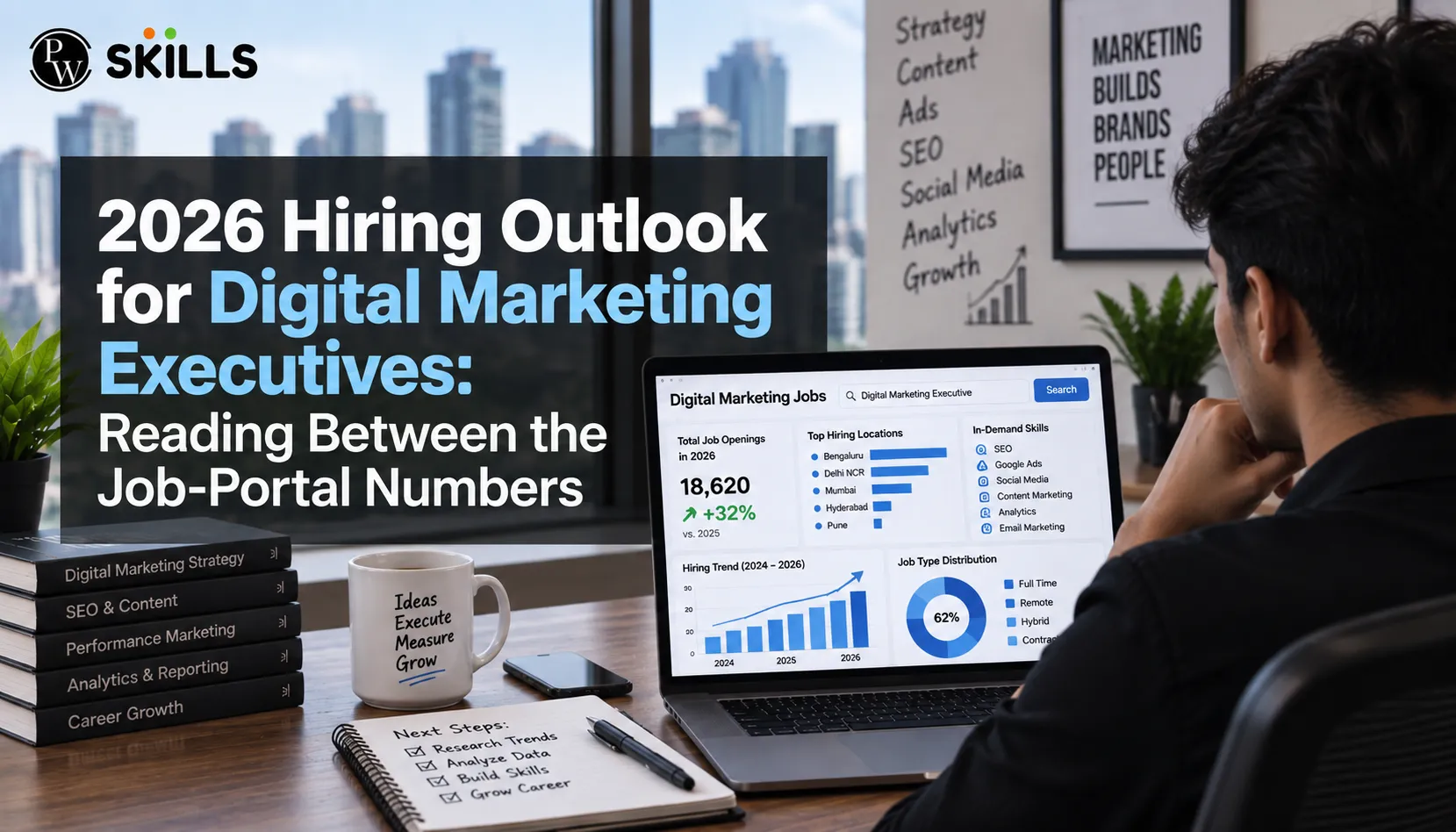
Companies no longer search for executives who only schedule social media posts or write manual content. Modern marketing teams expect professionals to handle automation, execute data analytics, and scale multi-channel campaigns with precision.
Securing a stable role requires bridging the gap between traditional promotional tactics and advanced artificial intelligence tools. Professionals who complete a specialized Digital Marketing with AI Course gain the technical confidence needed to meet these updated employer expectations.
Importance of a Digital Marketing with AI Course
AI Digital Marketing Course helps learners build modern marketing skills by combining digital marketing with AI tools, automation, data analysis, and campaign management. It covers areas such as SEO, content creation, social media, prompt engineering, audience targeting, and performance tracking. The course helps candidates build practical skills, create stronger portfolios, and prepare for growing digital marketing roles.
How Does a Digital Marketing with AI Course Match Current Hiring Trends?
Listing counts on job portals often create a false impression of market demand. While overall posting numbers may appear flat, the underlying distribution of responsibilities shows significant restructuring. Organizations are replacing entry-level repetitive tasks with integrated automated systems. Consequently, businesses are actively hunting for executives capable of directing these systems effectively.
Traditional Role vs AI-Integrated Marketing Focus
|
Metric / Indicator |
Traditional Role Focus |
AI-Integrated Marketing Focus |
|
Primary Task Execution |
Manual content creation & posting |
Automated workflows & prompt ops |
|
Data & Analytics |
Basic monthly traffic reports |
Predictive campaign modeling |
|
Campaign Management |
Single-channel manual tracking |
Cross-platform automated scaling |
|
Skill Requirement |
Basic copywriting & scheduling |
Data analysis & tool operation |
Recent employer surveys demonstrate clear patterns regarding team capabilities and operational priorities:
-
Operational Efficiency: Over half of modern marketing teams report using automated tools to streamline daily campaign management.
-
Targeting and Personalisation: Data-backed strategies now drive customer acquisition, with 52% of teams relying on first-party data collection to improve user conversion rates.
-
Resource Constraints: Nearly 39% of marketing leaders cite limited bandwidth as a primary operational barrier, increasing the demand for talent that uses technical tools to work efficiently.
Understanding these portal metrics helps candidates position themselves correctly. Taking a practical AI digital marketing course enables candidates to transition from manual execution to strategic implementation.
Why Is a Digital Marketing with AI Course Important for Career Growth?
Marketing roles now require direct interaction with algorithmic distribution engines, predictive audience segmentation, and machine-learning platforms. Relying purely on traditional marketing methods often leaves candidates behind during technical recruitment rounds.
Your table has the columns reversed. The corrected version is
Traditional Skillset to High-Value Placement
|
Stage |
Skillset / Outcome |
|
Traditional Skillset |
Manual Copy + Basic Graphics |
|
Portal Rejection Barrier |
Fails automated screening & technical tasks |
|
Upgraded Skillset |
Data Analysis + Automated Scaling |
|
High-Value Executive Placement |
Higher-value career opportunities |
A structured curriculum prepares candidates to handle modern execution demands directly. Key operational competencies built through structured training include:
-
Prompt Engineering for Content Operations: Moving beyond simple queries to build structured prompts that generate high-quality brand assets consistently.
-
Automated Data Analytics: Using algorithmic systems to clean data sets, track customer acquisition costs, and forecast long-term campaign return on investment.
-
Audience Segmentation Models: Deploying target models that adapt to real-time user signals, improving conversion performance.
-
Multi-Channel Workflow Integration: Connecting organic distribution channels, pay-per-click search engines, and automated nurture sequences into a single ecosystem.
Candidates holding these specialized competencies adapt faster to internal performance metrics. Upskilling via an AI digital marketing course helps professionals build a verified portfolio that proves their operational capability to recruiters.
How Does a Digital Marketing with AI Course Prepare You for Social Media Jobs?
Social distribution platforms have shifted from simple media channels into complex programmatic ecosystems. Recent updates highlighted in Digital Marketing with AI Course + Social Media Manager Jobs News show that companies are looking for managers who understand algorithm behaviors, audience engagement patterns, and automated social listening workflows.
Organic Distribution Platforms and Analytics
|
Organic Distribution Platforms |
Automated Social Listening & Analytics |
|
LinkedIn (High B2B Value Engine) |
Real-time Sentiment Tracking |
|
YouTube & Video Channels |
Programmatic Ad Spend Optimisation |
|
Secondary Brand Channels |
Predictive Engagement Scaling |
Professional marketers must handle dynamic content distribution while maintaining performance tracking across active platforms:
-
B2B Distribution Dominance: According to market performance metrics, 85% of B2B organizations identify LinkedIn as their most effective social platform for driving business outcomes.
-
Video & Short-Form Content: Short-form articles and video content represent the primary formats used by 92% and 76% of organizations, respectively.
-
Paid Engine Management: Roughly 73% of active brands rely on paid social promotion, while 64% utilize search engine marketing to sustain conversion rates.
Managing these channels manually at scale is no longer practical. A comprehensive AI digital marketing course teaches managers how to automate social monitoring, optimize budget allocations, and convert social engagement into qualified leads.
How Does a Digital Marketing with AI Course Match Content Marketing Skills?
Strategic planning requires grounding career decisions in validated industry research. Insights extracted from the Content Marketing Institute Report highlight clear operational gaps that companies are attempting to solve through new hiring.
Content Marketing Challenges and Required Skills
|
Content Marketing Challenge |
Employer Pain Point Share (%) |
Skill Required to Solve |
|
Action-Oriented Content |
40% |
Conversion Copywriting & Data |
|
Resource Constraints |
39% |
Workflow Automation & Tool Usage |
|
Measuring Effectiveness |
33% |
Multi-Touch Attribution Modeling |
|
Quality Content Volume |
28% |
Algorithmic Asset Generation |
|
Competitor Differentiation |
24% |
Deep Audience Insights Analysis |
Marketing leaders face specific structural challenges that candidates must address during interviews:
-
Actionable Conversions: Producing content that drives measurable user conversions remains a challenge for 40% of marketing teams.
-
Measurement and Attribution: Over 33% of teams report difficulties in accurately attributing revenue to specific marketing campaigns.
-
Resource Allocation: Lack of bandwidth, specialized talent, and budget affects 39% of marketing organizations.
Candidates who understand these pain points can position themselves as practical problem solvers. Completing a targeted AI digital marketing course provides marketers with the analytical frameworks needed to fix conversion bottlenecks and demonstrate business impact.
How to Build a Portfolio With a Digital Marketing with AI Course?
Building a strong resume requires moving beyond simple lists of former job duties. Recruiters want clear, measurable proof of operational capabilities and technical executions.
Portfolio Preparation Stages
|
Stage |
Focus |
Action |
|
Stage 1 |
Problem Definition |
Identify clear business metrics & resource limits |
|
Stage 2 |
Technical Tool Execution |
Apply automated tools & custom prompt workflows |
|
Stage 3 |
Measure Business Impact |
Document conversion increases & efficiency gains |
Follow these actionable steps to align your professional portfolio with current job market standards:
-
Document Tool Workflows: Clearly showcase the specific automation platforms and analytics tools you use to manage campaigns.
-
Highlight Conversion Metrics: Focus project case studies on lead acquisition, pipeline impact, and overall engagement gains rather than superficial impression counts.
-
Include Case Studies: Present real-world examples showing how automated tools helped cut production time while maintaining brand standards.
-
Verify Industry Qualifications: Feature recognized credentials, such as an AI digital marketing course, to confirm your technical foundation.
Matching your portfolio to live market requirements ensures your profile stands out on competitive job portals.





FAQ
1. What core skills are taught in a Digital Marketing with AI Course?
2. How are automated tools changing Social Media Manager Jobs News and listings?
3. Why is the Content Marketing Institute Report important for jobseekers?
4. Can an entry-level professional enroll in a Digital Marketing with AI Course?
5. How does learning AI tools improve the overall hiring-outlook-hook for marketers?






Get Free Counselling Today
and Clear up all your Doubts
 Live & recorded classes available at easeDashboard for progress trackingLakhs of practice questions

